
Reviewed · MEXICO CITY TOURS
Arrivals & Survival of Jews in Mexico from 1519
Mexico City keeps its Jewish story in plain sight. This three-and-a-half-hour walking tour links Aztec ruins, colonial churches, Inquisition buildings, Jewish trading routes, and two landmark synagogues. I like the small groups, capped at 10 people, and the way the route connects Jewish history with the wider story of Mexico City. The main drawback is that the tour’s historical scope is so broad that some visitors may find the Jewish material less focused than expected.
The strongest part is the guide-led storytelling, especially when Carlos leads the walk. He brings Mexican, European, and Jewish history together in a clear, personal way, and he welcomes questions. I also like that the tour ends at the decommissioned Justo Sierra Synagogue, rather than stopping with abstract history in a plaza. You should allow for some walking, a moderate fitness level, and a possible change of plans if security concerns affect the route.
In This Review
- Key points to know before booking
- Why this Jewish history walk matters in Mexico City
- Starting at Librería Porrúa above the Great Aztec Temple
- Behind the Metropolitan Cathedral and the Chapel of the Souls
- Plaza de Santo Domingo and the old trading world
- The Inquisition complex and its Perpetual Prison
- San Ildefonso, Rivera, Kahlo, and modern political history
- Plaza Loreto and Mexico’s first purpose-built synagogues
- Inside the former Justo Sierra Synagogue
- The guide and the pace make the difference
- Is $99 a fair price for three and a half hours?
- Who should book this Mexico City tour?
- FAQ
- Where does the tour begin?
- What time does the tour start?
- Where does the tour end?
- How long does the experience last?
- Is the tour offered in English?
- How large is the group?
- What level of fitness is required?
- Should you book Arrivals & Survival of Jews in Mexico from 1519?
Key points to know before booking
- Start above the Aztec ruins: The opening conversation takes place at Librería Porrúa, with a terrace view toward the remains of the Great Aztec Temple.
- Jewish history meets Mexico City history: The tour explains Jewish life alongside Spanish rule, the Inquisition, colonial trade, the Mexican Revolution, and the anti-Fascist movement.
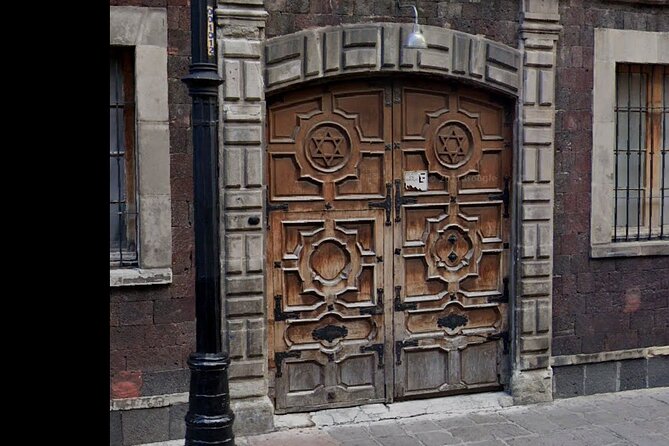
- Two important synagogue sites: You see the former Justo Sierra Synagogue, identified as Mexico’s first Ashkenazi synagogue, and the site of the Sephardic Mount Sinai congregation.
- A compact, personal group: With a maximum of 10 people, you can ask questions and hear more than you would on a large bus tour.
- A strong guide matters: Carlos receives especially warm praise for his clear English, historical command, patience, and personal connection to the subject.
- Plan on a city walk, not a museum visit: Most stops are viewed from outside, and admission is generally free or arranged through the tour.
Why this Jewish history walk matters in Mexico City
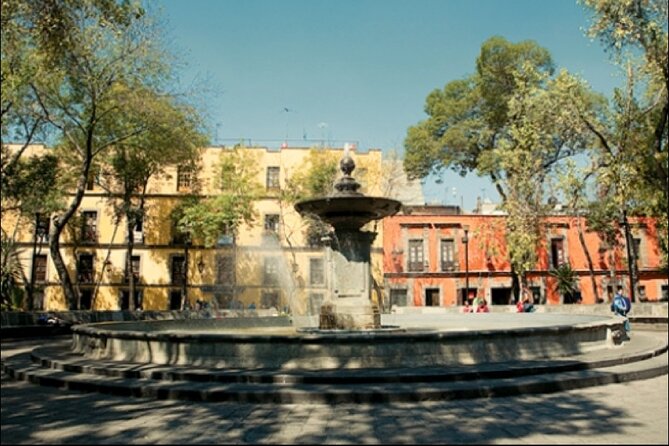
Mexico City’s Centro Histórico is layered with stories. In one short walk, you move from the remains of the Mexica capital to the colonial center built by Spain, then into places tied to Jewish survival, trade, art, politics, and community life.
The title, Arrivals & Survival of Jews in Mexico from 1519, signals the tour’s wide time span. You are not only learning when Jewish people arrived. You are also looking at the pressure created by Spanish religious control, the ways some Jews practiced in secret, the later formation of Sephardic and Ashkenazi communities, and the role of Jewish figures in modern Mexican life.
I find this broader approach useful because Jewish history in Mexico did not happen in isolation. To understand it, you need some sense of the colonial church, the trade system, the Inquisition, and the political changes that shaped Mexico. The guide uses the city itself as his classroom, which gives the information a physical anchor.
The experience is offered in English and begins at 10:00 a.m. The group size is limited to 10, a real advantage in the narrow streets and busy public spaces of central Mexico City. It also lets you stop for questions instead of simply following a flag through the crowd.
A few more Mexico City runs worth comparing
- Teotihuacan, Guadalupe Shrine & Tlatelolco Day Tour with Lunch
★ 5.0 · 11,603 reviews - Xochimilco, Coyoacan and Frida Kahlo with Optional Lunch
★ 4.5 · 7,320 reviews - Balloon flight + Breakfast in cave + Pyramids + Pick up CDMX.
★ 5.0 · 6,335 reviews
Starting at Librería Porrúa above the Great Aztec Temple
The meeting point is República de Argentina 15, in the Centro Histórico, at Librería Porrúa. The tour begins with an introductory conversation on the bookstore’s terrace, overlooking the ruins of the Great Aztec Temple.
This is a smart opening. You begin with a broad view of Mexico’s religious past and present, rather than jumping straight into a list of dates. The view also makes the city’s layers visible: pre-Hispanic ruins, Spanish colonial buildings, and modern Mexico City occupy the same small patch of ground.
The terrace setting gives the first hour a slower pace. Some people appreciate starting with a seated conversation, coffee, or a snack, as that can make a long historical subject easier to follow. The opening discussion frames the city as a place where different religions and cultures have existed side by side, sometimes peacefully and sometimes under severe pressure.
I would pay close attention here. The first explanation sets up the rest of the walk, especially the links between Spanish rule, the Catholic Church, and Jewish people who arrived during the colonial period. If you prefer a quick sightseeing tour with little talking, this opening may feel long. If you enjoy context, it helps the later stops make sense.
Behind the Metropolitan Cathedral and the Chapel of the Souls
From the bookstore, the group walks behind the Metropolitan Cathedral to the Chapel of the Souls. Here, the guide points out teachings against heresy and discusses how colonial religious architecture reflected the authority of the Spanish Inquisition.
The tour presents the area as part of a system designed to restrict or exclude other religions, including Judaism. The cathedral is not treated simply as a grand church to photograph. Instead, it becomes evidence of the religious rules that shaped daily life in colonial Mexico.
This part works best when you look closely at the details rather than only admiring the stonework. The cathedral’s size and placement help explain how thoroughly Catholic power dominated the center of the city. The guide also uses the viewpoint to discuss colonial architecture and the social divisions imposed under Spanish rule.
You spend about 20 minutes here. It is a short stop, but an important one because it shifts the tour from the broad opening story to specific signs of religious control. The location is outdoors, so the quality of the explanation depends heavily on the guide and on how easy it is to hear in the surrounding city noise.
Plaza de Santo Domingo and the old trading world
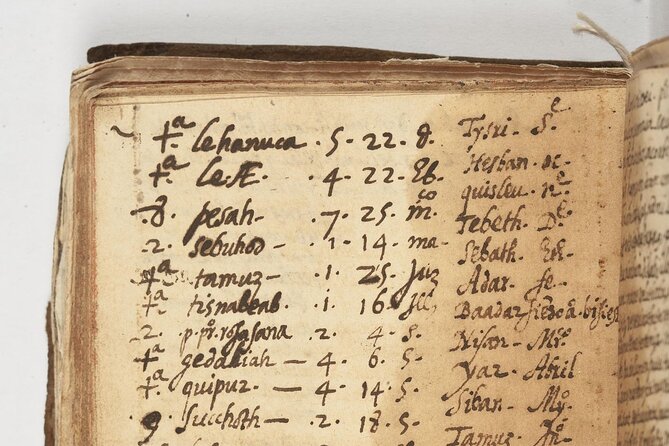
At Plaza de Santo Domingo, the tour turns toward commerce. This was a major trading marketplace from the 16th through the 19th centuries, and the guide explains how Jews living in hiding had to take part in trade while being watched by authorities.
The subject gives the tour a practical angle. Religious persecution was not only about sermons and laws. It affected where people could work, how they could sell goods, and how carefully they had to manage their public identity.
The group also examines what the guide describes as hidden anti-Semitic messages at the former Palace of the Inquisition and the Santo Domingo Church. You are asked to read the buildings as historical documents, not just as scenery. The church is also connected with the beginning of El Camino Real, presented here as a safer route for Jewish traveling traders.
This stop lasts about 20 minutes. I like the way it brings economic life into the story. It shows why a marketplace could be both an opportunity and a place of risk. At the same time, the guide’s interpretation is central, so you should expect explanation rather than a formal museum display or an extensive interior visit.
Same base, a different sort of day:
- Teotihuacan pyramids morning or afternoon without tourist traps
★ 5.0 · 6,186 reviews - Teotihuacan Early Access Guided Tour with optional Lunch
★ 4.5 · 6,138 reviews - Balloon flight + pick up in CDMX + Breakfast in Cave + Pyramids
★ 5.0 · 5,651 reviews - Balloon Flight + Cave Breakfast + Pick Up from CDMX or We Fly
★ 5.0 · 4,410 reviews
The Inquisition complex and its Perpetual Prison
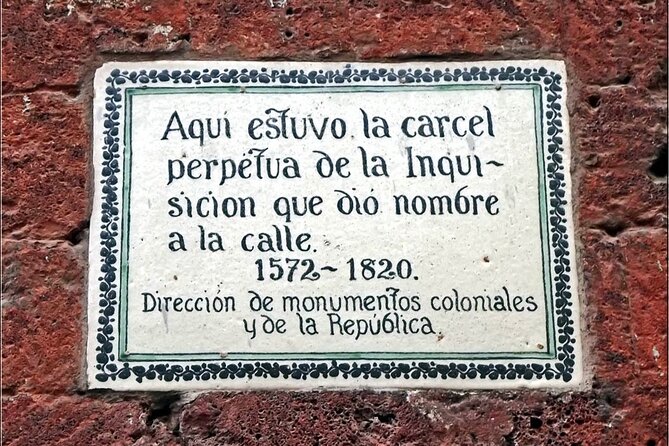
The route continues past the former administrative building of the Inquisition, its living quarters, and the Perpetual Prison. The tour discusses the torture and executions imposed on people accused by the institution, including Jews.
This is the most sobering part of the walk. The buildings may look like ordinary colonial structures from the street, but the story attached to them is grim. The guide places Jewish survival against a system that could investigate belief, punish religious difference, and use public authority to enforce conformity.
Because the stop is outside and lasts roughly 20 minutes, the experience does not pretend to recreate the prison. That restraint is useful. You are given enough context to understand the site without turning suffering into spectacle.
I would expect serious subject matter here. The tone is educational and historical, but the discussion includes torture, death sentences, and anti-Jewish persecution. This may not suit young children or anyone seeking a light sightseeing morning.
San Ildefonso, Rivera, Kahlo, and modern political history
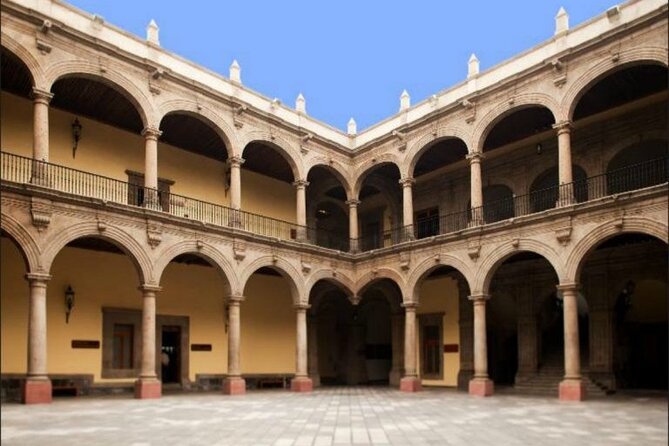
At the Antiguo Colegio de San Ildefonso, the group views the site from outside. This is where the tour connects Diego Rivera and Frida Kahlo, described through their Sephardic and Ashkenazi backgrounds.
The stop adds an artistic and personal thread to the earlier institutional history. Instead of ending the Jewish story in the colonial period, the guide brings it into modern Mexican culture. You also learn about the Mexican anti-Fascist movement, the cancellation of the first and only anti-Semitic national convention in Mexico, and the reception of Lev Davidovich Bronstein, better known as Leon Trotsky, as a refugee.
That is a lot for a 15-minute stop. The value comes from the connections. Art, political resistance, Jewish identity, and refugee history all meet at one location. If you already know about Rivera, Kahlo, or Trotsky, you may enjoy hearing their stories placed in a Mexican Jewish context.
The limitation is the same one that affects the whole tour: the subject is large. A brief stop cannot provide a full account of Rivera, Kahlo, Mexican anti-Fascism, and Trotsky. Think of it as a set of well-chosen links rather than a complete lesson on any one figure.
Plaza Loreto and Mexico’s first purpose-built synagogues
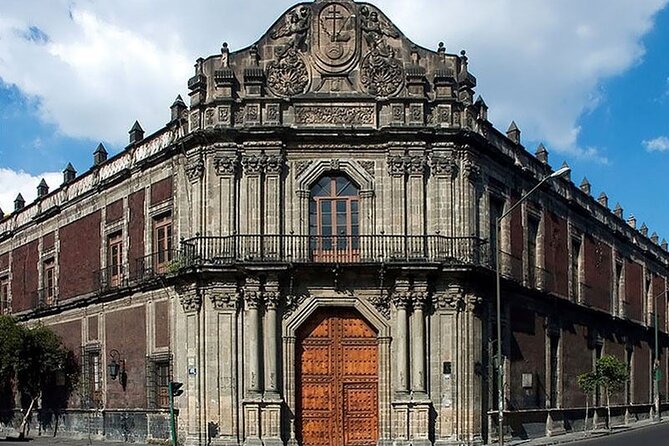
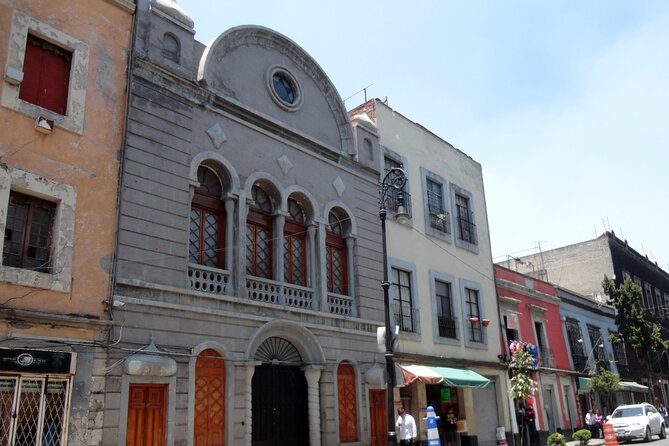
At Plaza Loreto, the walk reaches one of its most important areas. The guide points out the first purpose-built Sephardic synagogue in Mexico, identified as Mount Sinai, and the neighboring Nidjei Israel, described as the first Ashkenazi synagogue in the country.
This is where the tour’s earlier discussion becomes concrete. You have heard about Jewish people arriving, hiding, trading, and facing religious control. Now you see the later development of organized Jewish communities with their own institutions and places of worship.
The stop itself lasts about 15 minutes, so it is not a long interior visit. The description indicates that access to some private or public places has been arranged or included, but you should understand that much of the route involves viewing sites from the street.
The location also gives you a useful way to think about the difference between Sephardic and Ashkenazi communities. The tour does not treat Jewish identity in Mexico as one single story. It shows how different migration backgrounds led to distinct congregations that became part of the city’s religious life.
Inside the former Justo Sierra Synagogue
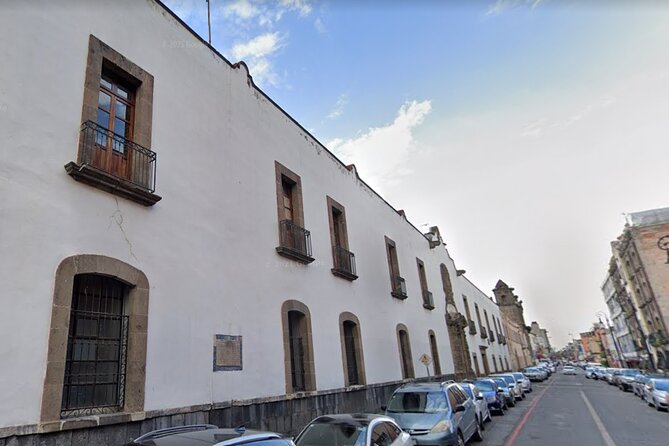
The walk ends at Justo Sierra 71, in front of Loreto Park on the south side of Justo Sierra Street. The final stop is the decommissioned Justo Sierra Synagogue, identified as Mexico’s first Ashkenazi synagogue.
This is the emotional finish of the route. After hours of discussing persecution, secrecy, trade, political change, and community formation, you arrive at a building created for Jewish worship. The former synagogue gives the story a human scale. It is not only about laws and institutions. It is also about people making a place for communal life.
Several strong accounts of the tour describe the synagogue as a memorable ending, and I can understand why. A historic house of worship leaves a clearer impression than another explanation beside a colonial façade. It also gives you a final chance to ask questions about Jewish life in Mexico City today.
The site is decommissioned, so do not assume it functions as a regular synagogue or that every visit includes a full interior tour. Access can depend on the arrangements made for the day. Still, as the final setting, it gives the walk a sense of arrival after the earlier focus on survival.
The guide and the pace make the difference
The guide is the key part of this experience. Carlos is repeatedly praised for his English, enthusiasm, clear storytelling, and ability to answer detailed questions. He also brings personal views and personal history into the presentation, which can make the subject feel more immediate.
I like that the tour appears to balance world history, Mexican history, and Jewish history rather than treating the subject as a narrow sequence of dates. You may hear about the Spanish Empire, the Inquisition, Cortés, the city’s role in international trade, the Mexican political scene, and the Jewish community in one connected narrative.
The teaching style may not suit everyone. One assessment described the explanations as too basic in places and wished for more reading suggestions. Another found the questioning approach less useful. If you want a tightly academic seminar with citations and a reading list, ask about sources during the tour and keep your expectations realistic.
The pace is gentler than the word walking might suggest. The route includes several short stops, and people have described it as manageable rather than an exhausting march. Even so, you need moderate physical fitness, comfortable shoes, and the ability to remain on your feet in city streets.
Is $99 a fair price for three and a half hours?
At $99 per person, this is not a cheap general sightseeing walk. The value depends on how much you want the Jewish and political context, and on the quality of the guide leading your particular departure.
Most stops do not charge a separate admission fee, and entrance to certain public and private places has been arranged or included. So you are mainly paying for the guide’s time, preparation, access arrangements, and the small-group format.
I think the price is reasonable for someone who would otherwise need to research the route, identify the synagogue sites, understand the Inquisition buildings, and connect the historical figures. The value is less clear if you want a conventional tour with many paid interiors, large monuments, or a broad visual survey of Mexico City.
The tour is often reserved about 30 days ahead, so advance planning makes sense. The experience has a 4.6 rating from 87 assessments, with 90 percent recommending it, but cancellations have also caused serious problems for some bookings. A health issue and a security concern led to last-minute cancellations in separate cases, with disputes over communication and reimbursement.
That does not make cancellation likely, but it does make one practical point important: use current contact information when booking, read the provider’s security notices, and confirm who handles any refund. You can cancel for a full refund up to 24 hours before the 10:00 a.m. start. Cancellations or changes inside that window are not refunded.
Who should book this Mexico City tour?
I would choose this experience if you want:
- A Jewish history tour tied closely to Mexico City’s historic center
- A small group with time for questions
- A guide who can connect Jewish history with Mexican politics, art, religion, and trade
- Historic synagogue sites that are easy to miss on a standard city walk
- A thoughtful alternative to a general Centro Histórico tour
- A moderate walking route with frequent stops
I would hesitate if you want a purely Jewish itinerary with several hours devoted only to Jewish communities. One account estimated that only about an hour of the total time focused directly on Jewish history, with the rest devoted to Mexican and religious history. That criticism is worth taking seriously.
You should also think twice if you dislike emotionally heavy subjects or prefer independent museum visits. This route asks you to listen, interpret buildings, and follow the guide’s historical framework. It is not a casual photo walk.
FAQ
Where does the tour begin?
It begins at Librería Porrúa, República de Argentina 15, in Mexico City’s Centro Histórico.
What time does the tour start?
The scheduled start time is 10:00 a.m.
Where does the tour end?
It ends at Justo Sierra 71, in front of Loreto Park on the south side of Justo Sierra Street.
How long does the experience last?
The tour lasts approximately 3 hours and 30 minutes.
Is the tour offered in English?
Yes. The experience is offered in English.
How large is the group?
The maximum group size is 10 people.
What level of fitness is required?
You should have a moderate level of physical fitness. The route is a city walk with several stops, and some people find the walking manageable, but you should still expect time on your feet.
Should you book Arrivals & Survival of Jews in Mexico from 1519?
Book it if you want Mexico City history told through Jewish experience, not a standard checklist of monuments. The most rewarding parts are the links between the Inquisition, trade, Jewish community institutions, Rivera and Kahlo, Trotsky, and modern Mexico.
I especially recommend it for visitors with a family, cultural, or religious interest in Jewish history, and for anyone who has already seen the main Centro Histórico sights and wants a different route through the city. Carlos appears to be an excellent choice when available, though the experience’s value will always depend on the guide assigned.
Go in expecting a serious, talk-heavy walking tour rather than a museum program. If that sounds right, the synagogue finish and the small-group conversation make the $99 worthwhile. If you want a narrowly focused Jewish tour or guaranteed access to every interior, choose carefully and confirm the day’s arrangements before setting out.
Newly listed around Mexico City
- Ticket to Frida Kahlo Museum on CDMX★ 4.5 · 44 reviews
- Epic Centro Histórico Walking Tour★ 5.0 · 77 reviews
- Eat Like A Local By The Taco Mensch★ 5.0 · 55 reviews
- Eat and Explore Local Markets in Mexico City★ 5.0 · 83 reviews
- Ticket for the Frida Kahlo Museum★ 3.5 · 67 reviews
- Authentic Lucha Libre Tour : Wrestling School, Tacos & Mezcal★ 5.0 · 162 reviews
- Express Tour to Teotihuacan Pyramids. Be the first to arrive!★ 4.5 · 62 reviews
- Small Group: The Magical Colonial Towns of Taxco and Cuernavaca★ 4.5 · 46 reviews
Mexico City Tours, compared.
Teotihuacan, Guadalupe Shrine & Tlatelolco Day Tour with Lunch
Read our review →
Xochimilco, Coyoacan and Frida Kahlo with Optional Lunch
Read our review →
Balloon flight + Breakfast in cave + Pyramids + Pick up CDMX.
Read our review →
Teotihuacan pyramids morning or afternoon without tourist traps
Read our review →
Teotihuacan Early Access Guided Tour with optional Lunch
Read our review →
Balloon flight + pick up in CDMX + Breakfast in Cave + Pyramids
Read our review →
Balloon Flight + Cave Breakfast + Pick Up from CDMX or We Fly
Read our review →
Teotihuacan, Tlatelolco & Guadalupe Shrine Tour
Read our review →Browse the lists this tour appears in