
Reviewed · MEXICO CITY TOURS
Iztapalapa: Cable Car Tour and Urban Art From the Heights
See Mexico City from its working cable car. This four-hour outing takes you from Bellas Artes into Iztapalapa by metro and Cablebús, then opens up wide views of rooftops, murals, winding streets, and distant volcanoes. I especially like the local perspective and the way guides such as Eduardo, Benjamin, Oscar, Gabi, and Alexia connect transport, art, food, and neighborhood history.
I also like that the tour helps you use Mexico City’s huge metro system with confidence, rather than keeping you in a tour van. The tradeoff is clear: roughly half the outing is spent getting to and from Iztapalapa, and some people may find the subway instruction longer than needed.
In This Review
- Key points before you book
- Why Iztapalapa makes this a different Mexico City tour
- Meeting at Bellas Artes and learning the metro
- The Cablebús ride over Iztapalapa
- Murals that work from the air
- The park, volcano views, and Iztapalapa stories
- Tortillas, gorditas, and the local food stop
- Four hours, nine people, and the real value
- Clothing, comfort, and restrictions
- Who will enjoy this experience most
- Should you book the Iztapalapa Cablebús tour?
- FAQ
- Where does the tour meet?
- How long does the experience last?
- What languages are available?
- How many people are in the group?
- Is public transportation included?
- Is food included?
- How much do the gorditas cost?
- What should I bring?
- Is the tour suitable for people with vertigo?
- Can I cancel the booking?
Key points before you book

- The Cablebús is the star: You ride high over Iztapalapa for about 40 minutes on the outward journey, with views of homes, streets, murals, and mountains.
- A practical metro lesson is built in: The route begins and ends at Bellas Artes, with about 45 minutes on the way out and 40 minutes returning.
- The art has a story: Your guide explains the large murals seen from above and their place in community life.
- You visit a local park and market area: The stop adds volcano views, neighborhood context, and a chance to buy typical food.
- Tortillas are part of the experience: You can take part in a tortilla-making activity and learn why this everyday food matters in Mexico.
- The group is small: With no more than nine people, it is easier to ask questions and stay with the guide.
Why Iztapalapa makes this a different Mexico City tour
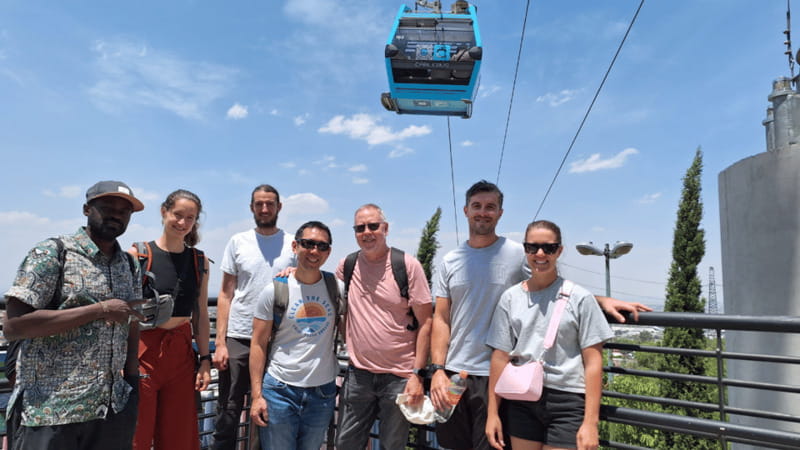
Mexico City sightseeing often centers on Centro Histórico, Frida Kahlo’s neighborhood, Chapultepec, or the grand museums. Those places deserve your time, but Iztapalapa shows another side of the capital: a large working community shaped by daily transport, local traditions, public art, and steady growth.
I like the basic idea here. You are not simply taken to a viewpoint. You reach it using the same public transport that links residents with the rest of the city. The route gives you a look at how Mexico City connects areas that are far from the postcard center.
Iztapalapa is also a useful place to discuss how a city grows. From the Cablebús, you see dense housing, narrow streets, broad urban stretches, and mountains around the basin. The guide adds the background, explaining how the community has developed and how it has dealt with serious challenges over time.
That context keeps the scenery from becoming a passing blur below the gondola. The streets and buildings are not just visual decoration. They are part of an enormous city where people live, work, travel, and build a strong local identity.
A few more Mexico City runs worth comparing
- Teotihuacan, Guadalupe Shrine & Tlatelolco Day Tour with Lunch
★ 5.0 · 11,603 reviews - Xochimilco, Coyoacan and Frida Kahlo with Optional Lunch
★ 4.5 · 7,320 reviews - Balloon flight + Breakfast in cave + Pyramids + Pick up CDMX.
★ 5.0 · 6,335 reviews
Meeting at Bellas Artes and learning the metro
The meeting point is the Parisian entrance to the Bellas Artes subway station, on the left side of the Palace of Fine Arts. Look for a guide wearing a green shirt and carrying a green umbrella. This detail matters because Bellas Artes has several entrances and the area can feel confusing when you are trying to find a small group.
I would arrive early and save the guide’s WhatsApp contact with your country code. One person specifically found the meeting point hard to identify, so a photo of the Parisian entrance would be useful, but you should still be able to connect if you follow the clothing and umbrella instructions.
The metro ride to the Cablebús takes about 45 minutes. That is a substantial part of the tour, but it is also one of its practical strengths. Mexico City’s metro is large, busy, and easy to underestimate. A guide can show you how the system works, help you follow the route, and explain the city as you move through it.
If you already use major subway systems, some of this instruction may feel basic. One person from London found the subway explanation too long. If you are new to Mexico City public transport, though, this section can give you the confidence to use the metro on your own for the rest of your stay.
Several guides receive especially warm praise for making this part easy. Benjamin is described as clear and caring, while Eduardo is credited with helping first-time riders understand both the metro and Cablebús. Oscar and Gabi also receive strong praise for mixing practical transport advice with local context.
The Cablebús ride over Iztapalapa
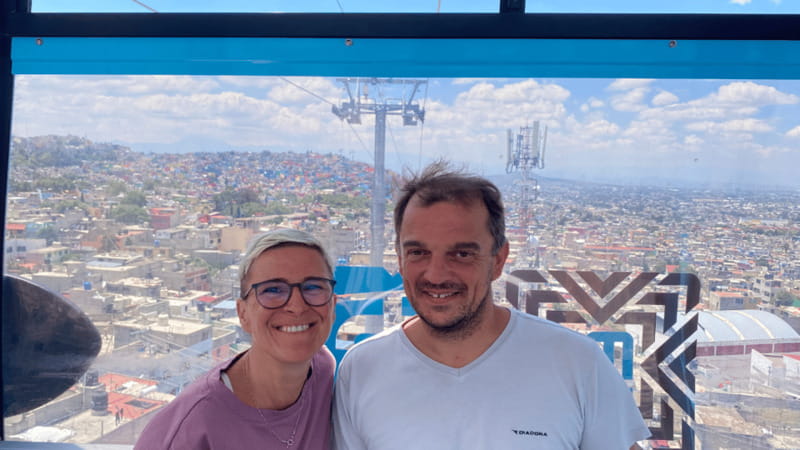
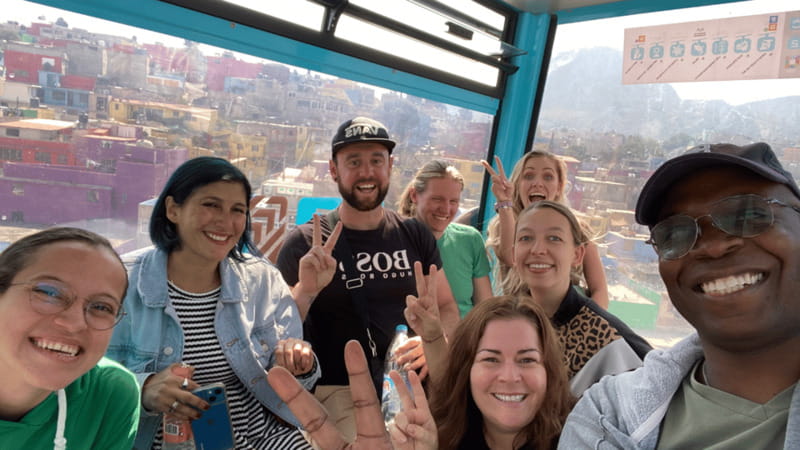
Once you reach the cable car, the mood changes. The ride lasts about 40 minutes on the way into Iztapalapa, followed by about 25 minutes on the return trip. From the cabins, you look across rooftops, streets, community buildings, and large areas of the city that are difficult to understand from ground level.
The Cablebús is described as the longest in the world, and the ride covers enough distance to make the claim feel meaningful rather than decorative. This is public transport first, but it also gives you a rare moving viewpoint over Mexico City.
I like the changing angle. One moment, you are looking down at the patterns of city blocks. The next, your attention moves toward painted walls, rooftop murals, or mountains in the distance. The height helps you see how tightly the neighborhoods fit together.
The Cablebús itself has been described as modern, clean, safe, and quiet. That makes the ride comfortable for taking in the views, though people prone to vertigo or motion sickness should think carefully before booking. Motion sickness prevention is recommended, and the tour is not suitable for people with vertigo, seasickness, or motion sickness.
Do not expect a ride focused only on famous monuments. The appeal is the view of everyday Mexico City. You may see colorful buildings and wide urban stretches, but the exact view depends on conditions and the route that day. The strongest moments come when your guide explains what you are seeing below.
Murals that work from the air
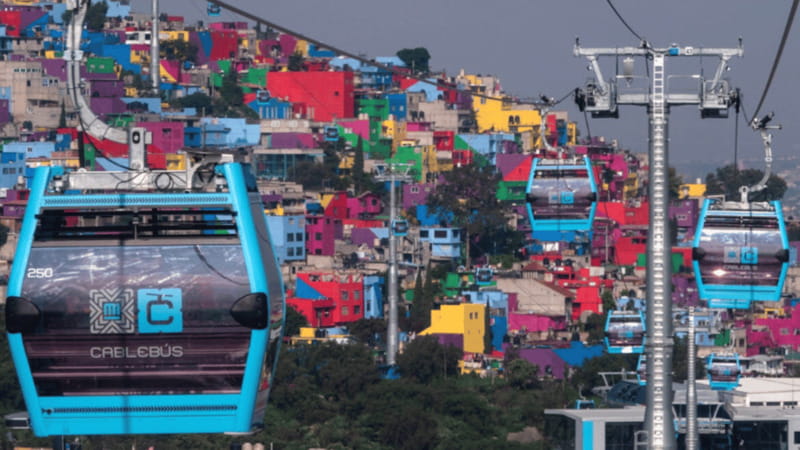
The urban art is one of the most distinctive parts of this experience. From street level, a large mural may be blocked by buildings, walls, traffic, or the angle of a nearby road. From the cable car, you can understand the scale and placement of artwork across rooftops and neighborhood walls.
Guides explain the stories and cultural meaning behind the murals. That makes the art more than a colorful background for photographs. You learn how public art can reach people during an ordinary commute and how the cable car gives residents a new way to see their own area.
Alexia is praised for explaining both the murals and their effect on daily Cablebús riders. That is a useful detail to listen for. The art is not placed in a gallery with a quiet audience. It is part of a transport corridor, seen by people moving through the community every day.
Bring a camera, but keep it secondary to looking around. The cabin gives you a broad view, while your guide supplies the details your camera cannot capture. Rooftop art is easy to miss if you spend the whole ride framing a single photograph.
Same base, a different sort of day:
- Teotihuacan pyramids morning or afternoon without tourist traps
★ 5.0 · 6,186 reviews - Teotihuacan Early Access Guided Tour with optional Lunch
★ 4.5 · 6,138 reviews - Balloon flight + pick up in CDMX + Breakfast in Cave + Pyramids
★ 5.0 · 5,651 reviews - Balloon Flight + Cave Breakfast + Pick Up from CDMX or We Fly
★ 5.0 · 4,410 reviews
The park, volcano views, and Iztapalapa stories
The guided section in Iztapalapa lasts about 20 minutes, followed by a photo stop of about 15 minutes and roughly 30 minutes of scenic views along the route. The exact rhythm may vary, but the plan gives you time to pause rather than spending the entire excursion inside trains and cabins.
At a local park, you can look toward the volcanoes and see Mexico City stretching into the distance. This is an important counterpoint to the close-up view from the Cablebús. From above the neighborhood, you notice rooftops and streets. From the park, you get a broader sense of the city’s size and setting.
Your guide also discusses Iztapalapa’s past, growth, and ability to overcome difficulties. I appreciate that the subject is handled through local life rather than a list of dates. The neighborhood becomes easier to understand when you connect its transport system, public art, music, food, and geography.
The music discussion adds another layer. You hear about cumbia, sonidero, and urban rock, rhythms tied to the area’s social life and identity. This section will appeal to you if you want culture explained through things people actually hear and share, not only through monuments.
Tortillas, gorditas, and the local food stop
Food is included in a modest but meaningful way. You take part in making tortillas and learn why they are central to the Mexican diet and culture. This is not presented as a full cooking class, so keep your expectations sensible. The value is the connection between a familiar food and everyday life.
Cash is essential if you want to try more. Gorditas cost 15 pesos, and food and drinks beyond the included tortillas are not covered by the price. Several people found the local market stop especially rewarding, with gorditas, tacos, fruit juice, sweets, and other typical snacks available from local stalls.
I would carry small bills and coins. You will have more freedom to sample food without worrying about cards or large notes. The market element also helps the tour feel less polished and staged than a standard food demonstration.
The food experience can vary. The supplied details confirm a tortilla activity and optional gorditas, while the additional market dishes depend on the route and guide. Oscar, Gabi, and Tomas are especially praised for guiding people toward local food, and Tomas is credited with combining warm neighborhood insight with good places to eat.
Remember that meals and drinks are not included. The cost of snacks is low, but your appetite may be larger than the included portion, so budget a little extra.
Four hours, nine people, and the real value
The price is $24 per person. For a four-hour outing, that is a fair price if you value instruction and transport help. Your fee includes the public transport card, metro and Cablebús rides, tortillas, an expert guide, and educational material.
The main value is not a private vehicle or a long list of paid attractions. You are paying for a carefully managed route through a part of the city that many people would not feel ready to visit alone. You also avoid working out the metro and Cablebús connections yourself.
The small-group limit of nine makes a difference. A guide can answer questions, keep people together in stations, and explain murals without needing to shout across a large crowd. One guide successfully kept a bigger-than-usual group together, but the stated small-group format should feel easier.
There is one value question to consider. If you already know Mexico City’s metro and mainly want a cable car ride, you may find the transport teaching too long. In that case, the tour is less efficient than simply taking the Cablebús yourself.
For someone new to the city, the calculation is better. You get a scenic ride, practical transport training, neighborhood history, public art, music, a park stop, and a tortilla activity for one modest fee.
Clothing, comfort, and restrictions
Wear comfortable closed shoes. High heels, sandals, and flip-flops are not allowed. The guidance also asks for discreet clothing and advises against shorts, skirts, short dresses, sleeveless shirts, hats, and sunglasses.
The list of restrictions is unusually long, so read it before booking. Oversize luggage, large bags, drones, pets other than assistance dogs, bikes, scooters, skateboards, skates, non-folding wheelchairs, non-folding strollers, and mobility scooters are not accepted. Smoking and drinks in the vehicle are also prohibited.
The experience is not suitable for children under five, people with respiratory issues, altitude sickness, or vertigo, or anyone over 220 pounds, or 100 kilograms. Unaccompanied minors cannot join. These rules may feel strict, but public transport and cable car safety require some limits.
Take only what you need. A small, manageable bag is more practical than luggage, especially during metro transfers. You should also bring cash for snacks and use motion sickness prevention if you need it.
English and Spanish tours are available. Some material may be presented in its original language, so ask the guide to clarify anything important.
Who will enjoy this experience most
I would choose this tour if you want to understand Mexico City beyond the central sights. It suits you especially well if you are curious about public transport, community art, city planning, local food, or the daily rhythm of a large neighborhood.
It is also a smart first-day activity for someone nervous about using the metro. Several guides, including Benjamin and Eduardo, are praised for helping people gain confidence with the system. After four hours of following the route, the city’s public transport may feel far less intimidating.
You should think twice if you dislike long transit periods, feel uneasy at height, or want a relaxed walking tour with museums and historic buildings. This is not a conventional sightseeing circuit, and the central purpose is not to tick off famous attractions.
The experience also requires respectful clothing and behavior. You are entering a real community, not a set built for tourism. Keep noise low, follow the guide’s directions, and treat the neighborhood as a place where people live their everyday lives.
Should you book the Iztapalapa Cablebús tour?
I would book it if you want a practical, affordable way to see a less familiar side of Mexico City. The strongest reasons are the long Cablebús ride, the rooftop murals, the volcano views, and the chance to learn the metro with a local guide beside you.
The tour is especially good value for first-time riders and curious repeat visitors. If you already know the metro, you may want to ask how much of the outing is devoted to transport instruction before booking. The cable car ride remains the highlight, but the journey there and back takes a large share of the four hours.
With a 4.9 rating from 124 bookings and repeated praise for guides such as Benjamin, Eduardo, Oscar, Gabi, Alexia, and Tomas, the experience has a strong record for clear explanations and friendly care. At $24, it offers more than a scenic ride without pretending to be a luxury excursion.
Book this if you want Mexico City from above, but also want to understand what lies below.
FAQ
Where does the tour meet?
Meet at the Parisian entrance of the Bellas Artes subway station, on the left side of the Palace of Fine Arts. Guides wear a green shirt and carry an umbrella.
How long does the experience last?
The tour lasts four hours.
What languages are available?
Live guiding is available in English and Spanish. Some content may be presented in its original language.
How many people are in the group?
The group is limited to nine participants.
Is public transportation included?
Yes. The tour includes a public transport card, metro rides, and Cablebús rides.
Is food included?
Tortillas are included, along with a tortilla-making activity. Meals and drinks are not included.
How much do the gorditas cost?
Gorditas cost 15 pesos. Bring cash for gorditas and other typical snacks.
What should I bring?
Bring comfortable shoes, cash, and motion sickness prevention if needed. You should also provide a WhatsApp contact with your area code for immediate communication.
Is the tour suitable for people with vertigo?
No. The experience is not suitable for people with vertigo, seasickness, or motion sickness.
Can I cancel the booking?
You can cancel up to 24 hours in advance for a full refund. A reserve-now, pay-later option is also available.
Newly listed around Mexico City
- Ticket to Frida Kahlo Museum on CDMX★ 4.5 · 44 reviews
- Epic Centro Histórico Walking Tour★ 5.0 · 77 reviews
- Eat Like A Local By The Taco Mensch★ 5.0 · 55 reviews
- Eat and Explore Local Markets in Mexico City★ 5.0 · 83 reviews
- Ticket for the Frida Kahlo Museum★ 3.5 · 67 reviews
- Authentic Lucha Libre Tour : Wrestling School, Tacos & Mezcal★ 5.0 · 162 reviews
- Express Tour to Teotihuacan Pyramids. Be the first to arrive!★ 4.5 · 62 reviews
- Small Group: Discover Puebla and Cholula from Mexico City★ 4.0 · 38 reviews
Mexico City Tours, compared.
Teotihuacan, Guadalupe Shrine & Tlatelolco Day Tour with Lunch
Read our review →
Xochimilco, Coyoacan and Frida Kahlo with Optional Lunch
Read our review →
Balloon flight + Breakfast in cave + Pyramids + Pick up CDMX.
Read our review →
Teotihuacan pyramids morning or afternoon without tourist traps
Read our review →
Teotihuacan Early Access Guided Tour with optional Lunch
Read our review →
Balloon flight + pick up in CDMX + Breakfast in Cave + Pyramids
Read our review →
Balloon Flight + Cave Breakfast + Pick Up from CDMX or We Fly
Read our review →
Teotihuacan, Tlatelolco & Guadalupe Shrine Tour
Read our review →Browse the lists this tour appears in