
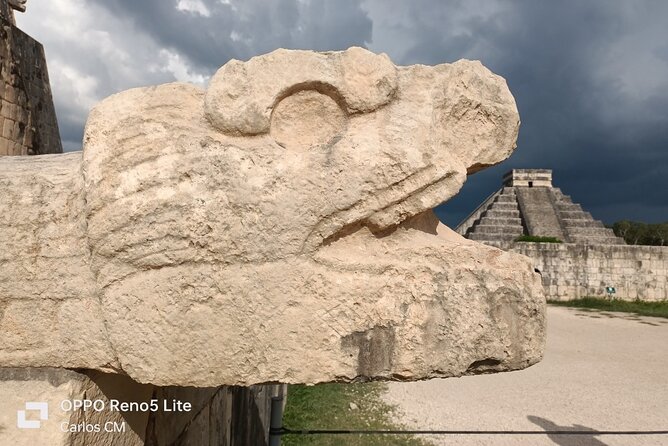
Reviewed · CHICHEN ITZA & CENOTE TOURS
Mayan Experience in Chichen Itza
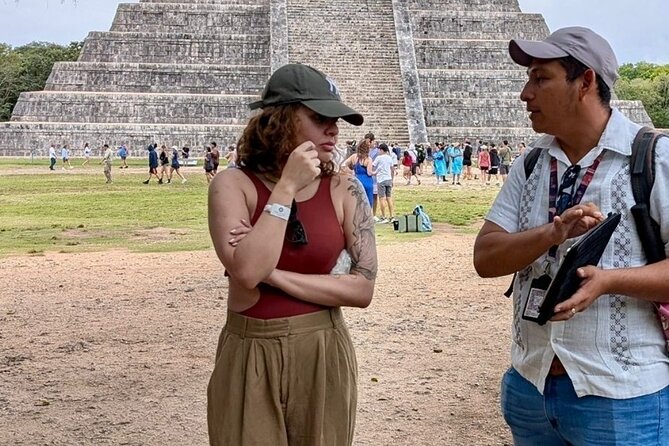
See Chichen Itza with more than a camera. This private tour turns a walk among famous Maya buildings into a guided look at water, astronomy, trade, war, sacrifice, and ritual, with a guide who stays with your group from start to finish. The best parts are the clear storytelling and the visual help from Carlos, who uses photographs on an iPad to show how the site’s carvings and ideas fit together.
I like the small private format, limited to your own group of up to 15 people, and I like the practical touch of a water bottle and archaeological site maps. Carlos is also flexible about the start time, which can matter if you are driving from Tulum or arranging your day around a long visit to Chichen Itza. The main drawback is cost planning: the $92.60 tour price does not include the archaeological site entrance fee or the possible MX$500 per-person public transportation charge.
In This Review
- Key points to know before you book
- Why this Chichen Itza tour feels different
- Starting at the Chichen Itza meeting point
- Water, traditions, and customs
- The Maya calendar and the night sky
- Carved evidence of Maya astronomy
- War and sacrifice in the stone carvings
- Trade, daily traditions, and social life
- Returning to war and sacrifice
- The ball ritual and its wider meaning
- What the $92.60 group price really includes
- Timing, comfort, and practical details
- Who should book this private visit?
- Should you book the Mayan Experience in Chichen Itza?
- FAQ
- How much does the Mayan Experience in Chichen Itza cost?
- How long does the tour last?
- Is transportation included?
- What does the tour include?
- Is the archaeological entrance ticket included?
- What language is the tour offered in?
- What happens if bad weather cancels the tour?
Key points to know before you book
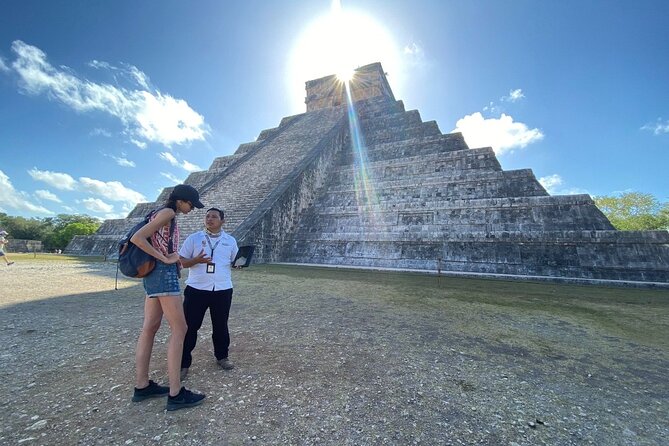
- Carlos uses an iPad with site images, helping you connect present-day ruins with details that may be hard to read in stone.
- The tour covers seven connected themes, from water and Maya customs to astronomy, warfare, sacrifice, trade, and the ball ritual.
- Your group stays private, with space for up to 15 people and no unrelated participants joining you.
- The visit lasts about one to two hours, so it offers a focused introduction rather than an all-day archaeological program.
- The entrance ticket is extra, costing MX$671 per person, and transportation may add MX$500 per person.
- The meeting point is at Chichen Itza, at 97751 Chichén-Itzá, Yucatan, and the activity returns there at the end.
Why this Chichen Itza tour feels different
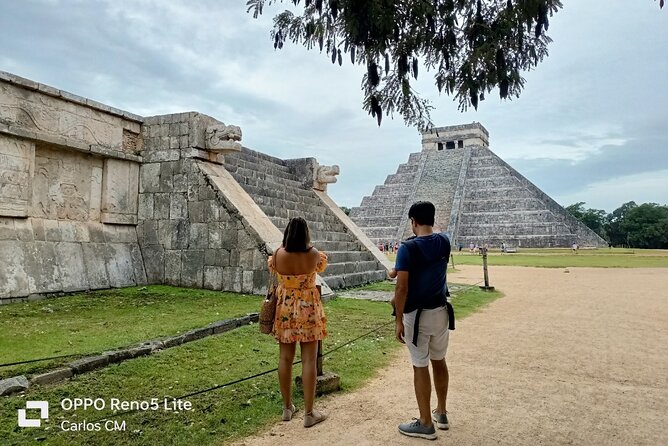
Chichen Itza is easy to experience badly. You can walk through the site, take pictures of El Castillo, and leave with a collection of impressive shapes but little sense of how the Maya understood the world. This tour gives you a structure for looking.
The route links practical life with ceremonial life. Water is treated as more than a basic need. Astronomy is tied to the Maya calendar. Carvings of conflict and sacrifice are placed alongside scenes of trade, customs, and the ball ritual. That broad mix helps you see Chichen Itza as a working society with religious, political, scientific, and commercial concerns.
I especially like that the guide accompanies the group throughout the visit. You are not left with a rushed introduction at the entrance or a short talk followed by free time. The guide remains available as the tour moves from one subject to another, which gives you a chance to ask questions when a carving or building raises one.
The tour is offered in English. It is private, but the group can be as large as 15 people, so the feel will depend on how many people are in your party. A couple or family gets a very personal visit. A full group of 15 will have less room for quiet questions, though it still avoids being mixed with strangers.
More Cenote Tours in Mexico:
- Chichen Itza, Cenote, and Valladolid Tour
★ 5.0 · 24,293 reviews - Chichen Itza, Cenote & Valladolid Tour with Tequila and Lunch
★ 4.5 · 15,789 reviews - Cancun: Chichen Itza, Cenote & Valladolid Tour with Lunch
★ 4.6 · 6,722 reviews
Starting at the Chichen Itza meeting point
The tour begins and ends at the stated meeting point in Chichen Itza, Yucatan, at 97751 Chichén-Itzá. It operates Monday through Sunday from 8:00 a.m. to 3:30 p.m. during the published operating period of May 16, 2025, through January 30, 2027.
That schedule gives you useful flexibility, especially if you are coming from another base in the Yucatan. Carlos adjusted the starting time for one group driving from Tulum, so it is worth discussing timing at booking rather than assuming a fixed departure minute. The tour itself takes about one to two hours, and the activity finishes back at the meeting point.
You should think of this as a focused site tour, not a full transportation package. The price covers the guide, water, and archaeological site maps. It does not cover the archaeological admission fee of MX$671 per person, and the listed public transportation cost is MX$500 per person. Snacks and drinks beyond the supplied water are also extra, though shops sell them.
Water, traditions, and customs
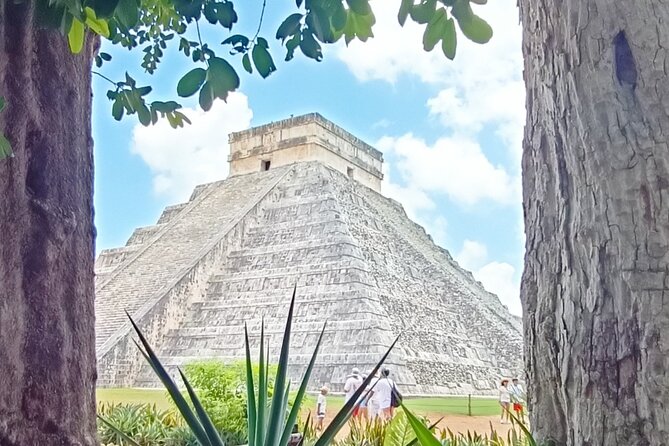
The first theme looks at the importance of water, along with Maya traditions and customs. This is a useful way to begin because it puts the site’s monumental buildings into the setting of everyday survival and community life.
The guide can help you consider why water mattered so much to people living in this region and how practical needs could connect with customs and belief. The tour data does not promise a visit to a particular water feature or a hands-on demonstration, so you should expect an explanation tied to the archaeological setting rather than a separate water activity.
This opening topic also gives families and first-time visitors an easier way into the site. You do not need prior knowledge to understand why water, shared customs, and local traditions matter. From there, the discussion moves toward the sky and the calendar.
The Maya calendar and the night sky
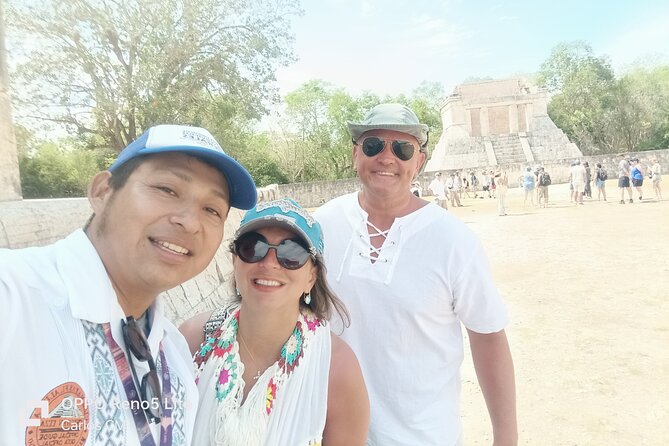
The next part covers the Maya calendar and astronomy. This is one of the strongest subjects for a guided visit because architectural alignments and carved symbols can look abstract without someone pointing out what to notice.
The guide explains how the Maya tracked time and viewed the heavens, giving you a framework for looking at the buildings rather than simply photographing them. A self-guided walk can leave you wondering which details are decorative and which carry a larger meaning. Here, the astronomy theme gives those details a purpose.
Carlos’s use of an iPad is particularly helpful at this point. He has photographs that make the ideas easier to picture and can show details that may be worn, distant, or difficult to understand from ground level. One practical tip is to keep your questions coming during this section. The guide is used to pausing, and the tour is designed to keep moving without rushing the explanation.
Same base, a different sort of day:
- Teotihuacan, Guadalupe Shrine & Tlatelolco Day Tour with Lunch
★ 5.0 · 11,603 reviews - Cabo Beach Camel Ride, Mexican Buffet and Tequila Tasting
★ 5.0 · 8,815 reviews - Xochimilco, Coyoacan and Frida Kahlo with Optional Lunch
★ 4.5 · 7,320 reviews - Mr. Sanchos Beach Club All-Inclusive Day Pass
★ 4.5 · 6,744 reviews
Carved evidence of Maya astronomy
The astronomy discussion continues with information about Maya astronomical engravings. This shifts the experience from broad ideas about the calendar to the physical evidence on the site.
You will spend time looking at carved surfaces and learning how they relate to Maya observation of the sky. The value here is not only the information itself. It is the act of being shown where to look. Chichen Itza contains many visual details, and a guide who knows the best viewing points can save you from walking past something important.
Carlos also knows good places for photographs. That matters at a site where a slightly different position can give you a clearer view of a carving or a better composition of a major structure. The photo advice is a small service, but it adds value for people who want more than a standard front-facing picture of El Castillo.
The possible limitation is time. With a total duration of about one to two hours, this section will not cover every astronomical feature in detail. You receive a guided introduction, not a specialist course in Maya astronomy.
War and sacrifice in the stone carvings
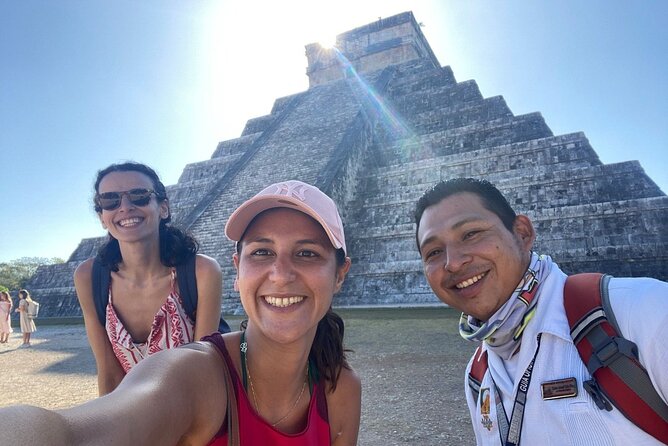
The tour then examines engravings connected with war and sacrifice. This is a serious part of the visit, and the guide’s role is important because the subject can easily become either sensational or too vague.
A good explanation places these scenes within the larger structure of Maya political and religious life. You can expect the guide to direct your attention to carved images and explain what they represent, rather than simply pointing out that the site has battle scenes. The same subject appears again later in the route, so it is treated as an important thread rather than a quick aside.
You may find this section less comfortable than the astronomy or trade topics. That is part of its value. Chichen Itza was not only a center of calendars and ceremony. The carvings also reflect power, conflict, and ritual practices that may feel distant from modern expectations.
If you are visiting with children, you may want to decide in advance how much detail you prefer. The supplied information confirms the topic, but it does not specify the exact level of graphic description. You can ask Carlos to keep the explanation suitable for your group.
Trade, daily traditions, and social life
The next stop focuses on prints and carvings connected with trade and traditions. I like this part because it widens the picture beyond rulers, temples, and ritual.
Trade shows the site as part of an organized society with exchange, movement, and shared customs. The carvings and prints can help you think about the people who made the city function, not just the monuments that now dominate the view. For many visitors, this is where the ruins begin to feel less like isolated stone and more like part of a lived community.
The guide’s visual material can again help. A tablet photograph may show a detail more clearly than the actual surface, especially if a carving is worn or viewed from a distance. You still see the real site in front of you, but the image gives you a closer reference.
This portion should suit curious first-time visitors who want social context. It may be less satisfying for someone hoping to spend the entire visit on architecture alone, but the trade theme adds balance to the heavier discussion of war and sacrifice.
Returning to war and sacrifice
The route returns to war and sacrifice, this time with more information and engravings tied to those subjects. Repetition may sound odd on paper, but it can help connect separate carvings and explain how the ideas appear in more than one part of the site.
You will benefit most if you treat this as a second layer rather than a duplicate stop. The first discussion introduces the theme. The later section can show how conflict and ritual fit into the wider story of Chichen Itza, alongside astronomy, commerce, and customs.
This is also a point where Carlos’s patient style matters. He is described as friendly, funny, and willing to stop for questions while keeping the tour moving. That balance is useful at a major archaeological site. You do not want a guide who races through every stop, but you also do not want a short tour consumed by one long explanation.
The ball ritual and its wider meaning
The final subject is the ball ritual and related traditions. Chichen Itza is closely associated with its ball court, so this gives the tour a strong closing topic.
The guide explains the ritual and directs you to the relevant engravings and symbols. As with the war section, the subject involves ceremony, competition, and social meaning, not just a simple sport. Looking at the carvings with that context can make the ball court easier to understand.
Ending with this theme also brings several strands together. You have already discussed the calendar, astronomy, customs, warfare, and trade. The ball ritual offers another example of how public activity, belief, status, and tradition could meet in one place.
The main constraint is again time. A one to two-hour visit cannot cover every structure or every interpretation at Chichen Itza. If you want a slower architectural study, you will need additional time at the site beyond the guided portion.
What the $92.60 group price really includes
At $92.60 per group, the price is not calculated per person, and the private format can be good value for a family or larger party. A group of 10 to 15 people divides the guide fee into a modest amount per person, while a couple pays more per head for the same private service.
The price includes only the guided tour, with the guide accompanying your group throughout. You also receive a water bottle and archaeological site maps. Those are practical inclusions in a hot outdoor setting, though you should not treat one bottle of water as your entire supply for the day.
The large extra cost is the site admission. The archaeological entrance fee is MX$671 per person, and public transportation is listed at MX$500 per person. Snacks are not included, but shops sell drinks and food. Before booking, add these charges to the tour price so the final budget does not surprise you.
The value is strongest if you care about interpretation, questions, and a private pace. If you only want a quick walk to take pictures, the guide fee may feel less necessary. At Chichen Itza, though, the carvings and themes are much easier to follow with someone explaining what you are seeing.
Timing, comfort, and practical details
The experience requires good weather. If poor weather forces cancellation, you are offered another date or a full refund. Otherwise, the booking is non-refundable and cannot be changed, so choose your date carefully before paying.
The tour is near public transportation, and service animals are allowed. Most people can participate. The archaeological site also provides free nursing service, as stated in the tour details.
There is no promise of a snack stop, so plan around the one to two-hour duration and the wider time you may spend at Chichen Itza. Shops offer drinks and snacks, but those purchases are separate from the tour.
The start window runs from 8:00 a.m. to 3:30 p.m. daily during the operating dates. Earlier or later conditions at the site are not described, so use the published hours when planning. If you are arriving from Tulum or another distant base, confirm the meeting time with Carlos and leave room for transportation delays.
Who should book this private visit?
I would recommend this experience to first-time visitors who want a clear introduction to Chichen Itza without joining a large mixed group. It also suits families, friends, and couples who value the chance to ask questions and choose a comfortable pace.
The tour is a good match if astronomy, Maya customs, carved scenes, and ritual interest you as much as the famous architecture. Carlos’s tablet photographs and knowledge of good photo positions are useful extras for anyone who wants to understand the details and bring home better images.
You may want something else if you expect transportation, entrance tickets, meals, or a full-day program to be part of the price. You should also look elsewhere if you want a long specialist lecture focused on one topic. This is a compact, broad tour that moves across several themes.
Should you book the Mayan Experience in Chichen Itza?
Book it if you want Chichen Itza explained rather than simply photographed. The private format, water, maps, English-language guiding, and Carlos’s use of an iPad make the visit easier to follow, while his patience and flexibility help the tour fit real travel plans.
Before you commit, calculate the full cost with the MX$671 entrance fee and possible MX$500 transportation charge per person. Also remember the strict non-refundable policy. If those conditions work for you, this is a well-focused way to give meaning to the carvings, rituals, and sky-watching ideas that make Chichen Itza far more than a collection of famous stones.
FAQ
How much does the Mayan Experience in Chichen Itza cost?
The tour costs $92.60 per group, with up to 15 people. The archaeological site entrance fee of MX$671 per person is not included.
How long does the tour last?
The guided experience lasts approximately one to two hours. It begins and ends at the meeting point in Chichen Itza.
Is transportation included?
No. Public transportation is not included, and the listed cost is MX$500 per person. The tour begins at 97751 Chichén-Itzá, Yucatan.
What does the tour include?
The price includes the tourist guide who accompanies your group throughout the tour, a water bottle, and archaeological site maps.
Is the archaeological entrance ticket included?
No. The archaeological site ticket costs MX$671 per person and must be paid separately.
What language is the tour offered in?
The experience is offered in English.
What happens if bad weather cancels the tour?
The experience requires good weather. If it is canceled because of poor weather, you can choose a different date or receive a full refund.
Newly listed around Mexico
- Ticket to Frida Kahlo Museum on CDMX★ 4.5 · 44 reviews
- Epic Centro Histórico Walking Tour★ 5.0 · 77 reviews
- Eat Like A Local By The Taco Mensch★ 5.0 · 55 reviews
- Eat and Explore Local Markets in Mexico City★ 5.0 · 83 reviews
- Ticket for the Frida Kahlo Museum★ 3.5 · 67 reviews
- Authentic Lucha Libre Tour : Wrestling School, Tacos & Mezcal★ 5.0 · 162 reviews
- Express Tour to Teotihuacan Pyramids. Be the first to arrive!★ 4.5 · 62 reviews
- Small Group: The Magical Colonial Towns of Taxco and Cuernavaca★ 4.5 · 46 reviews
Chichen Itza & Cenote Tours, compared.
Chichen Itza, Cenote & Valladolid Tour with Tequila and Lunch
Read our review →
Chichen Itza, Cenote & Valladolid Tour with Lunch
Read our review →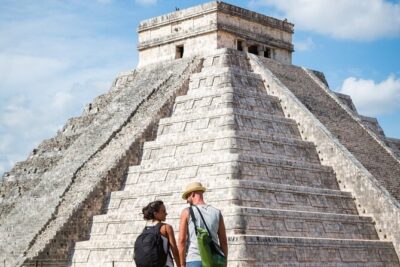
Early morning Chichen Itza Tour: Cenote and Tequila Tasting
Read our review →
Cancun ATV Jungle Adventure, Ziplines, Cenote and Tequila Tasting
Read our review →
Viator Exclusive: Tulum Ruins, Reef Snorkeling, Cenote and Caves
Read our review →
Chichen Itza Early Access All Inclusive: Hotel Pick up & All Fees
Read our review →
ATV Adventure, Interactive Bridges, Ziplines, Cenote and Lunch
Read our review →Browse the lists this tour appears in