
Reviewed · CITY TOURS
Mexico City: Hop-on Hop-off Bus Tour
Mexico City rewards a wide-angle first look. The Turibus makes that easy with four routes covering the historic center, Polanco, southern neighborhoods, and the Basilica of Guadalupe. I like the freedom to hop off at museums and plazas, then use the same bracelet to continue later. I also like the price, about $21 per person, since the bus doubles as sightseeing and transport. The main catch is traffic, plus audio problems when the Spanish announcement competes with the translated channel.
A one-day ticket can work as a city orientation, but two days make far more sense if you want time off the bus. Bring your own earphones, avoid sitting beside the loud onboard speakers, and treat the published timetable as a guide rather than a promise. English, Spanish, German, French, Italian, Chinese, Japanese, Portuguese, and Russian audio are available, with a children’s channel too.
In This Review
- Key points before you board
- What the Turibus is really good at
- Historic Downtown: the best first circuit
- Polanco: museums, shopping, and polished avenues
- South Route: Coyoacán, Frida Kahlo, and UNAM
- Basilica Route: a short route with a major destination
- Audio commentary: useful, but bring your own earphones
- Seats, weather, and the open-top setup
- Timing your day around Mexico City traffic
- Staff, stops, and small points that matter
- Is $21 a fair price?
- Who should book this city tour?
- Should you book the Mexico City Turibus?
- FAQ
- How much does the Mexico City hop-on hop-off bus cost?
- How long is the ticket valid?
- Can I use one ticket on all four routes?
- Where can I begin the tour?
- What languages are available for the audio guide?
- Does the bus have a restroom?
- How often do the buses run?
- Is the bus wheelchair accessible?
Key points before you board
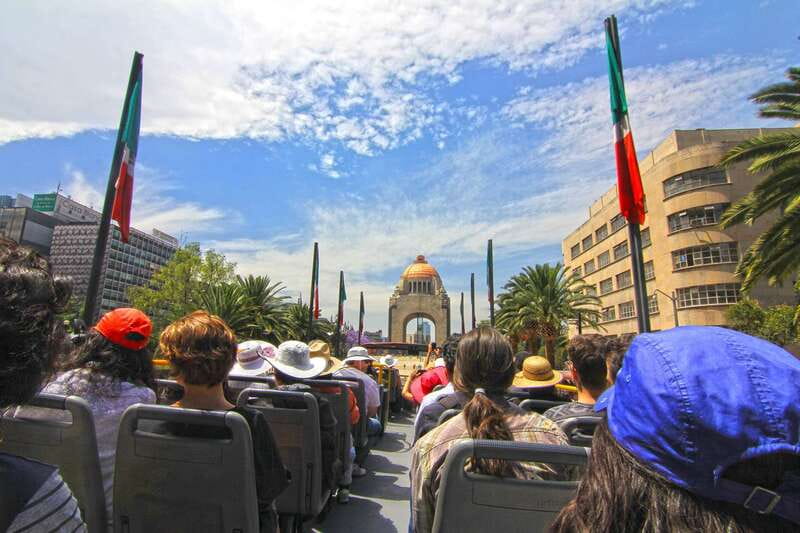
- Four very different routes: See Centro Histórico, Polanco, Coyoacán and the south, or the Basilica and Garibaldi area with one bracelet.
- Best value at $21: The ticket combines a narrated city tour with transport between major areas, often costing less than repeated taxis or ride-hailing trips.
- Historic Downtown is the essential circuit: It links the Zócalo, Reforma, museums, monuments, Condesa, and major cultural stops.
- Two days are better for serious sightseeing: Traffic and museum visits make it difficult to complete all four routes in one day.
- Use your own headphones: The English recording can be hard to hear when Spanish announcements or street noise are loud.
- Top-deck seats need timing: Morning and late afternoon can feel pleasant, but midday sun heats the metal seats and offers little shade.
What the Turibus is really good at

Mexico City is too large to understand on foot in a single visit. The Turibus gives you a moving introduction to the capital’s grand avenues, older districts, museums, shopping zones, and religious landmarks without asking you to master the entire public transport system on day one.
I see it as two tours in one. You get a narrated overview from the open-top double-decker bus, then you can use it as a practical ride between neighborhoods. That second role matters. A museum visit in the historic center can turn into lunch near the Zócalo, followed by a ride toward Reforma or Condesa, all under the same ticket.
The pass costs about $21 for one day, with a two-day option available. At that price, it is especially useful if you plan several rides rather than sitting through one full loop. You can board at any listed stop by showing a printed or electronic voucher, and one bracelet covers all four circuits.
The system is not perfectly smooth. Mexico City traffic can make a short route take much longer than expected. Bus frequency is strongest on the Historic Downtown circuit, while some other routes may leave you waiting 30 to 60 minutes. This is a sightseeing bus, not a clockwork metro.
A few more Mexico City runs worth comparing
- Teotihuacan, Guadalupe Shrine & Tlatelolco Day Tour with Lunch
★ 5.0 · 11,603 reviews - Xochimilco, Coyoacan and Frida Kahlo with Optional Lunch
★ 4.5 · 7,320 reviews - Balloon flight + Breakfast in cave + Pyramids + Pick up CDMX.
★ 5.0 · 6,335 reviews
Historic Downtown: the best first circuit
The Historic Downtown Route is the place to begin. It is the most useful circuit for a first look because it connects the city’s central monuments, museums, main avenue, and several neighborhoods where you may want to return on foot.
The route includes about 19 stops, with service listed daily from 9 a.m. to 7 p.m. Buses are scheduled roughly every 30 minutes, though traffic can stretch that interval. You can board near the National Auditorium, Museo de Antropología, Condesa, or the Zócalo, among other points.
At the western end, the National Auditorium and nearby Reforma stops put you close to some of Mexico City’s major cultural institutions. The Museo de Antropología is an important stop if you want to see one of the city’s leading museums, but allow several hours for a proper visit. Do not hop off there with only 20 minutes to spare.
The bus continues through Condesa and Plaza Madrid, marked by the Fuente de Cibeles. These areas offer a change of pace from monumental government buildings and formal avenues. Casa Lamm and Reforma 222 add art, shopping, and modern city life to the route.
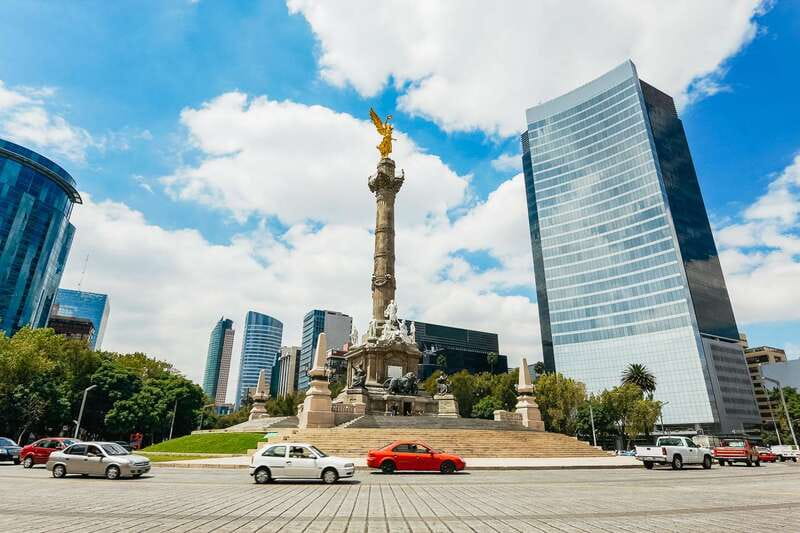
The Monumento a la Independencia, usually called El Ángel, is one of the most recognizable sights along Reforma. From here, the route continues toward the Museo de Cera and Ripley’s, then the Glorieta a Colón and the Hemiciclo a Juárez. These stops help you read the city’s long public spaces as a connected sequence rather than isolated attractions.
The Zócalo is the key stop. This huge central plaza is Mexico City’s main stage for public life, ceremonies, demonstrations, and celebrations. Get off here if you want food, historic streets, churches, and access to the capital’s central sights.
Nearby stops include Plaza Manuel Tolsá and the Museo Franz Mayer. The route then reaches the Monumento a la Revolución and Museo de San Carlos before returning toward Reforma and the National Auditorium area.
My practical advice is to ride much of this circuit once without getting off. Use the audio to mark places that deserve a second look, then make your stops on the next loop. The route is far more useful as a planning tool than as a rushed checklist.
Polanco: museums, shopping, and polished avenues
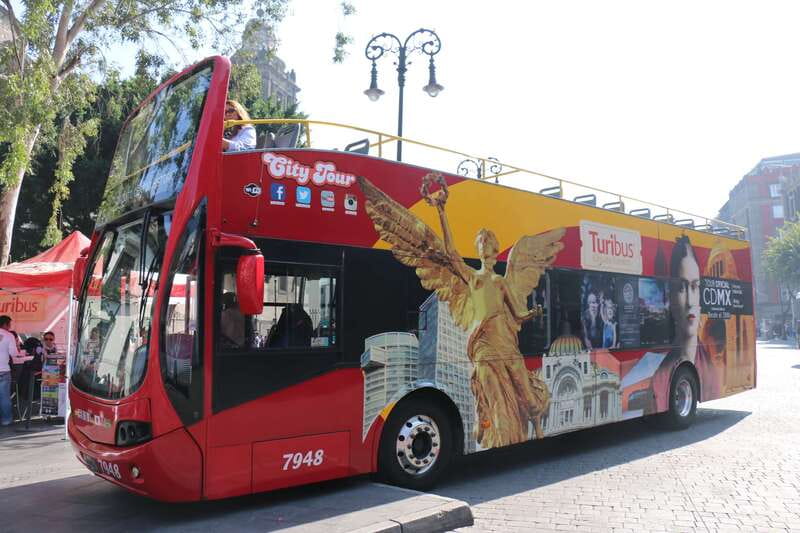
The Polanco Route is shorter and runs less often. From Auditorio, departures are listed at 10 a.m., 11:30 a.m., 1 p.m., 2:30 p.m., 4 p.m., and 5:30 p.m., so check the next departure before leaving the bus.
This circuit has seven stops. It covers Auditorio, Arquímedes, Campos Elíseos, Masaryk and Moliere, Centro Comercial Antara, Museo Soumaya, Hipódromo and Granja Las Américas, and Museo del Papalote.
Polanco is the city’s upscale side, with designer shopping, modern buildings, museums, and broad avenues. Masaryk and Moliere are the stops for high-end retail and architecture. Antara provides another shopping center option, while Museo Soumaya is the major cultural draw on this route.
Museo del Papalote is aimed at children, making the route useful for families. The children’s audio channel is a thoughtful inclusion, though the bus itself has no restroom. Plan breaks around your stops rather than expecting facilities onboard.
Because departures are spaced out, Polanco requires more planning than Centro. If you hop off at Museo Soumaya, do not assume another bus will appear soon. Check the schedule, note the next departure, and give yourself enough time to return to the stop.
This route works well as a half-day plan, especially if your priorities include museums and shopping. It is less useful for spontaneous hopping than the central circuit.
South Route: Coyoacán, Frida Kahlo, and UNAM
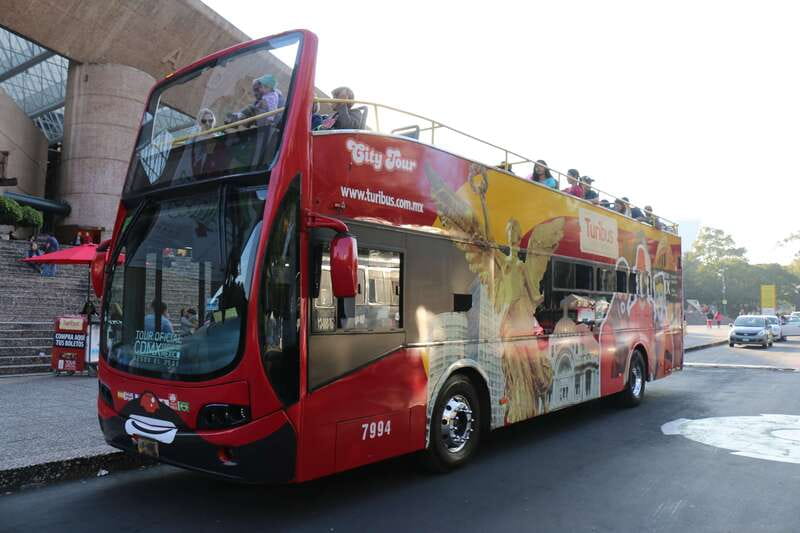
The South Route offers the most distinct change from the central city. It heads through Roma, Coyoacán, San Ángel, the university area, and southern commercial districts. The route is listed from 11 a.m. to 7 p.m., with intervals that can vary from roughly 30 to 60 minutes.
Stops include Fuente de Cibeles, Mercado Roma, the World Trade Center, Torre Manacar, the Museo Frida Kahlo, Centro Histórico de Coyoacán, Avenida de la Paz, Centro Cultural San Ángel, Estadio de C.U., Jardín Botánico, Centro Comercial Perisur, KidZania Cuicuilco, Rectoría de la UNAM, Plaza Oasis Coyoacán, Mercado Roma Coyoacán, Fonart, and repeated access points around Coyoacán and the Frida Kahlo museum.
This circuit is worth the time, but traffic can be severe. The ride to the Frida Kahlo Museum area may take much longer than expected, particularly during busy weekday periods. If seeing Casa Azul is a priority, build the day around that visit rather than trying to squeeze it between several other stops.
Coyoacán’s historic center is a strong place to get off and walk. The route also gives you access to San Ángel, the UNAM area, botanical gardens, and southern shopping districts. These places show a side of Mexico City that feels less like the monumental center and more like a collection of local neighborhoods and campuses.
The route is not ideal if you have only a few hours. One useful plan is to take the South circuit in the morning, then switch to Centro later. Another is to dedicate a full day to the south and accept that you will not complete every other route.
The stop near the Frida Kahlo Museum may not be directly at the entrance. Allow extra walking time and confirm the exact stop location with staff or the driver before getting off.
Same base, a different sort of day:
- Teotihuacan pyramids morning or afternoon without tourist traps
★ 5.0 · 6,186 reviews - Teotihuacan Early Access Guided Tour with optional Lunch
★ 4.5 · 6,138 reviews - Balloon flight + pick up in CDMX + Breakfast in Cave + Pyramids
★ 5.0 · 5,651 reviews - Balloon Flight + Cave Breakfast + Pick Up from CDMX or We Fly
★ 5.0 · 4,410 reviews
Basilica Route: a short route with a major destination
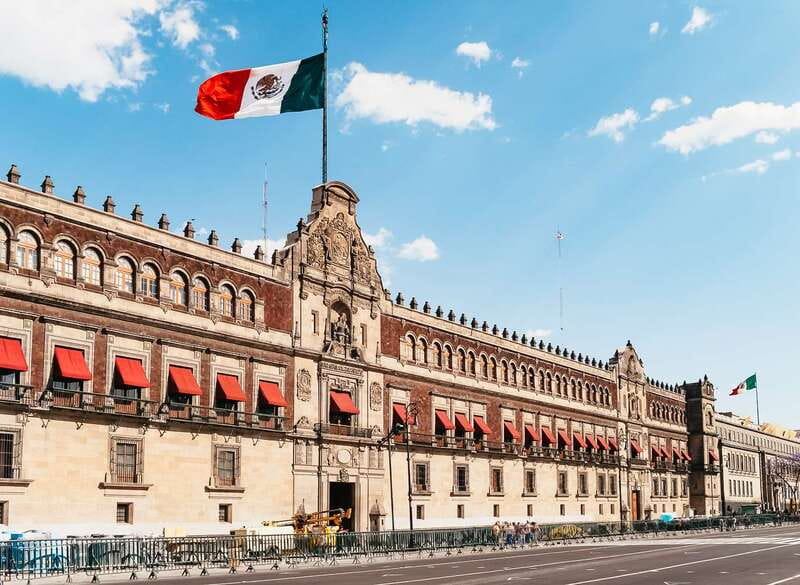
The Basilica Route connects the Zócalo, Garibaldi, the Basilica of Guadalupe, and Palacio de los Condes de Miravalle. Departures from the Zócalo are listed at 10 a.m., 11:30 a.m., 1 p.m., 2:30 p.m., 4 p.m., and 5:30 p.m.
This is the route to choose if the Basilica of Guadalupe is central to your visit. The complex is one of Mexico City’s most important religious destinations, and the route places a major pilgrimage site into the same hop-on hop-off system as the city center.
Garibaldi offers a different cultural setting, associated with mariachi music and public celebration. The route is much shorter than the Centro and South circuits, but its purpose is focused rather than broad.
Allow time at the Basilica instead of treating it as a quick photo stop. As with Polanco, departures are limited, so note the return schedule before you leave the bus. If you miss a departure, your wait may be substantial.
Traffic and stop changes can affect the plan. A stop has occasionally been removed without clear notice, so ask the onboard staff if a particular stop is operating that day.
Audio commentary: useful, but bring your own earphones
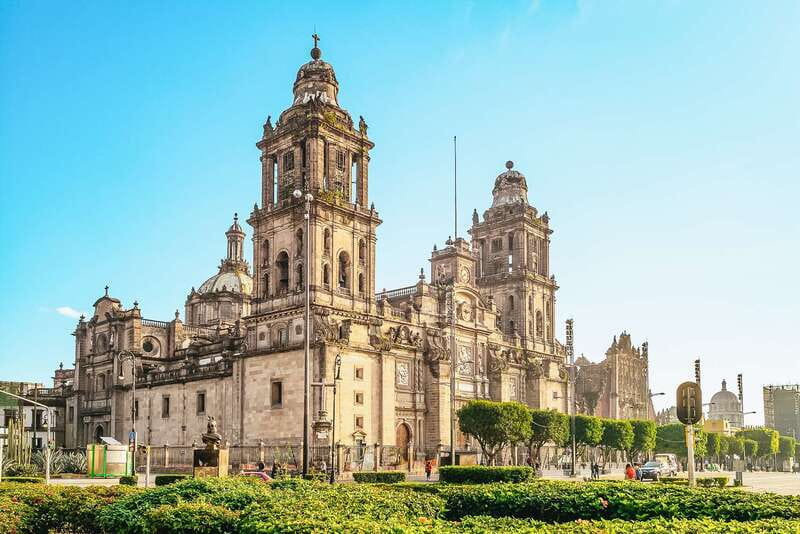
The multilingual audio system is a major part of the experience. It provides commentary in nine languages and includes a special channel for children. The narration covers pre-Hispanic, colonial, and modern Mexico City, giving you background as the streets pass by.
The system has weaknesses. On some buses, the Spanish announcements are much louder than the audio in other languages. Street noise can make the English channel difficult to follow, and some recordings have ended before the explanation was complete.
Bring your own standard earphones if possible. Several buses have offered poor-quality earbuds, and some passengers have found that their own headphones made the commentary easier to hear. Avoid seats directly beside the bus speakers, since the loud Spanish channel can overpower the headset.
Not every audio jack has worked reliably. If your channel is silent, try another seat or ask staff for help. The narration is worth using, but I would not plan the day around catching every sentence.
The audio also helps you decide where to return. A first loop can show you the city’s layout, while a second pass lets you get off with a clearer purpose.
Seats, weather, and the open-top setup
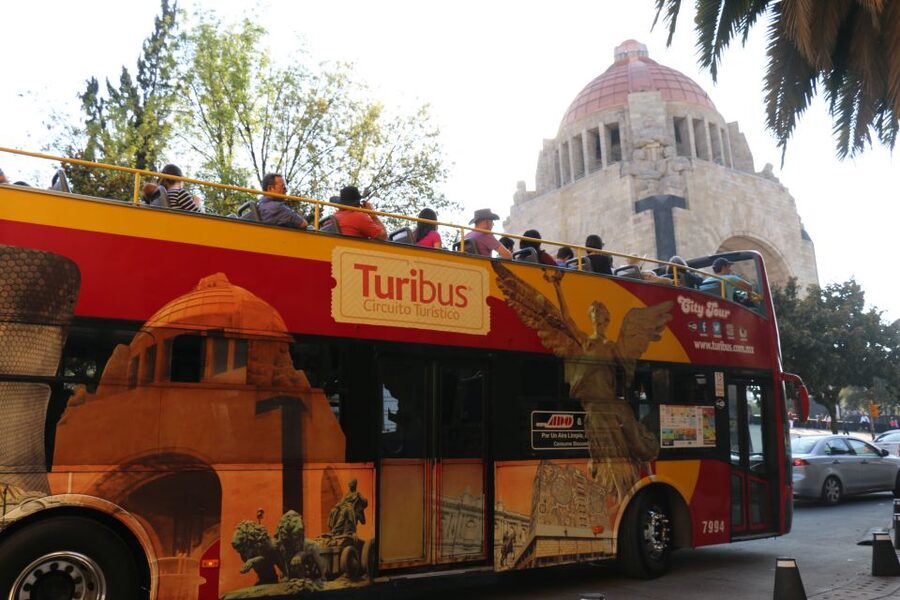
The double-decker design gives you the best views from upstairs. You can see monuments, long avenues, and building facades more clearly than from a regular enclosed bus. The open air also makes a long ride feel less confined.
But the top deck is exposed. Morning and late afternoon can be pleasant, while midday sun can be harsh. Metal seats may become uncomfortably hot, especially in warm months. Carry water, protect yourself from the sun, and move downstairs if the heat becomes too much.
There are no restrooms onboard. This matters most on the South Route, where traffic can stretch the journey, and on long rides between major stops. Use facilities when you get off at a museum, shopping center, or other destination.
The buses are described as wheelchair accessible, but the open-top design and busy stops may still require patience during boarding. If accessibility is important for your group, confirm the current boarding arrangements before setting out.
Timing your day around Mexico City traffic
Traffic is the biggest variable. A route that looks short on the map can take much longer, especially near major avenues and popular districts. This is why a one-day pass is best treated as an overview, not a promise that you will visit all four routes.
A sensible one-day plan is:
- Morning: Ride the Historic Downtown circuit and get off at the Zócalo.
- Midday: Explore the center on foot, then continue toward Reforma or Condesa.
- Late afternoon: Add part of the Polanco or Basilica Route if the departure times fit.
For two days, divide the city by area. Use one day for Centro and Polanco, then dedicate the second to the South Route and Basilica Route. You will have time to visit museums instead of watching the bus pull away while you are still reading the entrance sign.
Traffic is also a reason to avoid peak hours when possible. A weekday ride toward Coyoacán can take up to two hours in difficult conditions. Ask staff for an estimated return time, but keep plans flexible.
Staff, stops, and small points that matter
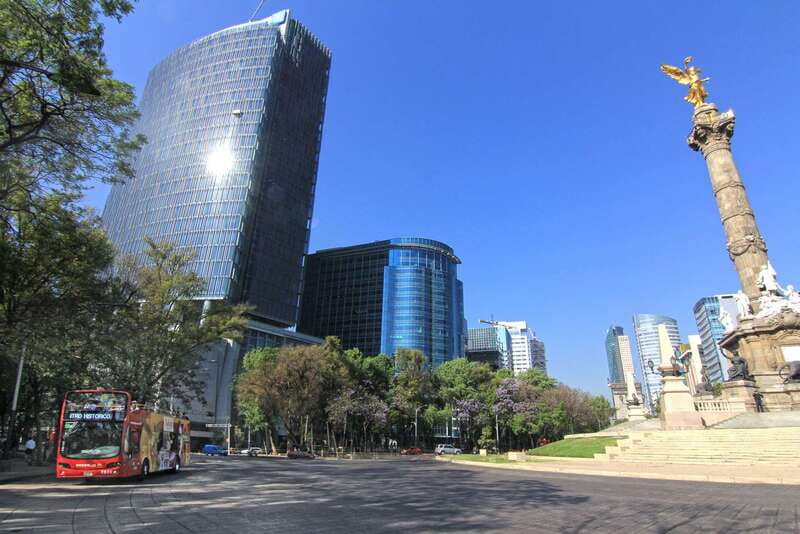
Most of the practical experience depends on finding the stop and understanding the transfer. Stops can be marked by signs or banners, but some are not obvious, and a stated location may be several dozen meters from the attraction. The Frida Kahlo stop, for example, has been reported as roughly 75 meters from the museum.
Do not rely only on the meeting point printed in your booking details. Since you can begin at any route stop, check the map and look for the nearest operating stop to your hotel. This can save you an unnecessary taxi ride.
Staff helpfulness can vary. Some drivers and assistants have been praised for being friendly and professional, while other rides have involved poor communication about stop changes or long delays. Ask questions early, especially when changing routes.
The buses are generally described as clean and modern. The drivers are expected to follow the route, but traffic, passenger delays, and street conditions can interfere. If someone holds up a departure, the bus may wait longer than expected, so keep some patience in reserve.
Is $21 a fair price?
Yes, if you use the pass as transport as well as a tour. A single ticket gives you access to four routes for one or two days, and you can board and leave as often as you like. That makes the price reasonable for anyone planning several rides across distant parts of the city.
The value drops if you stay onboard for only one short loop. In that case, you are paying mainly for the overview and audio. The ticket makes more financial sense when you use it to reach museums, neighborhoods, and landmarks that would otherwise require separate taxis or rides.
The two-day pass is the better choice for visitors who want museums, Coyoacán, Polanco, and the Basilica without rushing. A one-day ticket suits a first afternoon, a relaxed overview, or someone with limited time.
Free cancellation is available up to 24 hours before the activity, and you can reserve now while paying later. Children up to age three ride free but must sit on a parent’s lap.
Who should book this city tour?
I would recommend it to first-time visitors, families, older visitors, and anyone who wants a simple introduction before tackling Mexico City independently. It is also useful if you are staying near Reforma or Polanco, since several stops are within walking distance of hotels in those areas.
It suits you less if you dislike waiting, need precise arrival times, or want a quiet audio experience. Traffic and imperfect equipment are part of the bargain. The bus will not replace walking tours or museum visits, but it can show you how the city fits together.
Should you book the Mexico City Turibus?
Book it if you want a low-cost overview with the freedom to stop at major sights. Choose two days if you hope to cover all four routes, and make the Historic Downtown circuit your starting point.
Use your own earphones, carry water and sun protection, and allow generous time for traffic. With those precautions, the Turibus is one of the easiest ways to get your bearings, choose the places worth revisiting, and cross Mexico City without paying for a separate ride every time.
FAQ
How much does the Mexico City hop-on hop-off bus cost?
The listed price is about $21 per person. One-day and two-day ticket options are available.
How long is the ticket valid?
You can choose a ticket valid for one or two days. Check the available starting dates and times when booking.
Can I use one ticket on all four routes?
Yes. One bracelet provides access to the Historic Downtown, Polanco, South, and Basilica routes and their stops.
Where can I begin the tour?
You can start at any of the listed stops. Show your printed or electronic voucher when boarding.
What languages are available for the audio guide?
The audio system offers Spanish, English, German, French, Italian, Chinese, Japanese, Portuguese, and Russian. A special audio channel is available for children.
Does the bus have a restroom?
No. The open-top double-decker buses do not have restrooms.
How often do the buses run?
The Historic Downtown Route runs approximately every 30 minutes. The South Route can run roughly every 30 to 60 minutes, while Polanco and Basilica use scheduled departures rather than constant service.
Is the bus wheelchair accessible?
Yes, the activity is listed as wheelchair accessible. Children up to age three travel free but must sit on a parent’s lap.
Newly listed around Mexico City
- Ticket to Frida Kahlo Museum on CDMX★ 4.5 · 44 reviews
- Epic Centro Histórico Walking Tour★ 5.0 · 77 reviews
- Eat and Explore Local Markets in Mexico City★ 5.0 · 83 reviews
- Eat Like A Local By The Taco Mensch★ 5.0 · 55 reviews
- Ticket for the Frida Kahlo Museum★ 3.5 · 67 reviews
- Authentic Lucha Libre Tour : Wrestling School, Tacos & Mezcal★ 5.0 · 162 reviews
- Express Tour to Teotihuacan Pyramids. Be the first to arrive!★ 4.5 · 62 reviews
- Small Group: The Magical Colonial Towns of Taxco and Cuernavaca★ 4.5 · 46 reviews
City Tours, compared.
Teotihuacan, Tlatelolco & Guadalupe Shrine Tour
Read our review →
Teotihuacan Hot Air Balloon Flight from Mexico City / Volare
Read our review →

The best tour to Teotihuacán from Mexico City
Read our review →
Browse the lists this tour appears in