
Reviewed · MAYAN RUINS TOURS
Private Tour with Archaeologist and VR Experience at Teotihuacan
The ancient city rewards a closer look. This private Teotihuacan tour turns a visit to Mexico’s most famous archaeological site into a guided study of streets, temples, homes, murals, offerings, and changing theories about the people who built it. The guide, David, uses artifacts, maps, photographs, and virtual reality to help you picture parts of the city that time and restricted areas keep out of view.
I especially like the chance to explore a residential area often missed by people following the main route, and I like that the tour connects the ruins to their environment instead of treating the pyramids as isolated monuments. The main consideration is the price: at $120 per person, this is not a budget outing, and the standard experience does not include breakfast, lunch, or transportation from Mexico City.
In This Review
- Key points to know before you book
- Why an archaeologist changes the visit
- Starting at Gate One and finding your bearings
- Walking the Avenue of the Dead
- The Ciudadela and the Feathered Serpent Temple
- Residential areas and the people behind the monuments
- The Sun and Moon pyramids
- What the VR experience really adds
- Is $120 per person a fair price?
- Timing, meeting point, and physical demands
- Who will get the most from this tour?
- Should you book this Teotihuacan experience?
- FAQ
- How long does the Teotihuacan tour last?
- Where does the tour begin?
- Where does the tour end?
- Is this a private tour?
- Is an archaeologist included?
- Is the tour offered in English?
- Are entrance fees included?
- Does the tour include meals?
- Does the tour include transportation from Mexico City?
Key points to know before you book
- David brings archaeology to life: His explanations cover everyday homes, mural paintings, offerings, excavation finds, and current theories about Teotihuacan.
- The VR equipment adds context: You can use virtual reality and visual materials to picture how the city and its monuments changed over time.
- You see more than the two famous pyramids: The route includes the Avenue of the Dead, the Ciudadela, the Temple of the Feathered Serpent, residential areas, and the Sun and Moon pyramid zone.
- This is a true private visit: Only your group takes part, so you can ask questions and set the pace within the planned route.
- The tour ends at the Pyramid of the Moon: Two exit gates are located nearby, which is useful when you are planning your next move.
- Allow about four hours: The advertised duration is four to five hours, with the site portion listed at about four hours.
Why an archaeologist changes the visit
Teotihuacan can be visually impressive but intellectually thin if you only walk from one pyramid to another. The scale is easy to grasp. The people who lived here are harder to picture. A guide with archaeological training helps bridge that gap.
David’s approach, based on the available details, is especially useful because he does not limit the discussion to dates and names. He explains how people lived in the residential quarters, how the city was organized, what mural paintings can tell you, and how archaeologists interpret offerings found at the site.
That matters because much of Teotihuacan is low, open, and exposed. You may see walls, platforms, painted fragments, and foundations without immediately understanding their purpose. A guide can show how those pieces fit into a larger urban system.
I also like the emphasis on modern theories. Teotihuacan still raises major questions about its rulers, residents, religion, trade, and eventual decline. A good guide should separate what archaeologists know from what they still debate. This tour appears designed to do just that.
The private format gives you room to pause. If your child wants to ask ten questions about a serpent carving, or you want to spend longer discussing a mural, you are not holding up a large group. That flexibility helped make the experience work well for a family with children aged 9 and 12. David reportedly kept both children and adults engaged for hours and handled an endless stream of questions with patience.
More Mayan Ruins Tours in Mexico City
- Teotihuacan, Guadalupe Shrine & Tlatelolco Day Tour with Lunch
★ 5.0 · 11,603 reviews - Teotihuacan pyramids morning or afternoon without tourist traps
★ 5.0 · 6,186 reviews - Teotihuacan Early Access Guided Tour with optional Lunch
★ 4.5 · 6,138 reviews
Starting at Gate One and finding your bearings
The tour begins at Gate One, listed at La Ciudadela and the entrance to the Avenue of the Dead. You meet at the gate rather than beginning with hotel pickup, so you need to arrange your own way to the archaeological zone unless you separately request private transportation.
The starting point is logical. La Ciudadela gives you an immediate sense of Teotihuacan as an organized city rather than a collection of isolated ruins. The tour begins with an introduction to the site, helping you understand the overall plan before walking into the main ceremonial areas.
This opening is more valuable than it may sound. Without a basic orientation, the Avenue of the Dead can seem like a long paved route with pyramids at either end. With a map and a clear explanation, you can begin to read it as the central axis of a major ancient urban center.
David has also used maps, photographs, and reconstructed images during the visit. These materials can be a real help when the surviving stone does not explain itself. They offer a way to compare the ruins with earlier excavation images and possible reconstructions.
Bring water, sun protection, and shoes suited to a long walk. The tour lasts roughly four hours, and the site is large enough that you will spend much of that time on your feet. The stated fitness level is moderate, so this is not a passive bus tour.
Walking the Avenue of the Dead
The Calzada de los Muertos, or Avenue of the Dead, is the main ancient route through Teotihuacan. Walking it early in the tour gives you a strong sense of the city’s scale and planning.
This is where a guide can make the biggest difference between seeing and understanding. The broad avenue links major ceremonial areas, but the surrounding platforms and structures also reveal how public space was controlled and used. David discusses the relationship between the city and its environment, adding a practical layer to the usual talk about pyramids and gods.
Look for the way open spaces, raised platforms, stairways, and temple complexes relate to one another. You are not simply looking at one building. You are reading an urban plan.
The route also gives David a chance to explain how the city changed over time. The VR experience and other visual aids help you imagine earlier phases, painted surfaces, and structures that no longer appear as they once did. The technology is not a replacement for the ruins. It works best as a comparison tool, showing you how much has disappeared.
If you are visiting with children, the visual reconstructions may hold their attention better than a long lecture. If you are an adult interested in archaeology, they can help clarify the difference between surviving evidence and a proposed reconstruction.
The Ciudadela and the Feathered Serpent Temple
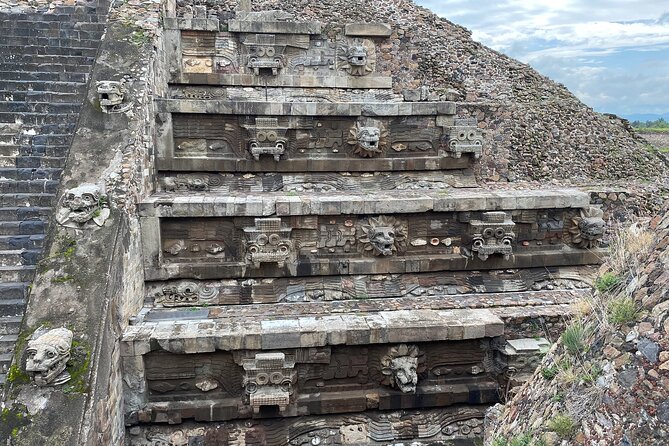
The next major area is La Ciudadela, a large complex that includes the Temple of the Feathered Serpent. This is one of the tour’s strongest stops because it brings architecture, religious imagery, and archaeological interpretation together.
The Temple of the Feathered Serpent is known for its carved decoration, including serpent imagery. Rather than simply pointing out the carvings, David discusses the possible meanings of offerings and the evidence found around the complex.
That conversation is important. Ancient offerings are easy to treat as dramatic objects with a single obvious meaning. Archaeological interpretation is usually more careful. The value of this tour is that you can ask what was found, where it was found, and why researchers connect those discoveries to ritual or political activity.
The Ciudadela also helps you think about power. Teotihuacan was not just a place of worship. It was a city with systems, neighborhoods, labor, ceremony, and authority. The guide’s focus on architecture and daily life should help you see the complex as part of a functioning society.
The private setup is useful here. This is the sort of place where you may want to stop and ask about one carved detail or compare the structure with another temple. In a large group, you often get one quick explanation and move on. With your own guide, the conversation can follow your interests.
Same base, a different sort of day:
- Xochimilco, Coyoacan and Frida Kahlo with Optional Lunch
★ 4.5 · 7,320 reviews - Balloon flight + Breakfast in cave + Pyramids + Pick up CDMX.
★ 5.0 · 6,335 reviews - Balloon flight + pick up in CDMX + Breakfast in Cave + Pyramids
★ 5.0 · 5,651 reviews - Balloon Flight + Cave Breakfast + Pick Up from CDMX or We Fly
★ 5.0 · 4,410 reviews
Residential areas and the people behind the monuments
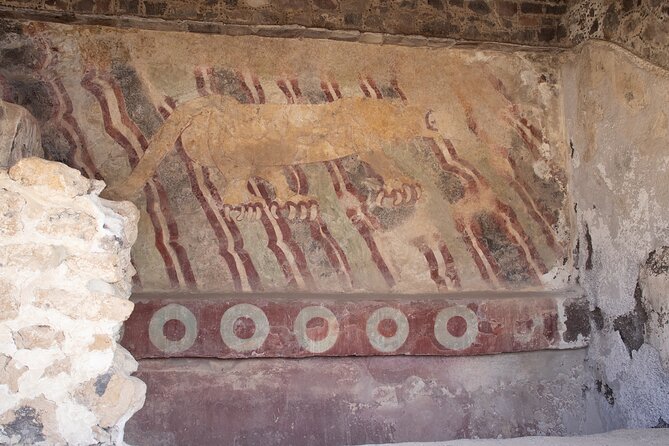
One of the best reasons to choose this tour is the visit to residential areas. The famous pyramids attract most attention, but homes and apartment compounds tell you more about ordinary life.
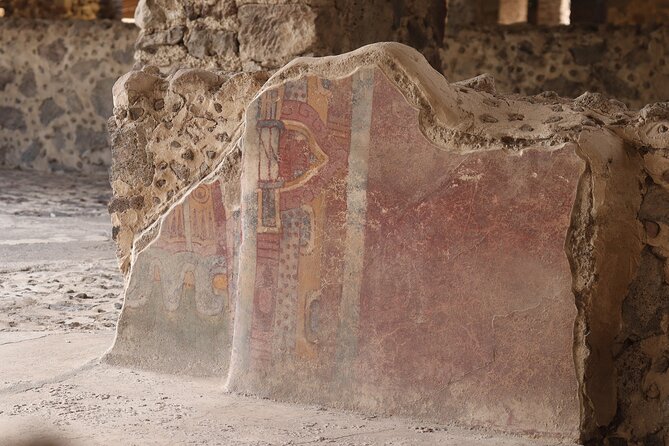
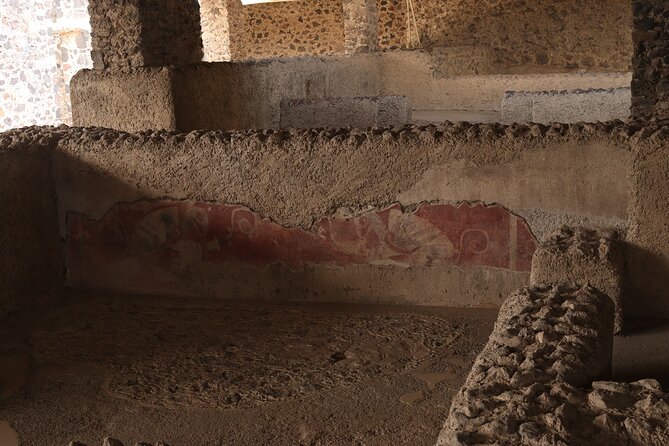
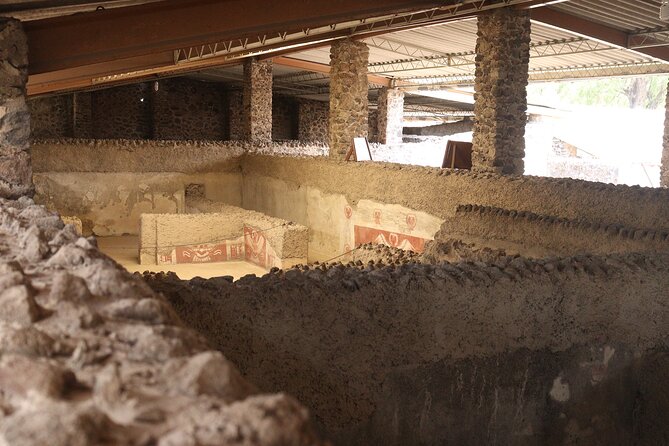
Here you can look at the architectural system used in living spaces and consider how people moved through their homes. Mural paintings add another layer, offering clues about symbols, beliefs, status, and decoration.
This stop keeps the tour from becoming a procession of monumental buildings. Teotihuacan was a lived-in city, and the residential quarters remind you that its story belongs to families, workers, artists, religious figures, and administrators, not just rulers or priests.
A family may find this section easier to connect with than a discussion of ceremonial platforms. You can ask what daily routines might have looked like, how rooms were arranged, and what the surviving paintings suggest. Adults who already know the basic facts about the Sun Pyramid may also find this the most rewarding part of the visit.
The tour also uses explanatory artifacts. These are not presented as a substitute for seeing the site. They give you physical examples to examine while David explains how archaeologists use objects to understand the past.
Because the route includes areas many people do not see, this portion adds real value to the private format. It gives you a fuller picture of the city and makes the visit feel less like a greatest-hits stop.
The Sun and Moon pyramids
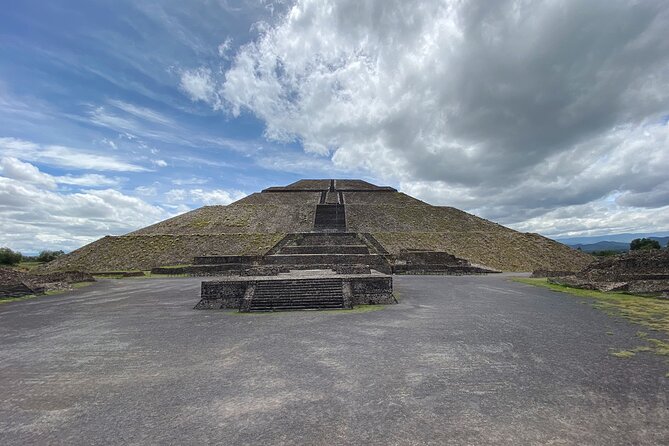
The final major section takes you to the zone of the Pyramid of the Sun and the Pyramid of the Moon. These are the monuments most people associate with Teotihuacan, and the tour saves them for after you have learned how the city functioned.
That sequence makes sense. By the time you reach the pyramids, you have already discussed streets, homes, murals, offerings, and changing interpretations. The monumental structures then become part of a wider story.
You can expect discussion of the pyramids, their place within the city, and the relationship between the built site and its surroundings. The guide also uses VR to show changes over time and to visualize areas closed to the public.
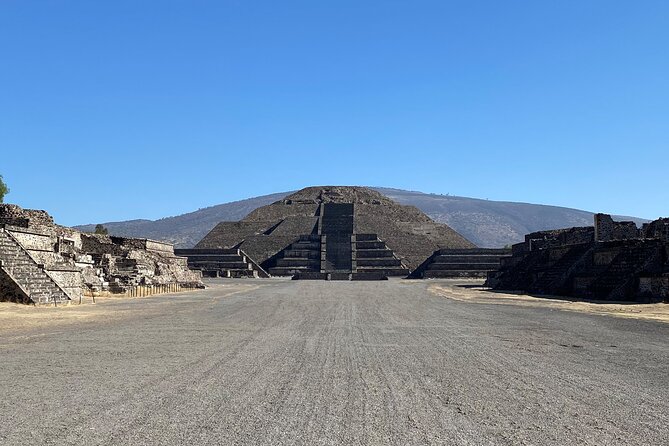
The provided information does not state that climbing the pyramids is included, so you should not book this experience expecting that activity. The route ends at the Pyramid of the Moon, where two nearby gates provide exit options. That ending is practical because you are not returned to Gate One.
The final stop can also be physically demanding. Four hours around a large archaeological zone means sun, walking, and uneven surfaces may be part of your day. A moderate fitness level is required, and you should plan accordingly.
What the VR experience really adds
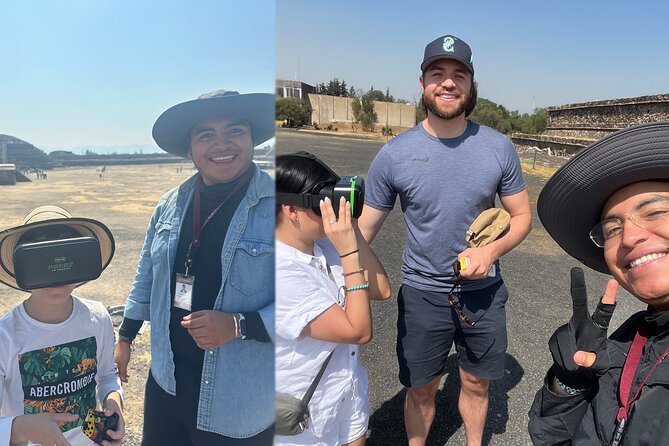
Virtual reality can be a gimmick when it is disconnected from the place in front of you. Here it appears to have a clear job: helping you see changes over time and explore areas that are not open to the public.
That is useful at Teotihuacan because the site has lost much of its original color, decoration, and upper structure. A VR view can show how a temple might have looked before weathering and centuries of damage altered its appearance.
David also uses photo recreations, excavation images, and renderings of painted pyramids. Together, these tools help you compare three different views:
- What remains today
- What archaeologists found during excavation
- What researchers think the buildings may have looked like in the past
You should still treat reconstructions as interpretations, not perfect photographs of the ancient city. Their value lies in making evidence easier to understand. The best part of the technology is not the novelty of putting on goggles. It is the way it gives shape to missing walls, color, and restricted spaces.
For children, the VR is likely to be a memorable part of the tour. For adults, it can answer a basic question that often lingers at archaeological sites: what am I actually looking at?
Is $120 per person a fair price?
At $120 per person, this tour costs more than joining a basic shared excursion. The price includes entrance fees, an archaeologist as your private guide, educational materials, explanatory artifacts, and the VR experience.
The value depends on how you like to visit major sites. If you want only transportation, a quick orientation, and time for photographs, this will probably feel expensive. If you want detailed explanations and the freedom to ask questions, the private format makes more sense.
One family described the private arrangement as worth the extra cost because David kept both children engaged and offered visual material throughout the day. Another group arranged transportation and hotel pickup separately and found the overall expense worthwhile. That is a useful distinction: private transportation is not listed among the standard inclusions, so ask about it if you want door-to-door service from Mexico City.
Food is also separate. Breakfast and lunch are not included. One group spent time over lunch at La Gruta restaurant with David, but lunch there is not part of the stated package. Plan your food budget and schedule separately.
The tour is available in English. It is also private, meaning only your group participates. For a couple, family, or small group with a strong interest in archaeology, the price may be justified. Solo visitors should compare the per-person cost carefully.
Timing, meeting point, and physical demands
The stated duration is four to five hours, with approximately four hours at the archaeological zone. You begin at Gate One and finish near the Pyramid of the Moon, not back at the original entrance.
That point matters if you are arranging a taxi, public transportation, or a later activity. The meeting information notes that the area is near public transportation, but no specific route or travel time is supplied. You should confirm your transport plan before the tour.
Confirmation is sent within 48 hours of booking, subject to availability. The tour has free cancellation if you cancel at least 24 hours before the start time. A cancellation made within 24 hours is not refunded, and late changes are not accepted.
The site requires moderate physical fitness. Expect a substantial amount of walking and time outdoors. The information does not promise accessible routes, seating, or special mobility arrangements, so anyone with mobility concerns should ask the provider before booking.
Who will get the most from this tour?
I would choose this experience if you want to understand Teotihuacan rather than simply photograph it. It suits adults interested in archaeology, families who need a guide capable of holding young people’s attention, and repeat visitors who want to see more than the most famous monuments.
It is also a good match if you prefer private conversation over a fixed group lecture. You can ask questions as they arise and spend more time on residential areas, murals, artifacts, or theories that catch your interest.
You may want a different option if your priority is the lowest possible price, included transportation, or a short visit. This is not a simple transfer with a few facts added. It asks you to spend several hours walking and thinking about the site.
The strongest praise for David centers on his warmth, patience, enthusiasm, and ability to explain difficult ideas clearly. Those qualities matter as much as the equipment. VR can show a reconstruction, but a good guide helps you understand why that reconstruction is being shown.
Should you book this Teotihuacan experience?
Book it if you want a private, English-language visit led by an archaeologist, with access to residential areas, explanatory objects, visual reconstructions, and VR. The 100 percent recommendation rate from 34 ratings supports the idea that this is a consistently well-received experience, especially for people who value expert interpretation over a quick sightseeing loop.
Before paying, confirm your meeting arrangements and ask about transportation if you do not want to reach Gate One independently. Also plan for food, sun, and several hours of walking.
For a first visit to Teotihuacan, this tour offers a thoughtful route through both the famous monuments and the less obvious parts of the city. At $120 per person, it is a splurge, but it can be a sensible one when you want the ruins to make sense, not just look impressive.
FAQ
How long does the Teotihuacan tour last?
The experience lasts approximately four to five hours. The archaeological site portion is listed as about four hours.
Where does the tour begin?
The tour begins at Gate One, at La Ciudadela and the entrance to the Avenue of the Dead.
Where does the tour end?
It ends at the Pyramid of the Moon. Two different gates are located next to the pyramid for exiting the site.
Is this a private tour?
Yes. Only your group participates in the activity.
Is an archaeologist included?
Yes. The private tour is provided by an archaeologist. The guide associated with the experience is David.
Is the tour offered in English?
Yes. English is the stated language for this experience.
Are entrance fees included?
Yes. Entrance fees are included in the price.
Does the tour include meals?
No. Breakfast and lunch are not included.
Does the tour include transportation from Mexico City?
Transportation is not listed among the standard inclusions. Some groups arranged private hotel pickup and transportation separately, so you should contact the provider if you want that service.
Newly listed around Mexico City
- Ticket to Frida Kahlo Museum on CDMX★ 4.5 · 44 reviews
- Epic Centro Histórico Walking Tour★ 5.0 · 77 reviews
- Eat Like A Local By The Taco Mensch★ 5.0 · 55 reviews
- Eat and Explore Local Markets in Mexico City★ 5.0 · 83 reviews
- Ticket for the Frida Kahlo Museum★ 3.5 · 67 reviews
- Authentic Lucha Libre Tour : Wrestling School, Tacos & Mezcal★ 5.0 · 162 reviews
- Express Tour to Teotihuacan Pyramids. Be the first to arrive!★ 4.5 · 62 reviews
- Small Group: The Magical Colonial Towns of Taxco and Cuernavaca★ 4.5 · 46 reviews
Mayan Ruins Tours, compared.
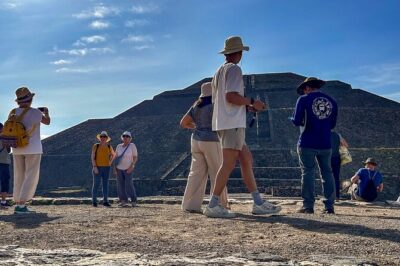
Teotihuacan, Guadalupe Shrine & Tlatelolco Day Tour with Lunch
Read our review →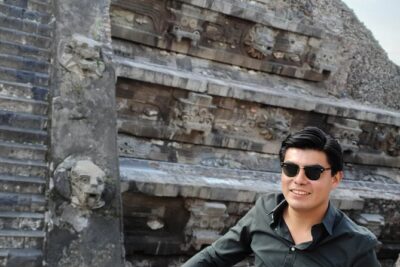
Teotihuacan pyramids morning or afternoon without tourist traps
Read our review →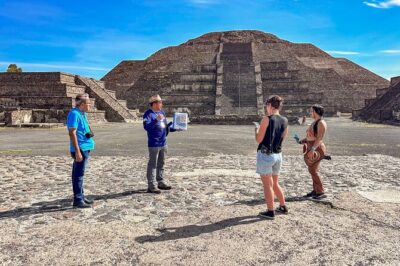
Teotihuacan Early Access Guided Tour with optional Lunch
Read our review →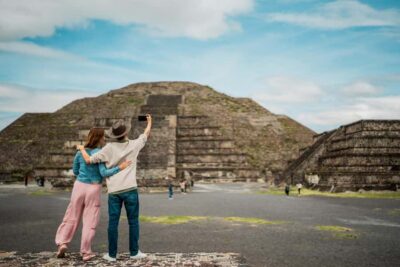
Teotihuacan, Tlatelolco & Guadalupe Shrine Tour
Read our review →
Teotihuacan Hot Air Balloon Flight from Mexico City / Volare
Read our review →
Balloon flight + pick up in CDMX + Breakfast in Cave + Teotihuacan
Read our review →
Browse the lists this tour appears in