
Reviewed · PUERTO VALLARTA TOURS
Sea Turtle Release – A Puerto Vallarta Conservation Adventure
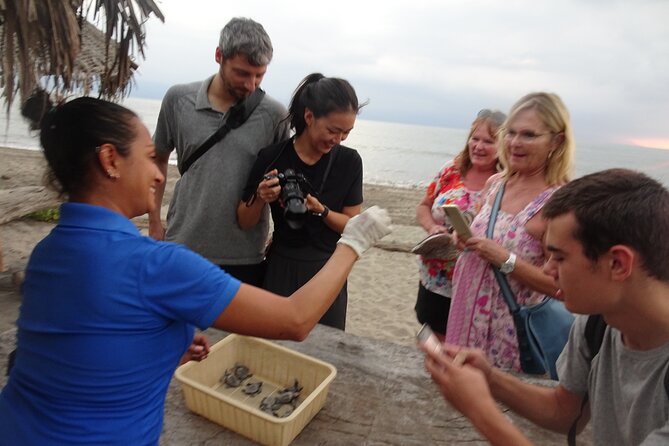
Baby turtles make sunset feel like a ceremony. This Puerto Vallarta outing combines a short lesson, a beach walk, and the rare chance to help hatchlings reach the Pacific. I especially like the hands-on conservation and the way guides connect turtle protection with mangroves, predators, and human impact. The sunset setting adds beauty without distracting from the work.
I also like the warm, practical guiding from biologists and local guides such as Michael, Maggie, and Francis. They explain the turtle life cycle clearly, answer questions patiently, and keep children involved. The main caution is the walk on sand and loose gravel, which can be tiring in the dark on the return trip.
In This Review
- Key points to know before you book
- Why this Puerto Vallarta turtle tour feels different
- Starting at Ecotours Vallarta in Marina Vallarta
- The van ride and the coastal walk
- Arriving at the sea turtle camp
- The sunset release and what you actually do
- What the guides add to the experience
- Family appeal, couples, and solo visitors
- Comfort, clothing, and accessibility advice
- Value, timing, and weather considerations
- Should you book this turtle release?
- FAQ
- Where does the sea turtle release tour begin?
- Where does the activity end?
- How long does the tour last?
- What time should I check in?
- Is transportation included?
- What food and drinks are provided?
- Is mosquito repellent provided?
- How much walking is involved?
- Can young children participate?
- What happens if there are no baby turtles or the weather is poor?
Key points to know before you book
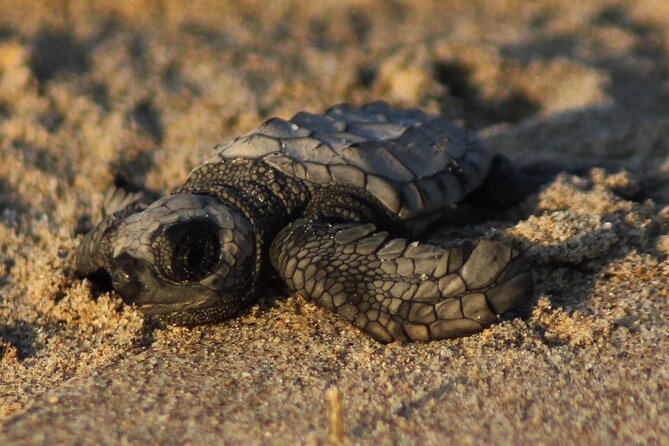
- Release baby Olive Ridley turtles at sunset: You may name a hatchling and watch it crawl from the beach toward the sea.
- Learn before you participate: A bilingual biologist explains turtle biology, nesting, hatching, and the threats these animals face.
- Expect a beach walk: The total walking distance is about one mile, including soft sand, loose gravel, and some rocky sections.
- Plan for a short van ride: The beach is roughly a 15-minute drive from the Ecotours Vallarta office, with a few bumpy stretches.
- Pack mosquito repellent: It is not included, and the coastal setting makes it an important comfort item.
- Weather and hatchlings matter: The outing can be moved or refunded if poor weather cancels it, and it may be rescheduled if no baby turtles are available.
Why this Puerto Vallarta turtle tour feels different
Many coastal excursions ask you to watch nature from a distance. This one gives you a small job in a larger conservation effort. You learn why hatchlings are collected, protected, and released at the correct time, then take part in one carefully managed release.
That distinction matters. You are not simply photographing cute animals. You are seeing how a local conservation camp monitors nests, cares for hatchlings, and limits the dangers facing newly emerged turtles. The experience gives families and couples a clear picture of how tourism can help fund and support environmental work.
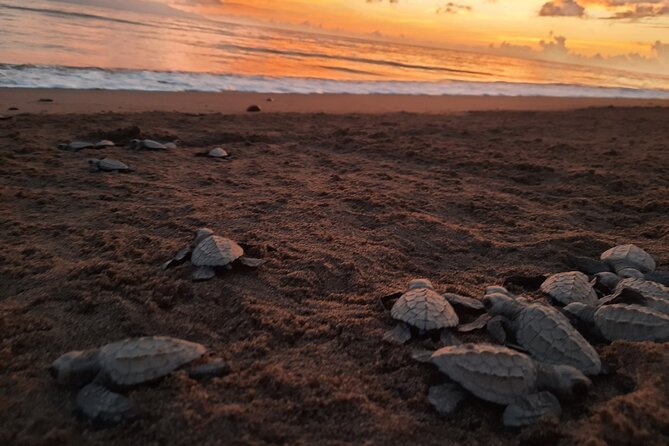
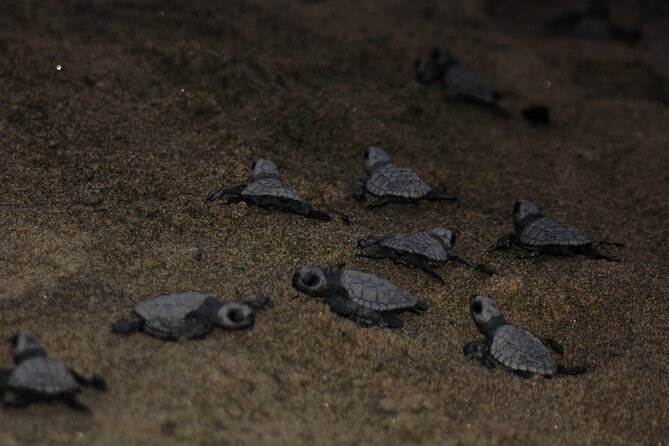
The release itself is brief, but the meaning lasts longer. A newly hatched turtle can be only about a day old when it is placed on the sand. It moves with surprising purpose toward the water, often prompting children and adults to cheer for the smallest member of the group.
The setting helps. The beach at sunset gives the activity a calm, almost quiet rhythm. You wait for the light to fade, listen to the instructions, and then watch a line of tiny turtles head toward the surf. It is gentle, memorable, and far removed from the usual Puerto Vallarta shopping stop or high-energy boat outing.
A few more Puerto Vallarta runs worth comparing
- Puerto Vallarta Best Zipline Canopy + Tequila and Speed Boat Ride
★ 5.0 · 3,786 reviews - Winner 2025 Downtown Vallarta Food Tour with Vallarta Food Tours
★ 5.0 · 3,738 reviews - Extreme Adventure, Wildest Bridge, ATV & Ziplines
★ 5.0 · 3,179 reviews
Starting at Ecotours Vallarta in Marina Vallarta
The meeting point is Ecotours Vallarta, at Dive ShopProa 20 in Marina Vallarta. Check-in is scheduled for 4:50 PM, followed by a 5:00 PM introduction. You can use the restroom before leaving, which is useful because the beach camp is reached after a drive and a walk.
The first talk gives the outing its shape. Your bilingual guide covers sea turtle biology and conservation, often with a slideshow or presentation. You learn about the turtle life cycle, nesting, hatching, and the environmental pressures that make protected releases necessary.
This opening is not filler while people gather. It prepares you to understand what you are seeing later. Guides including Michael have been praised for explaining the subject in a way that works for children while still giving adults useful context. Questions are welcome, and the tone is friendly rather than academic.
I would pay attention here. Once you reach the beach, the release can feel emotional and fast. Knowing why the hatchlings are released at dusk, and why the camp handles them with care, makes the final scene much more meaningful.
The van ride and the coastal walk
At about 5:45 PM, the group leaves in an air-conditioned vehicle. The drive takes around 15 minutes each way, depending on conditions, and parts of the road can be bumpy. The vehicle, bottled water, and simple snacks such as a granola bar, juice, or soda are included.
The drive is short, but it is worth knowing about if you have young children or motion sensitivity. You are not heading directly from the marina onto the sand. There is a transfer first, followed by a walk of roughly 10 to 20 minutes each way along the beach.
The total distance is about one mile. The walk is described as gentle, but the surface changes. You may cross soft sand, loose gravel, and rocky areas, and the return takes place after sunset. People who have trouble walking, use mobility aids, or tire easily should take this seriously.
The walk is also part of the lesson. Your guide points out the coastal environment and nearby mangroves. One particularly fortunate group saw a female turtle coming ashore to nest during the walk, an uncommon sight that shows how much can happen along this stretch of coast. Other groups saw crocodiles in a nearby reservoir and birds around the water.
Those sightings are not guaranteed, so I would not book this as a wildlife checklist. Think of them as possible bonuses. The reliable feature is the beach walk itself, with a chance to notice the coastal setting before reaching the turtle camp.
Arriving at the sea turtle camp
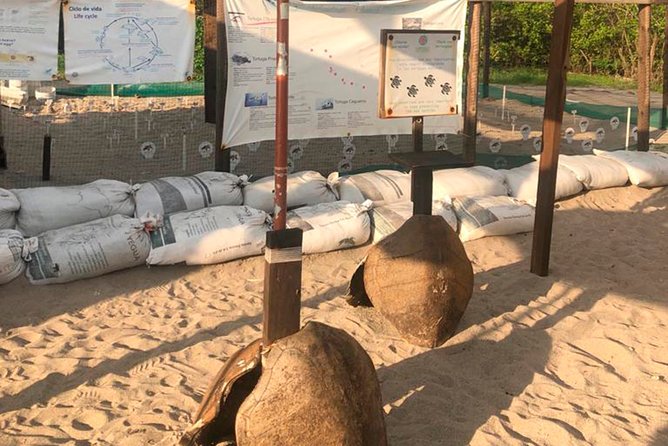
At the camp, you are introduced to the ongoing protection work. That can include nest monitoring and care for hatchlings before release. The staff and biologist explain how the camp fits into the wider effort to protect local sea turtles.
The camp gives the outing its strongest sense of purpose. You see that the release is part of a process, not a one-night performance. Eggs and hatchlings need protection from predators, weather, and human activity, and the camp provides a controlled place for that work.
The guides also connect turtle survival with the health of the coast. The earlier discussion of mangroves and the nearby water helps you see that turtles are part of a larger system. The subject stays accessible, but it is not watered down for children.
Parents should know that the presentation may include photographs of turtles mating. The images are not described as graphic, but the subject does come up as part of the life-cycle lesson. For most families, this is a normal and useful part of the biology talk.
Same base, a different sort of day:
- Mega Yacht ALL INCLUSIVE Yelapa Waterfall & Snorkeling Adventure
★ 5.0 · 2,515 reviews - Food & Mixology Tour:Tequila,Tacos, Mezcal and Agave Cocktails
★ 5.0 · 1,884 reviews - Outdoor Ziplining, Waterfalls & Speed boat in Puerto Vallarta
★ 5.0 · 1,796 reviews - Rhythms of the night, Sunset Cruise, Candlelit Dinner & Alma Show
★ 4.5 · 1,667 reviews
The sunset release and what you actually do
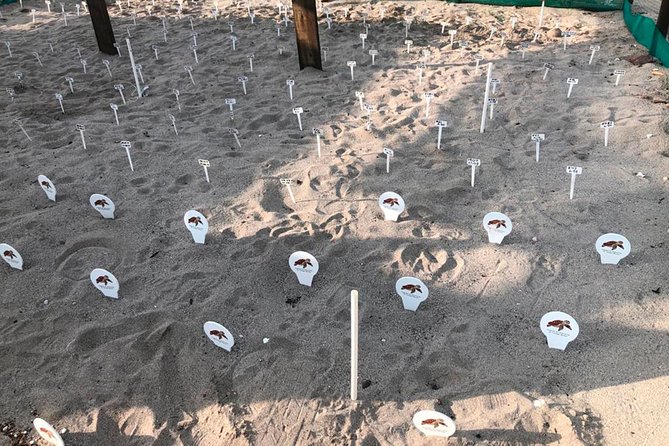
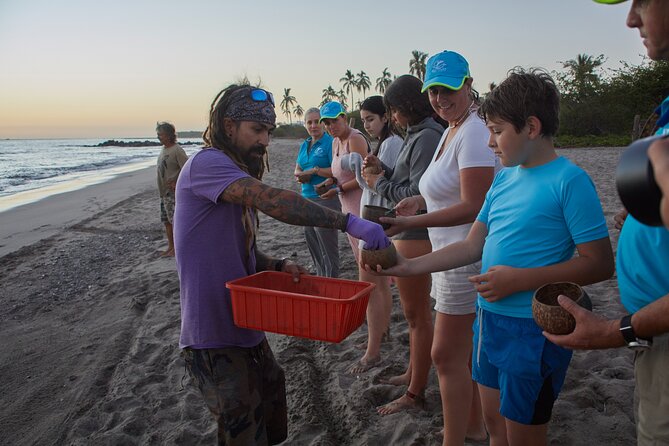
The main event takes place as daylight fades. Your group joins the biologist on the beach, where the hatchlings are prepared for release. Parents help children under seven carry a coconut to the sand, where the child can release the turtles into the ocean.
The coconut is a practical detail that gives small children a manageable role. Older children and adults can take part more directly, often naming a turtle before setting it down. The names make the moment personal, even though the hatchling quickly becomes one tiny traveler among many heading toward the waves.
Do not expect a long time holding the turtle. The point is to help it start its journey, not to handle it for photographs. The turtles need to move toward the water, and the biologist gives instructions so the release remains safe and orderly.
Some evenings may involve hundreds of newly hatched Olive Ridley turtles. Seeing them move together is the unforgettable part. They are delicate, but their movement is strong and direct. The timing at dusk or night helps reduce exposure to predators, which gives the sunset a real conservation purpose beyond pretty scenery.
The release can feel rushed if the group reaches the site later than planned. I would arrive ready to listen and participate rather than expecting a leisurely photo session. Keep your phone handy, but do not let it take over. The turtles are much more interesting than a perfect picture.
The walk back occurs in darkness. Bring shoes that can handle sand and uneven ground, and use care around rocks. The return is not difficult for someone comfortable walking on a beach, but it can challenge older adults or anyone with balance, joint, or stamina concerns.
What the guides add to the experience
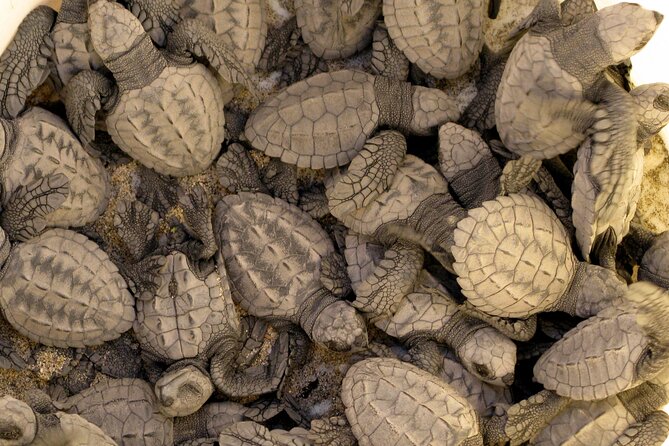
The guide can make or break a conservation outing, and this one depends heavily on the staff. Michael is often praised for his clear explanations and enthusiasm for the work. Maggie and Francis are also noted for being friendly and helpful with families.
The best part of the guiding is the connection between facts and feeling. You learn about biology, then see a hatchling move toward the sea. You hear how people affect the coast, then walk beside mangroves and water where wildlife may appear.
The bilingual format is useful for mixed-language groups. The information is presented in English, and the biologist can answer questions in both languages. That helps children follow along without turning the talk into a formal classroom.
A good guide also manages expectations. The staff cannot promise a particular number of hatchlings, a crocodile sighting, or a turtle nesting on the beach. What they can provide is access to a real conservation project and a respectful release when hatchlings are available.
Family appeal, couples, and solo visitors
This is a strong choice for families with school-age children. Kids can learn about turtles, name a hatchling, and see the immediate result of a conservation effort. Children around seven and ten have handled the walk and instructions well, while younger children may need help carrying the coconut.
The emotional side can be powerful. A child may become attached to the turtle it names, then feel sad when it disappears into the sea. That is part of the charm, but parents may want to explain beforehand that the turtle is not a pet and cannot be kept.
Couples get a quieter, nature-focused evening with a beautiful sunset. Solo visitors can also fit in comfortably because the group format provides company, transportation, and a guide who can answer questions. The maximum group size is 24 people, large enough for a social atmosphere but small enough for the biologist to give instructions.
Teenagers may appreciate this more than a standard family activity because it is unusual and genuinely hands-on. The experience has a clear purpose, and the wildlife is not presented as a staged show.
Comfort, clothing, and accessibility advice
Wear shoes that you can walk in on sand, gravel, and occasional rocky ground. Open sandals may be less useful on the return walk after dark, especially if you want stable footing.
Bring mosquito repellent. It is the one practical item specifically not supplied, and you should consider it essential. You may also want a light layer for the ride back, though no specific evening clothing requirement is given.
The tour is not suitable for people who cannot comfortably walk about one mile on uneven beach surfaces. It is also not recommended during the advanced stages of pregnancy because of the walking required. The accessibility warning deserves attention, since the beach conditions can be harder than the short distance suggests.
Restrooms are available at the office before departure and again after returning around 7:15 PM. Transportation is included between the office and the beach, and the activity ends where it begins.
Value, timing, and weather considerations
No price is provided here, so I cannot judge the exact cost against other Puerto Vallarta outings. I can say what you are paying for: transportation, snacks, bottled water, a bilingual biologist, a conservation lesson, access to the camp, and participation in a supervised hatchling release.
For me, the value is strongest if you want an activity with a real environmental purpose. You are supporting a local effort while gaining an experience that is difficult to reproduce on your own. If you only want a quick photo stop, the two-hour schedule and walking requirements may feel like too much.
The evening schedule is efficient. Check-in begins at 4:50 PM, the introduction starts at 5:00 PM, the group reaches the beach after the transfer and walk, and the return is planned for about 7:15 PM. Allow extra flexibility around that schedule because sunset timing, beach conditions, and the hatchlings themselves control the pace.
Weather can cancel the outing. If that happens, you are offered another date or a full refund. The same applies if the minimum number of participants is not reached. If you cancel yourself, you need to do so at least 24 hours before the start time for a full refund. Late cancellations and changes are not accepted.
Should you book this turtle release?
I would book it if you care about wildlife, want a meaningful family activity, or prefer a short conservation outing to a generic sightseeing trip. The strongest reasons are the careful biology talk, the chance to meet the people protecting turtle nests, and the unforgettable sight of hatchlings moving toward the Pacific at sunset.
I would hesitate only if beach walking is difficult for you, if you dislike uneven ground, or if your schedule cannot handle a weather-related change. Bring repellent, wear sturdy footwear, and expect a real coastal walk rather than a paved path.
For families, couples, and nature-minded solo visitors, this is one of Puerto Vallarta’s most memorable evening activities. The turtles are adorable, but the bigger reward is understanding the work that gives them a better chance at survival.
FAQ
Where does the sea turtle release tour begin?
It begins at Ecotours Vallarta, at Dive ShopProa 20 in Marina Vallarta, Puerto Vallarta, Jalisco, Mexico.
Where does the activity end?
The activity ends back at the Ecotours Vallarta meeting point.
How long does the tour last?
The full activity takes about two hours. The planned return to the Ecotours Vallarta office is around 7:15 PM.
What time should I check in?
Check-in is scheduled for 4:50 PM, with the guide introduction beginning at 5:00 PM.
Is transportation included?
Yes. An air-conditioned vehicle transports you between the Ecotours Vallarta office and the beach area.
What food and drinks are provided?
The tour includes bottled water and snacks, including a granola bar, juice, and sodas.
Is mosquito repellent provided?
No. Mosquito repellent is not included, and it is recommended for your comfort and protection.
How much walking is involved?
All participants must be able to walk about one mile in total on sand and loose gravel. The route includes a beach walk in both directions, and the return is in the dark.
Can young children participate?
Yes. Parents assist children under seven by carrying a coconut to the sand, where the child can release the hatchlings into the ocean.
What happens if there are no baby turtles or the weather is poor?
If no baby turtles are available, the reservation may be rescheduled. If poor weather cancels the activity, you are offered a different date or a full refund.
Newly listed around Puerto Vallarta
- Vallarta: Mexology Tacos & Tequila Tour★ 5.0 · 110 reviews
- Scuba Diving Marietas Islands★ 4.5 · 107 reviews
- Sayulita Taco Tour★ 5.0 · 149 reviews
- Sayulita ATV Jungle & Beach Adventure, Tequila Tasting★ 4.5 · 94 reviews
- Sayulita Tacos and Tequila Food Tour★ 5.0 · 101 reviews
- EcoHike to private beach, Jungle Walk to see plants & animals★ 5.0 · 113 reviews
- Hike and Yoga Jungle Experience in Mexico★ 5.0 · 163 reviews
- Canopy Tour Experience in Sayulita, Nuevo Nayarit.★ 5.0 · 31 reviews
Puerto Vallarta Tours, compared.
Puerto Vallarta Best Zipline Canopy + Tequila and Speed Boat Ride
Read our review →
Winner 2025 Downtown Vallarta Food Tour with Vallarta Food Tours
Read our review →
Extreme Adventure, Wildest Bridge, ATV & Ziplines
Read our review →
Mega Yacht ALL INCLUSIVE Yelapa Waterfall & Snorkeling Adventure
Read our review →
Food & Mixology Tour:Tequila,Tacos, Mezcal and Agave Cocktails
Read our review →
Outdoor Ziplining, Waterfalls & Speed boat in Puerto Vallarta
Read our review →
Rhythms of the night, Sunset Cruise, Candlelit Dinner & Alma Show
Read our review →
Boat and Snorkel Tour to 5 Islands of Los Arcos
Read our review →Browse the lists this tour appears in