
Reviewed · CHICHEN ITZA & CENOTE TOURS
2 dives in Cenote Dos ojos Certified Divers
The best part of Tulum may be underground. This five-hour experience takes you into the clear freshwater world of Cenote Dos Ojos, with a second cenote stop chosen around your ability and interests. I like the small maximum of four people, and I like that equipment, transport from the meeting point, snacks, drinks, and lunch are included. The main catch is that the cenote entrance fee is extra, and a few pairings cost another $10.
You begin at 8:30 a.m. at Agua Clara Diving Tulum on the beach road. The staff checks every piece of equipment before you leave, then your guide leads the group through a safety briefing and two sessions of roughly 40 to 45 minutes each. Guides such as Alberto, Leo, Marcel, Julio, Adiel, and Luke have earned especially warm praise for patience and safety, although one serious complaint about a guide’s attitude shows why it is sensible to discuss your comfort level before entering the water.
In This Review
- What makes this experience worth considering
- A freshwater world beneath Tulum
- Starting at Agua Clara Diving Tulum at 8:30 a.m.
- Cenote Dos Ojos and the first underwater session
- The break: snacks, drinks, and lunch
- Choosing the second cenote
- Why a four-person group matters
- What the $200 price really covers
- Cameras, wetsuits, and useful preparation
- Who should book this Tulum experience?
- Should you book the two-cenote tour?
- FAQ
- Where does the tour begin?
- What time does the experience start?
- Where does the activity end?
- Is hotel pickup included?
- Which cenotes are visited?
- How long is each underwater session?
- Is equipment included?
- Do I need proof of certification?
- Are cenote entrance fees included in the price?
What makes this experience worth considering
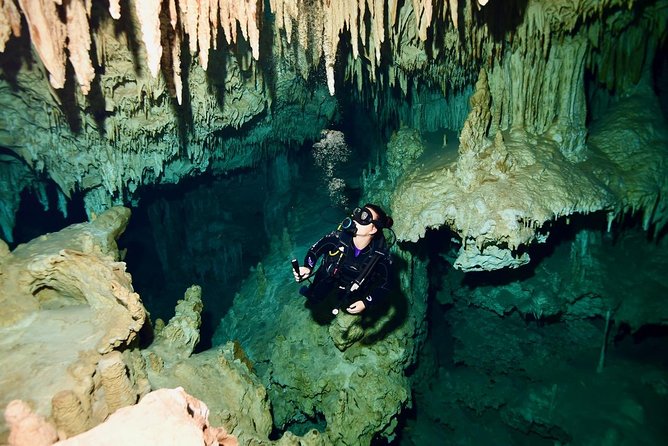
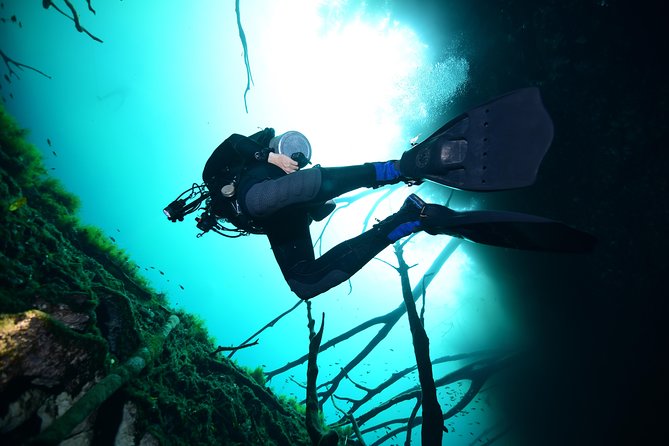
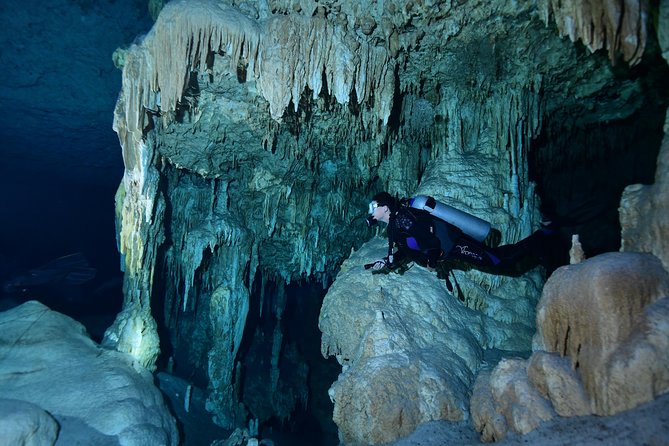
- Cenote Dos Ojos offers striking underwater formations: Expect stalactites, stalagmites, columns, and clear blue or turquoise freshwater.
- Groups are limited to four people: That gives your guide time to watch your buoyancy, breathing, signals, and comfort.
- The second cenote can match your ability: Possible locations include Casa Cenote and Gran Cenote, depending on the arrangement made with the booking team.
- Equipment fitting comes first: You try everything at the shop before heading out, which matters for both comfort and safety.
- The break comes between the two sessions: Snacks, drinks, and lunch help turn the morning into a relaxed half-day outing.
- Certified divers only: You must show proof of certification, and a moderate level of fitness is expected.
A freshwater world beneath Tulum
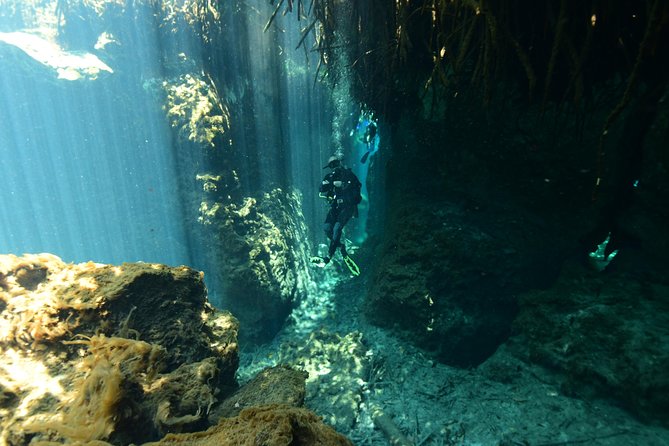
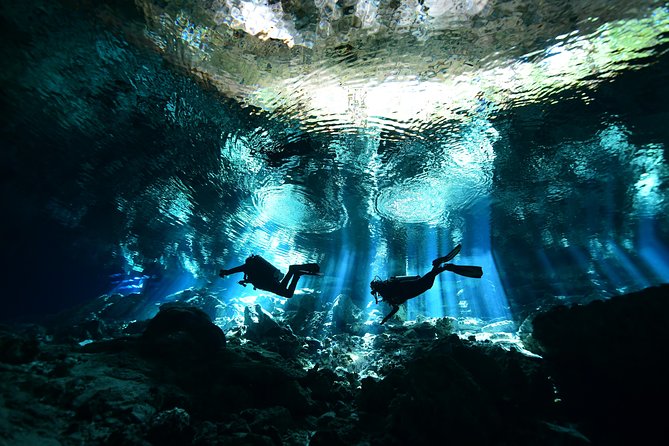
Tulum is famous for its beaches and Maya ruins, but the cenotes offer a completely different side of the region. These natural limestone pools are linked to underground passages, and their freshwater can feel remarkably clear. At Dos Ojos, the attraction is not coral or tropical fish. It is the rock itself, shaped into chambers, columns, and narrow passages over time.
I think this experience suits you if you already hold an open-water certificate and want to see how freshwater caves and caverns differ from ordinary ocean sessions. You are not simply swimming in a pretty pool. You are moving through an enclosed setting where light, rock, depth, and visibility change the mood from one minute to the next.
The underwater scenery received the strongest praise. The blue and turquoise water, excellent visibility, stalactites, stalagmites, and bat cave section all add variety. One guide also brought the group up into a cavern area where they could look at the cave above the water and see bats. That sort of detail makes Dos Ojos feel like more than a standard recreational outing.
More Cenote Tours in Tulum
- Chichen Itza, Cenote and Valladolid Small Group Day Trip
★ 5.0 · 2,104 reviews - Tulum Guided Tour, Magical Cenote, Lagoon Snorkeling and Beachside Lunch
★ 5.0 · 1,888 reviews - Tulum Ruins, Turtles in Akumal and Cenote tour
★ 5.0 · 1,706 reviews
Starting at Agua Clara Diving Tulum at 8:30 a.m.
Your morning begins at Agua Clara Diving Tulum, located at Carretera Tulum-Boca Paila kilometer 5, at Mexidivers, Hotel Zamas, on Tulum Beach. The activity returns to this same meeting point, so you need to arrange your own way there and back.
Hotel pickup and drop-off are not included. That is a small but important point, especially if you are staying away from the beach road. The meeting point is near public transportation, but the tour information does not promise a private transfer from your hotel.
The first practical task is equipment fitting. You try the gear before leaving, rather than discovering at the cenote that a mask leaks or a wetsuit feels wrong. This is one of the better features of the morning because comfort affects your breathing, buoyancy, and confidence.
If you plan to use sunscreen or insect repellent, it must be biodegradable. The shop sells both, and one especially useful tip is to ask for a long-sleeve wetsuit if mosquitoes are likely to be a problem. A short-sleeve suit may be fine in the water, but the insects around some cenotes can be persistent.
Cenote Dos Ojos and the first underwater session
The first listed stop is Cenotes Dos Ojos, one of the area’s best-known sites for cavern scenery. Once the group arrives, the guide gives a briefing and helps everyone prepare before entering the water.
Expect roughly 40 to 45 minutes underwater, though the exact time depends on conditions, air consumption, comfort, and the group. A good guide will keep an eye on the group while helping you manage buoyancy and equipment. A newly certified participant once needed help finding the right balance with the buoyancy control device, and the guide was able to offer practical assistance.
The scenery is the reason to come. Rock formations appear in the clear water, with stalactites hanging from the ceiling and stalagmites rising from below. Columns create a sense of architecture, as if the cave were built rather than slowly formed.
Dos Ojos can also include a bat cave experience, where the group comes up into an air-filled section. This adds a welcome change from the underwater route and lets you see the cavern from another angle. The combination of freshwater, rock, and natural light makes this first session the likely highlight for many participants.
Still, do not treat a cavern setting casually. You are relying on your guide for direction and safety, so you should be honest about your comfort, certification level, and recent experience. A positive experience here depends as much on calm communication as on the scenery.
The break: snacks, drinks, and lunch
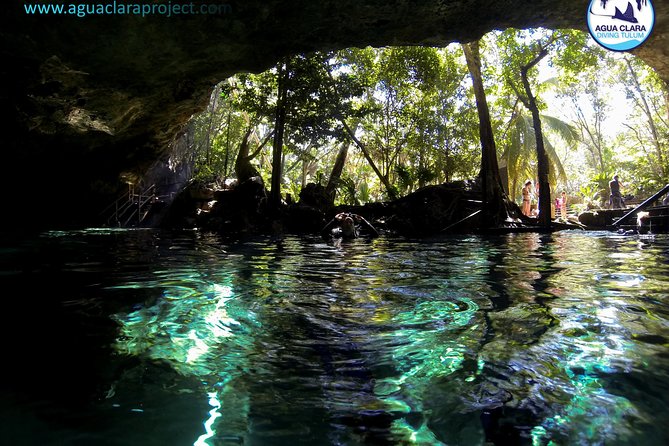
After the first session, you get a short rest with snacks, beverages, and lunch. The schedule says the timing can vary, so these refreshments may come during the break or according to the group’s preferred timing.
I like this pause because two freshwater sessions require more energy than the simple five-hour duration suggests. You have time to dry off, settle your breathing, discuss the first route, and prepare for the next one without rushing straight back into the water.
The food is practical rather than a reason to book the excursion by itself. Its real value is convenience. You do not need to leave the cenote area to find lunch, and you can keep the day moving while staying with the group.
Same base, a different sort of day:
- Sian Ka’an Adventure Full Day Trip to Punta Allen
★ 5.0 · 1,179 reviews - Selva Maya Eco Adventure Park: Ziplining, Hanging Bridges, Rappelling and Cenote
★ 5.0 · 1,057 reviews - Tulum Archaeological Site & Sian Ka’an Muyil Tour from Tulum
★ 5.0 · 824 reviews - Magical Cenote and Paradise Lagoon Snorkeling Adventure
★ 5.0 · 808 reviews
Choosing the second cenote
The second location depends on your preference and skill level. Possible combinations include Dos Ojos with Casa Cenote or Gran Cenote, though the specific arrangement is decided with the booking team.
This flexibility is useful for mixed experience levels. A newer certified participant may need a calmer pace and more reassurance, while a more confident diver may want a different setting. The guide can help determine which cenote suits the group rather than forcing every booking into the same route.
Casa Cenote and Gran Cenote are named as possible alternatives, but the supplied details do not promise a particular second site for every booking. Ask the company in advance which pairing is planned and whether it carries an added entrance charge.
Some combinations cost $10 more because the entrance fees differ. Since the base price is $200 per person and cenote admission is not included, your final cost depends partly on the selected locations. That makes the tour less simple to budget than an all-inclusive ticket, but the small group and included equipment, transport, food, and guide support add real value.
Why a four-person group matters
The maximum of four people is one of the strongest reasons to choose this outing. Cenote routes can feel less comfortable when you are trying to watch a large group, stay close to a guide, and enjoy the formations at the same time.
With four or fewer participants, the guide has a better chance of noticing small problems early. That might mean helping with buoyancy, repeating a hand signal, adjusting equipment, or slowing the pace for someone who needs a moment.
The guide quality appears especially important here. Alberto helped a newly certified couple feel safe on their first overseas session. Leo was praised for patience and for explaining equipment use and underwater signals. Julio received similar praise for being attentive and helpful, while Marcel was credited with giving a useful refresher and helping participants feel more confident.
Luke also made a strong impression by explaining the cenotes and their background, then helping a nervous participant enter the water during the second session after deciding not to take part in the first. That is the kind of flexibility I value. You should never feel pressured to continue if you are uncomfortable.
There is one serious warning. One account describes a guide who was rude, made the participant feel undermined, and handled a safety disagreement poorly. It is a single negative experience among a large number of positive ratings, but it should not be ignored. Tell the company clearly if you need a patient guide, have limited recent experience, or feel anxious in enclosed water.
What the $200 price really covers
At $200 per person, this is not the cheapest way to see a cenote. The price becomes easier to justify when you count the included equipment, transport from the central meeting point, professional guide, snacks, drinks, lunch, taxes, fees, and handling charges.
You still pay the cenote entrance fee, and some combinations add $10. If you are the only person booked, the company can still operate the outing for an additional $15. Ask about these possible charges before finalizing your plans.
The small group improves the value. A cheaper, larger group may leave you with less personal attention, which matters more in a cavern than it would on a simple surface swim. For me, the price is reasonable if safety, close supervision, and a quieter experience matter more than finding the lowest-cost cenote visit.
Cameras, wetsuits, and useful preparation
You may be given a camera, but manage its battery carefully. One participant used much of the battery early and had little power left when the best scenery appeared near the end of the second session. If photography matters to you, ask how the camera works and save battery for the final section.
Bring proof of certification. It is required for every participant, and the activity is for certified divers rather than beginners seeking their first lesson.
A moderate level of physical fitness is expected. The tour involves handling equipment, entering and leaving the cenote area, and completing two sessions. The details do not specify a particular access method or the exact physical demands at each site, so ask the operator if you have concerns about mobility or exertion.
Service animals are allowed, and the meeting point is near public transportation. The activity is offered in English, and confirmation is normally sent when you book, subject to availability for bookings made within one day of departure.
Who should book this Tulum experience?
I would choose this for a certified diver who wants a close look at cenote formations rather than another ocean outing. It is especially well suited to small groups, couples, and solo participants who value a guide’s full attention.
It can also work for newly certified people, provided they are honest about their experience and ask for a patient guide. The strongest accounts came from people who felt nervous at first and gained confidence through calm instruction and repeated equipment checks.
I would think twice if you dislike enclosed spaces, want hotel pickup, need a guaranteed specific cenote combination, or expect entrance fees to be included. You should also confirm the planned route if mosquitoes bother you, since some sites may require extra protection.
The company offers free cancellation if you cancel at least 24 hours before the 8:30 a.m. start. Cancellations or changes within 24 hours are not refunded, so keep that deadline in mind.
Should you book the two-cenote tour?
Yes, if you are certified, reasonably fit, and excited by freshwater caves. The clear water, striking formations, small group, and attentive guides make this a memorable alternative to Tulum’s usual beach schedule.
Before booking, confirm the second cenote, the entrance fee, any $10 combination surcharge, and your transport to the beach meeting point. If you want the best chance of a comfortable outing, explain your experience level and request a guide who is patient with newer certified participants. With those details settled, the $200 price buys a well-supported morning in one of the most unusual settings around Tulum.
FAQ
Where does the tour begin?
It begins at Agua Clara Diving Tulum, Carretera Tulum-Boca Paila kilometer 5, Mexidivers, Hotel Zamas, Tulum Beach, 77760 Tulum, Quintana Roo, Mexico.
What time does the experience start?
The start time is 8:30 a.m.
Where does the activity end?
It ends back at the same meeting point in Tulum.
Is hotel pickup included?
No. Hotel pickup and drop-off are not included. Transport from the central meeting point to the cenotes is included.
Which cenotes are visited?
The listed first stop is Cenotes Dos Ojos. The second location can be Casa Cenote, Gran Cenote, or another suitable combination, depending on preference and skill level.
How long is each underwater session?
Each session lasts around 40 to 45 minutes. The exact duration depends on several factors.
Is equipment included?
Yes. All necessary equipment is included, and you try the equipment at the shop before leaving for the cenote.
Do I need proof of certification?
Yes. Evidence of certification is required from all certified participants taking part.
Are cenote entrance fees included in the price?
No. Entrance fees are separate. Some cenote combinations cost an additional $10 because admission prices differ.
Newly listed around Tulum
- Tulum: Private Snorkel and Sailing Experience★ 4.8 · 52 reviews
- Tulum: Sian Ka’an Biosphere Reserve Kayak Tour★ 4.8 · 61 reviews
- Tulum: Chichen Itza Adventure! Cenote Saamal and Valladolid★ 4.2 · 59 reviews
- Tulum: Mexican Cooking Class in Local Home★ 4.9 · 34 reviews
- Tulum: Skip-the-Line Entrance Ticket★ 3.0 · 139 reviews
- Tulum: 2-Hour Snorkeling in Two Spots of Tulum’s Reef★ 4.5 · 183 reviews
- Tulum: 3-Hour Local Food Tasting Tour★ 4.8 · 80 reviews
- Tulum Ruins & Swim in a Cenote – VIP Private Experience★ 5.0 · 58 reviews
Chichen Itza & Cenote Tours, compared.
Chichen Itza, Cenote & Valladolid Tour with Tequila and Lunch
Read our review →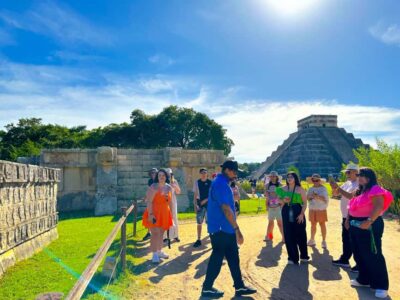
Chichen Itza, Cenote & Valladolid Tour with Lunch
Read our review →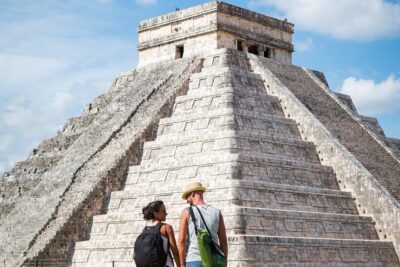
Early morning Chichen Itza Tour: Cenote and Tequila Tasting
Read our review →
Cancun ATV Jungle Adventure, Ziplines, Cenote and Tequila Tasting
Read our review →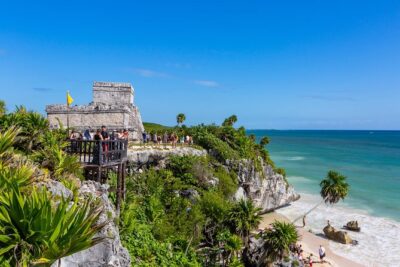
Viator Exclusive: Tulum Ruins, Reef Snorkeling, Cenote and Caves
Read our review →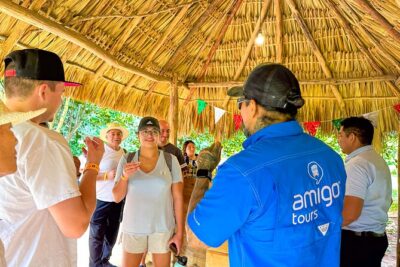
Chichen Itza Early Access All Inclusive: Hotel Pick up & All Fees
Read our review →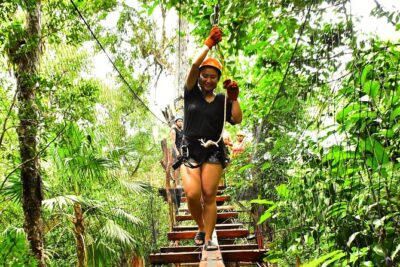
ATV Adventure, Interactive Bridges, Ziplines, Cenote and Lunch
Read our review →Browse the lists this tour appears in