
Reviewed · IXTAPA & ZIHUATANEJO TOURS
Baby Sea Turtle Releasing Sightseeing Tour with Luis de la Maza
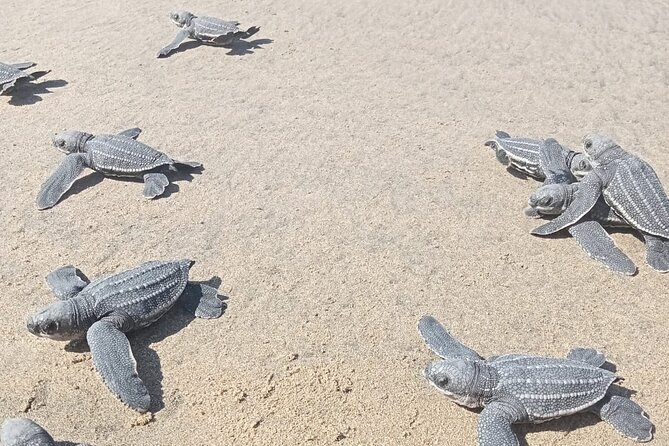
Tiny flippers, a huge journey. The Baby Sea Turtle Releasing Tour with Luis de la Maza takes you from Zihuatanejo to remote Juluchuca, where local conservation workers protect nests and help hatchlings reach the Pacific. I like the quiet, secluded beach and the chance to hear directly about turtle survival from the people doing the work. I also like the guide service, with Luis, Francisco, Juan, Pablo, and others praised for clear explanations and warm company. The main drawback is the long road trip, which can take roughly 40 to 60 minutes each way.
This is not a polished resort excursion. It is a rustic, small-community experience built around a simple act: moving newly hatched turtles to wet sand and watching them race toward the sea. You may spend more time in a van than expected, and the conservation center itself is basic. Still, if you value local work, wildlife, and a memorable family outing over luxury, the $65.75 price can feel fair.
In This Review
- Key points to know before you book
- Why Juluchuca makes this trip worthwhile
- The turtle lesson comes before the release
- Seeing a nest and a hatch
- The release at wet sand
- What the guides add to the day
- Rustic setting, authentic rewards
- Who will enjoy this half-day outing
- Practical tips for a smoother visit
- Should you book the Juluchuca turtle release?
- FAQ
- Where does the turtle release tour take place?
- How long does the tour last?
- What time does pickup begin?
- What happens at Juluchuca Beach?
- How close to the water are the turtles released?
- Is transportation included?
- Is food included?
- Can I cancel for a refund?
Key points to know before you book
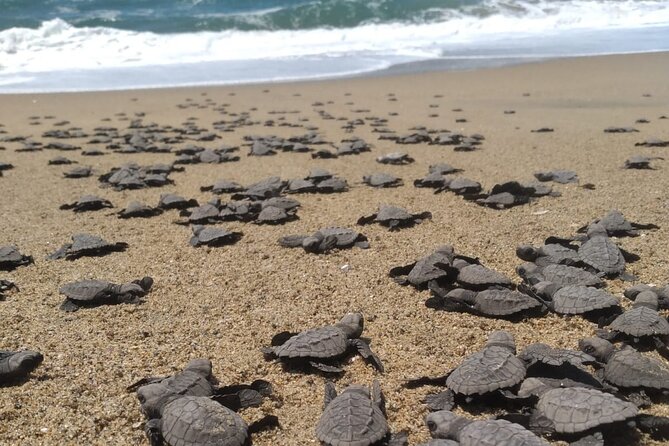
- Juluchuca is the real destination: You leave the resort towns behind for a rural coconut-producing community with a long, quiet beach used by nesting turtles.
- The conservation lesson comes first: Expect about 20 minutes on turtle life cycles, three local species, and the predators that threaten them.
- You may see eggs and hatching turtles: The team selects a nest found the previous day and another nest that is actively hatching.
- The release is carefully timed: Hatchlings stay in a small container for about 10 to 20 minutes until they are active, then you help place them on wet sand near the water.
- The guide can shape the day: Luis, Francisco, Juan, Paco, Pablo, and other guides have been praised for local stories, humor, and turtle information.
- The setting is deliberately rustic: The conservation team works from a simple beach site, not a modern visitor center, and donations may be welcomed.
Why Juluchuca makes this trip worthwhile

The trip begins with hotel pickup at 2:00 pm. You meet your guide in the lobby, and he confirms your name so you know you have the right person. Be ready five minutes early, since the total tour time includes transportation.
From Zihuatanejo or Ixtapa, the vehicle heads south through town and into rural Mexico. The drive is part of the experience, though you should set your expectations correctly. Depending on your starting point and the day’s route, the ride has been described as roughly 40 minutes to an hour. The air-conditioned vehicle helps, and guides often fill the road time with information about the area, local life, and Mexico.
I like this transition because it gives you a clear sense of leaving the resort zone behind. One minute you are surrounded by hotels and tour traffic. Soon you are passing through a quieter community known for coconut products, including coconut macarons, on the way to a beach with far less noise and development.
The tradeoff is simple: you are paying for a half-day outing, but a meaningful share of it is spent getting there and back. If you want a quick activity close to your hotel, this is the wrong choice. If the ride feels like part of your holiday and you enjoy seeing rural communities, it adds context that a nearby beach visit would miss.
Some departures include a short ATV ride from the village toward the beach. This detail appears to vary with the local arrangement, so you should treat it as a possible part of the outing rather than a guaranteed feature. The ride has been described as bumpy and about a mile long, passing coconut trees and vegetation. It is another reason to wear practical clothes and shoes that can handle sand.
A few more Mexico runs worth comparing
- Private Ixtapa and Zihuatanejo City Tour
★ 5.0 · 137 reviews - Ixtapa Island Tour
★ 4.5 · 134 reviews - Xihuacan Culture and Archaeology Tour
★ 5.0 · 116 reviews
The turtle lesson comes before the release
At Juluchuca Beach, the local conservation team explains the life cycle of sea turtles. You learn about the three kinds of sea turtles that lay eggs in this part of Mexico, along with the dangers they face before reaching the ocean and after entering it.
The lesson lasts about 20 minutes. That may sound brief, but it gives the release a purpose. Without it, you might see only a group of tiny animals moving across sand. With the explanation, you understand that the hatchlings are beginning an uncertain journey and that the local team is trying to improve their odds.
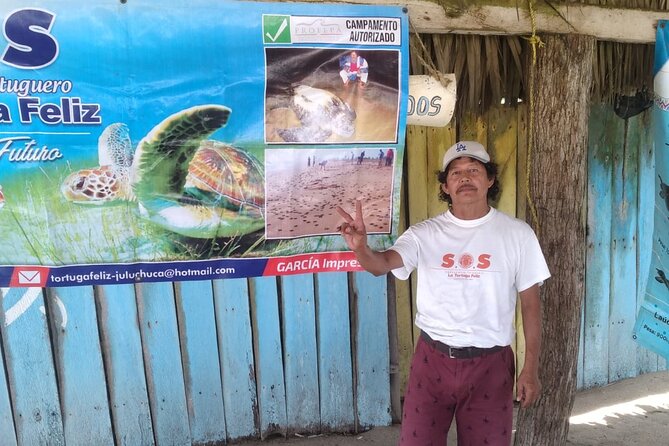
The conservation work covers more than the few minutes you spend at the beach. The local workers patrol a roughly 30-kilometer stretch of nesting beach, protect adult turtles and nests, and care for hatchlings. The operation is described as being run by a very small local group, including Balta and Freddy, also associated with La Tortuga Feliz. Some accounts describe two brothers carrying out this work with little or no government support.
That point matters when you judge the experience. The tour is not simply a ride to a photo opportunity. It connects you with people who spend much of their time protecting nests and monitoring the beach. At the same time, the setting is basic, and the educational portion is led by local staff with translation from your English-speaking guide. The exact guide may be Luis, Francisco, Juan, Pablo, Paco, or another member of the team.
Seeing a nest and a hatch
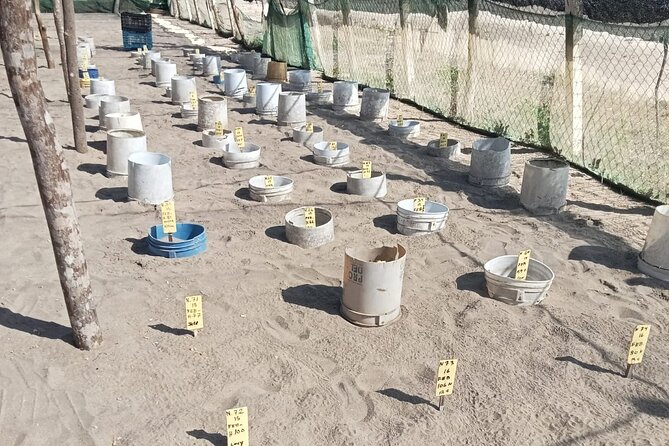
After the introduction, the team selects a nest found the day before. They carefully remove a small amount of sand and show you one of the eggs before covering the nest again. This is a short demonstration, not an invitation to handle the nest yourself.
The tour then moves to a nest that is hatching. You watch as the turtles work their way toward the surface. Once they emerge, the hatchlings are placed in a small container for about 10 to 20 minutes, allowing them to become active and ready for release.
This part requires patience. Nature does not operate on a schedule, and the exact number of turtles can vary. One group helped release about 65 hatchlings, while other descriptions refer to dozens. You might see a large group, or you might have a smaller release depending on which nest is ready that day.
The waiting period is also there for a reason. The turtles are not rushed straight from the nest into the water. The team watches until they are active, then carries them to the release point. You may be able to pick them up or transfer them into individual baskets, depending on the instructions at the site. Follow the local staff closely, since these are living animals and the handling process matters.
The release at wet sand
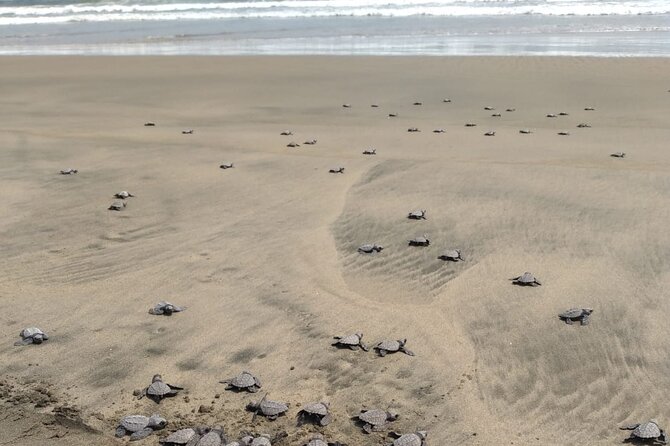
The final walk is short. The hatchlings are taken about 25 feet from the ocean, to wet sand near the surf. Once placed down, they begin moving toward the water, and the group waits until they all make it to the sea.
This is the moment most people remember. The turtles are small enough to fit in your hand, yet the beach ahead of them looks enormous. You may find yourself watching each one closely, hoping it avoids birds and reaches the waves.
The guides and conservation workers help protect the release area from predators. One group had to wait for frigate birds to move away before releasing its turtles. That small delay shows why the team does not simply scatter hatchlings wherever it is convenient.
You should also understand what the tour can and cannot promise. The staff can give the turtles a head start, but they cannot guarantee survival once the animals enter the ocean. The lesson explains the many predators and hazards involved. The emotional power of the experience comes partly from this uncertainty. You are watching the first few feet of a very difficult life.
Some people describe the release as a chance to hold the turtles in their hands. In practice, the process is controlled by the conservation staff, and handling may be limited. Go expecting a supervised release, not unlimited touching or a private photo session with each hatchling.
Same base, a different sort of day:
- Chichen Itza, Cenote, and Valladolid Tour
★ 5.0 · 24,293 reviews - Chichen Itza, Cenote & Valladolid Tour with Tequila and Lunch
★ 4.5 · 15,789 reviews - Teotihuacan, Guadalupe Shrine & Tlatelolco Day Tour with Lunch
★ 5.0 · 11,603 reviews - Cabo Beach Camel Ride, Mexican Buffet and Tequila Tasting
★ 5.0 · 8,815 reviews
What the guides add to the day
Luis de la Maza is the named experience provider, and he has personally guided some departures. His work is not limited to driving. You may hear about Ixtapa, Zihuatanejo, Mexican history, nearby communities, and local livelihoods during the road trip.
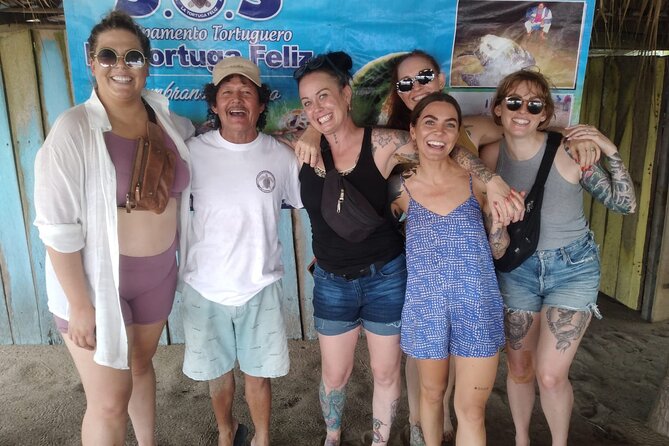
Francisco, also called Paco, has been praised for storytelling, humor, and explanations about the region. Juan has been described as friendly and effective with both turtle information and general tour support. Other departures have included Pablo, Ran, Francisco, Guillermo, Julio, Balta, and Freddy in different guiding or conservation roles.
This range suggests that the exact feel of the tour can vary. The local conservation workers lead the beach presentation, while the English-speaking guide helps explain and translate. A strong guide makes the long drive pass more easily and helps you understand why the turtle work matters.
Photography is possible, but your attention should remain on the animals and instructions. One departure included a driver who helped with photographs. That may not be part of every group, so bring your phone or camera, but do not count on a dedicated photographer.
Rustic setting, authentic rewards
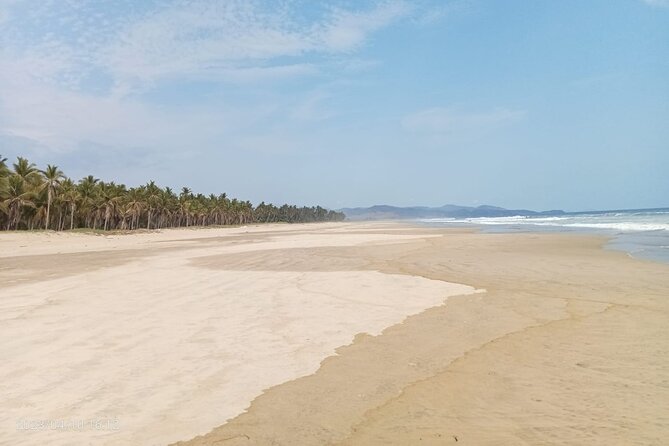
The beach site is not designed as a luxury attraction. You may find a simple hut, a small turtle nursery, basic equipment, and a rural road leading toward the coast. The simplicity is part of the appeal, but it is also the clearest warning for anyone expecting polished facilities.
I like that the money and attention connect with a real local conservation effort. You are seeing how a small team works with limited resources, rather than entering a large commercial park with a fixed display. A generous donation may be appropriate if you feel moved by the work, particularly because the conservation group is described as operating without government support.
The setting also gives you a look at rural Mexico that most visitors do not see from an Ixtapa hotel. Juluchuca is known for coconut production, and the beach is long and secluded. That quiet stretch of coast is important for nesting turtles because it is away from the noise of the resort towns.
The cost is $65.75 per person. I consider that reasonable if your fare includes hotel pickup, an air-conditioned vehicle, the guide, transportation to Juluchuca, and the full conservation experience. You are also paying for convenience and for a guide who can bridge the language gap.
One criticism is worth taking seriously. The actual turtle lesson and release are conducted by the local conservation center, while the tour company may mainly arrange transport and interpretation. If you can independently reach the center for much less, the packaged tour may feel expensive. The value depends on how much you want hotel pickup, English guidance, local commentary, and a planned visit instead of organizing the trip yourself.
Who will enjoy this half-day outing
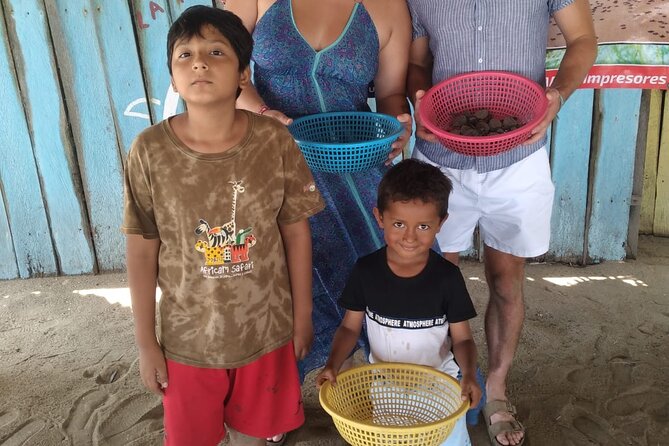
This is a strong choice for families. One account described a teenager who was bored at first but became fully engaged once the group began moving the turtles. The activity is visual, hands-on under supervision, and easy for children to understand.
It also suits couples who want a meaningful break from pool time. Several couples described the release as a once-in-a-lifetime memory, especially when every hatchling reached the water. The quiet beach gives the outing a more personal feel than a large group attraction.
Nature-minded visitors will get the most from the educational side. You will hear about nesting, hatching, predators, and conservation rather than simply taking a quick picture and leaving. The experience also suits people who prefer local projects and modest facilities to highly produced entertainment.
It may not suit you if you dislike long drives, bumpy ATV transport, sand, heat, or uncertain timing. The tour lasts about three and a half hours, but the hatch can take its own pace. You should also skip it if you want a formal meal or a full beach day. Dinner is not included, and the listed experience centers on the turtle program.
Practical tips for a smoother visit
Wear comfortable clothing and shoes that can handle sand. If the ATV transfer operates on your departure, closed shoes may feel more secure than flimsy sandals.
Bring sun protection and water for the road and beach. The vehicle is air-conditioned, but the release takes place outdoors, and the tour is scheduled in the afternoon.
Keep your camera ready, but listen before touching or moving anything. The conservation team decides which nest to open, when the hatchlings are ready, and where the release happens.
Expect a group of up to 30 people, although some departures have ended up feeling private or very small. A smaller group can make the lesson easier to follow. A larger one may mean more waiting for your turn and less space near the release point.
Book ahead if the date matters to you. The experience is often reserved about 19 days in advance. Confirmation is sent when you book, and most people can participate.
The tour requires good weather. If poor weather cancels it, you are offered another date or a full refund. You can cancel for a full refund up to 24 hours before the 2:00 pm start time. Within 24 hours, the payment is not refunded, and changes are not accepted.
Should you book the Juluchuca turtle release?
I would book this tour if you want an authentic conservation outing and are comfortable with a long ride to a simple beach site. The best parts are the local conservation story, the chance to see a nest and hatching turtles, and the quiet release into the Pacific. Guides such as Luis and Paco can turn the drive into useful local context rather than dead time.
I would choose another option if your priority is the lowest possible price or a short activity near your hotel. The local center does much of the hands-on turtle work, so an independent visit might cost less if you can arrange transportation and interpretation yourself.
For families, couples, and visitors who want more than resort scenery, this is one of the most memorable things to do near Zihuatanejo. Go for the small-scale conservation work, not luxury. Wear practical shoes, allow extra time, and treat the hatchlings with care. The little turtles provide the magic, but the people protecting them are the reason the experience matters.
FAQ
Where does the turtle release tour take place?
The tour travels from Zihuatanejo to Juluchuca, a rural community with a long, secluded beach where sea turtles lay eggs.
How long does the tour last?
The tour lasts approximately 3 hours and 30 minutes, including travel time.
What time does pickup begin?
The scheduled start time is 2:00 pm. Hotel pickup is offered, and you should be ready in the lobby five minutes early.
What happens at Juluchuca Beach?
You receive an explanation of sea turtle life cycles, the three local turtle species, and the predators that threaten them. The team then shows an egg from a recently found nest, lets you watch a hatching nest, and prepares the hatchlings for release.
How close to the water are the turtles released?
The hatchlings are carried to wet sand about 25 feet from the ocean, where they begin moving toward the water.
Is transportation included?
Yes. The tour includes an air-conditioned vehicle, hotel pickup, and guide service. Some departures also include a short ATV ride from the village to the beach.
Is food included?
Dinner is not included. One account describes local food at the site, but meals are not listed as part of the tour.
Can I cancel for a refund?
You can cancel at least 24 hours before the start time for a full refund. Cancellations or changes made within 24 hours are not accepted for a refund. If bad weather cancels the experience, you are offered a different date or a full refund.
Newly listed around Mexico
- Ticket to Frida Kahlo Museum on CDMX★ 4.5 · 44 reviews
- Epic Centro Histórico Walking Tour★ 5.0 · 77 reviews
- Eat Like A Local By The Taco Mensch★ 5.0 · 55 reviews
- Eat and Explore Local Markets in Mexico City★ 5.0 · 83 reviews
- Ticket for the Frida Kahlo Museum★ 3.5 · 67 reviews
- Authentic Lucha Libre Tour : Wrestling School, Tacos & Mezcal★ 5.0 · 162 reviews
- Express Tour to Teotihuacan Pyramids. Be the first to arrive!★ 4.5 · 62 reviews
- Small Group: The Magical Colonial Towns of Taxco and Cuernavaca★ 4.5 · 46 reviews
Ixtapa & Zihuatanejo Tours, compared.


Private Transportation from the Zihuatanejo Airport to your hotel in Ixtapa
Read our review →
Browse the lists this tour appears in