
Reviewed · MUSEUMS
Chapultepec Castle & Anthropology Museum Tour
History comes alive quickly here. This half-day outing pairs the National Museum of Anthropology with Chapultepec Castle, giving you a guided route through Mexico’s Aztec, Maya, colonial, imperial, and revolutionary past. I like the smart pairing: the museum explains the civilizations that shaped Mexico, while the castle shows how later rulers lived and fought over the country. I also like the guides’ strong reputations, especially Leonardo, Ligia, Gio, Antonio, and Miriam, who are praised for making difficult subjects clear and engaging.
The main catch is time. The Anthropology Museum is enormous, and 2.5 hours only allows a focused selection of rooms. Add the castle’s hill and another two hours on your feet, and this becomes a serious morning and afternoon outing. Eat a good breakfast, wear sensible shoes, and expect a quick tour rather than a complete museum visit.
In This Review
- Key things to know before booking
- Why these two Mexico City sights work together
- Starting at the National Museum of Anthropology
- What the guide adds inside the museum
- Crossing Chapultepec Park between the museums
- Reaching Chapultepec Castle
- The views and the castle’s visual appeal
- Time, group size, and guide quality
- Is the $79 price a good deal?
- Practical advice for a smoother visit
- Who should book this tour?
- FAQ
- How long does the Chapultepec Castle and Anthropology Museum Tour last?
- What is included in the price?
- Is the tour offered in English?
- Where does the tour begin?
- Where does the tour end?
- How much walking is involved?
- Can I bring food, drinks, or a backpack?
- What happens if I need to cancel?
Key things to know before booking
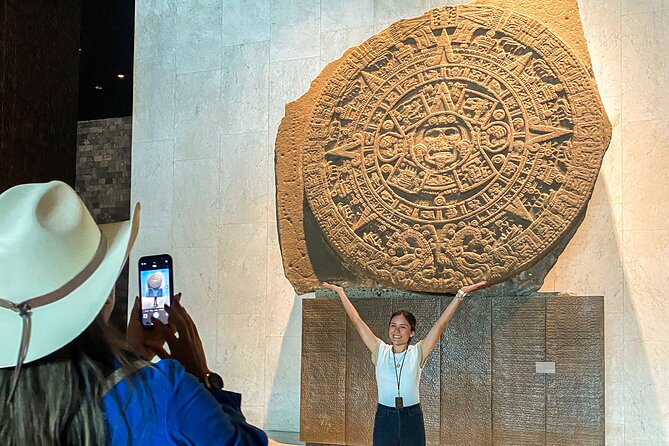
- The Aztec Stone of the Sun anchors the museum visit: You will see Mexico’s famous carved calendar stone, along with Olmec heads and other major pre-Columbian works.
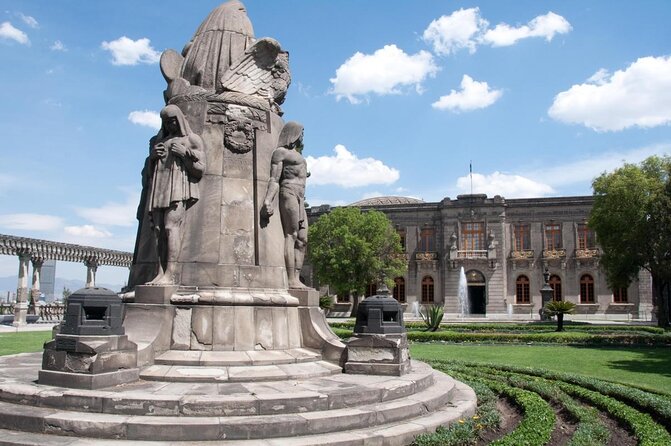
- Chapultepec Castle adds royal drama: Marble staircases, imperial rooms, state carriages, murals, and city views give the history a human scale.
- The guide does the editing for you: The museum could consume a full day, so an English-speaking guide helps you reach the major pieces without wandering blindly.
- Plan for about 3 kilometers of walking: The route includes museum galleries, the Chapultepec grounds, and the uphill approach to the castle.
- The private upgrade may be worthwhile: If you want to ask many questions or set the pace yourself, a private visit offers a more personal format.
- Pack light: Food, drinks, and backpacks are not allowed inside. A handbag is permitted.
Why these two Mexico City sights work together
Mexico City’s two major museums tell different parts of the same national story. The Anthropology Museum looks back to the civilizations that existed before Spanish conquest and follows the cultural regions and Indigenous groups that shaped Mexico. Chapultepec Castle then carries the story forward through empire, independence, presidents, and revolution.
I like this sequence because it gives you a useful framework. At the museum, you see the artistic and political achievements of ancient societies. At the castle, you see the ambitions of later rulers and the conflicts that turned Mexico into the modern nation you visit today.
Without a guide, both places can feel like a flood of names, dates, and stone objects. The guide’s job is not to explain every display. It is to point out what matters most, connect one period to the next, and help you understand why an object deserves your attention.
That service is especially useful if you do not read Spanish. One person described the museum as so large that a guide was essential for making sense of it in a limited amount of time. That is the basic value of this tour: not more hours, but better use of the hours you have.
More museum visits in Mexico City:
- CDMX: Xochimilco, Coyoacan, Frida Kahlo Museum & Murals Tour
★ 4.4 · 3,025 reviews - Frida Kahlo VIP [Museum Tickets Included] Bike, Markets & Churros
★ 5.0 · 1,072 reviews - Anthropology Museum Guided Tour
★ 4.5 · 1,035 reviews
Starting at the National Museum of Anthropology
The tour begins at the National Museum of Anthropology on Paseo de la Reforma, beside Chapultepec Park. This is Mexico City’s most visited museum and one of the country’s most important places for understanding Indigenous cultures.
You spend about 2.5 hours inside. That sounds generous until you see the scale of the building. The museum holds far more than any half-day route can cover, so the guide leads you toward selected highlights rather than trying to march through every gallery.
The Aztec Stone of the Sun is the obvious star. This huge carved stone is often called the Aztec calendar, though its meaning is more complex than a simple wall calendar. A good guide can explain the symbols and why scholars continue to debate parts of its purpose. Recent visitors singled out this explanation as one of the most memorable parts of the outing.
The Olmec carved heads are another major stop. These massive stone faces came from areas in Tabasco and Veracruz, far from Mexico City. Their size, age, and distinctive features make them easy to remember, but the surrounding cultural context is what gives them meaning. Your guide can place the Olmec world within the wider development of Mesoamerican societies.
You will also hear about different cultural regions and Indigenous groups. That matters because Mexico was never shaped by one single civilization. The museum presents a broad story of shared ideas, local traditions, trade, conflict, and artistic skill. The result is a more accurate picture than the familiar Aztec-only version of Mexican history.
What the guide adds inside the museum
The best part of this visit is the selection. You are not left to guess which objects deserve twenty minutes and which can receive a quick glance. Guides such as Leonardo, Ligia, Gio, Antonio, Alicia, Lili, Alan, and Miriam have been praised for explaining major exhibits with enthusiasm and clear connections between ancient and modern Mexico.
I would pay close attention to the guide’s storytelling rather than trying to photograph everything. You can return on another day if the museum captures your interest, but you cannot absorb its entire collection during this tour.
The pace can vary. Some guides spend extra time on small details, which is useful if you enjoy close analysis but frustrating if you want to see more rooms. One person appreciated Nadia’s precision but wished the group had moved more quickly. Another felt rushed by the opposite problem, with too much ground covered in a large group.
That is the central tradeoff. A focused tour gives you a strong introduction, but it cannot offer the freedom of an all-day museum visit. If your priority is seeing the largest possible number of objects, go independently and allow much more time. If your priority is understanding the major displays, the guided format makes good sense.
Crossing Chapultepec Park between the museums
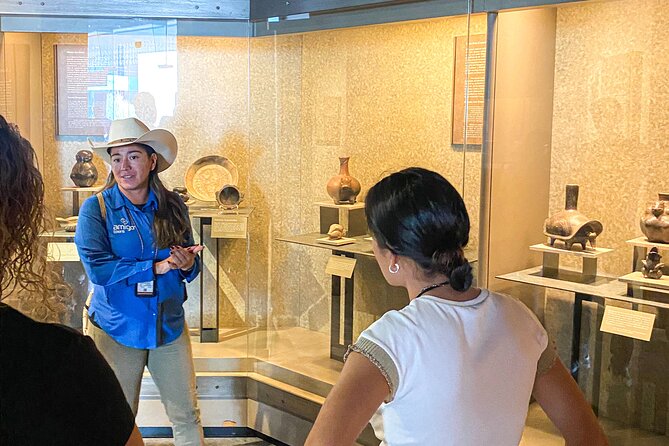
The two sites are both in Chapultepec Park, so this is not a bus tour with a long transfer. You move through the park toward the castle, whose hill rises above the surrounding area.
Chapultepec Forest covers about 810 hectares and is one of the defining open spaces in Mexico City. Even the short connection between the museums gives the day a change of rhythm. You leave the display cases behind, walk through the park, and then begin the climb toward the castle.
The uphill section is manageable for most people, but it is still part of the tour. The stated walking distance is about 1.8 miles, or 3 kilometers, and the total time on your feet is greater than that figure might suggest. One person needed help getting an elevator ride to reach the castle, so tell your guide early if stairs or uphill walking may be difficult.
There may also be a break between the two attractions. Do not count on a leisurely meal. Food and drinks are not allowed inside the museums, and the available pause may feel short if you need to wait for refreshments. I would eat beforehand and carry only what the site rules allow.
A few more Mexico City runs worth comparing
- Teotihuacan, Guadalupe Shrine & Tlatelolco Day Tour with Lunch
★ 5.0 · 11,603 reviews - Xochimilco, Coyoacan and Frida Kahlo with Optional Lunch
★ 4.5 · 7,320 reviews - Balloon flight + Breakfast in cave + Pyramids + Pick up CDMX.
★ 5.0 · 6,335 reviews - Teotihuacan pyramids morning or afternoon without tourist traps
★ 5.0 · 6,186 reviews
Reaching Chapultepec Castle
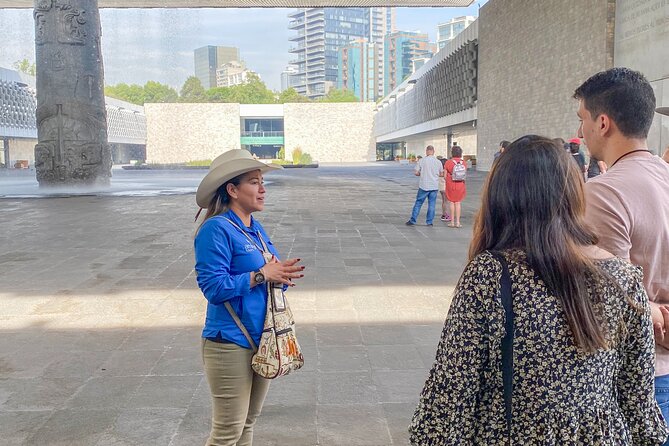
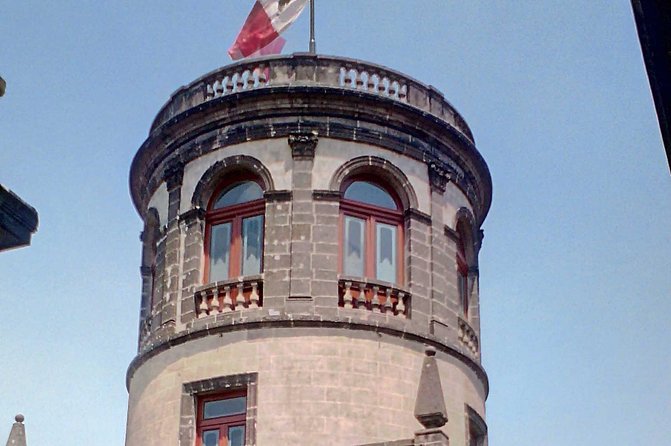
Chapultepec Castle occupies the top of Chapultepec Hill. Its story begins long before the current palace. The hill served as a retreat for Aztec rulers, then changed purpose over centuries. It was partly destroyed and rebuilt as a residence for Emperor Maximilian of Habsburg in the nineteenth century.
Later, the building served as a residence for Mexico’s presidents. Much of it is now the National History Museum. That layered past is what makes the castle so effective as a second stop. The Anthropology Museum asks you to picture ancient societies. The castle lets you walk through rooms connected to rulers, presidents, soldiers, and political upheaval.
Inside, the route covers 12 halls over about two hours. You will see marble staircases and royal apartments, then move through exhibits that trace Mexico from the pre-Columbian period through Spanish colonial rule, independence, and revolution.
The imperial connection is hard to miss. State carriages associated with Emperor Maximilian and Benito Juárez help turn political history into something tangible. You also see sculptures and busts of major figures, along with the sword linked to independence fighter José María Morelos.
Do not rush past the murals. Works connected with artists including José Clemente Orozco and John O’Gorman show battles and national history in bold, dramatic form. A guide’s explanation helps you see how these paintings present political memory, not just decoration.
The views and the castle’s visual appeal
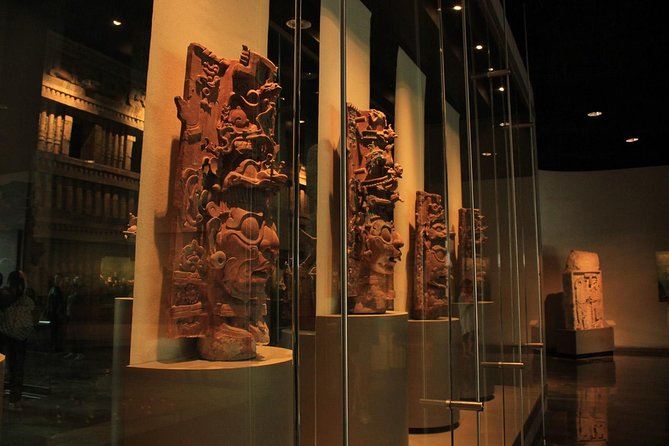
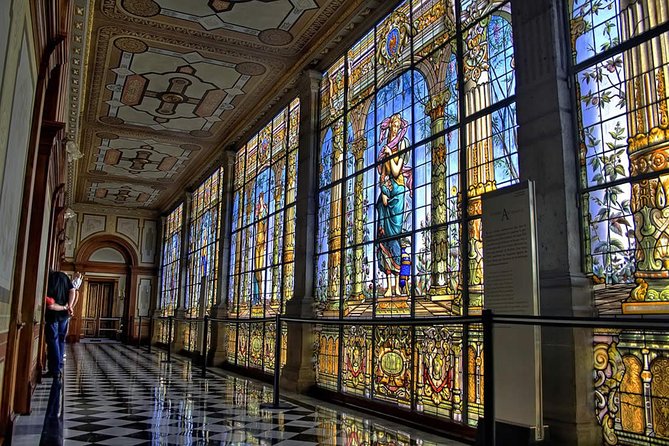
The castle is more than a history museum. Its elevated position gives you broad views over Mexico City, and the rooms themselves are among the most visually memorable interiors on the route.
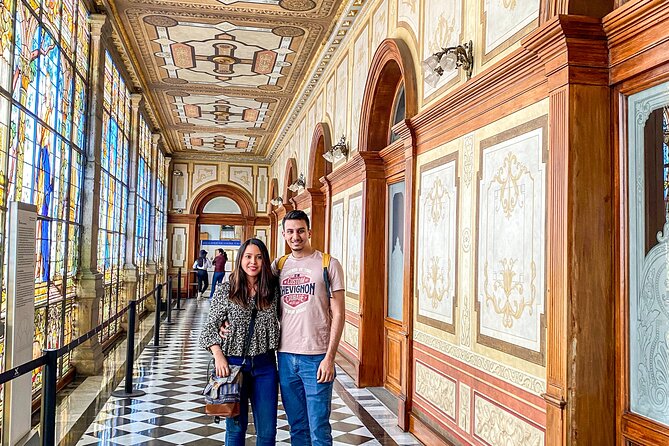
The marble staircases and royal apartments offer a glimpse of imperial taste and presidential life. You can picture the building changing roles as Mexico moved from colonial rule to independence, empire, republic, and revolution. That physical change is easier to grasp when you are standing in the spaces connected to it.
The castle also gives the tour a satisfying visual finish. After the dense displays at the Anthropology Museum, the open rooms, murals, carriages, and city views provide variety. One guide, Miriam, was praised for explaining the main exhibits thoroughly, while another, Fernando, was appreciated for making the historical sequence clear despite the length of the day.
Time, group size, and guide quality
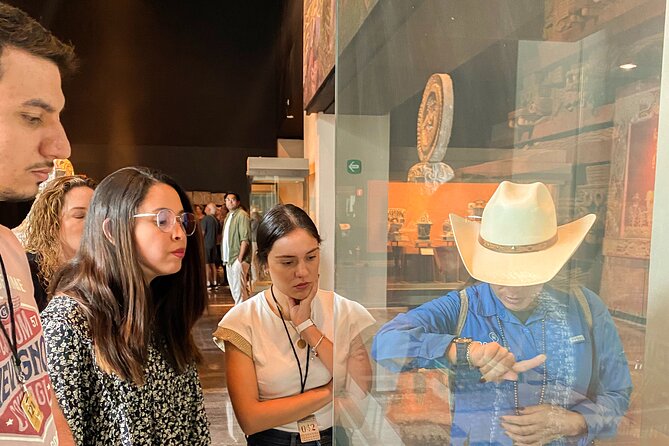
The experience is advertised at about five hours, with 2.5 hours at the Anthropology Museum and two hours at the castle. That leaves a small amount of time for moving between locations and any break.
This is not a relaxed stroll. You will be standing, listening, walking through galleries, and climbing the castle hill. Several people enjoyed the amount of information but found the day tiring. I would schedule it on a day when you do not also have another long walking tour planned.
The group size is listed at a maximum of 25 people. One account described a group of about 30, so the practical size may vary. Headsets are used when needed, which helps, but a large group can still make it harder to hear an accent or ask personal questions.
Guide quality is the biggest variable in the experience. Many guides have earned praise for strong command of Mexican history and for making the subject lively. Leonardo receives especially warm comments for linking pre-Hispanic, colonial, and modern periods. Ligia’s long experience was also valued, and Gio was praised for explaining complex history in a clear, engaging way.
There are less positive experiences too. A few people found the English difficult to understand, one person described a guide as poorly prepared, and another reported a late start and weak communication. These comments do not erase the strong overall rating of 4.5 from 1,348 reviews, but they are worth keeping in mind if your group depends heavily on spoken English.
The private option may solve some of these problems. It gives you more room to ask questions, request a slower or faster pace, and make the visit feel less like a march through highlights. For families, serious history fans, or anyone who dislikes large groups, the additional cost may be justified.
Is the $79 price a good deal?
At $79 per person, the tour includes admission to both museums and a professional English-speaking guide. There is no food, drink, or transportation included.
I see the price as fair if you have limited time in Mexico City and want both major sites explained in one day. The admission tickets remove some planning work, and the guide helps you avoid losing time in the enormous Anthropology Museum. You are paying mainly for interpretation and organization.
The value is weaker if you prefer to linger. You could spend the whole day at the Anthropology Museum alone, then visit the castle separately at your own pace. Independent entry may cost less, though the exact savings depend on ticket prices and how much you value expert explanation.
Group discounts may help reduce the cost for larger parties. The tour is offered in English and is often booked about 25 days ahead, so advance planning makes sense if your dates are fixed.
Practical advice for a smoother visit
Start with breakfast. The combined walking and standing can make the day feel longer than five hours, especially if you stop for detailed explanations.
Arrive early at the National Museum of Anthropology meeting point on Paseo de la Reforma. One person had trouble finding the guide and received no clear message, while other accounts praised the staff for getting the group inside on time. Early arrival gives you a buffer if the meeting point is busy.
Bring as little as possible. Backpacks, food, and drinks are not allowed inside. A handbag is permitted, so plan around that rule instead of arriving with a full day bag.
Wear shoes that can handle roughly 3 kilometers of walking and the climb to the castle. The route is suitable for most people, but it is not ideal if you need frequent seated breaks or find hills difficult.
Finally, listen for the guide’s instructions about the castle murals. They are easy to miss if you focus only on the royal rooms and city views.
Who should book this tour?
I recommend it most strongly if you have only a few days in Mexico City, want a serious introduction to Mexican history, and prefer guided context over independent browsing. It also suits first-time visitors who might feel overwhelmed by the museum’s size.
History fans should enjoy the links between ancient cultures, Spanish rule, independence, empire, and revolution. The private version is a better fit if you want long conversations or have a group with mixed interests.
I would choose a different plan if you want a slow museum day, dislike standing, or already know both collections well enough to navigate them alone. In that case, separate visits give you more control and may offer better value.
For most first-time visitors, though, this is a smart pairing. You get Mexico City’s most important archaeological museum, a hilltop castle with striking rooms and views, and a guide who can turn a pile of objects into a connected story. Just treat it as a focused introduction, not the final word on either museum.
FAQ
How long does the Chapultepec Castle and Anthropology Museum Tour last?
The experience lasts about five hours. The Anthropology Museum portion takes approximately 2.5 hours, and the Chapultepec Castle portion takes about two hours, with time needed to move between them.
What is included in the price?
The price includes a professional guide, admission to the National Museum of Anthropology, and admission to Chapultepec Castle.
Is the tour offered in English?
Yes. The tour is offered in English.
Where does the tour begin?
The tour begins at the National Museum of Anthropology, located on Avenida Paseo de la Reforma in Chapultepec Park.
Where does the tour end?
The tour ends at Chapultepec Castle on Avenida Heroico Colegio Militar in Chapultepec Park.
How much walking is involved?
A moderate amount of walking is involved, listed at about 1.8 miles or 3 kilometers. You also walk uphill to reach Chapultepec Castle.
Can I bring food, drinks, or a backpack?
No. Food, drinks, and backpacks are not allowed inside. Only a handbag is permitted.
What happens if I need to cancel?
You can receive a full refund if you cancel at least 24 hours before the experience starts. Cancellations or changes made within 24 hours are not refunded or accepted. If poor weather causes the tour to be canceled, you will be offered another date or a full refund.
Newly listed around Mexico City
- Ticket to Frida Kahlo Museum on CDMX★ 4.5 · 44 reviews
- Epic Centro Histórico Walking Tour★ 5.0 · 77 reviews
- Eat Like A Local By The Taco Mensch★ 5.0 · 55 reviews
- Eat and Explore Local Markets in Mexico City★ 5.0 · 83 reviews
- Ticket for the Frida Kahlo Museum★ 3.5 · 67 reviews
- Authentic Lucha Libre Tour : Wrestling School, Tacos & Mezcal★ 5.0 · 162 reviews
- Express Tour to Teotihuacan Pyramids. Be the first to arrive!★ 4.5 · 62 reviews
- Small Group: The Magical Colonial Towns of Taxco and Cuernavaca★ 4.5 · 46 reviews
Museums, compared.

Xochimilco, Coyoacan, Frida Kahlo Museum & Murals Tour
Read our review →![Frida Kahlo VIP [Museum Tickets Included] Bike, Markets & Churros](https://d1.introducingmexico.com/wp-content/uploads/frida-kahlo-vip-museum-tickets-included-bike-markets-churros-400x267.jpg)
Frida Kahlo VIP [Museum Tickets Included] Bike, Markets & Churros
Read our review →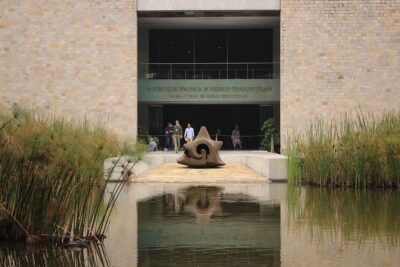
![Frida Kahlo VIP [Museum Tickets Included] Walk, Markets & Churros](https://d1.introducingmexico.com/wp-content/uploads/frida-kahlo-vip-museum-tickets-included-walk-markets-churros-400x267.jpg)
Frida Kahlo VIP [Museum Tickets Included] Walk, Markets & Churros
Read our review →
EXCLUSIVE TOUR Frida Kahlo Museum – SMALL GROUPS
Read our review →
Coba Multun-Ha Cenote Tulum and Mayan Museum Small Group
Read our review →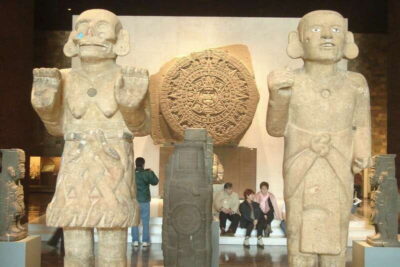
Frida Kahlo Museum Entry Ticket w/Digital Guide
Read our review →Browse the lists this tour appears in