
Reviewed · CHICHEN ITZA & CENOTE TOURS
Chichen Itza: Self-Guided Tour with Audio Narration & Map
The ruins make more sense with a voice in your ear. This $9.99 self-guided tour uses GPS, audio narration, photos, text, and an offline map to lead you around Chichén Itzá without a group or private guide. I like the freedom to pause for shade, skip a stop, or wander off for photos, and I like that the route covers the major monuments rather than leaving you to guess what matters.
The main catch is preparation. You must download the separate Action Tour Guide app and tour content while you have strong Wi-Fi or cellular service. A few technical problems have been reported, including trouble entering the access code, early audio triggers, and one case where the tour could not be opened on an iPhone.
This is a useful low-cost choice if you want historical context without paying for a private guide. Bring earbuds, start with a full battery, and take a moment to line up with the first stop before walking.
In This Review
- Key points before you buy
- What this Chichén Itzá tour actually is
- Download the app before you reach the ruins
- Starting at the handicraft market
- El Castillo, the first major landmark
- The Great Ball Court and its carved walls
- Tzompantli and the Eagles and Jaguars Platform
- El Caracol and the site’s astronomy
- The larger Chichén Itzá complex
- The Temple of Warriors and its stone columns
- The Red House and the Ossuary
- Las Monjas and La Iglesia
- Audio quality, route design, and common snags
- Is $9.99 good value?
- Who should use this tour?
- Practical advice for a smoother visit
- Should you book the Chichén Itzá audio tour?
- FAQ
- Is admission to Chichén Itzá included?
- How long does the audio tour take?
- Does the tour work without internet?
- Will a guide meet me at Chichén Itzá?
- What language is available?
- What equipment should I bring?
- Can I cancel for a refund?
Key points before you buy
- More than 37 audio stories: The route covers El Castillo, the Great Ball Court, El Caracol, the Temple of Warriors, Las Monjas, and smaller structures.
- Works offline after setup: GPS continues to guide you inside the archaeological zone without Wi-Fi or data roaming.
- About two miles of walking: Plan on roughly two hours if you listen to everything and visit the full route.
- No guide meets you: You begin at the entrance area and follow the app on your own.
- Good value for couples: Two people can share one tour with a pair of headphones, although each person must be comfortable listening from one device.
- English only: The supplied information lists English as the available language.
What this Chichén Itzá tour actually is
This is not an admission ticket, transport service, or live guided walk. It is a digital audio tour that you use inside Chichén Itzá after purchasing your entrance ticket separately.
The tour begins near the handicraft market at the archaeological site, listed at 97751 Chichén-Itzá, Yucatán. Once you reach the first story point, the app uses your phone’s GPS to begin the narration. As you walk, later stories play automatically when you reach the next areas.
You can also pause, replay, skip, or start stories manually. That matters because Chichén Itzá is not a place you should rush through. You may want to stop for photographs, find shade, browse souvenirs, or sit for a while before continuing.
The route is advertised as more than 1.5 miles in one section and over two miles in another. The practical takeaway is simple: covering the full site takes real walking. The audio content itself takes about one to two hours, while the overall visit can stretch to two or three hours depending on breaks and how long you spend looking at each monument.
More Cenote Tours in Mexico:
- Chichen Itza, Cenote, and Valladolid Tour
★ 5.0 · 24,293 reviews - Chichen Itza, Cenote & Valladolid Tour with Tequila and Lunch
★ 4.5 · 15,789 reviews - Cancun: Chichen Itza, Cenote & Valladolid Tour with Lunch
★ 4.6 · 6,722 reviews
Download the app before you reach the ruins
The setup is the one part I would not leave to chance. After booking, you receive instructions by email and text, along with a password or access code. Search your messages for audio tour if the instructions do not appear immediately.
You need to download the separate Action Tour Guide app, enter the supplied password, and download the tour while you still have a strong connection. Do not wait until you are standing at the entrance. The tour is meant to work offline, but the initial download is not.
The recommended devices are an iPhone running iOS 15 or later, an Android phone running version 9 or later, or an iPad or tablet with GPS and cellular connectivity. Test the app before leaving your hotel or rental.
One useful fix has been reported for a code problem: if the app asks for the password again after you entered it, close the app completely and reopen it. Most of the time, the content should then load. You should also bring a portable charger. One user enjoyed the tour but ran out of battery during the visit.
Starting at the handicraft market
The first stop is the handicraft market, which serves more as a starting point than a major archaeological sight. The audio introduces Chichén Itzá as a former Maya center filled with surviving monuments and unanswered questions.
This is a good place to get your bearings. Look at the map, confirm that your location matches the first story, and make sure the audio is playing through your earbuds before moving toward the ruins.
A small amount of patience here can save frustration later. If you begin too far from the starting point, the app may not trigger in the order you expect.
A second early stop introduces the Maya civilization and its importance in Mesoamerica. The explanation is brief, but it gives you a basic frame for what you are about to see.
El Castillo, the first major landmark
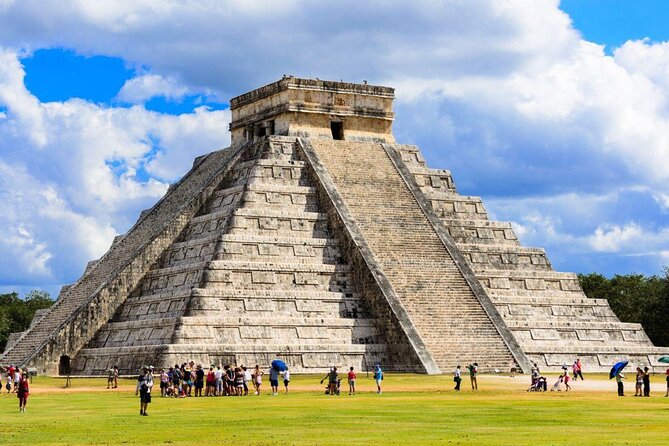
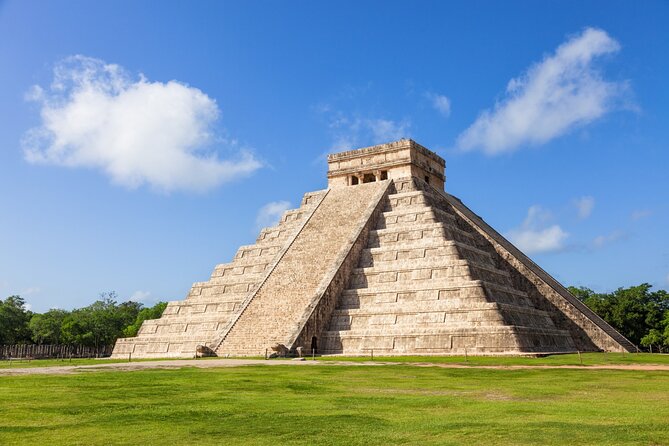
El Castillo, also called the Pyramid of Kukulkan, is the monument that most people picture when they hear Chichén Itzá. The tour explains its connection to Kukulkan, the feathered serpent deity, and uses the pyramid to point toward Maya architecture, religion, and astronomy.
The audio gives you a reason to look beyond the size of the building. Instead of simply taking a photograph and moving on, you can listen while studying the stairways, terraces, and overall shape.
The stop is listed at about ten minutes, but you may want longer. The audio can play while you stand in the shade or look for different angles. Access to the archaeological site is not included in the $9.99 price, and the monument itself cannot be climbed.
The app’s GPS is generally useful here, but you should not expect laboratory-level accuracy. One person found that narration sometimes began before reaching the exact location. That can be harmless, but listen for the description and use the map to identify the building it is discussing.
A few more Mexico runs worth comparing
- Teotihuacan Early Access Guided Tour with optional Lunch
★ 4.5 · 6,138 reviews - Tulum Ruins and Cenote Guided Tour, from Cancun
★ 4.5 · 2,592 reviews - Tulum Guided Tour, Magical Cenote, Lagoon Snorkeling and Beachside Lunch
★ 5.0 · 1,888 reviews - Anthropology Museum Guided Tour
★ 4.5 · 1,035 reviews
The Great Ball Court and its carved walls
The Gran Juego de Pelota is one of Chichén Itzá’s most impressive spaces. The long field is bordered by high walls decorated with sculpted scenes of ball players.
The audio helps you notice details that are easy to miss when you are simply walking through a large open area. Look closely at the reliefs while the narration explains the field’s cultural meaning.
This stop is short in the programmed route, about five minutes. You can pause the story and take more time with the carvings. That is one advantage over a fixed group tour, where the guide may move on before you are ready.
Tzompantli and the Eagles and Jaguars Platform
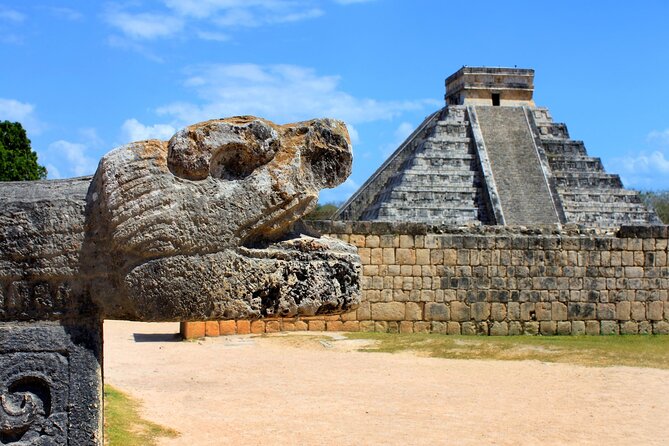
The Tzompantli, or skull rack, is a more confronting stop. Its carvings include warriors, human heads, skulls, snakes, and eagles. The name refers to the display of sacrificial victims’ heads, so this is not the lightest section of the route.
The audio gives the platform a clear purpose and helps you read the imagery on its walls. You should listen before walking away, since the carvings may look decorative at first glance.
Nearby, the Eagles and Jaguars Platform offers a different kind of space. It appears to have functioned as a flat ceremonial stage for dances, rituals, public speeches, or viewing. Its open design makes more sense when you imagine people gathered around it rather than a temple rising above it.
Both stops are short, which is appropriate for their size. Still, the walking between them adds to the total time and distance.
El Caracol and the site’s astronomy
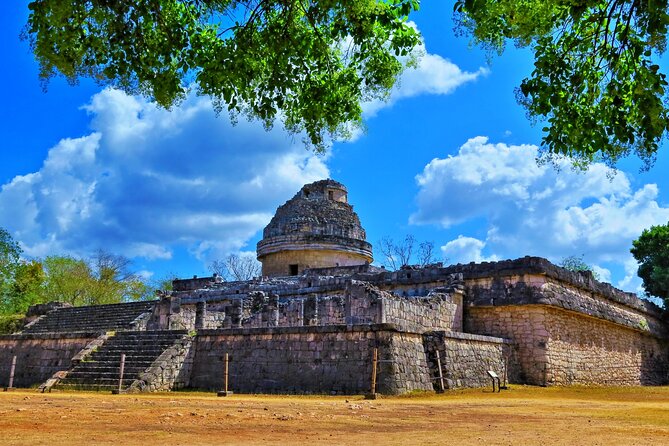
El Caracol is the circular observatory, and it is among the most memorable buildings on the route. The tour explains how the Maya watched the stars and tracked the movement of planets.
The surviving structure is not a working observatory, of course, but its unusual shape makes it easy to understand why it attracts attention. The audio gives you a reason to pause at the building instead of treating it as just another ruin.
The itinerary lists El Caracol twice, once as a principal stop and again later as a repeated location. That repetition may reflect different route points or duplicated content in the app. If the same story appears twice, skip the second version rather than assuming you have missed something.
This is also one of the places where the GPS route may matter most. Stay close to the marked path and check the map if audio begins too soon.
The larger Chichén Itzá complex
One extended story gives wider context for the site. Chichén Itzá developed over nearly 1,000 years, and its surviving buildings show Maya construction traditions combined with influences from central Mexico, including Toltec elements.
That background helps tie the separate monuments together. El Castillo, the Temple of Warriors, El Caracol, and the other platforms are not isolated curiosities. Together, they show how religion, public ceremony, political power, astronomy, and art shaped the city.
The program allows about an hour for this broader section. This is likely where you will get the most useful overview, though the amount of detail may feel limited if you want an academic treatment.
One important limitation is that the tour does not appear to answer every major historical question. A user specifically wanted more explanation about why the city was abandoned. If you want a full discussion of Maya political change, daily customs, and the later history of the site, you will need additional reading or a live guide.
The Temple of Warriors and its stone columns
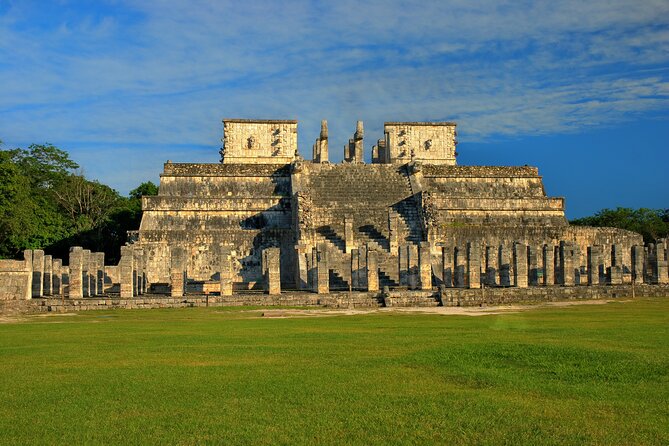
The Temple of Warriors is a large stepped structure topped by a smaller temple. Its surrounding forest of columns is carved with Toltec-style warrior figures.
The audio gives you a useful way to read the monument. Rather than seeing only a broad staircase and rows of pillars, you can focus on the individual carvings and imagine how the space may have functioned as a formal ceremonial area.
The stop is listed at ten minutes. Give yourself extra time if you want to examine the columns. The app’s audio is short enough that you can listen once for the main explanation, then replay parts while looking at details.
This stop also shows the tour’s value. On-site signs are limited and may not explain the workmanship or purpose of every building in enough depth. The narration fills some of that gap without requiring you to stay beside a guide.
The Red House and the Ossuary
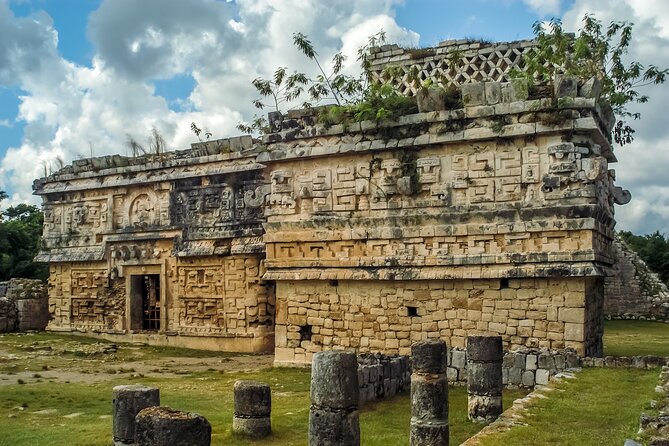
The Red House, or Chichanchob, is also called the House of Little Holes. Latticework near the top gives the building its nickname. It is a smaller and less famous structure, but that is precisely why it benefits from an audio explanation.
Without context, you might pass it quickly. The story encourages you to look at the upper decoration and consider how the building fits into the wider complex.
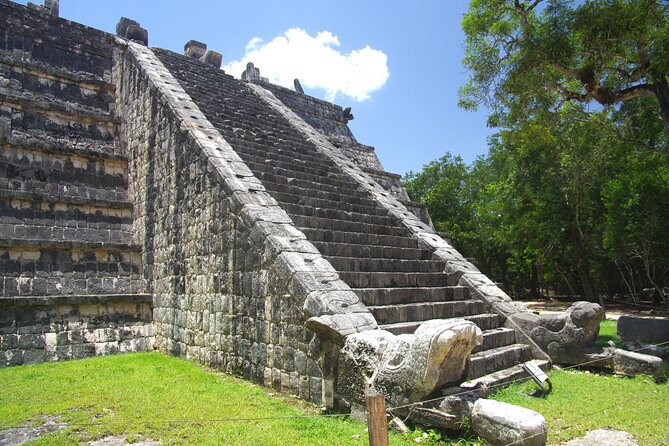
The Ossuary, also called El Osario or the High Priest’s Grave, is a pyramid associated with human and animal remains found on the site. Archaeologists uncovered seven tombs in a cavern beneath it, believed to belong to members of the Maya elite.
The tour includes both the English name and the alternate names, which is useful because signs and guidebooks may use different terms. You will also hear why the structure is associated with bones and burial.
Las Monjas and La Iglesia
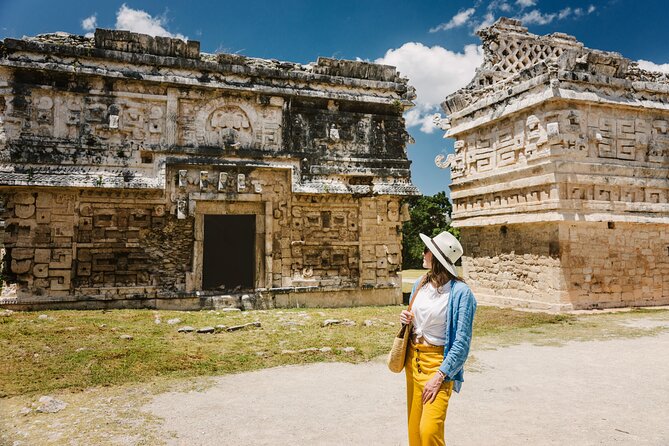
Las Monjas, or the Nunnery, is one of the largest and most important buildings at Chichén Itzá. Its walls contain many inscriptions, including references to a ruler named Kakupakal.
The name can mislead you. It does not mean the building was a convent in the European sense. The audio helps separate the nickname from the Maya setting and draws attention to the carved texts.
La Iglesia is one of the most photographed smaller buildings. Its outer surface is heavily decorated, with masks of Chac on two upper levels. Among the masks are carvings of an armadillo, crab, snail, and tortoise.
This is a rewarding final stop because the details are easy to miss from a distance. Listen, then study the facade slowly. The entire route is designed to show you both the famous pyramid and the smaller structures that give the site its character.
Audio quality, route design, and common snags
The strongest part of the experience is its independence. You are not tied to a group’s pace, and you do not need to stand shoulder-to-shoulder with a guide in the open sun. You can stop in the shade, repeat a story, or walk away from a crowded area while still keeping the tour available.
The GPS function generally works well. Several people found it easy to return to the route after buying souvenirs or wandering for photographs. The map also lets you continue manually if an automatic trigger does not fire.
The narration is concise. For many people, that is a virtue because you can understand the main point without listening to a long lecture at every building. For others, it may feel too basic. The supplied information also indicates English is the only language, and one French-speaking user found that disappointing.
Audio style is a personal matter. Most feedback describes the voice as clear and pleasant, but one person found the delivery flat and the explanations hard to understand. I would treat the tour as a practical introduction rather than a substitute for specialist historical study.
Is $9.99 good value?
At $9.99 per person, this is one of the cheaper ways to add context inside Chichén Itzá. A private guide costs much more, and the entrance fee is separate from either option.
The value is especially strong for solo visitors and couples who want privacy. Two people may share one purchase by splitting headphones, which lowers the effective price. You will need to be comfortable walking at the same pace and listening from one phone.
The main thing you are buying is flexibility. You are not paying for transport, skip-the-line access, admission, or a person to answer every question. You are paying for an organized route, location-triggered stories, and basic interpretation of the site.
The tour is advertised with lifetime access and no expiry, allowing you to use it on another visit or listen again later. Some older instructions refer to one year of access, so check the current booking details you receive after purchase.
Who should use this tour?
I would choose it if you:
- Want to avoid a large guided group
- Prefer to walk and pause at your own speed
- Are watching your budget
- Can prepare the app before arriving
- Have a charged phone and earbuds
- Want an introduction to the main monuments
I would look elsewhere if you need a live expert, extensive historical detail, another language, or help with every technical step. You should also think twice if you do not want to use your phone while sightseeing.
The route is private to your group, but it is not a private guide. No one meets you at the starting point, and you are responsible for launching the correct tour version if more than one appears in the app.
Practical advice for a smoother visit
Download the app and content before you leave reliable Wi-Fi. Enter the access code, close and reopen the app if necessary, and test the first story.
Bring wired or wireless earbuds, a portable charger, water, and comfortable walking shoes. Keep the audio available even when you step away for photographs, since the GPS can help you return to the route.
The site is open daily from 8 a.m. to 5 p.m. Check the current hours before you go. The experience provider offers free cancellation up to 24 hours before the scheduled start time. Within 24 hours, cancellations and changes are not accepted for a refund.
Should you book the Chichén Itzá audio tour?
I would book it if you want a low-cost, flexible way to understand the main buildings without hiring a private guide. Its best qualities are the offline GPS, the freedom to pause, and the route that reaches far beyond El Castillo.
I would not book it expecting a full course in Maya civilization or a live specialist who can answer questions. The content is brief, English only, and the app requires careful setup.
For most independent visitors, $9.99 is a sensible addition to the admission fee. Download it early, bring headphones, and use it as a helpful guide rather than the only source of information.
FAQ
Is admission to Chichén Itzá included?
No. The $9.99 price covers the self-guided audio tour, map, and app content. You must buy your Chichén Itzá entrance ticket separately.
How long does the audio tour take?
The audio route takes about one to two hours, and the full walk covers roughly 1.5 to more than two miles. Allow two to three hours if you include pauses, photographs, and time at the monuments.
Does the tour work without internet?
Yes. You must download the app and tour content while you have strong Wi-Fi or cellular service. After that, the tour works offline using your phone’s GPS.
Will a guide meet me at Chichén Itzá?
No. This is a self-guided activity. You go to the listed starting point, open the Action Tour Guide app, and begin the first story yourself.
What language is available?
The tour is offered in English. The supplied information does not list French, Spanish, or other language versions for this experience.
What equipment should I bring?
Bring a compatible phone, headphones or earbuds, and a portable charger. The recommended devices include an iPhone with iOS 15 or later, an Android phone with version 9 or later, or a GPS-enabled iPad or tablet with cellular connectivity.
Can I cancel for a refund?
You can cancel at least 24 hours before the scheduled start time for a full refund. Cancellations or changes made within 24 hours are not accepted for a refund.
Newly listed around Mexico
- Ticket to Frida Kahlo Museum on CDMX★ 4.5 · 44 reviews
- Epic Centro Histórico Walking Tour★ 5.0 · 77 reviews
- Eat Like A Local By The Taco Mensch★ 5.0 · 55 reviews
- Eat and Explore Local Markets in Mexico City★ 5.0 · 83 reviews
- Ticket for the Frida Kahlo Museum★ 3.5 · 67 reviews
- Authentic Lucha Libre Tour : Wrestling School, Tacos & Mezcal★ 5.0 · 162 reviews
- Express Tour to Teotihuacan Pyramids. Be the first to arrive!★ 4.5 · 62 reviews
- Small Group: The Magical Colonial Towns of Taxco and Cuernavaca★ 4.5 · 46 reviews
Chichen Itza & Cenote Tours, compared.

Chichen Itza, Cenote & Valladolid Tour with Tequila and Lunch
Read our review →
Chichen Itza, Cenote & Valladolid Tour with Lunch
Read our review →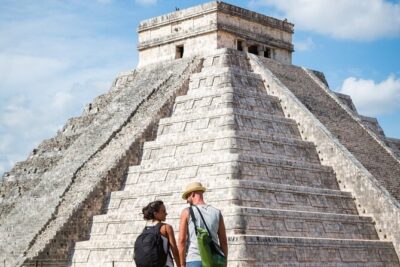
Early morning Chichen Itza Tour: Cenote and Tequila Tasting
Read our review →
Cancun ATV Jungle Adventure, Ziplines, Cenote and Tequila Tasting
Read our review →
Viator Exclusive: Tulum Ruins, Reef Snorkeling, Cenote and Caves
Read our review →
Chichen Itza Early Access All Inclusive: Hotel Pick up & All Fees
Read our review →
ATV Adventure, Interactive Bridges, Ziplines, Cenote and Lunch
Read our review →Browse the lists this tour appears in