Reviewed · MEXICO CITY TOURS
Fly over to the Unexplored Parts of CDMX by Cable Car
Mexico City looks different from above. This four-and-a-half-hour outing takes you from the Centro Histórico into Iztapalapa, a part of CDMX many visitors never see, using the city’s regular public transportation and Cablebús. I like the wide city views and the chance to see daily life beyond the usual historic center. I also like that Fernando, the main guide, explains the history, geography, and transit system as you move through the city.
The trade-off is pace. You will walk often, use Metro and Cablebús stations, manage stairs, and keep up with a guide who speaks English quickly. This is not a slow sightseeing stroll, and it may not suit anyone with limited mobility, hearing difficulty, or trouble following rapid speech in a noisy station.
In This Review
- Key points to know before you book
- Why Iztapalapa changes your view of CDMX
- Starting in Centro Histórico with Fernando
- Stop 1: Museum of Cultures by Iztapalapa Passion
- Walking through Iztapalapa at street level
- Taking the Cablebús over the rooftops
- Mercado Quetzalcóatl: murals with your tacos
- Pulque at the finish in Centro
- What the $58 price really buys you
- Who should book this CDMX experience?
- Should you book it?
- FAQ
- How long does the Cablebús and Iztapalapa tour last?
- How much does the tour cost?
- Is the tour offered in English?
- Where does the tour begin?
- Where does the tour end?
- Is food included?
- Is an alcoholic drink included?
- How much walking is involved?
- Can I cancel for a full refund?
Key points to know before you book
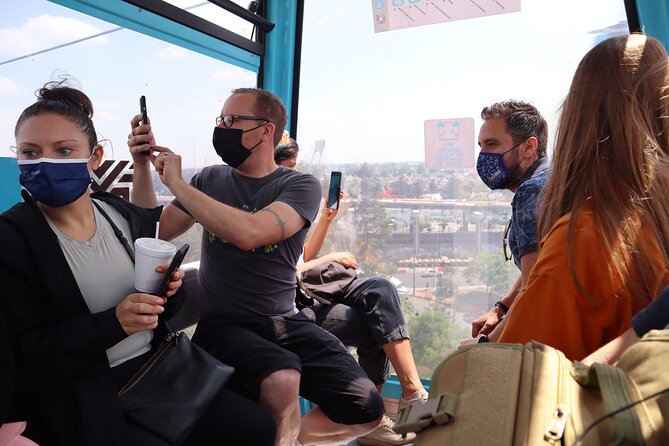
- Iztapalapa from above: The Cablebús gives you a rare view over dense neighborhoods, colorful homes, rooftop murals, and the huge scale of Mexico City.
- Public transportation is part of the lesson: You use the Metro and Cablebús as local residents do, with Fernando explaining how the system works.
- Food and drink are included: The route includes tacos at Mercado Quetzalcóatl, a snack, and a traditional alcoholic drink at a pulquería.
- A strong guide makes the difference: Fernando brings history, sociology, local knowledge, and practical CDMX advice to the route.
- Expect a demanding four and a half hours: The experience includes frequent walking and stairs, and the group can have up to 20 people.
- The price is fair for the access: At $58 per person, you get guided transport, several stops, food, drinks, and a side of the city that is difficult to understand on your own.
Why Iztapalapa changes your view of CDMX

Most first visits to Mexico City stay close to Centro Histórico, Roma, Condesa, Coyoacán, and the major museums. Those areas deserve your time, but they do not show the full size or social range of the capital. Iztapalapa gives you a very different frame of reference.
Iztapalapa is Mexico City’s largest district, and the tour takes you into its streets rather than treating it as something to view from a highway. You visit a cultural center, see local murals, stop for food, and use the city’s cable car as ordinary public transit.
That distinction matters. The Cablebús is not simply a tourist ride built for pretty photographs. It functions as part of the working transport network. From the cabins, you can see the close-packed neighborhoods below and understand how far the city spreads toward the old volcanoes.
The ride also changes how you read the city. At street level, Mexico City can feel like a collection of separate districts. From above, the connections become clearer. Rooftop murals, colorful buildings, narrow streets, and long stretches of housing form a broad urban picture that is hard to grasp from inside a taxi.
A few more Mexico City runs worth comparing
- Teotihuacan, Guadalupe Shrine & Tlatelolco Day Tour with Lunch
★ 5.0 · 11,603 reviews - Xochimilco, Coyoacan and Frida Kahlo with Optional Lunch
★ 4.5 · 7,320 reviews - Balloon flight + Breakfast in cave + Pyramids + Pick up CDMX.
★ 5.0 · 6,335 reviews
Starting in Centro Histórico with Fernando
The meeting point is Churrería El Moro Centro at Eje Central Lázaro Cárdenas 42. That puts you in a central, familiar part of town before the route moves away from the standard sightseeing circuit. The tour ends downtown at Pulquería La Risa on Mesones Street, so you finish close to the Centro Histórico rather than being left in an unfamiliar outer district.
Fernando is the guide most closely associated with this experience. His strength is not just naming places. He explains how Mexico City developed, how Iztapalapa fits into the wider city, and how to use public transportation with more confidence.
That makes this a useful first-day or early-trip activity. You learn the Metro and Cablebús system while accompanied by someone who can explain what you are seeing. Several tour participants found the transit instruction alone worth the price, and I agree that this is one of the most practical parts of the outing.
Fernando also gives food and bar suggestions for the rest of your stay. His English is described as fluent but fast, so listen closely. On the Metro, station noise and movement can make explanations harder to follow. If you want to ask questions, do it early and clearly.
The group can reach 20 people. A smaller group may make it easier to hear and stay connected, while a full group could feel brisk when moving through stations and streets.
Stop 1: Museum of Cultures by Iztapalapa Passion
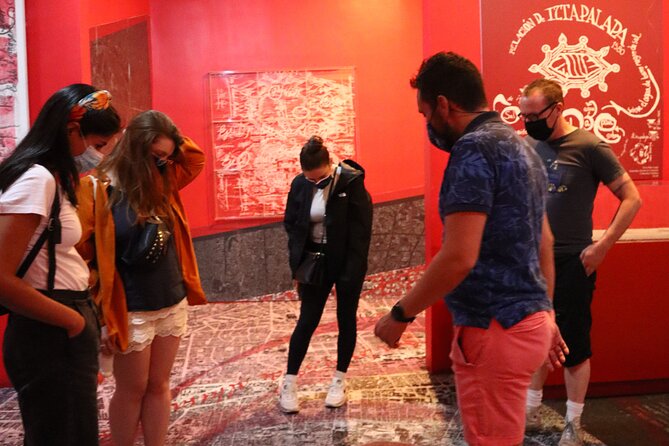
The first stop is the Museum of Cultures by Iztapalapa Passion, with about 35 minutes inside and admission included. This museum introduces the history and traditions of Iztapalapa before you walk through the district itself.
The timing is short, but the stop gives the rest of the experience a useful foundation. Without some context, the neighborhood can look like a vast collection of buildings and streets. The museum helps you connect local customs and traditions with the places you see later.
I would not book this tour expecting a long museum visit. Thirty-five minutes is enough for an introduction, not a detailed study of every exhibit. Its real value is preparation for the outdoor portion, where the guide links local life, history, and city growth.
This is also where the tour begins to move beyond standard postcard Mexico City. You are not simply ticking off a famous museum. You are getting an introduction to a district that usually receives far less attention from international visitors.
Walking through Iztapalapa at street level
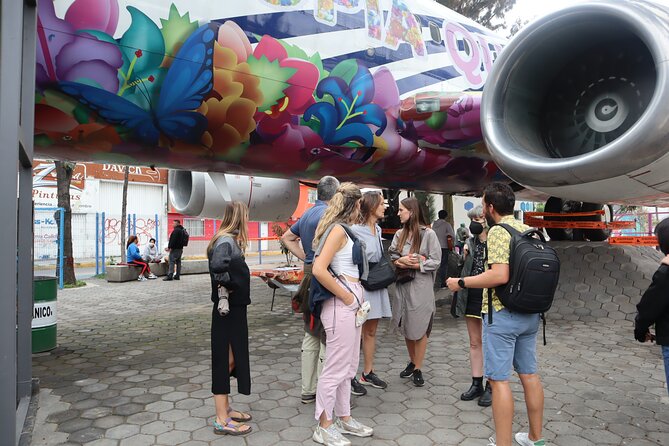
After the museum, you spend about an hour in Iztapalapa. The group walks through local streets, visits a cultural center, and eats local food before reaching the cable car.
This portion requires an open mind. The experience is designed to show a working residential district, not a polished tourist zone. You may see ordinary streets, community spaces, murals, and the texture of daily life that is absent from the central monuments.
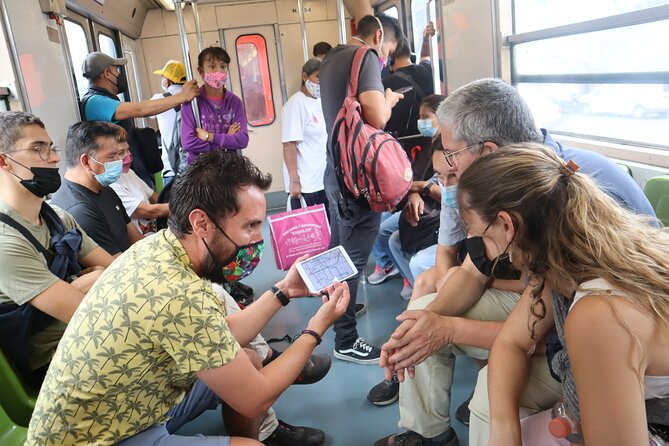
The guide’s commentary is especially important here. Fernando explains the district’s past and present, rather than asking you to look at unfamiliar surroundings without context. He also discusses Mexico City’s public transport and the way the city’s neighborhoods connect.
Several people described this section as fast-paced, educational, and interactive. That is useful praise, but also a warning. You should be ready to move from one point to another without long pauses. Comfortable shoes are a sensible choice, and you should keep your belongings secure in crowded public spaces as you would anywhere in a large city.
The food is one of the rewards. The exact snack may vary, but the tour includes local food and later stops at a market known for tacos. The emphasis is on eating where local residents eat, not on a formal restaurant meal.
Same base, a different sort of day:
- Teotihuacan pyramids morning or afternoon without tourist traps
★ 5.0 · 6,186 reviews - Teotihuacan Early Access Guided Tour with optional Lunch
★ 4.5 · 6,138 reviews - Balloon flight + pick up in CDMX + Breakfast in Cave + Pyramids
★ 5.0 · 5,651 reviews - Balloon Flight + Cave Breakfast + Pick Up from CDMX or We Fly
★ 5.0 · 4,410 reviews
Taking the Cablebús over the rooftops
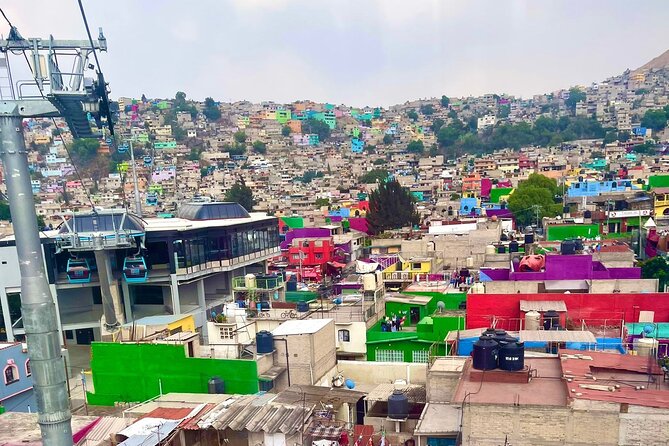
The Cablebús is the star of the day. Once aboard, you rise above the neighborhoods and see CDMX from a viewpoint most visitors miss.
The cabins offer broad views of houses, streets, murals, and the city’s outer reaches. Rooftop paintings are a recurring highlight, and some are large enough to make sense only from the air. The ride also shows the density and scale of Iztapalapa in a direct, memorable way.
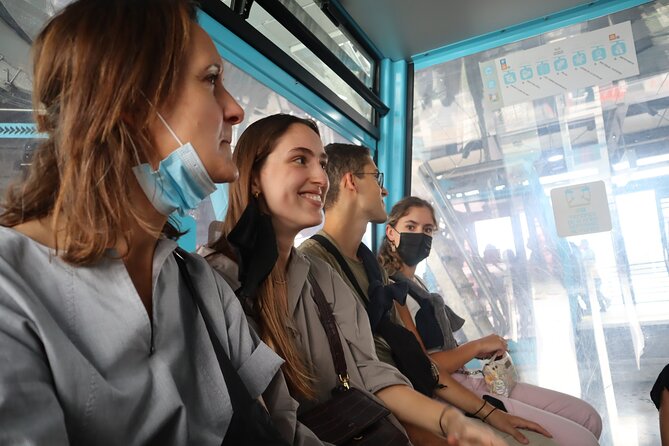
The Cablebús itself is described as smooth, efficient, and safe. Since it serves as public transit, the ride feels connected to the city rather than separated from it as a sightseeing attraction. That is a key difference. You are not only looking at Mexico City, you are learning how people move through it.
Weather matters. The experience requires good conditions, and poor weather can lead to a new date or a full refund. Clear weather should give you the best views, though the tour still has value from the ground if visibility is less than perfect.
You should also expect stairs and station walking. One detailed account specifically warned that the route includes lots of walking and stairs in and out of the Metro and Cablebús. If you use a cane or need a slower pace, contact the operator before booking and make sure the format is suitable.
Mercado Quetzalcóatl: murals with your tacos
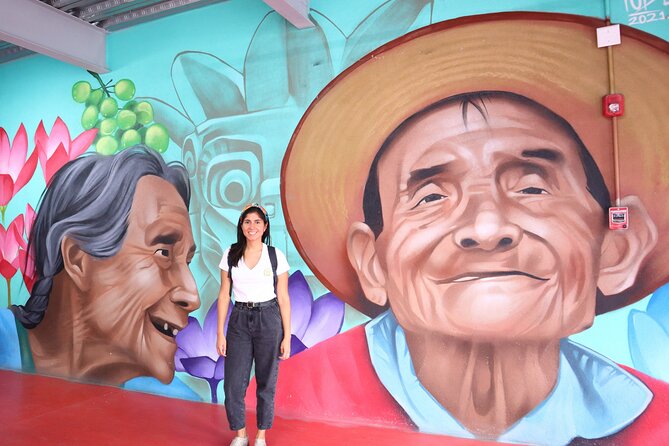
The 30-minute visit to Mercado Quetzalcóatl combines food and public art. You get tacos, including carnitas mentioned by one participant, and see striking murals inside the market.
This stop works because it is short and focused. You do not spend an hour wandering without direction. Instead, the guide points out the murals, helps explain the setting, and gives you time to eat.
The market is also a good example of why local context matters. A mural can look decorative when viewed quickly, but a guide can help you think about who made it, where it sits, and how public art helps shape a neighborhood. The market stop gives the tour a human scale after the huge views from the Cablebús.
Food expectations should stay practical. This is a local market visit, not a multi-course tasting menu. If you want a substantial lunch, you may need to eat before or after the tour. The tacos and included snack add real value, but the main purpose is the combination of food, murals, and place.
Pulque at the finish in Centro
The final stop is a local bar, listed as Pulquería Vacas Verdes Bellas Artes, while the stated end point is Pulquería La Risa on Mesones Street in Centro Histórico. The experience finishes with a pre-Hispanic alcoholic beverage, pulque.
Pulque is made from fermented agave sap and has a long connection to Mexican food and drink traditions. It is different from tequila and mezcal, so this is a chance to try something many first-time visitors do not encounter during a standard city tour.
The included drink gives the outing a pleasant finish, but the time is brief, about 20 minutes. Think of it as a final taste and conversation, not a full evening at a bar. You finish downtown, which is convenient if you want dinner, more sightseeing, or an easy route back to your accommodation.
Because the supplied details name two different pulquería locations, confirm the final meeting instructions before departure. The important practical point is that the tour ends at a local bar in the Centro Histórico.
What the $58 price really buys you
At $58 per person, this is not the cheapest way to ride public transport in Mexico City. The Metro and Cablebús fares themselves cost only a small amount. You are paying for interpretation, organization, food, drinks, and access to a route that most visitors would not plan confidently on their own.
The value is strongest if you want to understand the city rather than simply collect sights. Fernando explains the transport system, local history, geography, and social setting while handling the route. You also get tacos, a snack, and a traditional drink.
The tour can be particularly useful at the beginning of a stay. After learning the Metro and Cablebús system, you may feel more comfortable reaching museums, markets, and districts on your own. Several participants considered the transit guidance a major part of the value.
The price feels less attractive if you dislike group movement, want a slow pace, or only care about the cable car ride. In that case, you may prefer a shorter independent transport outing. But for a guided half-day that covers a museum, neighborhood walk, market, public art, food, and pulque, $58 is reasonable.
Who should book this CDMX experience?
I would recommend it to curious first-time visitors who have already seen, or plan to see, the main central sights and want a broader picture of the capital. It also suits people who enjoy public transportation, urban history, murals, markets, and food more than formal sightseeing.
Families can enjoy it, and one account specifically noted that an 11-year-old stayed engaged. Teenagers may also appreciate the cable car views and the active format. The tour works well for couples, solo visitors, and small groups who want something unusual without paying for a private excursion.
You should think twice if you walk slowly, need frequent rests, have hearing difficulty, or find rapid English difficult. One strongly negative account described problems with the guide’s manner, including impatience with a slower walker and with someone who struggled to follow fast speech in a noisy Metro. Most of the available feedback is highly positive, but this concern is specific and important.
The guide’s energy is a major asset for people who like lively teaching. It can feel intense if you prefer quiet, relaxed sightseeing. Go in expecting a demanding, information-filled outing rather than a gentle ride with occasional commentary.
Should you book it?
Book this tour if you want to see Mexico City from above and at street level, learn the transit system, eat tacos in a local market, and finish with pulque. The Cablebús views are the visual highlight, while Iztapalapa and Fernando’s explanations give the day its purpose.
Skip it if you need an accessible or slow-paced route, or if you want to stay within the familiar tourist districts. For the right person, this is one of the better ways to understand how enormous and varied CDMX really is. Cancel at least 24 hours before the start for a full refund. If bad weather or an insufficient number of bookings cancels the tour, you can choose another date or receive a full refund.
FAQ
How long does the Cablebús and Iztapalapa tour last?
The experience lasts approximately four hours and 30 minutes.
How much does the tour cost?
The listed price is $58 per person.
Is the tour offered in English?
Yes. The tour is offered in English, and Fernando is described as fluent in English. Some people found his speech quite fast.
Where does the tour begin?
It begins at Churrería El Moro Centro, Eje Central Lázaro Cárdenas 42, Centro Histórico, Mexico City.
Where does the tour end?
It finishes at a local bar in Centro Histórico. The stated end point is Pulquería La Risa, Calle de Mesones 71. The tour details also mention Pulquería Vacas Verdes Bellas Artes, so confirm the final location before departure.
Is food included?
Yes. The experience includes a complimentary snack, local food, and tacos at Mercado Quetzalcóatl.
Is an alcoholic drink included?
Yes. The tour ends with a pre-Hispanic alcoholic beverage at a local pulquería.
How much walking is involved?
The tour includes frequent walking and stairs in and out of Metro and Cablebús stations. It is best suited to people comfortable with a fast-paced walking route.
Can I cancel for a full refund?
Yes. You must cancel at least 24 hours before the start time for a full refund. Cancellations or changes made within 24 hours are not refunded or accepted.
Newly listed around Mexico City
- Xochimilco : Island of the dolls, tequila and mezcal CDMX★ 5.0 · 102 reviews
- Xochimilco: Sanctuary of the Axolotl★ 4.9 · 58 reviews
- Xochimilco: Market, Food and Nature ¡All included! Tour★ 4.9 · 107 reviews
- Xochimilco: amanecer en kayak Ciudad de México★ 5.0 · 35 reviews
- Xochimilco & Colonial Coyoacan Trip★ 4.0 · 312 reviews
- Small Groups: Xochimilco and Coyoacan★ 4.0 · 37 reviews
- Bike Tour in Mexico City★ 5.0 · 45 reviews
- Museum of Anthropology: a look at Mexico’s past★ 5.0 · 52 reviews
Mexico City Tours, compared.
Teotihuacan, Guadalupe Shrine & Tlatelolco Day Tour with Lunch
Read our review →
Xochimilco, Coyoacan and Frida Kahlo with Optional Lunch
Read our review →
Balloon flight + Breakfast in cave + Pyramids + Pick up CDMX.
Read our review →
Teotihuacan pyramids morning or afternoon without tourist traps
Read our review →
Teotihuacan Early Access Guided Tour with optional Lunch
Read our review →
Balloon flight + pick up in CDMX + Breakfast in Cave + Pyramids
Read our review →
Balloon Flight + Cave Breakfast + Pick Up from CDMX or We Fly
Read our review →