Reviewed · MEXICO CITY TOURS
Guadalupe Shrine Tour
A miracle, two basilicas, one hill. The Guadalupe Shrine Tour takes you from central Mexico City to one of Catholicism’s busiest pilgrimage sites, where the 1531 apparition story still shapes Mexican faith and culture. I like the round-trip transport, which removes a cross-city chore, and the guides who often turn a quick visit into a thoughtful lesson. The visit also includes the Old Basilica, New Basilica, Tepeyac Hill, and a museum of 17th-century religious art.
The main drawback is the 3:00 pm start. Several buildings close around 5:00 pm, so a late departure can make the visit feel rushed, especially if you want to climb the hill, see the chapels, attend Mass, and explore the museum. The meeting point at Hostal Amigo in the Historic Center can also be hard to find, and hotel pickup is available only with the private option.
In This Review
- Key points at a glance
- Why the Guadalupe Shrine matters in Mexico City
- Meeting in the Historic Center at 3:00 pm
- The Old Basilica and its 1709 colonial design
- The New Basilica and the moving image of Guadalupe
- Climbing Tepeyac Hill to the original chapel
- The museum’s 4,000 pieces of religious art
- Free time for Mass, prayer, or a closer look
- Guides can make or break the afternoon
- Timing, transport, and the $51 price
- Who will get the most from this visit
- Should you book the Guadalupe Shrine Tour?
- FAQ
- Where does the Guadalupe Shrine Tour start?
- What time does the tour begin?
- Is hotel pickup included?
- Is the tour offered in English?
- What is included in the $51 price?
- Is the tour physically demanding?
Key points at a glance
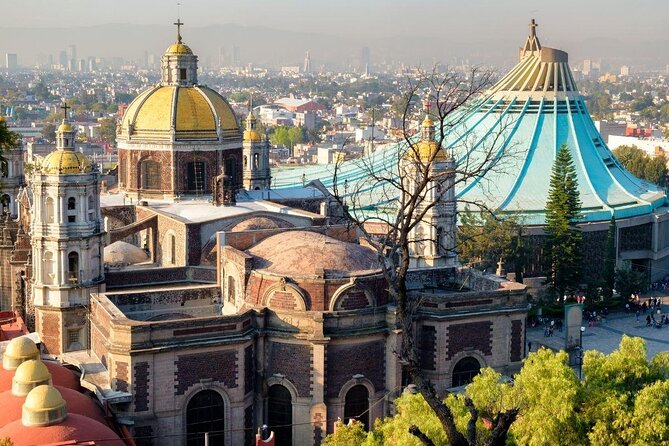
- See both basilicas: Compare the Moorish-influenced Spanish colonial Old Basilica, built in 1709, with the circular New Basilica, completed in 1976.
- The tilma is the central sight: The cloak associated with Juan Diego and the Virgin of Guadalupe is displayed inside the shrine.
- Climb Tepeyac Hill: Well-maintained stairs lead to the chapel and the site linked to the apparition.
- Get cultural context: The guide explains why the Virgin of Guadalupe matters as both a religious figure and a national cultural symbol.
- Small-group setting: The maximum group size is 20, and some departures become nearly private when bookings are light.
- Plan around closing time: The 3:00 pm departure may leave limited time for the museum and smaller chapels.
Why the Guadalupe Shrine matters in Mexico City
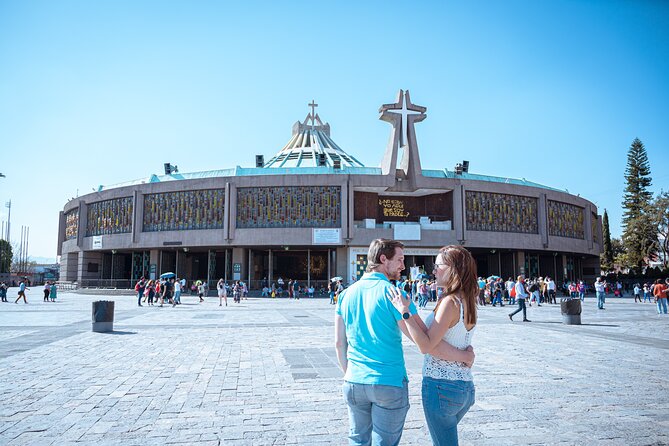
The Basilica of Our Lady of Guadalupe is far more than one church building. It is a large religious complex in the northern part of Mexico City, with basilicas, chapels, gardens, historic buildings, and the hill called Tepeyac.
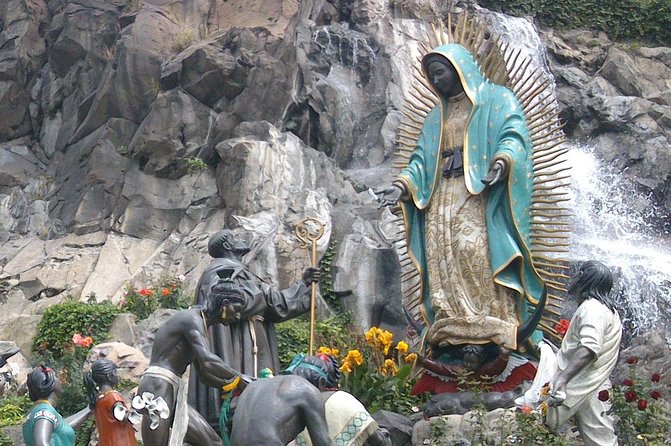
According to Catholic tradition, the Virgin Mary appeared in 1531 to Juan Diego, an Indigenous peasant, on Tepeyac Hill. Her image was then miraculously imprinted on his tilma, or cloak. That image became the focus of devotion at Guadalupe and helped make the shrine one of the most visited Catholic pilgrimage sites in the world, with more than 20 million visitors each year.
You do not need to be Catholic to appreciate the visit. The site offers a useful way to understand Mexican identity, Spanish colonial religion, Indigenous traditions, and the role of pilgrimage in public life. One guide, Jocelyn, was praised for connecting the Guadalupe story with wider Mexican history and present-day culture. That wider context is exactly what can be missing if you simply arrive, take a photograph, and leave.
A few more Mexico City runs worth comparing
- Teotihuacan, Guadalupe Shrine & Tlatelolco Day Tour with Lunch
★ 5.0 · 11,603 reviews - Xochimilco, Coyoacan and Frida Kahlo with Optional Lunch
★ 4.5 · 7,320 reviews - Balloon flight + Breakfast in cave + Pyramids + Pick up CDMX.
★ 5.0 · 6,335 reviews
Meeting in the Historic Center at 3:00 pm
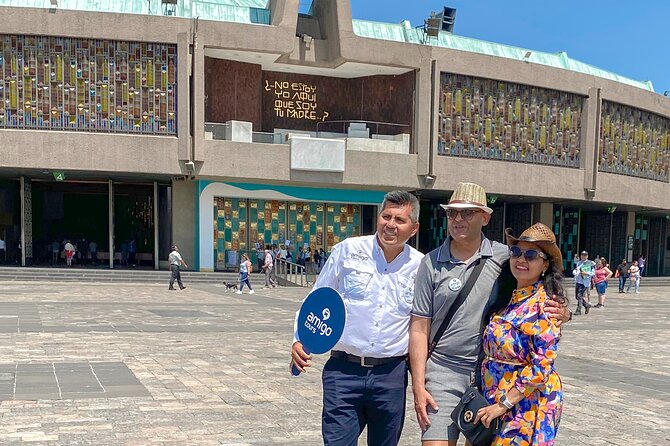
The shared tour begins at Hostal Amigo, at Isabel La Católica 61-A in the Centro Histórico. This is not a grand transport terminal. The office is inside a youth hostel, and finding the right room can take some patience.
I would arrive early. One dissatisfied customer described the office as hidden and the waiting area as unpleasant, while other experiences praised the company for punctual departures. That contrast tells you something practical: allow extra time to locate the meeting point, and confirm the departure details before you arrive.
The tour is offered in English, and the vehicle takes you from central Mexico City to the shrine and back. Transportation is included, which is useful because Guadalupe is not right beside the central sights. It also saves you from arranging a taxi or navigating public transport for a first visit.
The group maximum is 20 people. That is small enough for a guide to answer questions, though the actual group can be much smaller. Several departures had only one couple or one solo participant, turning the outing into a personal walking tour. That is not guaranteed, but a light booking can work in your favor.
If you choose the private version, hotel pickup is available. You need to provide your hotel name so the operator can arrange it. For the shared option, you must reach the listed meeting point yourself.
The Old Basilica and its 1709 colonial design
The first major stop is the Basílica Antigua, or Old Basilica. Built in 1709, it reflects Spanish colonial design with Moorish influence. Its age and style give you a useful contrast with the modern church nearby.
Inside, you can see devotional paintings and the tilma connected with the Guadalupe miracle. The image is the spiritual center of the entire complex, so this is not a stop to rush through. Your guide helps explain what you are seeing and why the cloak carries such weight for Mexican Catholics.
Photography is allowed in most areas, but one personal account notes that it is not allowed inside the original chapel. Follow the signs and your guide’s instructions, particularly in places where worship is taking place.
The Old Basilica also helps you understand how the shrine developed. Guadalupe is not a single monument built at one moment. It is a collection of sacred places shaped by centuries of devotion, construction, repairs, and pilgrimage.
The New Basilica and the moving image of Guadalupe
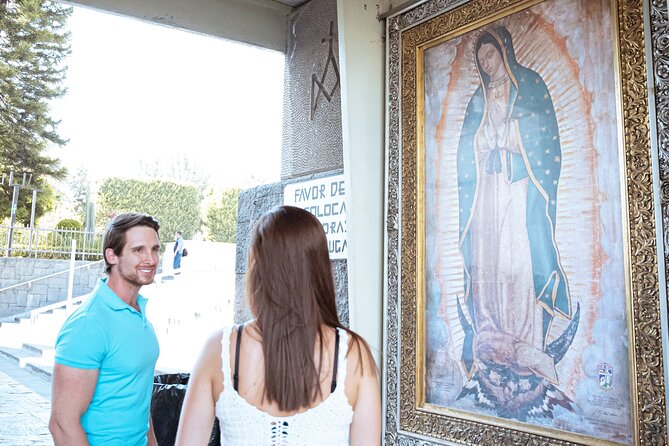
The New Basilica was completed in 1976 and has a circular floor plan. That shape lets you view the Virgin from almost any place inside the church, rather than limiting the view to a traditional front altar.
The design is practical as well as symbolic. The basilica can seat more than 10,000 worshippers, according to one account, and the broad interior accommodates a constant flow of people. Pilgrims move toward the image along the main aisle, often in a quiet, steady stream.
A moving walkway passes in front of the tilma. The tour information does not specify every operating detail, so listen closely to your guide when you enter. The key point is that the arrangement lets large numbers of people see the image without stopping the movement of the congregation.
This is also where the human side of the shrine becomes most visible. Some older pilgrims have spent years hoping to make this journey. For them, the basilica is not simply an architectural sight. It may be a once-in-a-lifetime act of devotion.
Your guide can help you read the room beyond its size. The New Basilica may look modern and imposing, but the focus remains personal: a small image, a remembered apparition, and generations of people coming to pray.
Same base, a different sort of day:
- Teotihuacan pyramids morning or afternoon without tourist traps
★ 5.0 · 6,186 reviews - Teotihuacan Early Access Guided Tour with optional Lunch
★ 4.5 · 6,138 reviews - Balloon flight + pick up in CDMX + Breakfast in Cave + Pyramids
★ 5.0 · 5,651 reviews - Balloon Flight + Cave Breakfast + Pick Up from CDMX or We Fly
★ 5.0 · 4,410 reviews
Climbing Tepeyac Hill to the original chapel
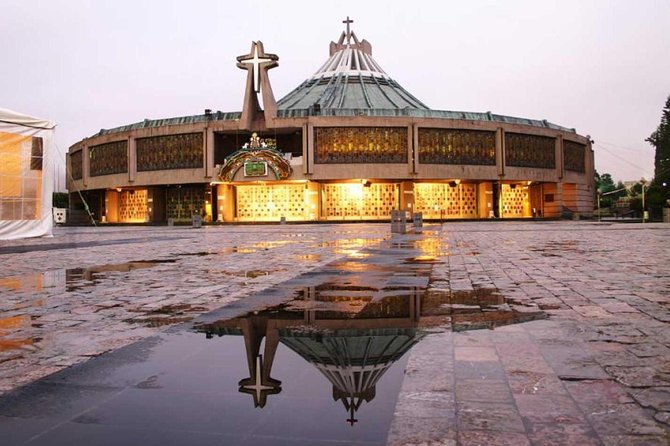
The climb up Tepeyac Hill is one of the most meaningful parts of the visit. This is the place associated with the original apparition, and the route leads to a chapel above the main complex.
The stairs are well maintained, but the climb does require moderate physical effort. The tour’s fitness guidance is worth taking seriously if you have mobility concerns or tire easily. The slope is not simply a quick sidewalk stroll.
At the top, you gain a different view of the complex and the city. The hill also changes the pace of the visit. After seeing large basilicas and crowds, you are standing at a smaller, more intimate site tied directly to the Guadalupe story.
The guides who earned the strongest praise adjusted the pace here. Anthony was described as helpful with people who had different needs, while other guides took time to find easier routes for a parent using a wheelchair. Accessibility is not presented as fully guaranteed, so tell the guide at the start if anyone in your group needs a slower pace or an easier route.
If the tour runs late, this is one of the places most at risk of being shortened or skipped. The hill, the smaller chapels, and the museum all compete with the 5:00 pm closing time mentioned in one detailed account.
The museum’s 4,000 pieces of religious art
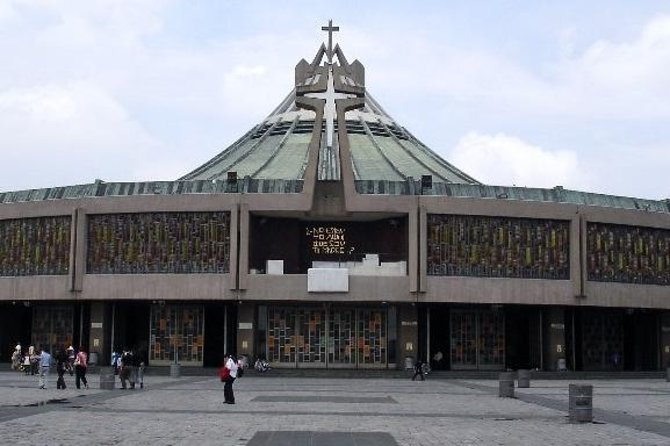
Behind the Old Basilica, the museum contains about 4,000 pieces of 17th-century religious art. This stop adds welcome context to the Guadalupe story.
Church art can seem confusing when you do not know what to look for. A guide can point out devotional themes, colonial influences, and the way religious imagery was used to teach people who might not have read formal religious texts.
The museum is especially valuable if you want more than a pilgrimage stop. It links the shrine to the wider artistic culture of colonial Mexico. You may also find it the quietest part of the tour, although the available time depends on the day’s schedule.
This is another reason I would prefer an earlier start. A 3:00 pm departure gives you roughly four hours overall, but the drive, walking, worship services, and closing times can squeeze the museum visit. One account specifically wished the tour began at 1:00 pm so there would be enough time for the other churches and chapels.
Free time for Mass, prayer, or a closer look
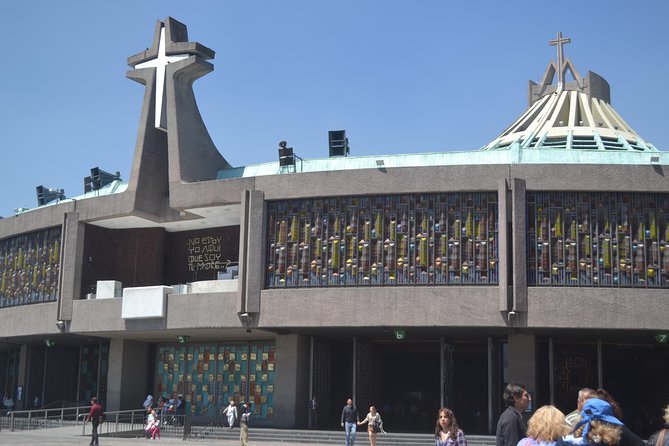
The final part of the visit includes free time. You can attend Mass, pray, take photographs where permitted, or walk around the complex on your own before returning to Mexico City.
This flexibility is a real strength for people making a religious pilgrimage. One guide, Ligia, waited while a visitor attended services and helped turn the outing into a personal act of prayer rather than a simple sightseeing circuit. Another guide made time for Sunday Mass.
You should not assume that every departure will provide unlimited time for a service. The schedule, group needs, and closing hours matter. If attending Mass is your priority, tell the guide as soon as the tour begins.
For a culturally curious visitor, free time also lets you pause without a running commentary. You can sit in the New Basilica, watch the movement of pilgrims, or study the buildings at your own pace. That balance of guided explanation and personal time makes the tour more useful than a fast stop for photographs.
Guides can make or break the afternoon
The best part of this experience is often the guide. Miriam, Ligia, Jocelyn, Gabriel, Antonio, Anthony, and Herson were all praised for being friendly, patient, or well informed. Miriam and driver Joseluis were also credited with making visitors feel safe and welcome.
Several guides answered long strings of questions without rushing. One visitor described the experience as closer to a conversation than a standard tour because the guide stayed with the group and explained each location carefully.
That level of service is not automatic. One poor experience involved a late vehicle, a guide who did not speak the promised English, little historical explanation, and a group member who was temporarily lost. Another person found the guide only average and felt the information added little beyond prior reading.
The fairest conclusion is that guide quality has varied. Most of the detailed praise centers on guides who communicate well, accommodate different abilities, and understand that the shrine is both a sacred place and a cultural site. The tour is worth more when your guide explains the names, dates, buildings, and traditions rather than simply pointing them out.
Timing, transport, and the $51 price
At $51 per person, the tour is not the cheapest way to reach Guadalupe. You are paying for round-trip transport, an English-speaking professional guide, and help making sense of a large complex that lacks an obvious small map for first-time visitors.
The value improves if you are staying in central Mexico City, have limited time, or do not speak much Spanish. One account noted that very few people at the shrine spoke English, making the guide particularly useful. Without help, you could see the main basilicas but miss the significance of the chapels, hill, museum, and Juan Diego traditions.
The price is less compelling if you are comfortable arranging your own transport and researching the site in advance. The admission ticket for the main visit is listed as free, so the tour fee is mainly for convenience, transportation, and interpretation.
The four-hour estimate should be treated as approximate. One outing began at 3:00 pm and returned around 6:30 pm, while another was badly delayed and lost valuable time at the shrine. A late vehicle can affect the whole experience, so do not schedule a tight dinner reservation immediately afterward.
Transportation has generally been described as comfortable, but one report mentioned a van with broken air conditioning. That appears to be an exception, not a standard feature, yet it is a reminder that vehicle conditions can vary.
Who will get the most from this visit
I would recommend the tour to:
- First-time visitors to Mexico City who want clear background on Guadalupe.
- English speakers who prefer not to manage transport and explanations alone.
- Catholic visitors who want time for Mass or personal prayer.
- Families with older relatives, provided you discuss mobility needs with the guide.
- Curious visitors interested in Mexican culture, colonial art, and religious practice.
You might skip it if you have only a short time in Mexico City and prefer to focus on central sights. You might also prefer an independent visit if you want to spend several hours in the museum and chapels, since the fixed afternoon schedule may feel tight.
The site itself is accessible to a wide range of interests. One self-described atheist still found the architecture and history worthwhile. That is a good way to approach Guadalupe: faith gives the place its purpose, but art, architecture, national identity, and human devotion give every visitor something to consider.
Should you book the Guadalupe Shrine Tour?
Book it if you want an English-speaking guide and simple round-trip transport to a complex site that can be confusing on your own. The strongest guides, including Ligia, Jocelyn, Miriam, Herson, and Gabriel, have made the visit patient, personal, and much more meaningful.
I would book the private option if hotel pickup, extra flexibility, or special mobility needs matter to you. For the shared tour, arrive early at Hostal Amigo, keep your afternoon open after the tour, and ask at the start about the hill, museum, chapels, and Mass.
The biggest caution is timing. If you can choose among departure times, an earlier start would give you more breathing room. If 3:00 pm is your only choice, go for the main basilicas and tilma first, then fit in the hill and museum as time allows.
FAQ
Where does the Guadalupe Shrine Tour start?
The shared tour starts at Hostal Amigo, Isabel La Católica 61-A, in Mexico City’s Centro Histórico. The activity ends back at the same meeting point.
What time does the tour begin?
The listed start time is 3:00 pm. The tour lasts approximately four hours.
Is hotel pickup included?
Hotel pickup is available only if you select the private tour option. You must provide your hotel name so the pickup can be coordinated.
Is the tour offered in English?
Yes. English is the offered tour language.
What is included in the $51 price?
The price includes a professional guide and round-trip transportation. Food and drinks are not included.
Is the tour physically demanding?
A moderate fitness level is recommended. The climb up Tepeyac Hill uses maintained stairs and requires some exertion. Tell the guide if someone in your group needs an easier route or assistance.
Newly listed around Mexico City
- Xochimilco : Island of the dolls, tequila and mezcal CDMX★ 5.0 · 102 reviews
- Xochimilco: Sanctuary of the Axolotl★ 4.9 · 58 reviews
- Xochimilco: Market, Food and Nature ¡All included! Tour★ 4.9 · 107 reviews
- Xochimilco: amanecer en kayak Ciudad de México★ 5.0 · 35 reviews
- Xochimilco & Colonial Coyoacan Trip★ 4.0 · 312 reviews
- Bike Tour in Mexico City★ 5.0 · 45 reviews
- Small Groups: Xochimilco and Coyoacan★ 4.0 · 37 reviews
- Museum of Anthropology: a look at Mexico’s past★ 5.0 · 52 reviews
Mexico City Tours, compared.
Teotihuacan, Guadalupe Shrine & Tlatelolco Day Tour with Lunch
Read our review →
Xochimilco, Coyoacan and Frida Kahlo with Optional Lunch
Read our review →
Balloon flight + Breakfast in cave + Pyramids + Pick up CDMX.
Read our review →
Teotihuacan pyramids morning or afternoon without tourist traps
Read our review →
Teotihuacan Early Access Guided Tour with optional Lunch
Read our review →
Balloon flight + pick up in CDMX + Breakfast in Cave + Pyramids
Read our review →
Balloon Flight + Cave Breakfast + Pick Up from CDMX or We Fly
Read our review →