
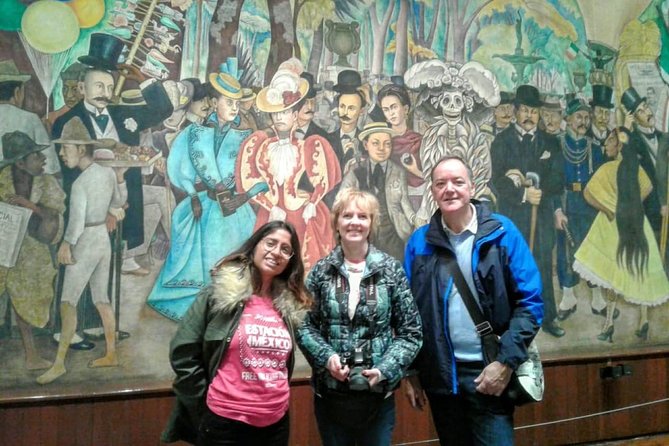
Reviewed · FRIDA KAHLO MUSEUM TOURS
La Catrina & Muralism: Diego Rivera’s Legacy & Frida Kahlo
Murals turn downtown into a history book. This 2.5-hour walking tour connects Diego Rivera, Frida Kahlo, José Clemente Orozco, David Alfaro Siqueiros, and the wider Mexican muralism movement across central Mexico City. I like the way it combines major museums with public art tucked into markets and older buildings. I also like the small group limit of 12, which gives the guide room to answer questions instead of delivering a speech to a crowd.
The main caution is timing. The published duration is about 2 hours 30 minutes, but some outings have lasted three and a half to more than four hours. That can be a gift if you love art, but a problem if you have lunch plans or another timed visit. Bring water and a snack, and ask at the start how closely the day’s route will follow the advertised schedule.
In This Review
- Key points at a glance
- Why Mexican muralism deserves a place on your Mexico City schedule
- Starting at San Ildefonso, where Rivera and Kahlo crossed paths
- Reading murals at the Museo Vivo del Muralismo
- La Catrina and the Museo Mural Diego Rivera
- Ending at Palacio de Bellas Artes
- The guides are the heart of the experience
- A walking tour with more standing than the clock suggests
- What $66.14 buys you
- Who should book this mural walk?
- Practical planning before you go
- Should you book La Catrina and Muralism?
- FAQ
- How long is the La Catrina and Muralism tour?
- Where does the tour begin?
- Where does the tour end?
- What language is the tour offered in?
- Are museum tickets and transportation included?
- Can I cancel for a full refund?
Key points at a glance
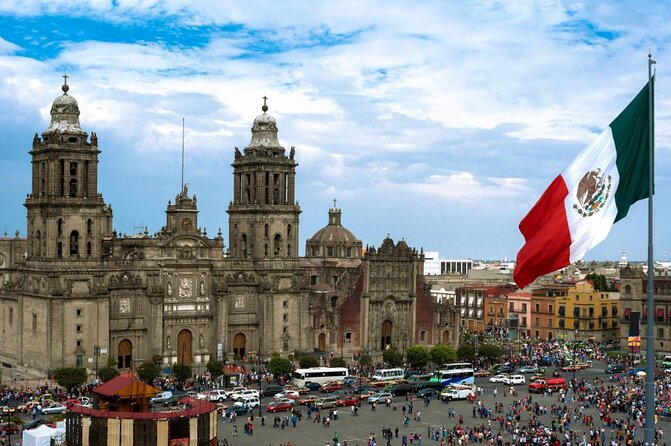
- Four central Mexico City stops: Visit San Ildefonso, the Museo Vivo del Muralismo, the Museo Mural Diego Rivera, and Palacio de Bellas Artes.
- La Catrina takes center stage: See Diego Rivera’s celebrated mural featuring the skeletal figure linked with Día de Muertos.
- Small groups matter: The maximum group size is 12, and private-feeling outings can happen when fewer people book.
- The guide makes the difference: Guides including Ady, Sofía, Ulysses, Wariyor, Diana, David, and Erin have been praised for clear storytelling and genuine passion.
- Expect more than famous names: The route may include murals in markets and public buildings that are difficult to locate without local help.
- English only: The single-language format keeps the explanations focused and easy to follow.
Why Mexican muralism deserves a place on your Mexico City schedule
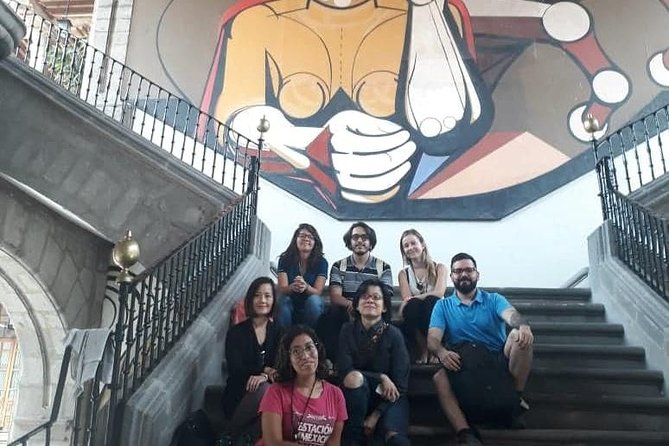
Mexican muralism is not simply wall decoration. It grew into one of the major artistic movements of the 20th century, using public buildings to tell stories about revolution, workers, Indigenous identity, political struggle, and the lives of ordinary people.
That public setting matters. You are not looking at paintings in a quiet white room, separated from daily life. You are seeing art placed in schools, government buildings, museums, markets, and major civic spaces. The art speaks to the people moving through those places.
I find a guided visit especially useful here because the murals can look overwhelming at first. Figures, symbols, historical events, and political arguments crowd the walls. A good guide gives you a way in: who painted the work, who paid for it, what period it reflects, and what the artist wanted the public to notice.
The tour also helps you see Rivera in context. He is the headline name, but the experience includes the larger movement and the artists influenced by it. One account specifically praised a route that covered Rivera, Orozco, and Siqueiros. That wider view is important because Rivera’s murals make more sense when you understand the artistic and political conversation around them.
More Frida Kahlo tickets:
- Xochimilco, Coyoacan and Frida Kahlo with Optional Lunch
★ 4.5 · 7,320 reviews - CDMX: Xochimilco, Coyoacan, Frida Kahlo Museum & Murals Tour
★ 4.4 · 3,025 reviews - Frida Kahlo VIP [Museum Tickets Included] Bike, Markets & Churros
★ 5.0 · 1,072 reviews
Starting at San Ildefonso, where Rivera and Kahlo crossed paths
The meeting point is the Former College of San Ildefonso, at Justo Sierra 16 in the Centro Histórico. The tour begins at 11:00 a.m., a useful time for anyone staying in or near central Mexico City.
The first 35 minutes provide an introduction to Diego Rivera’s life and work. San Ildefonso also carries a personal connection: it witnessed the beginning of the relationship between Rivera and Frida Kahlo, one of the best-known couples in Mexican art.
That link gives the opening some human scale. Before the tour asks you to think about politics, revolution, and public identity, it introduces two artists whose personal lives became part of Mexico’s cultural story. You get a sense of the people behind the names.
Admission is included, so you do not need to arrange a separate museum ticket for this stop. The exact museums can change based on availability, so it is wise to treat the route as a strong plan rather than an unchangeable promise.
Reading murals at the Museo Vivo del Muralismo
The second stop is the Museo Vivo del Muralismo, with two courtyards and three levels. The scheduled visit lasts about 35 minutes.
That layout suggests a more varied experience than a single-room museum visit. You move through different spaces, and the courtyards and levels help show how mural art relates to architecture. The guide’s role is useful here because the building itself forms part of the experience.
Several people have praised guides for showing parts of public buildings they would not have noticed alone. One particularly useful example involved a return visit to a government building that felt completely different with a guide, including areas the visitor had not known were there. That is the real value of this tour: not just getting inside, but learning what deserves your attention once you are there.
The schedule allows 35 minutes, but do not expect a hurried checklist. Guides such as Sofía, Ulysses, and Wariyor have been praised for taking time with questions and pointing out details that are easy to miss. If you want only a quick look at colorful walls, this may feel talk-heavy. If you want the meaning behind the images, that extra explanation is the point.
La Catrina and the Museo Mural Diego Rivera
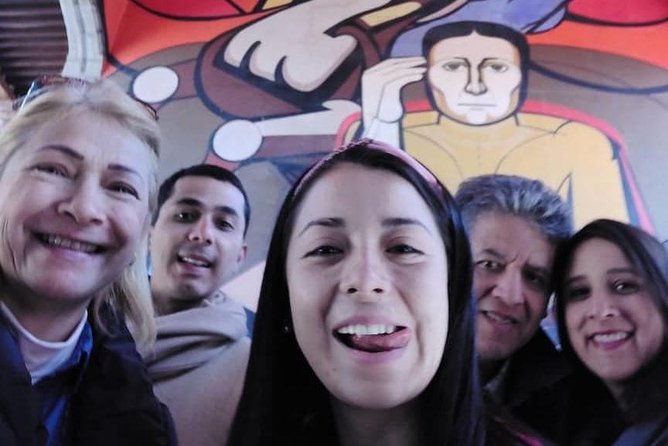
The third stop lasts about 30 minutes at the Museo Mural Diego Rivera. Here you see one of the best-known works associated with Mexican muralism, a large composition built around Día de Muertos and the figure of La Catrina.
La Catrina is more than a familiar skeleton on a souvenir print. Within Mexican culture, the figure can carry ideas about death, social class, vanity, and the way the living remember the dead. Rivera’s mural brings these themes together with historical figures and references, creating a work that rewards slow looking.
This is the stop most likely to satisfy anyone booking the tour for Rivera specifically. I would not rush it. The guide can help you follow the many figures and explain why the mural matters, rather than leaving you to take a photograph and move on.
The museum also gives the tour a clear visual anchor. Earlier stops introduce the movement through buildings and multiple murals. This stop places one famous Rivera work at the center, making it easier to connect the political and cultural ideas discussed along the way.
A few more Mexico City runs worth comparing
- Teotihuacan, Guadalupe Shrine & Tlatelolco Day Tour with Lunch
★ 5.0 · 11,603 reviews - Balloon flight + Breakfast in cave + Pyramids + Pick up CDMX.
★ 5.0 · 6,335 reviews - Teotihuacan pyramids morning or afternoon without tourist traps
★ 5.0 · 6,186 reviews - Teotihuacan Early Access Guided Tour with optional Lunch
★ 4.5 · 6,138 reviews
Ending at Palacio de Bellas Artes
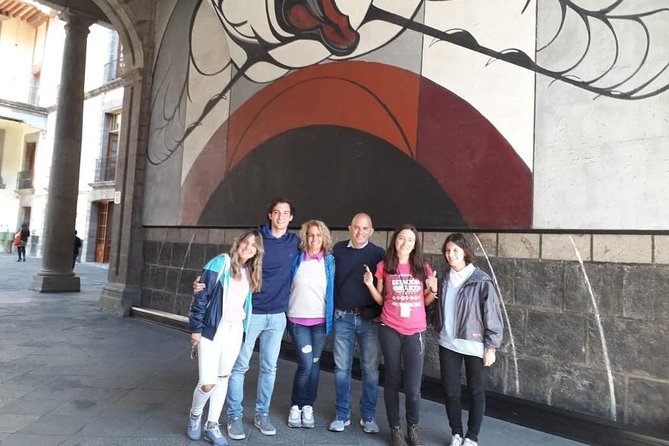
The final scheduled stop is Palacio de Bellas Artes, Mexico City’s major cultural venue. The visit is planned for about 30 minutes, and the tour ends nearby on Avenida Juárez.
The building is home to Diego Rivera’s controversial mural created in the United States and later preserved for public viewing in Mexico. That detail alone makes the stop worth attention. The mural’s journey reflects the political tensions surrounding Rivera’s work and the arguments that his art could provoke.
Bellas Artes also provides a fitting finish because it brings the movement into a major national cultural setting. You have seen murals in more intimate or less obvious places, then arrive at one of Mexico City’s most recognizable arts institutions.
The tour ends with practical local advice. Your guide will share suggestions for things to do nearby and places to eat. That is handy because the ending point sits in a part of the Centro Histórico where you can continue exploring on foot.
If Bellas Artes matters to you, say so early. One outing accommodated a request to include it, and route changes may occur based on museum availability. The listed itinerary includes the palace, but flexibility is still useful.
The guides are the heart of the experience
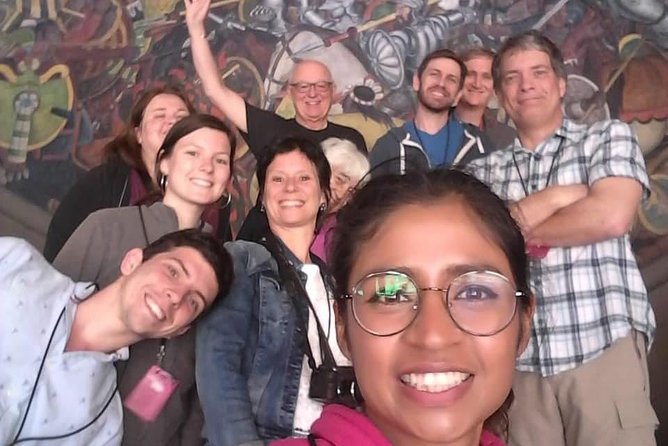
The strongest praise is reserved for the guides. Ady was described as warm, friendly, entertaining, and clear. Sofía received repeated approval for her passion and ability to explain Mexican history in an easy way. Ulysses was praised for finding murals that are difficult to locate independently and for showing additional areas within familiar buildings.
Wariyor, also called Warrior or Warryor in different comments, appears to be especially committed to the subject. He has been praised for showing market murals, explaining the artists and stories behind them, and even helping finish a mural visit after the scheduled time ran short.
Other guides, including Diana, David, Guerrero, and Erin, have also been praised for their command of the subject and willingness to answer questions. The names may vary from one departure to another, so you cannot book a particular guide based on the information provided. You can expect the company to place an art-focused guide with your group.
The one-language format helps. Since the tour is offered in English and the experience uses a single language, the storytelling should remain consistent rather than switching between several groups. That is particularly helpful when discussing symbolism or political subjects that can become confusing when rushed.
A walking tour with more standing than the clock suggests
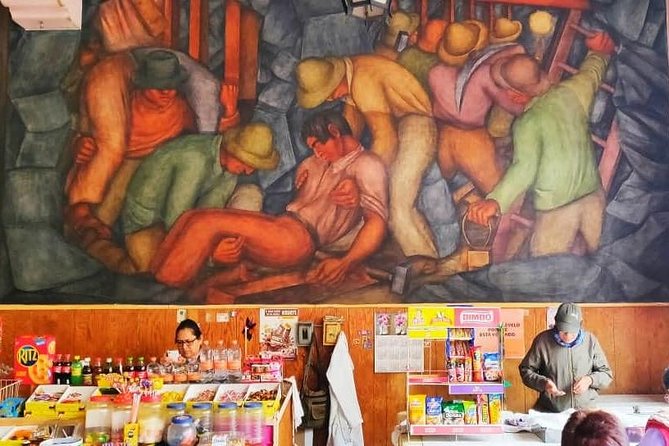
The route uses walking and public transportation, with public transportation included. You meet and finish in central Mexico City, so the locations are practical for combining with other Centro Histórico plans.
This is not a strenuous mountain hike, but it is an active outing. You will stand in museums, walk between locations, and spend much of the time listening while upright. One account described the experience as almost entirely standing, with no planned water or toilet break.
The route may also extend beyond the advertised 2 hours 30 minutes. Some participants found it lasted around three and a half hours, while another outing continued for more than four hours and ran through lunchtime. Guides may be generous with explanations, questions, and extra murals, but the schedule can become difficult if you have a fixed appointment afterward.
I would avoid pairing this with a tightly timed lunch reservation. Carry water, wear comfortable shoes, and consider a small snack. Food and drinks are not included.
What $66.14 buys you
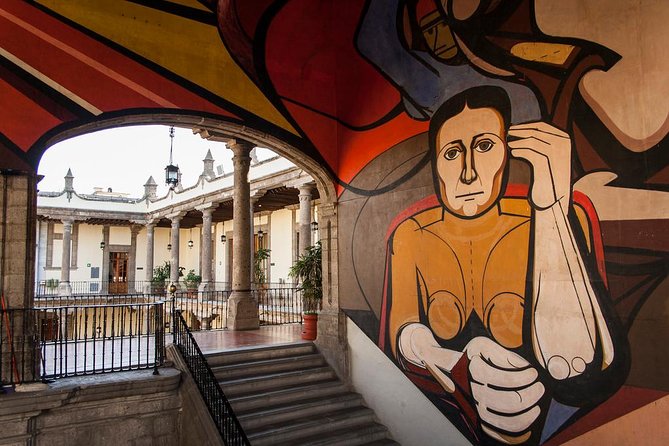
At $66.14 per person, this is not the cheapest way to look at murals in Mexico City. You can see public art without paying for a tour, and some major cultural sites may be visited independently.
The value comes from the interpretation and the route. Admission to the museums is included, as is public transportation. More importantly, the guide connects the sites into one story. You are paying to understand why the murals were made, how they relate to Mexican history, and where to look for details that would be easy to miss alone.
I think the price makes the most sense for a first visit to Mexico City, an art-focused holiday, or anyone who has already seen Rivera’s name but wants a clearer picture of the movement around him. It is also useful if you prefer a compact central route instead of researching several museums and public buildings yourself.
The value is weaker for someone who wants a quick photo stop or has already studied Mexican muralism in detail. The experience is built around explanation, not speed.
Who should book this mural walk?
I would recommend it to:
- First-time visitors who want a cultural introduction to central Mexico City
- People interested in Rivera, Kahlo, Orozco, Siqueiros, or public art
- Families with older children and teenagers who can manage several hours of walking and standing
- Solo visitors who want context and company without a large group
- Art students and practicing artists looking for political and historical background
- Anyone who has visited a mural before and felt unsure how to read it
It may not suit you if you need frequent seated breaks, cannot walk between sites, or have a strict schedule after 1:30 p.m. The tour is accessible to most participants according to the supplied information, but the amount of standing deserves attention.
The small group format is a real advantage. When attendance is low, the experience may feel almost private, giving you more space for questions. That is not guaranteed, but the maximum of 12 keeps the group from becoming unwieldy.
Practical planning before you go
Meet at the Former College of San Ildefonso, Justo Sierra 16, in the Centro Histórico. The start time is 11:00 a.m., and confirmation is sent when you book.
The tour ends near Palacio de Bellas Artes, at Avenida Juárez. From there, you can follow your guide’s suggestions for nearby food and sights. Since the route uses public transportation, keep your ticket details available on your phone and expect to move through central city streets rather than remain inside one museum.
Museum availability can alter the stops. If one location changes, the guide may substitute another site connected to the same subject. I would ask at the beginning which museums are confirmed and how long the full route is expected to take.
Free cancellation is available if you cancel at least 24 hours before the start time. Inside that window, the payment is not refunded and changes are not accepted.
Should you book La Catrina and Muralism?
Book it if you want meaning, not just murals. The best part is the connection between art, public space, and Mexican history. Guides such as Ady, Sofía, Ulysses, Wariyor, Diana, David, and Erin have been praised for making difficult subjects clear and for locating works you might not find on your own.
I would book this for an early or middle day in Mexico City, when you can let the tour shape the rest of your Centro Histórico visit. Just protect your time, bring water and a snack, and allow for a longer outing than the published estimate.
If Rivera’s La Catrina mural, the Rivera and Kahlo story, and Mexico’s political art interest you, the $66.14 fee is reasonable for the museum entries, transport, small group, and guiding. If you prefer to move quickly or dislike extended standing, explore independently instead.
FAQ
How long is the La Catrina and Muralism tour?
The advertised duration is approximately 2 hours 30 minutes. Some outings have lasted three and a half hours or longer, so you should allow extra time.
Where does the tour begin?
It begins at the Former College of San Ildefonso, Justo Sierra 16, Centro Histórico de la Ciudad de México.
Where does the tour end?
The tour ends near Palacio de Bellas Artes on Avenida Juárez in the Centro Histórico.
What language is the tour offered in?
The tour is offered in English in a single-language format.
Are museum tickets and transportation included?
Yes. Tickets for the museums and public transportation are included. Food and drinks are not included.
Can I cancel for a full refund?
Yes. You can receive a full refund if you cancel at least 24 hours before the experience start time. Cancellations or changes made within 24 hours are not refunded or accepted.
Newly listed around Mexico City
- Xochimilco : Island of the dolls, tequila and mezcal CDMX★ 5.0 · 102 reviews
- Xochimilco: Sanctuary of the Axolotl★ 4.9 · 58 reviews
- Xochimilco: Market, Food and Nature ¡All included! Tour★ 4.9 · 107 reviews
- Xochimilco: amanecer en kayak Ciudad de México★ 5.0 · 35 reviews
- Xochimilco & Colonial Coyoacan Trip★ 4.0 · 312 reviews
- Bike Tour in Mexico City★ 5.0 · 45 reviews
- Small Groups: Xochimilco and Coyoacan★ 4.0 · 37 reviews
- Museum of Anthropology: a look at Mexico’s past★ 5.0 · 52 reviews
Frida Kahlo Museum Tours, compared.

Xochimilco, Coyoacan and Frida Kahlo with Optional Lunch
Read our review →
Xochimilco, Coyoacan, Frida Kahlo Museum & Murals Tour
Read our review →
Frida Kahlo VIP [Museum Tickets Included] Bike, Markets & Churros
Read our review →
Frida Kahlo VIP [Museum Tickets Included] Walk, Markets & Churros
Read our review →
EXCLUSIVE TOUR Frida Kahlo Museum – SMALL GROUPS
Read our review →
Frida Kahlo Museum Entry Ticket w/Digital Guide
Read our review →
Private City Tour in Frida Kahlo, Coyoacan, and Xochimilco
Read our review →
PREMIUM Frida Kahlo Museum and Xochimilco (Small Groups)
Read our review →Browse the lists this tour appears in