
Reviewed · WORKSHOPS
Make Your Own Chocolate with Oaxacan Tradition Private Class
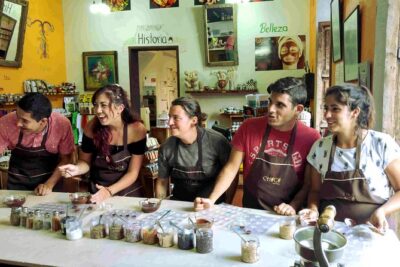
Chocolate has a story before it reaches your cup. This small Oaxaca City class lets you follow that story from cacao bean to drink, using a clay comal, hand peeling, regional ingredients, and a traditional grinder. I especially like the hands-on work and the chance to keep your own custom chocolate. The main consideration is time: the advertised 2.5 hours may stretch closer to three hours, especially if you linger over the tasting and drink-making.
I also like the very small group size, capped at four people, because it gives the class a personal feel. Guides including Diego, Fernanda, Lupita, and Ruth have been praised for patience and clear teaching, including with children. At $98.57 per person, this is not a cheap snack stop, but it offers more than a tasting. You learn a traditional process, make a blend to your taste, drink the result, and take chocolate home.
In This Review
- Key points to know before booking
- Starting at 5 de Mayo 210 in central Oaxaca
- Learning what cacao is before making chocolate
- Roasting cacao on the San Marcos Tlapazola comal
- Peeling the cacao by hand and hearing its story
- Grinding cacao into your own chocolate blend
- Making the drink with a traditional grinder
- Why the small group changes the experience
- Is $98.57 per person a fair price?
- Who should book this chocolate class?
- Practical details that help you plan
- Should you book Make Your Own Chocolate with Oaxacan Tradition?
- FAQ
- Where does the chocolate-making class begin?
- Where does the experience end?
- How long does the class last?
- How many people can join?
- Is the class offered in English?
- What will I make during the class?
- Do I get to take chocolate home?
- Is the activity suitable for children?
- What is the cancellation policy?
Key points to know before booking
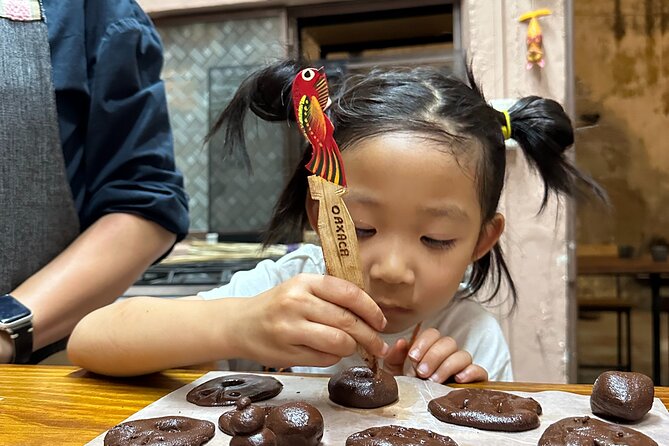
- You roast cacao on a clay comal: The comal comes from San Marcos Tlapazola in Oaxaca’s Central Valleys, adding a local craft detail to the class.
- You make choices about your chocolate: You select the sugar percentage and mix in different regional ingredients.
- The class is limited to four people: This is useful if you want direct help, especially with younger children or hand grinding.
- The experience goes beyond sweet chocolate: You compare cacao seeds, ground powders, and different styles of production before making your own.
- Your final drink uses a traditional grinder: The tool helps blend the chocolate into a hot drink in the Oaxacan kitchen tradition.
- You leave with your own chocolate: The chocolate you make is yours to take home, along with the memory of a good workout at the grinder.
Starting at 5 de Mayo 210 in central Oaxaca
The class begins at 5 de Mayo 210, on the Ruta Independencia in Centro, Oaxaca de Juárez. The meeting point is near public transportation, and the activity ends at the same address, so you do not need to arrange a second pickup or figure out an unfamiliar return point.
That central location makes the class easy to add to a day in Oaxaca City. You could schedule it between sightseeing and dinner, though I would avoid placing another tight appointment immediately afterward. The stated duration is about 2 hours and 30 minutes, but one couple found that the full experience took around three hours. The extra time came from the tasting, making the drink, and enjoying the class rather than from a delay.
The group limit matters here. With no more than four participants, this feels closer to a private kitchen lesson than a large demonstration. You can ask questions, get help with roasting and grinding, and adjust your chocolate without waiting for a crowd to catch up.
The class is offered in English. Confirmation arrives at booking, and service animals are allowed. Free cancellation is available until 24 hours before the local start time. Inside that 24-hour window, the payment is not refunded and changes are not accepted.
A few more Oaxaca runs worth comparing
- Cacao, Chocolate Experience in Oaxaca for Small Groups
★ 5.0 · 92 reviews - Finca 18 Puerto Vallarta Tequila Tour + Chocolate Pairing
★ 5.0 · 393 reviews - Bean to Bar Chocolate Workshop in Puerto Vallarta
★ 5.0 · 381 reviews
Learning what cacao is before making chocolate
The class begins with an introduction to cacao from Oaxaca. This first part gives you a useful base because the instructor does not treat chocolate as one uniform product. You examine the organoleptic qualities of different seeds, meaning the features you can notice through taste, smell, texture, and appearance.
That distinction helps explain why one chocolate can taste earthy, bitter, fruity, sharp, or smooth while another tastes entirely different. You also learn the difference between cacao, commercial chocolate, and what the class describes as conscious chocolate. The goal is not simply to produce a sweet drink. It is to help you understand what changes when cacao is processed, sweetened, and combined with other ingredients.
This section appears to be especially useful if you already know a little about chocolate. One participant arrived with prior knowledge and still found plenty to learn. You do not need a background in cacao, though. Children as young as four have taken part, and older children, including ages eight, nine, eleven, twelve, and thirteen, have enjoyed the activity.
The teaching style seems to be a major part of the experience. Diego has been praised for being patient and informative, while Fernanda was especially good with a nine-year-old. Lupita and Ruth have also been singled out for their friendly, attentive approach. Since the class is small, the guide can explain things at your pace instead of rushing through a fixed speech.
Roasting cacao on the San Marcos Tlapazola comal
Next, you roast the cacao on a clay comal. This is one of the most appealing parts of the class because the cooking surface itself has a local connection. The comal comes from San Marcos Tlapazola, a community in the Central Valleys of Oaxaca known in the experience for this traditional kitchen tool.
Roasting changes the aroma and flavor of the cacao, so this is where the raw material begins to feel like something you can use in a kitchen. You are not watching a machine do the work behind glass. You take part in the process and see how heat affects the beans before they become chocolate.
The pace may be slower than a standard cooking class. That is a benefit if you want to understand each step, but it also explains why the experience can run longer than the stated time. You should expect a lesson with conversation and tasting, not a quick recipe demonstration.
The clay comal also connects the chocolate to everyday Oaxacan cooking. That context gives the class more meaning than simply learning how to melt commercial chocolate. You are working with a tool tied to a local community and using methods that feel rooted in home kitchens.
Peeling the cacao by hand and hearing its story
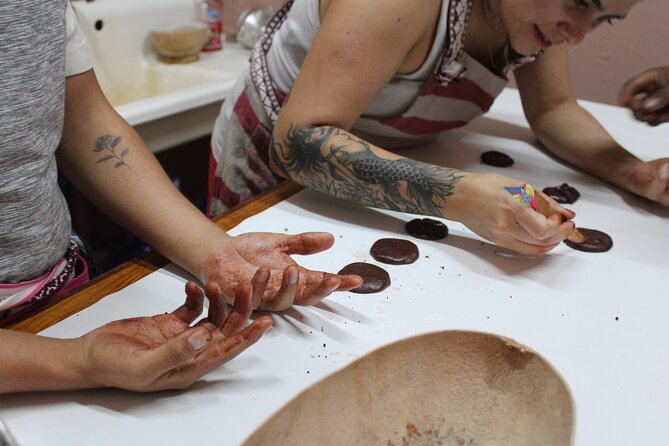
After roasting, you peel the cacao with your hands. It is simple, tactile work, but it changes your sense of what goes into a finished chocolate. Before this class, you may think of chocolate as a ready-made ingredient. Here, you handle the beans at a much earlier stage and see the labor involved in preparing them.
The peeling is also described as a ritual. While you work, the guide explains part of the history and culture of cacao in the local community. This is where the class moves beyond food preparation. Cacao becomes a way to discuss tradition, social importance, and the place of chocolate in Oaxacan life.
Several families found the hands-on method easy for children to enjoy. A four-year-old proudly told people that she had made her own chocolate, while older children liked the mix of learning and physical work. Parents should still expect the activity to require attention and participation. This is not a class where children simply watch a professional make dessert.
The process can be messy and repetitive, which is part of its charm. If you want a polished cooking demonstration with every ingredient prepped, this may feel rustic. If you like understanding food by touching and making it, the peeling is one of the strongest parts.
Same base, a different sort of day:
- Hierve el Agua, Tule Tree, Mitla and Mezcal Distillery Tour
★ 4.5 · 1,094 reviews - Explore Hierve el Agua, Mitla, Tule, Textile and Mezcal for a day
★ 5.0 · 1,043 reviews - Monte Alban Guided Half Day Tour
★ 5.0 · 880 reviews - From Oaxaca de Juarez: Hierve el Agua and Mezcal Distillery
★ 4.9 · 615 reviews
Grinding cacao into your own chocolate blend
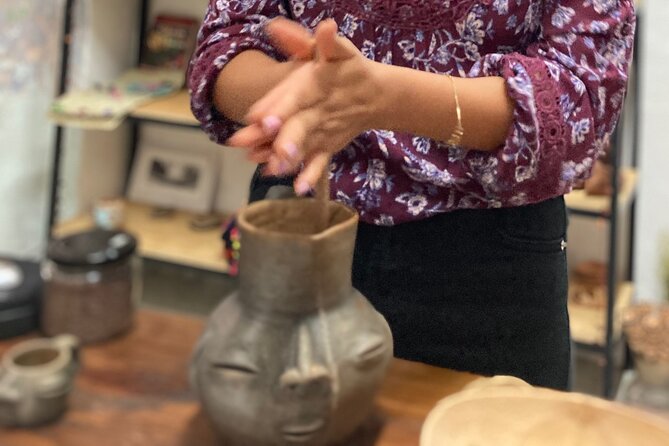
Once the beans are peeled, you transform them into chocolate in an artisanal way. You choose the percentage of sugar, then mix the cacao with different ingredients from the region. This gives you control over the final flavor instead of leaving you with one standard recipe.
That choice is important. Some people want a sweeter chocolate, while others prefer the stronger taste of cacao. You can make a blend that fits your own preferences, and the result becomes a personal souvenir rather than a sample handed to you by the instructor.
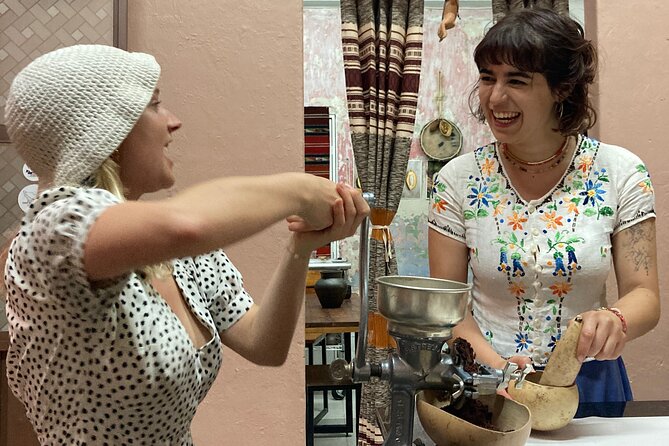
The grinding also gives the class a physical side. One participant compared it to getting a workout while grinding the chocolate. You should not expect a passive tasting here. The work is part of the lesson, and it helps you understand how much effort traditional preparation can require.
The exact regional ingredients are not specified in the tour details, so you should ask the guide what is available on the day. The supplied experience information does mention a custom blend of chocolate and chili, which suggests that a spicy version may be possible. Do not assume every ingredient will be offered at every session, but do expect some choice in flavor and sweetness.
You can keep the remaining chocolate you make. That small take-home portion adds real value, especially if you want a souvenir you can use rather than a decorative object that sits on a shelf.
Making the drink with a traditional grinder
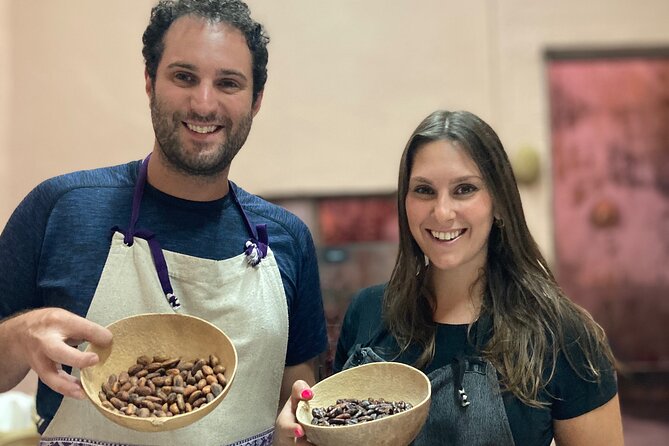
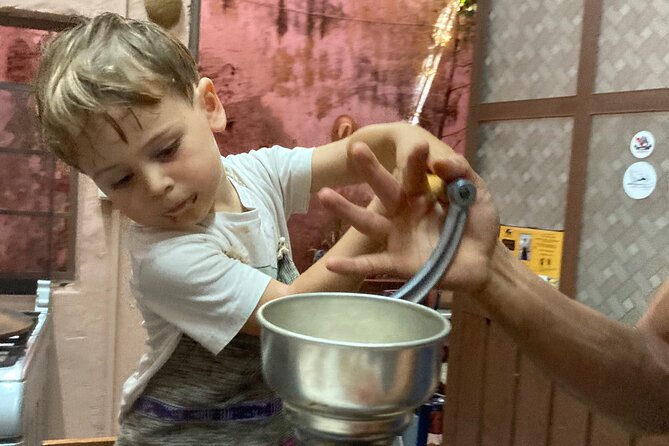
The final preparation turns your chocolate into a drink. The guide shows you how to use a grinder, a traditional kitchen utensil that helps incorporate and blend the chocolate. This is a key moment because you get to taste the full result of your work rather than stopping with ground cacao.
The drink is prepared in the Oaxacan tradition, and the hands-on tool gives the process a distinct character. You are not simply stirring powder into a mug. You are learning how the chocolate is worked into a drink and seeing why tools matter in traditional kitchens.
The timing here deserves attention. One couple estimated about an hour of the experience for making and enjoying the drink. That may sound long for hot chocolate, but it includes the preparation, the grinding, the explanation, and the tasting. If you are in a hurry, this can feel drawn out. If you want the drink to be the reward at the end of a full process, it is exactly the point.
The experience closes with a cocoa-based snack described as cocoa toast. This gives you something to eat with the drink and keeps the ending simple and focused on cacao. The combination is more satisfying than a tiny tasting spoon, especially after the work of roasting, peeling, and grinding.
Why the small group changes the experience
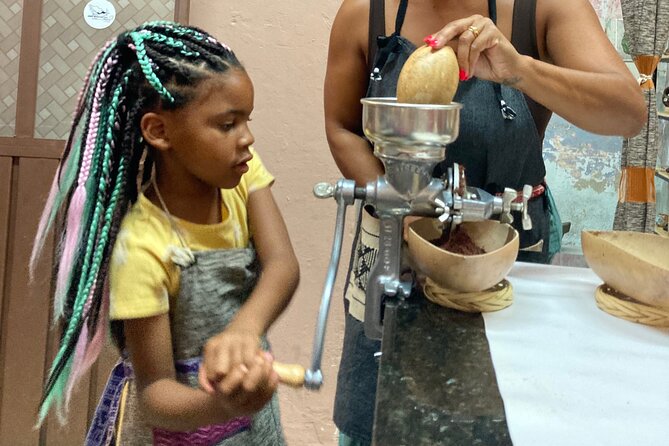
A maximum of four participants is one of the strongest practical features. Small groups make it easier to ask about flavor, processing, and local traditions. They also give the guide room to help you with the comal, peeling, and grinder.
Families benefit from that personal attention. The guides have worked well with children from preschool age through the early teens, adjusting their patience and explanations to suit different ages. A child who loses interest during a long food tour may stay engaged here because there is something to touch and do at nearly every stage.
Couples and friends can also make the class their own. You can compare sugar levels, try different combinations, and decide which blend best suits your group. Solo participants are not left out, either. The small format gives you direct contact with the instructor rather than placing you at the edge of a large class.
The small capacity has one possible downside: availability may be limited. The experience is booked on average 16 days in advance, so I would reserve ahead if your Oaxaca dates are fixed. That lead time is not a guarantee that every session sells out, but it is a useful signal not to leave this until the last morning of your trip.
Is $98.57 per person a fair price?
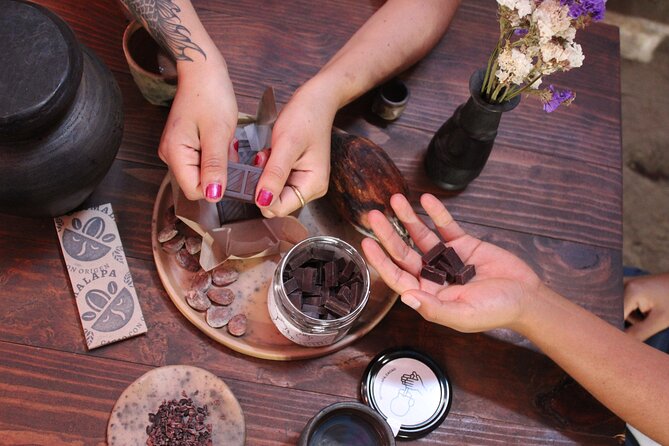
At $98.57 per person, this class costs more than buying a cup of Oaxacan chocolate and a pastry in town. The value comes from the length, the personal instruction, the tasting, the equipment, and the chocolate you make yourself.
You are paying for roughly 2.5 to 3 hours of guided activity in a group capped at four. The class includes several stages: cacao education, seed tasting, roasting, peeling, grinding, selecting sugar, mixing regional ingredients, preparing the drink, and eating the cocoa toast. That is a full workshop rather than a quick tasting.
I think the price makes the most sense for people who value food culture and personal instruction. It is also easier to justify for a family or small group that wants one shared activity with a tangible result. For someone who only wants to try Oaxacan hot chocolate, it is probably more than necessary.
Group discounts are available, which may improve the value for families or friends booking together. The listing does not specify the discount amount, so check the final price before booking.
Who should book this chocolate class?
I would recommend it most strongly to:
- Families who want a hands-on activity suitable for children
- Couples looking for a food-focused experience in central Oaxaca
- Friends who enjoy tasting and comparing flavors
- Solo visitors who prefer small classes with direct instruction
- Anyone interested in cacao production, traditional tools, or regional cooking
- Chocolate fans who want to understand the process instead of only eating the finished product
It may not suit you if you dislike repetitive hand work, want a fast activity, or prefer a polished modern cooking studio. The class is built around traditional methods, so the pace and texture are part of the experience.
You should also plan around the possibility of a three-hour visit. The official estimate is about 2 hours and 30 minutes, but the drink-making and tasting can take longer when the group is engaged.
Practical details that help you plan
The meeting and ending point is 5 de Mayo 210, Ruta Independencia, Centro, Oaxaca de Juárez, Oaxaca, postal code 68000. The site is near public transportation, and the activity returns to the starting point.
The class is offered in English, with confirmation provided at the time of booking. Service animals are allowed. The maximum group size is four people, and group discounts are offered.
For flexibility, cancel at least 24 hours before the local start time for a full refund. Cancellation within 24 hours receives no refund, and changes made during that period are not accepted.
I would wear something comfortable for kitchen work and leave room in your schedule afterward. The class involves roasting, peeling, and grinding, so you will be participating rather than sitting still throughout.
Should you book Make Your Own Chocolate with Oaxacan Tradition?
Yes, if you want a small, personal class that connects chocolate to Oaxacan tools, ingredients, and community traditions. The strongest reasons to book are the four-person limit, the chance to choose your sugar level, the hand grinding, and the chocolate you take home.
Families have especially good reason to consider it. The guides have shown patience with very young children, and older children can take part in every major step. Couples and solo visitors should also enjoy the relaxed pace, provided they are willing to spend close to three hours on the activity.
I would skip it only if your main goal is a quick taste or a lower-cost food stop. For everyone else, the price buys a real workshop, not just a cup of hot chocolate. Book ahead, allow extra time, and come ready to work for your dessert.
FAQ
Where does the chocolate-making class begin?
It begins at 5 de Mayo 210, Ruta Independencia, Centro, 68000 Oaxaca de Juárez, Oaxaca, Mexico.
Where does the experience end?
The activity ends back at the meeting point at 5 de Mayo 210.
How long does the class last?
The stated duration is approximately 2 hours and 30 minutes. You should allow closer to three hours because tasting and making the drink may take additional time.
How many people can join?
The activity has a maximum of four participants.
Is the class offered in English?
Yes, the experience is offered in English.
What will I make during the class?
You will roast and peel cacao, grind it into chocolate, select the sugar percentage, mix it with regional ingredients, and prepare a chocolate drink using a traditional grinder.
Do I get to take chocolate home?
Yes. Each participant takes home the chocolate made during the class.
Is the activity suitable for children?
Yes. Children from very young ages through the early teenage years have taken part, and the guides are described as patient and accommodating with children.
What is the cancellation policy?
You can cancel at least 24 hours before the experience for a full refund. Cancellations or changes made less than 24 hours before the start time are not accepted, and the amount paid is not refunded.
Newly listed around Oaxaca
- Oaxaca Walking Tour★ 5.0 · 32 reviews
- Private Minivan: Huatulco International Airport (HUX)★ 4.0 · 119 reviews
- Traditional Oaxaqueña Cooking with Grandma’s Recipes★ 5.0 · 260 reviews
- Culture, History and Food in Oaxaca City★ 5.0 · 43 reviews
- Ultimate Hierve el Agua Hike + Textile Art★ 5.0 · 42 reviews
- Private and safe transfer from the airport to the hotel in Oaxaca★ 4.5 · 58 reviews
- Private and Secure Transfer Hotel to Oaxaca Airport★ 5.0 · 33 reviews
- Tour Boil the “classic” water★ 4.5 · 67 reviews
Workshops, compared.
Cabo San Lucas Mexican Cooking Class Experience and Local Markets
Read our review →
Puerto Vallarta Cooking Class Experience with Market Tour
Read our review →
La Paz World Class Snorkeling in Balandras Hidden Beaches
Read our review →
Mexican Cooking Class with Food Market Visit in Mexico City
Read our review →
Bean to Bar Chocolate Workshop in Puerto Vallarta
Read our review →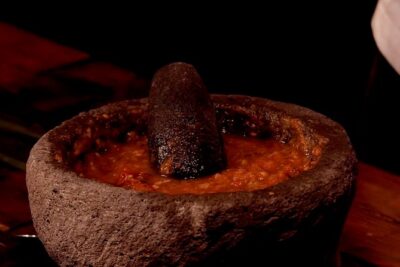
Browse the lists this tour appears in