
Reviewed · CITY TOURS
Mexico City: Diego Rivera’s Murals Guided Walking Tour
Walls can tell a country’s story. This 3.5-hour walk follows Diego Rivera through Mexico City, using his murals to explain the Mexican Revolution, social change, politics, and the rise of public art. I especially like the focus on why the murals were made, not just where to find them. I also like that the route includes three major stops, giving you a clear sense of how Rivera’s work developed.
The main consideration is timing. A 3:00 p.m. start can feel rushed because several museums close around 5:30 or 6:00 p.m. You will also spend much of the tour on foot, so comfortable shoes matter. Guides such as Jorge, David, Laila, Francisco, and Leila have earned praise for their warmth, flexibility, and command of Mexican history.
In This Review
- Key points about the mural walk
- Why Diego Rivera’s murals matter in Mexico City
- Starting at Museo Vivo del Muralismo
- Secretaría de Educación Pública: the longest and richest stop
- Palace of Fine Arts: Rivera in a grand setting
- Diego Rivera Mural Museum and the final return
- The guides are a major part of the value
- Is $78 a fair price?
- What the walk feels like in practice
- Who should book this experience?
- Booking details worth knowing
- Should you book the Diego Rivera mural tour?
- FAQ
- Where does the Diego Rivera mural tour begin?
- How long does the tour last?
- Which places does the tour visit?
- Are museum entrance tickets included?
- What languages are available?
- Is the tour wheelchair accessible?
- What should I bring?
- Can I cancel or pay later?
Key points about the mural walk
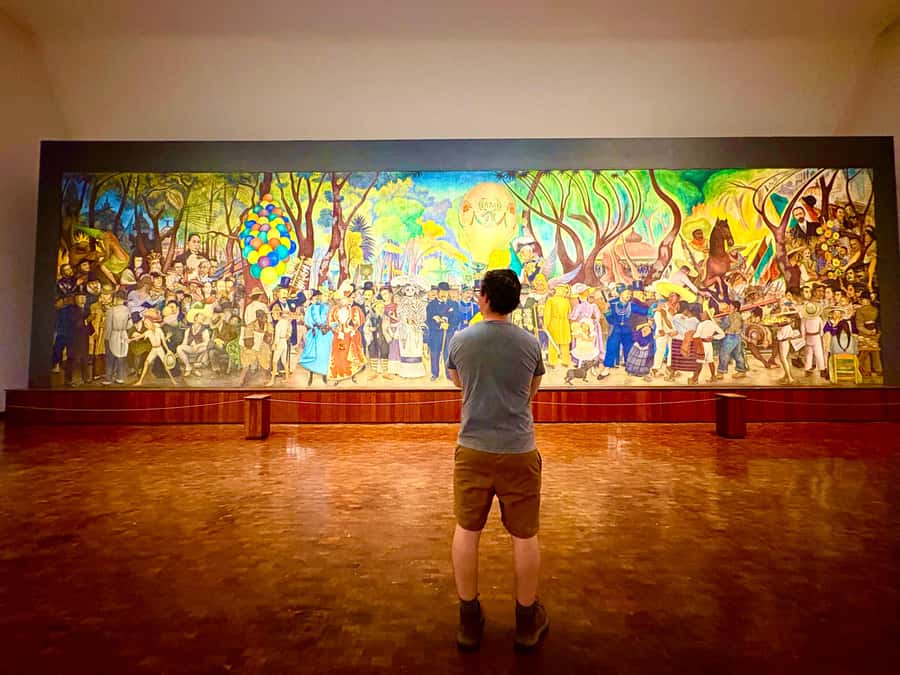
- Three substantial art stops: Visit the Secretaría de Educación Pública, Palace of Fine Arts, and Diego Rivera Mural Museum.
- History first, paintings second: The guide explains the Mexican Revolution and the political purpose of muralism.
- A strong guide makes the difference: Jorge, David, Laila, Francisco, and Leila are praised for clear explanations and friendly care.
- A useful 3.5-hour route: The walk covers a lot without requiring transportation between listed stops.
- Museum tickets are included: The $78 price covers entry to all museums on the route.
- Flexible arrangements help: You can cancel up to 24 hours ahead and reserve without paying immediately.
Why Diego Rivera’s murals matter in Mexico City
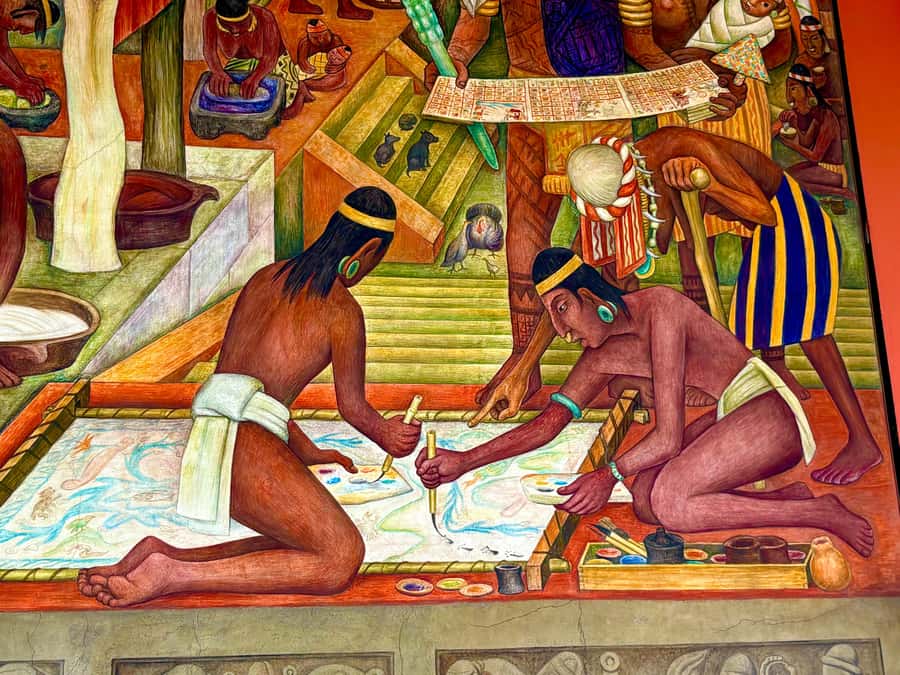
Rivera’s murals are not quiet gallery pieces. They were created for public buildings, where ordinary people could see them without buying a ticket or studying art. Their subjects include workers, Indigenous people, political leaders, violence, industry, religion, and the long struggle over who should control Mexico’s future.
That public setting is central to this tour. You are not simply looking at large paintings and trying to guess what they mean. Your guide connects the images to the Mexican Revolution and to the cultural movement that followed it. This makes the art easier to read, especially if you do not already know Mexico’s political story.
Rivera was one of Los Tres Grandes, the trio of major Mexican muralists that also included José Clemente Orozco and David Alfaro Siqueiros. The tour centers on Rivera, but it also gives you a frame for understanding Mexican muralism as a whole.
I like this approach because Rivera’s paintings can overwhelm you at first. They are crowded with people, symbols, historical references, and competing ideas. A good guide slows the scene down and shows you where to look.
More Walking Tours in Mexico City
- Historic Downtown Walking Tour
★ 5.0 · 1,289 reviews - Mexico City: Historic Downtown Walking Tour
★ 4.8 · 1,039 reviews - Frida Kahlo VIP [Museum Tickets Included] Walk, Markets & Churros
★ 5.0 · 982 reviews
Starting at Museo Vivo del Muralismo
The meeting point is Museo Vivo del Muralismo. From there, your guide sets the tone for the walk and begins placing Rivera’s art within the larger story of post-Revolution Mexico.
Bring your passport or ID card. That requirement is easy to overlook, especially if you prefer to leave your documents in your hotel safe, but it is listed as necessary for the activity.
You should also arrive ready to walk. The tour is wheelchair accessible, but the route still involves moving through city streets and museum spaces. If you use a wheelchair or are traveling with a stroller, tell the guide about your needs at the start. Jorge was praised for taking special care with a group that included an older woman, three children, and a stroller, which suggests a patient approach when a group needs a slower pace.
The tour is offered in Spanish, English, French, and German. That range is helpful, since the meaning of the murals depends heavily on spoken explanation.
Secretaría de Educación Pública: the longest and richest stop
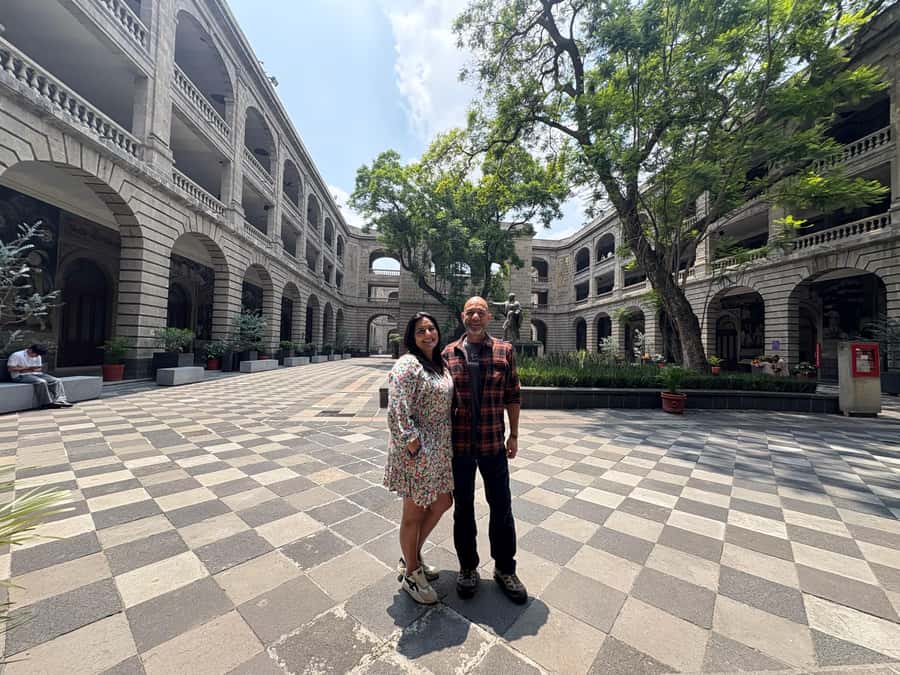
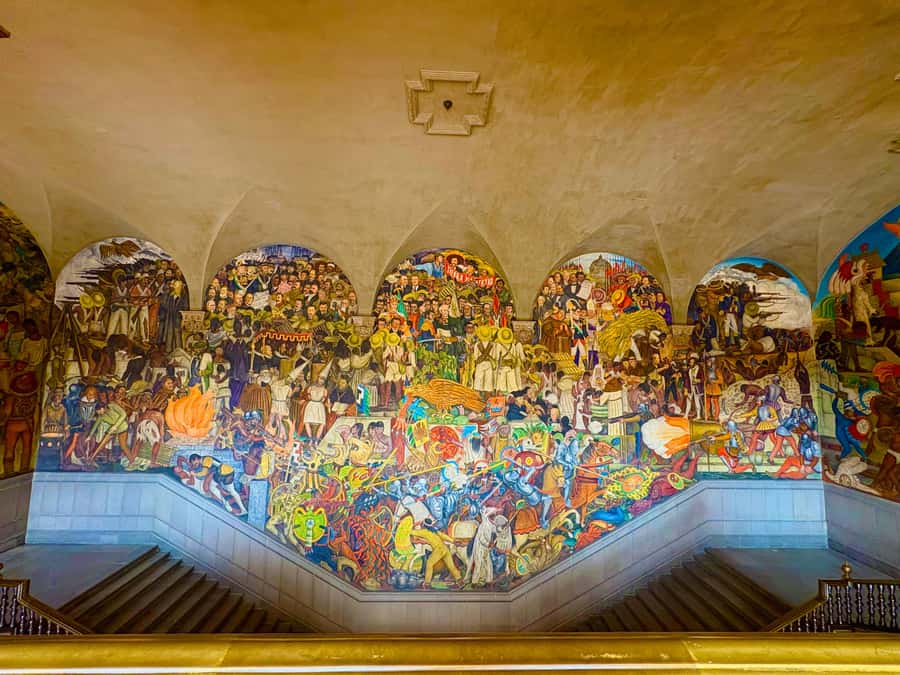
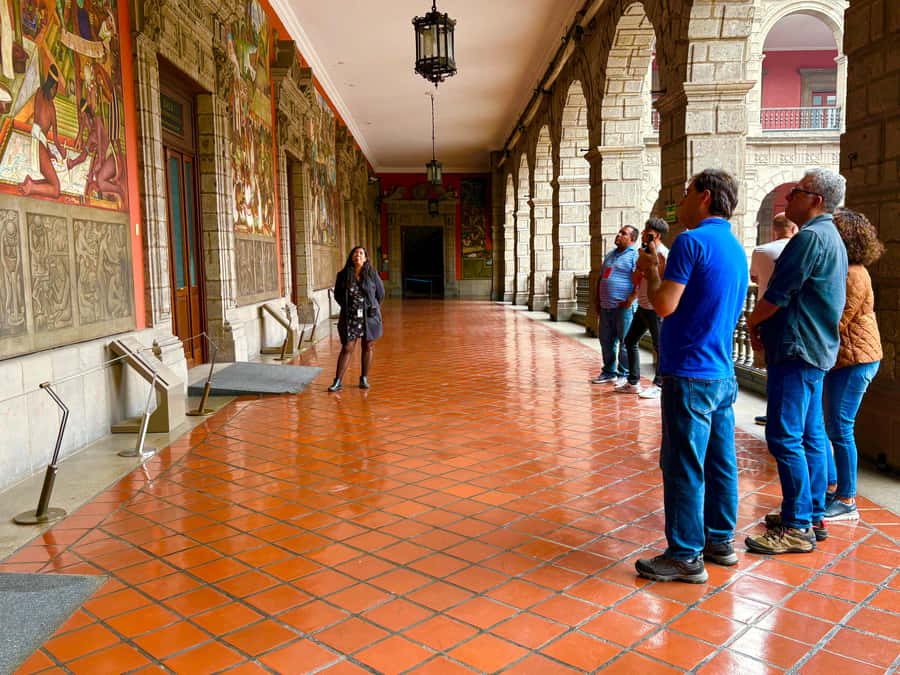
The Secretaría de Educación Pública building receives about 1.5 hours, making it the heart of the route. This is where you get the most sustained look at Rivera’s murals and the clearest sense of his storytelling method.
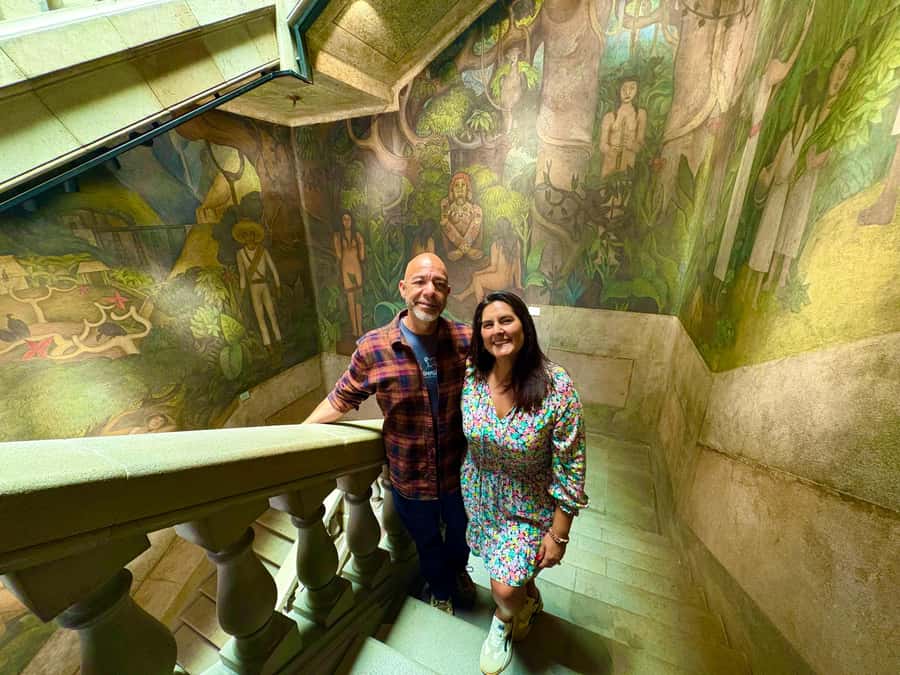
The building is especially useful for seeing how Rivera treated architecture as part of the artwork. Rather than viewing one framed image at a time, you move through a setting filled with connected scenes. The guide can help you follow recurring subjects and understand how separate panels work together.
I would pay close attention to the way Rivera presents ordinary people. The murals were designed to educate, and their message reaches beyond famous names. Farmers, workers, soldiers, and families occupy much of the visual world. That emphasis helps explain why muralism became such an important public art form after the Revolution.
This stop also shows why visiting alone can be difficult. You might see dozens of impressive images but miss the relationships between them. Without context, a detail can look decorative when it carries a political message. The guide’s job is to point out those links without turning the visit into a dry lecture.
The length of this stop is a strength, but it also means you should save some energy. You are still less than halfway through the experience, and the rest of the route includes more walking and two additional museum visits.
Palace of Fine Arts: Rivera in a grand setting
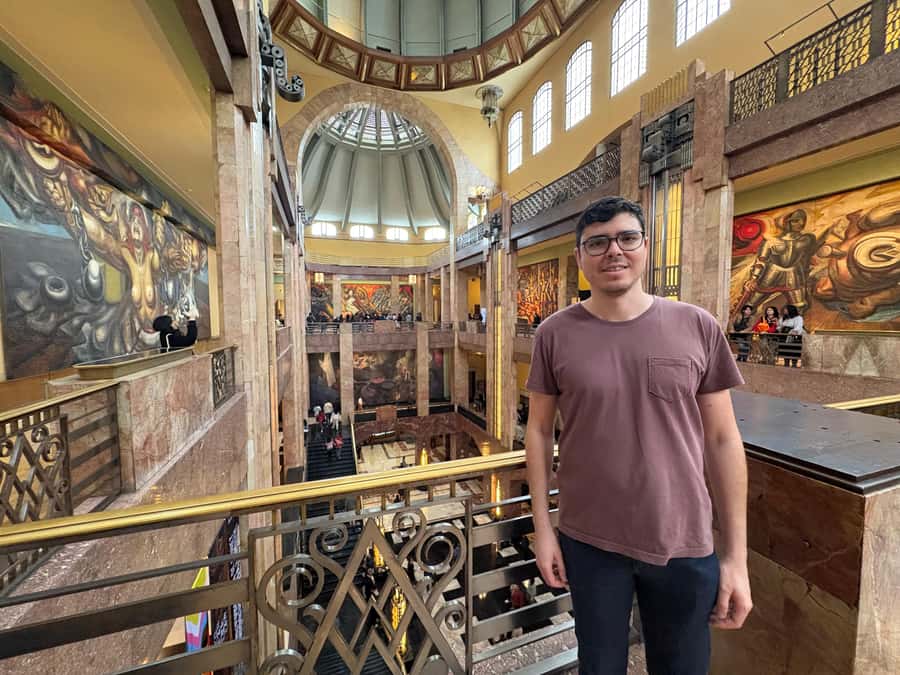
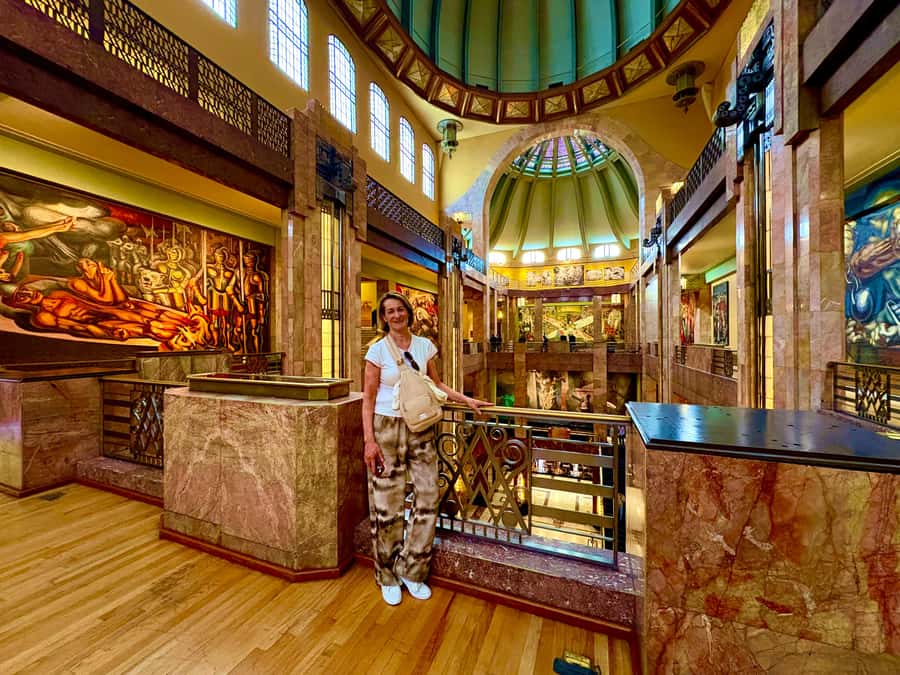
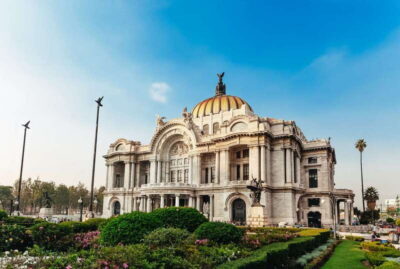
The Palace of Fine Arts visit lasts about 40 minutes. The building itself adds a different mood to the tour. After the more extended mural viewing at the Secretaría de Educación Pública, this stop places Rivera’s work in one of Mexico City’s best-known cultural buildings.
Here, the guide can help you compare Rivera’s public art with the building’s formal surroundings. That contrast matters. Rivera’s subjects often challenge established power, while the setting can feel ceremonial and grand. The result is a useful reminder that murals can be both beautiful and argumentative.
A guide also helps you compare Rivera with other muralists. The tour description centers on Rivera, but the experience includes the work of other artists as well. If you are interested in Mexican art beyond Rivera, ask questions about Orozco and Siqueiros as you go.
The main drawback is the short visit. Forty minutes is enough for a focused explanation, but not enough for an unhurried look at every artwork or architectural detail. Your guide will need to keep the group moving, and you should expect the stop to emphasize selected works rather than cover everything.
Same base, a different sort of day:
- Teotihuacan, Guadalupe Shrine & Tlatelolco Day Tour with Lunch
★ 5.0 · 11,603 reviews - Xochimilco, Coyoacan and Frida Kahlo with Optional Lunch
★ 4.5 · 7,320 reviews - Balloon flight + Breakfast in cave + Pyramids + Pick up CDMX.
★ 5.0 · 6,335 reviews - Teotihuacan pyramids morning or afternoon without tourist traps
★ 5.0 · 6,186 reviews
Diego Rivera Mural Museum and the final return
The Diego Rivera Mural Museum is scheduled for about 25 minutes. This is the briefest museum stop, so think of it as a concentrated final chapter rather than a long gallery visit.
The value here is comparison. By this point, you have seen Rivera’s murals in more than one setting. A short visit can help you connect earlier ideas and notice changes in his style and subject matter. One useful thread to follow is the development of Rivera’s work from earlier pieces toward later examples.
The museum visit also gives your guide another chance to explain Rivera’s place in Mexican culture. The tour is not only about technique. It is about how art can shape public memory and offer a version of national identity.
Afterward, you return to Museo Vivo del Muralismo. The route is compact enough to complete without arranging a taxi or public transport between the listed stops, but transportation to the meeting point and back to your hotel is not included.
The guides are a major part of the value
The strongest praise for this experience centers on the guides. That matters because the route is built around interpretation. The paintings are already there, but the guide determines how much you take away.
Jorge is described as enthusiastic, witty, patient, and attentive to different interests. He also handled a family group with children and a stroller carefully. If you are traveling with mixed ages, that kind of flexibility can make the afternoon much easier.
David receives praise for his command of Rivera and Mexican history, along with a relaxed manner. He was also described as generous with his time and willing to discuss subjects beyond the scheduled material. One guide even continued well beyond the planned 3.5 hours, though you should not assume every tour will run long.
Laila and Leila are praised for warmth, clear explanations, and strong people skills. One participant enjoyed the experience enough to request another tour with Laila. Francisco is described as carefully prepared and able to explain the artwork clearly. He also spoke Italian for an Italian participant, which may be useful if you have limited Spanish.
The practical lesson is simple: ask questions. The guides appear willing to adjust the conversation to your interests, including Rivera’s relationship with Frida Kahlo, the meaning of specific figures, and the role of other Mexican muralists.
Is $78 a fair price?
At $78 per person, this is not a bargain-priced city walk. I think the price can be fair if you want serious context and museum entry handled together.
The ticket cost for all museums is included, which adds clear value. You are also paying for a live guide in your chosen language and for a route that connects several Rivera sites in one afternoon. Visiting independently may cost less in guiding fees, but you would need to plan the order, confirm opening access, find the important murals, and supply your own historical explanation.
The strongest value comes if Rivera is a central reason for your visit. If you already have a strong background in Mexican art and prefer to explore quietly, the price may feel high. If you are new to Rivera, the guide can save you from wandering through major buildings without understanding what you are seeing.
Meals, drinks, and transportation to and from the starting point are not included. Budget for those separately. Also check the departure time carefully. The late 3:00 p.m. option has been described as stressful because the museums may close before the full route is finished. An earlier start is the safer choice.
What the walk feels like in practice
This is a city walk with substantial indoor viewing, not a gentle stroll built around coffee stops. You will move between public streets and museum interiors, then pause for explanations in front of major murals.
Wear comfortable shoes and carry only what you need. You may spend long periods standing while the guide explains a scene, and the route works better when you can move easily through the city.
The experience is also conversation driven. The best moments are likely to come when you ask about a symbol, historical figure, political idea, or artistic choice. Guides have shown flexibility when museum access changed, including creating an alternate route when Museo Vivo del Muralismo was closed and helping with another opportunity to see murals when access to Palacio Nacional was blocked.
That flexibility is encouraging, but it also points to a practical truth: museum access can change. Holidays, security procedures, closures, and other conditions may affect the route without notice. The provider states that experiences are subject to availability and change.
Who should book this experience?
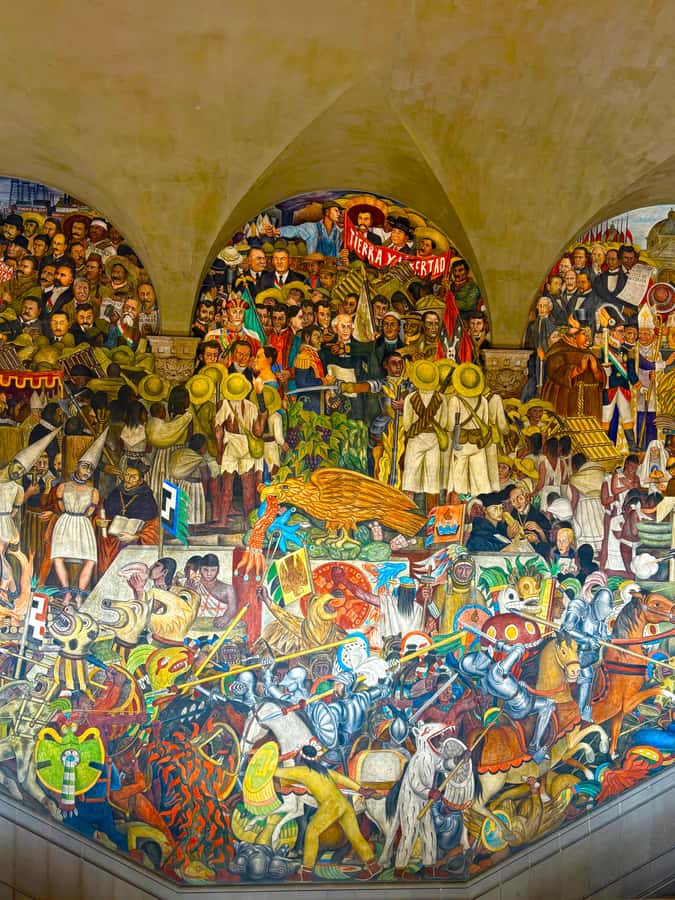
I would choose this tour if you want Mexico City’s art explained in connection with its politics and social history. It suits first-time visitors, museum lovers, students of Mexican culture, and anyone who wants more than a quick photograph of a famous mural.
Families can also consider it, especially if the guide is told in advance about children, an older participant, or a stroller. The walk may be less suitable for anyone who dislikes extended standing, city walking, or focused art discussion.
You do not need to be an art expert. In fact, the tour may be most useful if you know Rivera’s name but cannot yet read his murals. The guide supplies the background that turns a wall full of figures into a story.
Booking details worth knowing
The duration is 3.5 hours, and starting times vary. Check the available schedule before booking, and favor an earlier departure when possible.
Free cancellation is available up to 24 hours before the tour for a full refund. You can also reserve now and pay later, which is useful if your Mexico City plans are still shifting.
The tour is wheelchair accessible, and live guiding is available in Spanish, English, French, and German. Bring your passport or ID card, wear comfortable shoes, and remember that your own meals, drinks, and transportation are separate.
Should you book the Diego Rivera mural tour?
Book it if you want the murals to make sense, not simply appear impressive. The combination of the Secretaría de Educación Pública, Palace of Fine Arts, and Diego Rivera Mural Museum gives you a strong look at Rivera’s public art, while the guide connects it to revolution, national identity, and cultural change.
I would be cautious about choosing a late start, since closing times can compress the route. I would also skip it if you want a casual walk with little explanation. For everyone else, especially visitors drawn to Mexican art but unsure where to begin, $78 buys a well-organized cultural lesson with museum admission and guides who bring real enthusiasm to the subject.
FAQ
Where does the Diego Rivera mural tour begin?
The tour begins at Museo Vivo del Muralismo and returns there at the end.
How long does the tour last?
The scheduled duration is 3.5 hours.
Which places does the tour visit?
The route includes Secretaría de Educación Pública, the Palace of Fine Arts in Mexico City, and the Diego Rivera Mural Museum.
Are museum entrance tickets included?
Yes. Entrance tickets to all museums on the tour are included.
What languages are available?
The live tour guide service is available in Spanish, English, French, and German.
Is the tour wheelchair accessible?
Yes, the activity is listed as wheelchair accessible.
What should I bring?
Bring a passport or ID card, and wear comfortable shoes because this is a walking tour.
Can I cancel or pay later?
You can cancel up to 24 hours in advance for a full refund. The reserve now and pay later option lets you book without paying immediately.
Newly listed around Mexico City
- Ticket to Frida Kahlo Museum on CDMX★ 4.5 · 44 reviews
- Epic Centro Histórico Walking Tour★ 5.0 · 77 reviews
- Eat Like A Local By The Taco Mensch★ 5.0 · 55 reviews
- Eat and Explore Local Markets in Mexico City★ 5.0 · 83 reviews
- Ticket for the Frida Kahlo Museum★ 3.5 · 67 reviews
- Authentic Lucha Libre Tour : Wrestling School, Tacos & Mezcal★ 5.0 · 162 reviews
- Express Tour to Teotihuacan Pyramids. Be the first to arrive!★ 4.5 · 62 reviews
- Small Group: The Magical Colonial Towns of Taxco and Cuernavaca★ 4.5 · 46 reviews
City Tours, compared.
Teotihuacan, Tlatelolco & Guadalupe Shrine Tour
Read our review →
Teotihuacan Hot Air Balloon Flight from Mexico City / Volare
Read our review →

The best tour to Teotihuacán from Mexico City
Read our review →
Browse the lists this tour appears in