

Reviewed · CITY TOURS
Mexico City: Hop-On Hop-Off Bus City Tour
Mexico City reveals itself in layers. I like this 24-hour ticket because it links the Zócalo, Reforma, Polanco, Coyoacán, and UNAM without making you master the city’s huge street plan on day one. I also like having three circuits in one pass, giving you a simple way to compare the historic center with the city’s southern neighborhoods.
The main caution is the audio system. One verified booking reported that unstable WiFi made the English commentary impossible to hear. You must also bring your own headphones, and the bus is an outdoor, rain-or-shine experience, so comfort depends partly on the weather.
In This Review
- Key points at a glance
- Why this bus works well in a huge capital
- Green Circuit: from the Zócalo to Polanco
- Yellow Circuit: museums, monuments, and Guadalupe
- Blue Circuit: Coyoacán, San Ángel, and UNAM
- How to use the 24-hour ticket well
- Audio guide and the practical WiFi problem
- Finding the bus and exchanging your reservation
- Who gets the most from this tour?
- Should you book the Mexico City bus tour?
- FAQ
- How long is the ticket valid?
- Which circuits are included?
- Does the tour include an audio guide?
- Is food allowed on the bus?
- Does the tour operate on Sundays?
- Is the bus wheelchair accessible?
- Can I cancel the booking?
Key points at a glance

- Three routes, one ticket: Ride the Downtown to Polanco, Downtown to Temples, and Downtown to South circuits during the ticket’s 24-hour validity.
- A useful first look at Mexico City: The bus connects major districts that are spread far apart, including Reforma, Roma, Condesa, Coyoacán, and Polanco.
- The blue southern route is the cultural choice: It reaches Coyoacán, the Frida Kahlo Blue House Museum area, San Ángel, and the UNAM campus.
- The green route mixes famous sights and fashionable districts: You pass the Zócalo, Angel of Independence, Diana the Huntress, Roma, Condesa, and Polanco.
- The yellow route focuses on monuments and religious sites: Its stops include the Franz Mayer Museum, Basilica of Guadalupe, Temple of San Judas Tadeo, and Benito Juárez Hemicycle.
- Prepare for a basic bus service: Food, drinks, hotel transfers, and headphones are not included. Staff in pink vests exchange your reservation for a bracelet.
Why this bus works well in a huge capital

Mexico City is not a compact sightseeing town. Its important places are scattered across a vast urban area, and the distance between the historic center and Coyoacán alone can make a carefully planned day feel crowded. This bus gives you an overview before you decide where to spend more time.
The biggest benefit is flexibility. You can remain aboard for a panoramic ride, then get off when a neighborhood catches your eye. You can also use the circuits as a practical orientation tool, especially if this is your first day in the capital.
The ticket costs $20 per person and is valid for 24 hours from first activation. That is a reasonable price if you use several portions of the routes, particularly because the ticket includes all three circuits and travel insurance. It is less useful if you only want a short ride around the center and do not plan to get off.
The service is not a private guide or a small-group tour. It is shared transportation with recorded commentary. That distinction matters. You get access to a broad area, but you will need to choose your own stops and manage your own sightseeing time.
A few more Mexico City runs worth comparing
- Teotihuacan, Guadalupe Shrine & Tlatelolco Day Tour with Lunch
★ 5.0 · 11,603 reviews - Xochimilco, Coyoacan and Frida Kahlo with Optional Lunch
★ 4.5 · 7,320 reviews - Balloon flight + Breakfast in cave + Pyramids + Pick up CDMX.
★ 5.0 · 6,335 reviews
Green Circuit: from the Zócalo to Polanco
The green circuit is the best introduction to Mexico City’s changing character. It begins in the historic center, where the Zócalo offers a broad view of the capital’s central civic area. From there, the route heads along Reforma Avenue, one of the city’s grandest roads.
Reforma is lined with major buildings and monuments. Two named highlights are the Angel of Independence and Diana the Huntress. These are not minor roadside decorations. They help you see how Mexico City presents its national identity through wide avenues, public sculpture, and monumental architecture.
The Angel of Independence is particularly useful as a city marker. Even if you do not get off, seeing it from the upper part of the bus helps you understand Reforma’s scale. The Diana the Huntress monument adds another recognizable point along the route.
The green circuit then reaches parts of Roma, Condesa, and Polanco. These districts offer a very different feel from the central square. Roma and Condesa are known here as fashionable neighborhoods, while Polanco brings another polished side of the capital.
I like this route for the contrast. In one ride, you move from the historic center to major avenues and then into neighborhoods with a more modern, stylish identity. It gives you a quick answer to a basic question: which part of Mexico City suits your interests?
If you have only one day, you might use the green circuit as a full orientation ride first. After that, get off in the district you most want to explore. The limitation is that a ride through Roma, Condesa, or Polanco is only an introduction. The bus lets you see where to go, but it cannot replace time on foot.
Yellow Circuit: museums, monuments, and Guadalupe
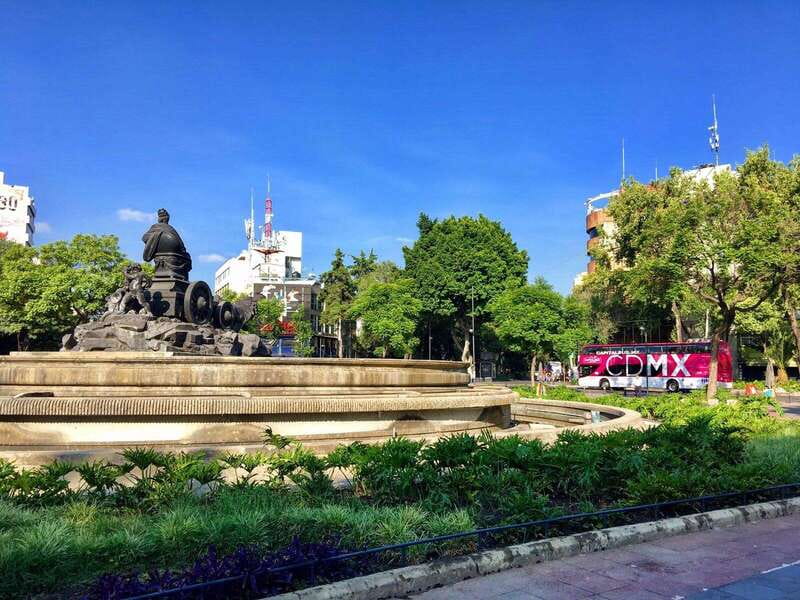
The route labels skip from Circuit 1 to Circuit 3, but the yellow circuit is clearly marked as Downtown to Temples. Its focus is historical and religious sites rather than fashionable neighborhoods.
The Franz Mayer Museum is one of the named stops. Its inclusion makes the route useful for anyone who wants to add a museum visit to a day in the center. Since the ticket only provides the ride, you should plan separately for admission and visiting time if you want to go inside.
The Basilica of Guadalupe is another major stop. This gives the yellow route a wider reach than a standard central sightseeing loop. You can use it to connect the historic center with one of Mexico City’s most important religious destinations without arranging separate transportation.
The Temple of San Judas Tadeo adds another religious site to the route. The name of the circuit signals the theme, so this is the route to choose if churches, monuments, and Mexico’s public religious traditions interest you most.
The Benito Juárez Hemicycle is one of the route’s important monuments. It gives the circuit a civic and national focus, balancing the religious stops with a major public memorial.
I would not choose the yellow circuit simply because it has the most stops. Its value depends on your interests. If you want markets, restaurants, or long neighborhood walks, the green and blue routes may be a better match. If you want to connect monuments and places tied to Mexico’s public and religious life, yellow earns its place in the ticket.
Blue Circuit: Coyoacán, San Ángel, and UNAM
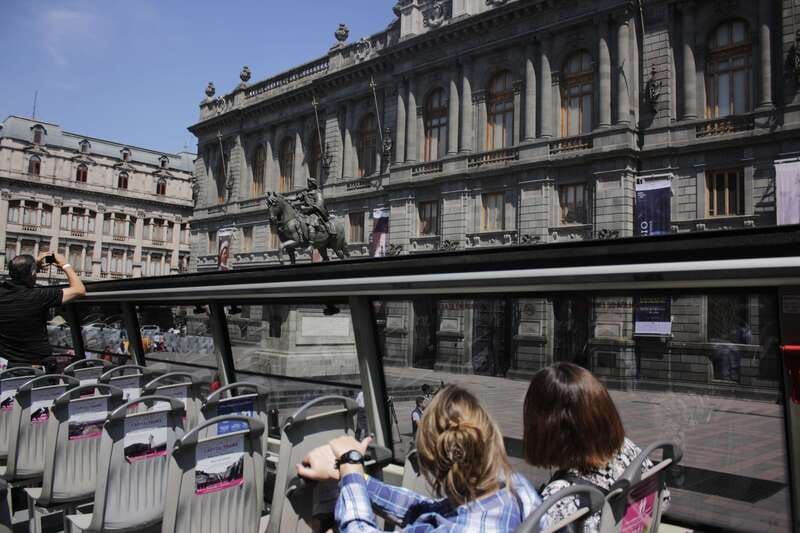
The blue circuit, called Downtown to South, is likely the most appealing route for culture-focused visitors. It reaches Coyoacán, San Ángel, and the National Autonomous University of Mexico campus, known as UNAM.
Coyoacán is the route’s major draw. The neighborhood is also home to the Frida Kahlo Blue House Museum, giving you a clear reason to get off. The bus does not include museum admission, and the experience details do not promise timed entry, so you should treat the stop as transportation to the area rather than a museum reservation.
The Blue House is especially important because it turns the route into more than a sightseeing ride. You are not simply looking at monuments through a bus window. You can choose a neighborhood connected to one of Mexico’s best-known artists, then spend time exploring on your own.
San Ángel offers a second southern stop, with beautiful parks named among the route’s highlights. This gives the blue circuit a slower, more open-air quality than the central routes. If you want a break from major roads and city monuments, San Ángel is a sensible place to get off.
The route also reaches the UNAM campus. That makes the circuit useful for anyone interested in architecture, education, or Mexico City’s cultural institutions. The campus is far enough from the center that having a sightseeing bus connect it to other major areas can save planning time.
The drawback is simple: the southern route covers a lot of ground. If you get off at Coyoacán, San Ángel, and UNAM, you may not have time to explore each area fully before the next useful bus arrives. Pick one or two priorities rather than trying to collect every stop.
Same base, a different sort of day:
- Teotihuacan pyramids morning or afternoon without tourist traps
★ 5.0 · 6,186 reviews - Teotihuacan Early Access Guided Tour with optional Lunch
★ 4.5 · 6,138 reviews - Balloon flight + pick up in CDMX + Breakfast in Cave + Pyramids
★ 5.0 · 5,651 reviews - Balloon Flight + Cave Breakfast + Pick Up from CDMX or We Fly
★ 5.0 · 4,410 reviews
How to use the 24-hour ticket well
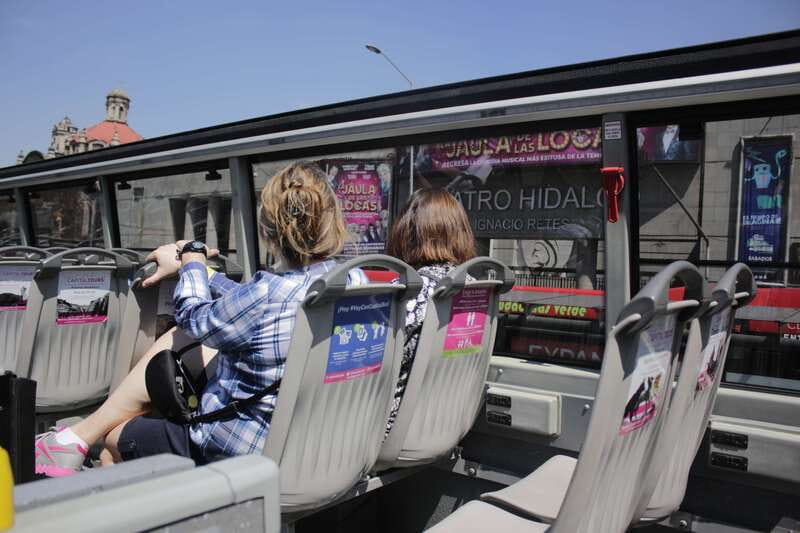
The ticket is valid for 24 hours from first activation, not simply until the end of the calendar day. That gives you more flexibility than a single morning or afternoon pass. You can begin at a convenient time and use the ticket during the following 24-hour period.
A sensible plan is to start with one complete circuit while staying aboard. This lets you see the route, note the areas that interest you, and avoid getting off at a stop before you understand how the day fits together.
After that, choose stops with a purpose:
- Use green for Reforma, Roma, Condesa, or Polanco.
- Use yellow for the Franz Mayer Museum, Basilica of Guadalupe, San Judas Tadeo, or the Benito Juárez Hemicycle.
- Use blue for Coyoacán, the Blue House Museum area, San Ángel, or UNAM.
The three circuits do not all serve the same type of sightseeing. Trying to ride every route end to end may give you a broad view, but it leaves little time for actual visits. I would use the bus for orientation and longer transfers, then spend the rest of the day at two or three carefully chosen places.
Bring comfortable clothing and a sun hat. Mexico City weather can change, and the service runs rain or shine. You should also carry your passport or ID card, as those are listed items to bring.
Food and drinks are not included, and food and drinks are not allowed on the bus. Plan your meal breaks around the stops rather than expecting to eat aboard. Umbrellas and pets are not allowed, although assistance dogs are permitted.
Audio guide and the practical WiFi problem
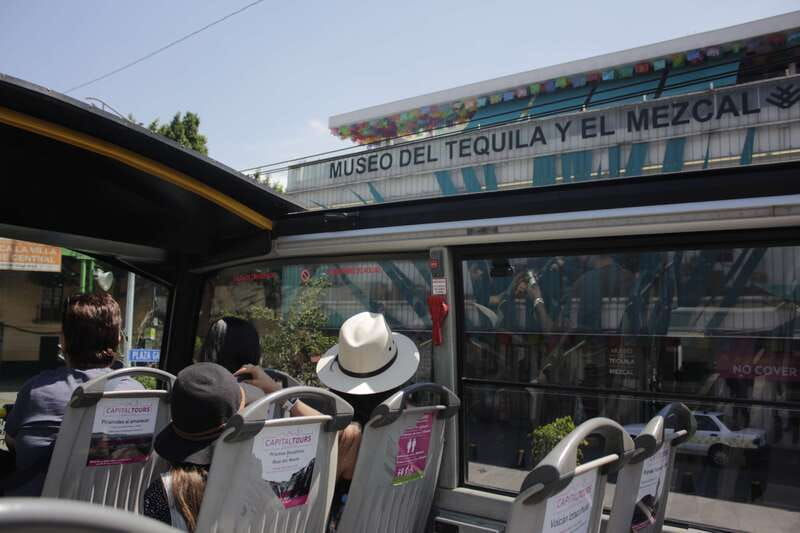
The audio guide adds useful context to a route that would otherwise be mostly visual. It can help explain the monuments along Reforma, identify important buildings, and give meaning to the sites on the yellow circuit.
You need your own headphones. They are not included, so bringing a familiar pair is a small but important preparation step.
There is also a technical concern. One verified booking reported unstable WiFi and said the English commentary could not be heard. That does not prove the problem will affect every departure, but it is a real reason to avoid relying on the audio guide as your only source of information.
I suggest treating the commentary as a bonus rather than the foundation of your day. Keep your phone charged, bring headphones that connect easily, and pay attention to the route itself. If the audio works, you gain extra context. If it fails, the bus still provides transportation and a broad view of the city.
The overall rating is 3.9 out of 5 from 183 ratings. That places the experience in the useful but not flawless category. The audio issue is the clearest specific weakness provided, while the route coverage and flexibility are the main reasons to consider it.
Finding the bus and exchanging your reservation
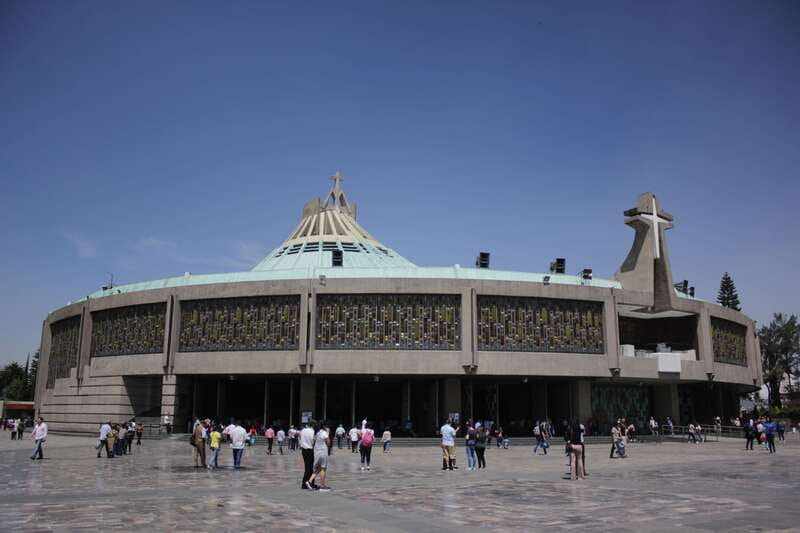
You should arrive 10 minutes early at the meeting point. Staff members wear pink vests, validate your reservation, and give you directions. They will exchange your reservation for a bracelet, which functions as your access for the day.
This is not a hotel pickup service. You must reach the meeting point yourself, and hotel pickup and drop-off are not included. That is normal for a city sightseeing bus, but it matters if you are staying far from the central area.
The bracelet exchange is worth handling before you are in a hurry. Arriving early gives you time to identify the correct staff member and understand where to board. Since the city is large and the routes have different colors, confirm that you are joining the circuit you want.
All three circuits operate every day. On Sundays from 8:00 to 14:00, the buses use alternative streets because of Mexico City’s Ciclotón, a government-organized cycling event. This may change the route or timing, so Sunday morning is not the best time to expect the normal street-by-street experience.
The tour is wheelchair accessible. That makes it a practical option for visitors who need accessible transportation, though you may still want to confirm the boarding details directly when you exchange your reservation.
Who gets the most from this tour?
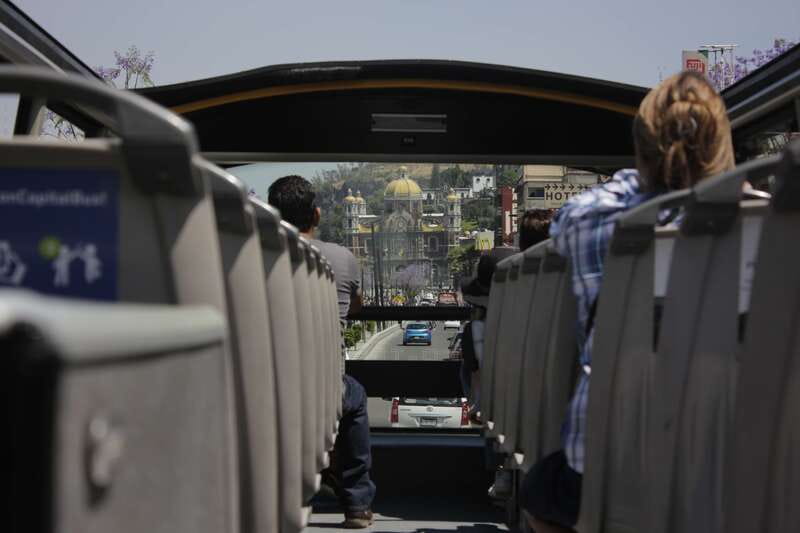
I would recommend the bus to first-time visitors who want a broad look at Mexico City before committing to specific neighborhoods. It also suits you if you want to combine distant areas, such as the historic center and Coyoacán, without arranging separate rides for every leg.
Families may like the simple format, since you can stay aboard when the group needs a rest and get off when a stop feels worthwhile. It can also help anyone who prefers not to spend a first day working out public transportation across a very large capital.
The tour is less suitable if you want a detailed, personal explanation from a live guide. The commentary is recorded, and its reliability may depend on the onboard connection. It is also not ideal if you dislike fixed routes or want to spend an entire day at one museum or neighborhood.
At $20, the pass is good value when you ride multiple circuits or use it for longer transfers. It is weaker value for a short panoramic ride. The more you use the hop-on, hop-off feature, the more the price makes sense.
Should you book the Mexico City bus tour?
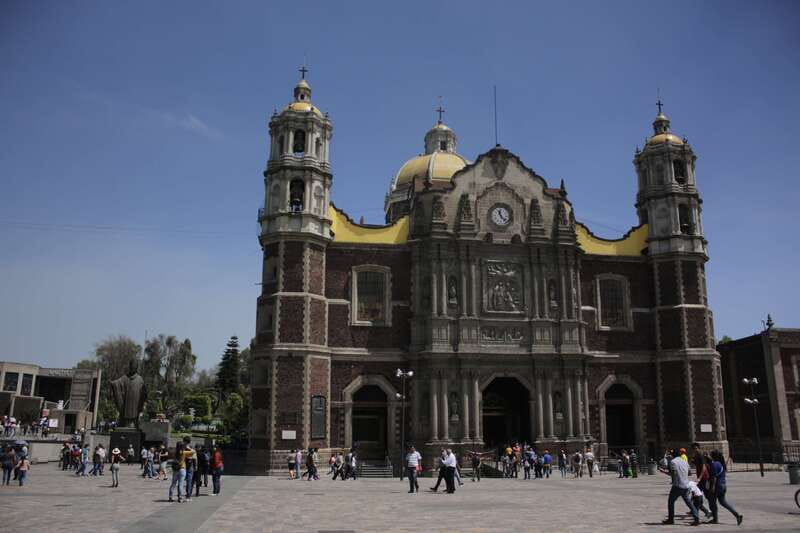
Book it if you want an affordable overview of a huge city and plan to visit at least two different districts. The strongest reason is the route coverage: green takes you from the Zócalo and Reforma toward Roma, Condesa, and Polanco, while blue reaches Coyoacán, San Ángel, and UNAM.
Choose it with realistic expectations. Bring headphones, do not depend completely on the audio guide, arrive early for the pink-vested staff and bracelet exchange, and leave time for traffic, weather, and Sunday route changes.
If you prefer a live guide, included meals, or a tightly managed sightseeing schedule, this is not the right format. If you want freedom, low cost, and a useful first look at Mexico City’s major districts, it is a practical choice.
FAQ
How long is the ticket valid?
The ticket is valid for 24 hours from the time you first activate it.
Which circuits are included?
One ticket includes three circuits: Downtown to Polanco in green, Downtown to Temples in yellow, and Downtown to South in blue.
Does the tour include an audio guide?
Yes, an audio guide is included. Headphones are not included, so you need to bring your own.
Is food allowed on the bus?
No. Food and drinks are not included, and food and drinks are not allowed on the bus.
Does the tour operate on Sundays?
Yes, all three circuits operate every day. On Sundays from 8:00 to 14:00, buses use alternative streets because of the Ciclotón.
Is the bus wheelchair accessible?
Yes, the activity is listed as wheelchair accessible.
Can I cancel the booking?
You can cancel up to 24 hours in advance for a full refund. A reserve-now, pay-later option is also available.
Newly listed around Mexico City
- Ticket to Frida Kahlo Museum on CDMX★ 4.5 · 44 reviews
- Epic Centro Histórico Walking Tour★ 5.0 · 77 reviews
- Eat and Explore Local Markets in Mexico City★ 5.0 · 83 reviews
- Eat Like A Local By The Taco Mensch★ 5.0 · 55 reviews
- Ticket for the Frida Kahlo Museum★ 3.5 · 67 reviews
- Authentic Lucha Libre Tour : Wrestling School, Tacos & Mezcal★ 5.0 · 162 reviews
- Express Tour to Teotihuacan Pyramids. Be the first to arrive!★ 4.5 · 62 reviews
- Small Group: The Magical Colonial Towns of Taxco and Cuernavaca★ 4.5 · 46 reviews
City Tours, compared.
Teotihuacan, Tlatelolco & Guadalupe Shrine Tour
Read our review →
Teotihuacan Hot Air Balloon Flight from Mexico City / Volare
Read our review →

The best tour to Teotihuacán from Mexico City
Read our review →
Browse the lists this tour appears in