
Reviewed · CITY TOURS
Mexico City: Ticket de entrada Museo Memoria y Tolerancia
Some museums ask you to remember. This one asks you to act. The Museo Memoria y Tolerancia uses the Holocaust, genocides, personal stories, documents, and modern art to examine how discrimination and indifference can lead to violence. I like the museum’s serious purpose and its wide range of material, from historic photographs to a World War II train wagon and interactive sculptures. I also like that the ticket includes temporary exhibitions and an audioguide in both Spanish and English. The main consideration is emotional: the permanent exhibition is recommended for children over 15, and younger children must have an adult with them.
Set aside real time for this visit. There are 43 rooms and more than 1,200 objects, documents, and audiovisual pieces, so this is not a quick stop you squeeze between lunch and another museum. The material is direct and often painful, but the museum works toward tolerance, human rights, peace, and social action rather than leaving you with history alone.
In This Review
- Key points to know before you go
- Why this museum matters in Mexico City
- Starting with 43 rooms of permanent exhibitions
- The Holocaust galleries and the Anne Frank focus
- From Armenia to Rwanda, Guatemala, Cambodia, Darfur, and Yugoslavia
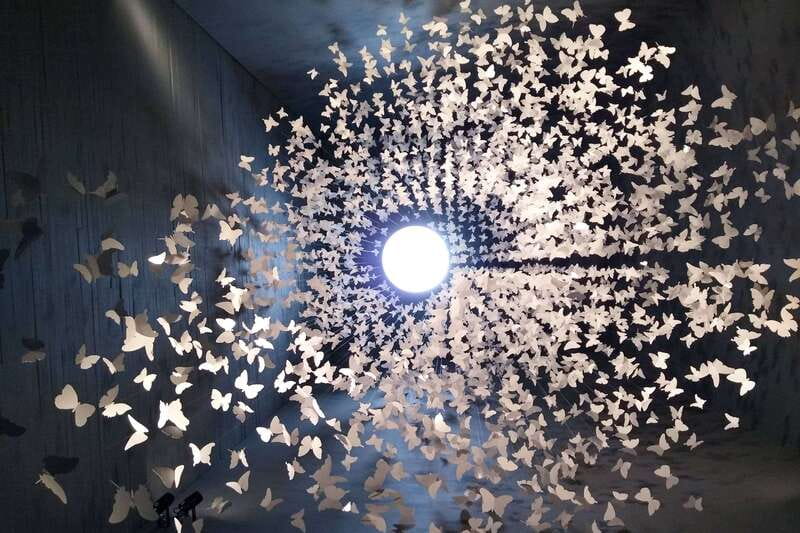
- Art that turns memory into a public message
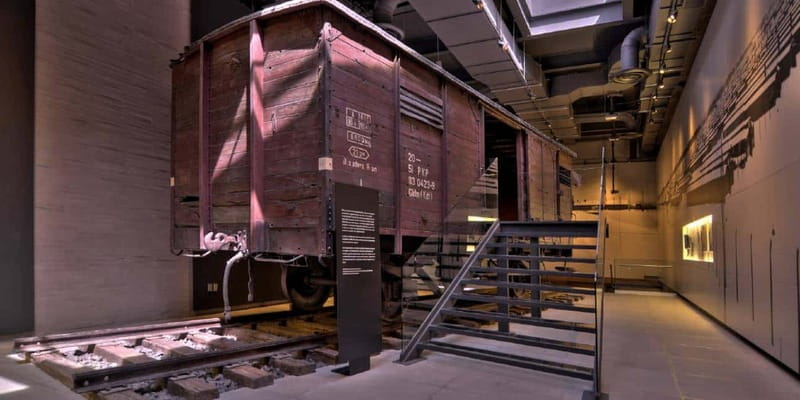
- The World War II train wagon and Berlin Wall fragment
- Temporary exhibitions add another layer
- Location and practical planning at Plaza Juarez
- Is the $13 ticket good value?
- Who should visit this museum?
- Should you book the Memory and Tolerance Museum?
- FAQ
- How much does admission to the Museo Memoria y Tolerancia cost?
- How long is the ticket valid?
- Where is the museum located?
- What does the entrance ticket include?
- Is an audioguide available in English?
- What does the permanent exhibition cover?
- Are children allowed in the museum?
- Is the museum wheelchair accessible?
- Can I bring food or drinks inside?
Key points to know before you go
- The 43-room permanent exhibition covers several genocides: The Holocaust is central, but the museum also examines Armenia, Rwanda, Guatemala, Cambodia, Darfur, and Yugoslavia.
- More than 1,200 objects and media pieces fill the museum: Expect documents, photographs, audiovisual material, installations, sculpture, and a World War II train wagon.
- The Anne Frank material can be especially affecting: It gives the museum’s larger themes a personal and human focus.
- Jan Hendrix appears in several major installations: Lost Potential and Cube add an artistic language to the museum’s historical message.
- Your ticket includes temporary exhibitions: The visit is not limited to the permanent galleries.
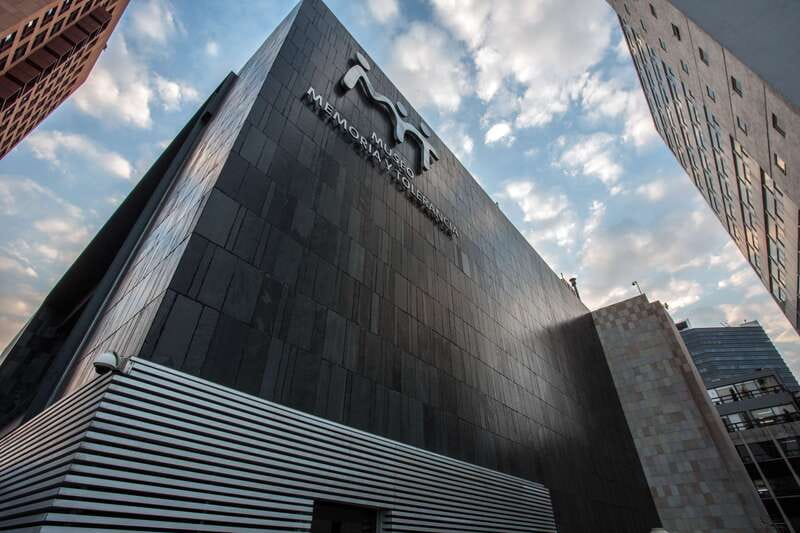
- The museum sits beside major downtown landmarks: You will find it at Plaza Juarez, next to the Secretariat of Foreign Affairs and opposite the Hemicycle to Juarez.
Why this museum matters in Mexico City
Mexico City has museums about art, archaeology, politics, and national history. The Memory and Tolerance Museum takes a different route. It looks at crimes against humanity across countries and decades, then connects those events to choices people still make today.
That connection is the museum’s central idea. Genocide does not begin with the final act of mass killing. It begins with exclusion, prejudice, propaganda, silence, and the decision to treat a group as less human. The museum asks you to notice those early steps.
I value that focus because it keeps the visit from becoming a lesson about distant events only. The exhibitions are historical, but their purpose is present-day awareness. You are encouraged to think about discrimination, violence, respect for human rights, and the responsibility to respond instead of looking away.
The museum also has an international reach. Alongside the Holocaust, the permanent galleries address the Armenian genocides, Rwanda, Guatemala, Cambodia, Darfur, and Yugoslavia. That wider view is useful, since it shows that mass violence has appeared in different regions and political settings. The museum does not limit the subject to one country or one period.
A few more Mexico City runs worth comparing
- Teotihuacan, Guadalupe Shrine & Tlatelolco Day Tour with Lunch
★ 5.0 · 11,603 reviews - Xochimilco, Coyoacan and Frida Kahlo with Optional Lunch
★ 4.5 · 7,320 reviews - Balloon flight + Breakfast in cave + Pyramids + Pick up CDMX.
★ 5.0 · 6,335 reviews
Starting with 43 rooms of permanent exhibitions
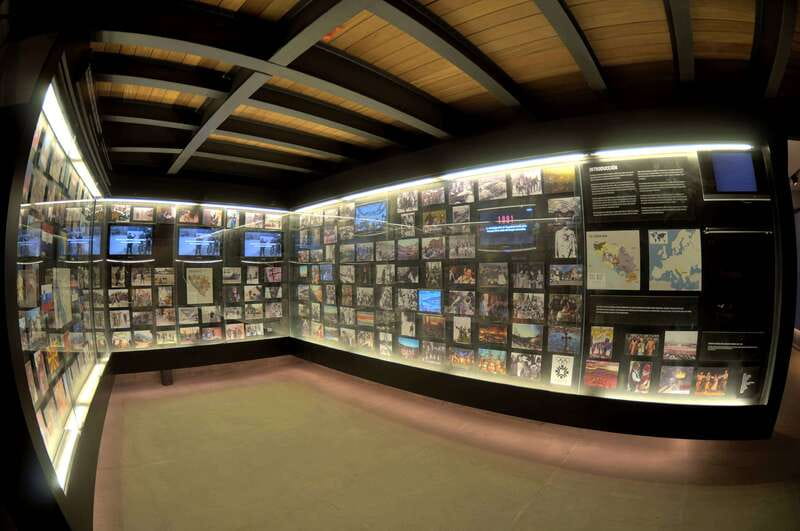
The permanent exhibition is the main reason to buy this ticket. Across 43 rooms, you can see more than 1,200 objects, documents, and audiovisual pieces. The material covers a large amount of ground, so the visit works best when you are ready to read, watch, pause, and think.
You will encounter the Holocaust as a major part of the exhibition, along with other crimes against humanity. The use of original objects and documents gives the historical sections weight. Photographs and audiovisual pieces add personal detail and help move the subject beyond dates and political names.
I find this combination more useful than a display made only of text panels. Documents show the machinery and record of persecution. Images show its human cost. Audiovisual material can bring testimony and explanation into the rooms. Together, these forms give you several ways to understand difficult material.
The scope can also feel heavy. You should not expect a light museum outing or a quick collection of highlights. The recommended age of 15 and older is a helpful guide. Younger children may find the subject matter upsetting or difficult to understand, and anyone under 15 must be accompanied by an adult.
The audioguide is included in Spanish and English. That matters here because careful context is important. If you are not comfortable reading every display in Spanish, the English option helps you follow the museum’s argument and historical material without rushing.
The Holocaust galleries and the Anne Frank focus
The Holocaust section is one of the most emotionally important parts of the museum. It presents the subject through historical evidence, photography, artistic interpretation, and human stories. The museum’s message is not only that these crimes happened, but that ordinary choices and public silence can help create the conditions for them.
The Anne Frank exhibition has particular emotional force. It gives a single young person’s experience a place within the larger history. That personal scale can make the broader material easier to grasp. Numbers and official documents explain the size of the crime, while Anne Frank’s story reminds you that each victim had a life, family, personality, and future.
I would plan your pace around this section. You might want to pause longer than expected, especially if you are already familiar with Anne Frank’s diary. The museum’s strength here is its ability to connect a famous story with the wider subject of persecution and human responsibility.
This is also where the museum’s purpose becomes clearest. It does not present suffering as a spectacle. The goal is to lead you toward awareness and action, with tolerance and respect for human rights as practical duties rather than abstract slogans.
From Armenia to Rwanda, Guatemala, Cambodia, Darfur, and Yugoslavia
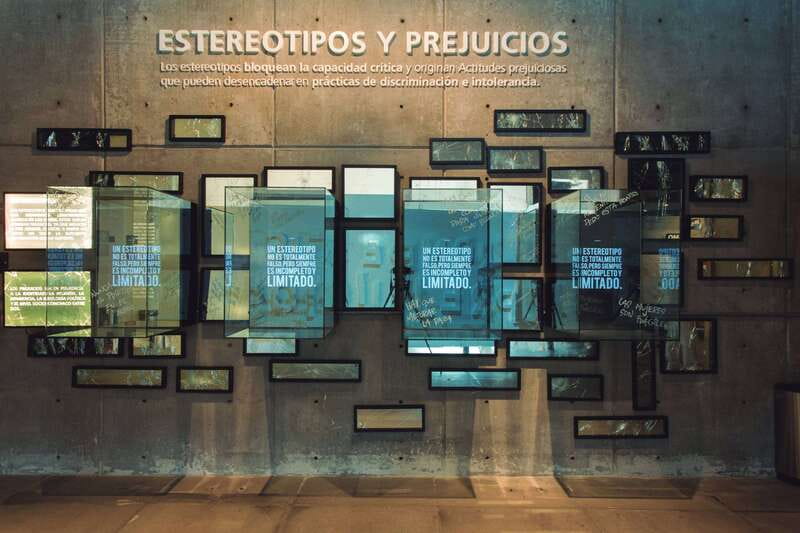
The permanent exhibition moves beyond the Holocaust to examine several other genocides and mass crimes. The inclusion of Armenia, Rwanda, Guatemala, Cambodia, Darfur, and Yugoslavia gives you a broader frame for understanding how violence develops.
Each case has its own causes, political setting, victims, and sequence of events. The museum’s value is not that it makes these histories identical. Instead, it places them in conversation, allowing you to notice recurring warnings: discrimination, dehumanizing language, organized violence, and the failure of people or institutions to act.
This section may be especially useful if you know the Holocaust well but have less background on the other cases. You may find that the museum’s international scope changes how you think about genocide. It is not a single historical subject belonging to one country. It is a human danger that has appeared in many places.
The amount of information is one reason to avoid treating the museum as a brief photo stop. With 43 rooms and over 1,200 pieces, you will get more from the visit if you accept that you cannot absorb every item equally. Use the audioguide to keep the main thread, then spend extra time with the subjects that speak most strongly to you.
Same base, a different sort of day:
- Teotihuacan pyramids morning or afternoon without tourist traps
★ 5.0 · 6,186 reviews - Teotihuacan Early Access Guided Tour with optional Lunch
★ 4.5 · 6,138 reviews - Balloon flight + pick up in CDMX + Breakfast in Cave + Pyramids
★ 5.0 · 5,651 reviews - Balloon Flight + Cave Breakfast + Pick Up from CDMX or We Fly
★ 5.0 · 4,410 reviews
Art that turns memory into a public message
The museum is not made only of documents and historical displays. Art installations carry much of its emotional and visual language. These pieces help the museum move from recording the past to asking what society should do next.
Jan Hendrix created Lost Potential and Cube, two installations listed among the permanent works. Their presence adds a modern artistic voice to a subject that could otherwise feel locked in the past. You are not simply reading about events. You are being asked to consider absence, possibility, loss, and the shape of memory.
Another notable piece is the metronome installation by Lozano-Hemmer. A metronome suggests rhythm, repetition, and time. In a museum about historical violence, that idea can feel pointed: the past can repeat when warnings are ignored.
The Wings of Peace by Jorge Marin is a sculptural and interactive work. Rivelino’s YOU is also interactive. These pieces invite more than passive viewing, though the precise way you respond will depend on the installation and your own reading of it.
Carl Fredrik Reuterswärd’s Non-Violence Project sculpture adds another direct symbol to the museum. You will also see a fragment of the Berlin Wall, an object that links personal memory to the physical remains of political division.
I like this mixture of historical evidence and art because it gives the museum different speeds. Some rooms ask you to read carefully. Others ask you to look, listen, or consider a symbol. That variety helps keep a long visit from becoming one continuous wall of text.
The World War II train wagon and Berlin Wall fragment
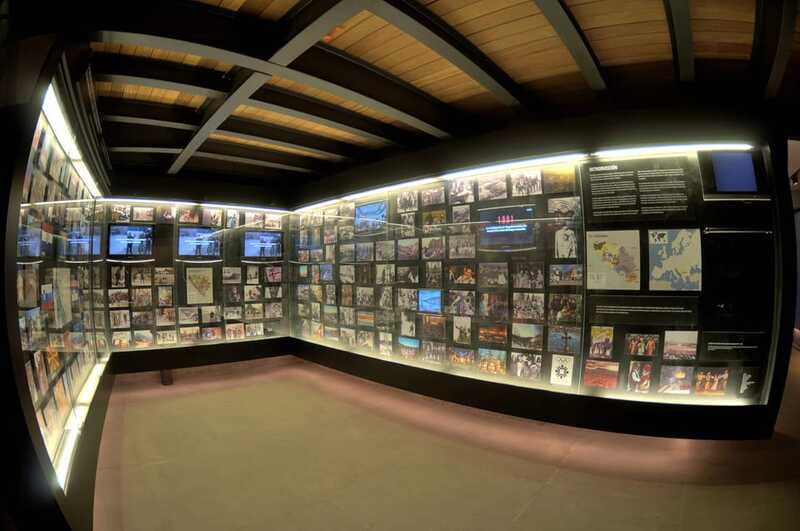
Two objects are especially important for their physical presence: a train wagon used during World War II to transfer prisoners and a fragment of the Berlin Wall.
A train wagon is difficult to treat as a distant historical idea. Its size, shape, and purpose make forced transport more tangible. It helps you think about how systems of persecution depended on ordinary forms of transport and administration, not only on dramatic moments of violence.
The Berlin Wall fragment works differently. It represents political division, control, and the eventual breaking of a barrier. It is not part of the genocide galleries in the same way as the train wagon, but it fits the museum’s concern with intolerance, separation, and the consequences of treating people as categories rather than individuals.
These objects also break up the rhythm of the exhibition. After reading documents or watching audiovisual pieces, a large physical object can reset your attention. I would not rush past them. They are among the displays that make the museum’s ideas easier to picture.
Temporary exhibitions add another layer
Your ticket includes temporary exhibitions, which is a useful part of the value. The exact displays can change, so I cannot promise a particular subject or artist on your visit. Still, the temporary galleries give you a chance to see how the museum continues its work beyond the permanent rooms.
This also makes the ticket more worthwhile for repeat visits. The permanent exhibition carries the main historical content, while temporary displays can offer a fresh subject, a new artistic approach, or a more focused treatment of tolerance and social change.
Check what is on view when you plan your day, but do not build your entire decision around a temporary show unless you have confirmed its details. The permanent exhibitions are the dependable reason to come.
Location and practical planning at Plaza Juarez
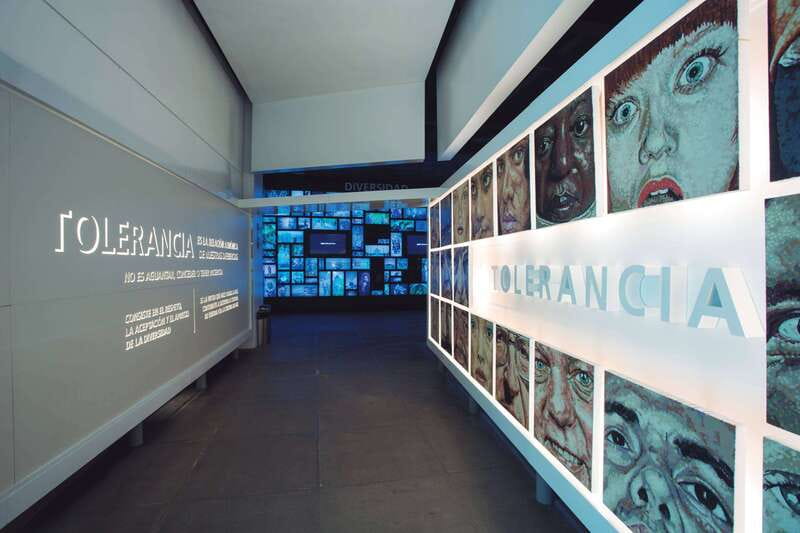
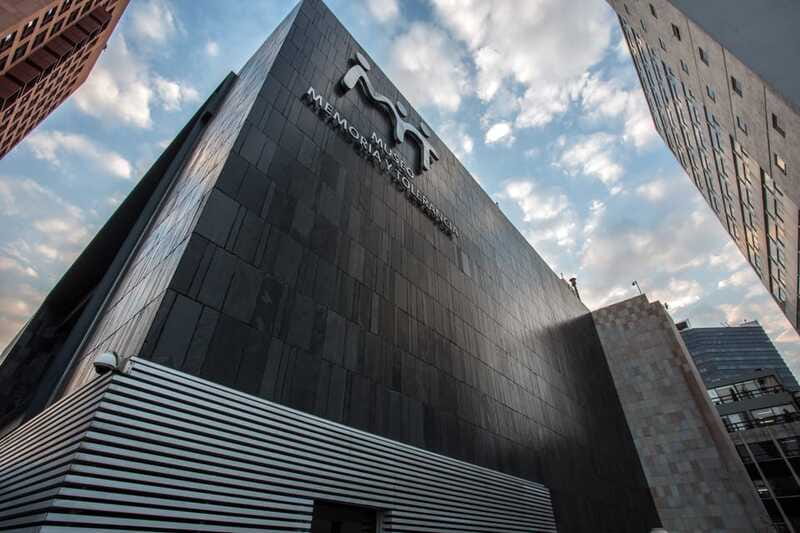
The museum is at Plaza Juarez in downtown Mexico City. It is next to the Secretariat of Foreign Affairs and opposite the Hemicycle to Juarez, so the location is easy to identify once you are in this central area.
That setting makes the museum convenient to pair with other downtown sights, but the museum itself deserves attention rather than a rushed add-on. The ticket is valid for one day, and availability determines the starting times. You should check the available time when booking.
Food and drinks are not allowed inside. Plan to eat before or after your visit rather than expecting to carry a snack through the galleries.
The museum is wheelchair accessible. That removes an important barrier for many visitors, though the subject matter remains the larger planning issue. Give yourself enough time, and do not schedule another demanding museum immediately afterward if you know difficult historical material affects you strongly.
Is the $13 ticket good value?
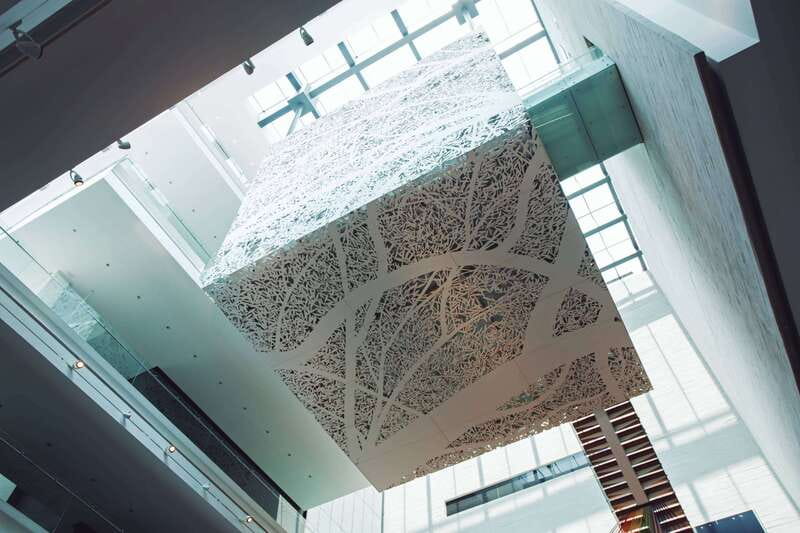
At $13 per person, the ticket offers solid value for a museum with 43 permanent rooms, more than 1,200 objects and media pieces, temporary exhibitions, and an audioguide in two languages.
The value is not based on a single famous object. It comes from the scale and purpose of the visit. You are paying for several connected exhibitions, major installations, historic objects, and access to temporary displays in one central Mexico City location.
The ticket is an especially good choice if you want a thoughtful museum rather than a quick attraction. It also suits you if you are interested in human rights, modern history, genocide studies, documentary photography, or public art.
The price may feel less worthwhile if you have only a short amount of time or prefer museums with a lighter tone. This is a serious visit, and its impact depends on your willingness to spend time with hard material. The audioguide helps, but it cannot make the subject easy.
Flexible booking terms improve the practical value. You can reserve and pay later, and cancellation is available up to 24 hours in advance for a full refund. Those terms are useful when your Mexico City plans are still shifting.
Who should visit this museum?
I would recommend the museum to adults, older teenagers, students, educators, and anyone who wants to think carefully about intolerance and violence. It is also a good choice for people who have visited other museums focused on genocide or human rights and want a broader international comparison.
The museum may suit families with older teenagers, provided an adult is ready to discuss what the exhibitions show. Children under 15 need adult supervision, and the permanent galleries are recommended for older children.
You should choose another activity if you are looking for entertainment, relaxed sightseeing, or a place where you can skim a few displays in twenty minutes. The museum asks for attention and emotional energy.
Should you book the Memory and Tolerance Museum?
Yes, if you want one of Mexico City’s most serious and purposeful museum visits. The combination of Holocaust and genocide exhibitions, Anne Frank material, historic objects, striking installations, and temporary displays gives the $13 ticket strong value.
Book it when you can give the permanent exhibition enough time. Go with an open mind, use the Spanish or English audioguide, and expect the subject to stay with you after you leave. I would especially choose this museum for older teenagers and adults who want history connected to present-day responsibility, not just a collection of facts.
FAQ
How much does admission to the Museo Memoria y Tolerancia cost?
The entrance ticket costs $13 per person.
How long is the ticket valid?
The ticket is valid for one day. Available starting times depend on the schedule shown when you check availability.
Where is the museum located?
The museum is at Plaza Juarez in downtown Mexico City, next to the Secretariat of Foreign Affairs and opposite the Hemicycle to Juarez.
What does the entrance ticket include?
It includes museum admission, the audioguide, and access to temporary exhibitions.
Is an audioguide available in English?
Yes. The audioguide is available in Spanish and English.
What does the permanent exhibition cover?
It focuses on the Holocaust and other crimes against humanity, including the Armenian genocides, Rwanda, Guatemala, Cambodia, Darfur, and Yugoslavia.
Are children allowed in the museum?
Yes, but the permanent exhibitions are recommended for children older than 15. Children younger than 15 must be accompanied by an adult.
Is the museum wheelchair accessible?
Yes, the museum is wheelchair accessible.
Can I bring food or drinks inside?
No. Food and drinks are not allowed inside the museum.
Newly listed around Mexico City
- Ticket to Frida Kahlo Museum on CDMX★ 4.5 · 44 reviews
- Epic Centro Histórico Walking Tour★ 5.0 · 77 reviews
- Eat Like A Local By The Taco Mensch★ 5.0 · 55 reviews
- Eat and Explore Local Markets in Mexico City★ 5.0 · 83 reviews
- Ticket for the Frida Kahlo Museum★ 3.5 · 67 reviews
- Authentic Lucha Libre Tour : Wrestling School, Tacos & Mezcal★ 5.0 · 162 reviews
- Express Tour to Teotihuacan Pyramids. Be the first to arrive!★ 4.5 · 62 reviews
- Small Group: The Magical Colonial Towns of Taxco and Cuernavaca★ 4.5 · 46 reviews
City Tours, compared.
Teotihuacan, Tlatelolco & Guadalupe Shrine Tour
Read our review →
Teotihuacan Hot Air Balloon Flight from Mexico City / Volare
Read our review →

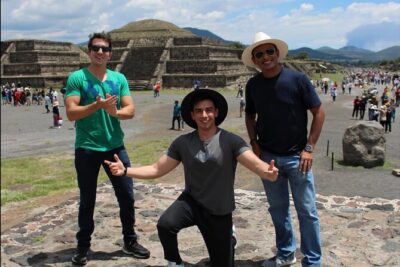
The best tour to Teotihuacán from Mexico City
Read our review →
Browse the lists this tour appears in