Reviewed · MEXICO CITY TOURS
Museo Nacional de Antropología – Small Groups
History comes alive inside these galleries. This three-hour tour gives you a clear route through six of the museum’s eleven archaeology rooms, with Raúl connecting objects to the societies that made them. I especially like the small group, capped at six people, and the guide’s focus on how the museum itself was designed. You get more than a walk past famous objects.
The main drawback is pace. The National Museum of Anthropology is enormous, and three hours only covers part of it. The admission ticket also costs extra, at MX$210 per person, and the guide can be easy to miss in the crowded lobby, so arrive prepared and watch for your meeting instructions.
In This Review
- Key points at a glance
- Why this museum works better with a guide
- Starting at Museo Nacional de Antropología
- The museum’s design becomes part of the tour
- Olmec objects and the first steps through time
- Zapotec and Teotihuacan rooms
- Mexica culture and the approach to 1521
- Gold, jade, obsidian, and the 1985 theft
- What a six-person group feels like
- Price, admission, and overall value
- Who should book this experience?
- Six practical tips for a better visit
- FAQ
- How long does the Museo Nacional de Antropología tour last?
- How many people can join the group?
- Is museum admission included in the tour price?
- Is the tour offered in English?
- Where does the tour start and finish?
- Can I cancel for a full refund?
- Should you book the small-group museum tour?
Key points at a glance
- Six archaeology rooms in three hours: The route focuses your time instead of leaving you to wander through all eleven archaeology rooms.
- Raúl brings serious subject knowledge: His background in archaeology and history helps explain objects in plain, engaging English.
- Small groups change the experience: With no more than six people, you can ask questions and take seated breaks when needed.
- Olmec, Zapotec, Teotihuacan, and Mexica cultures: The tour links major Mesoamerican societies across time rather than treating each room as an isolated stop.
- Museum design is part of the story: You learn about the thinking behind the building, not only the objects inside it.
- Plan to buy admission separately: Use the museum’s official website, with the tour price and museum entry paid as separate costs.
Why this museum works better with a guide
Mexico City’s National Museum of Anthropology is not a quick stop. Its scale can work against you. You may enter with a list of famous cultures in mind, then find yourself surrounded by rooms, objects, labels, dates, and unfamiliar names.
This tour solves part of that problem by choosing a route through six archaeology rooms. Instead of trying to see everything, you spend your limited time on major cultures and the objects that help explain them. I like that approach for a first visit, especially if you plan to visit archaeological sites elsewhere in Mexico.
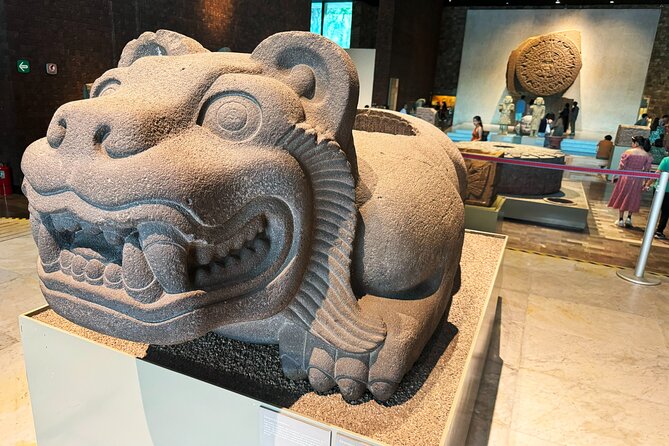
The guide’s job here is not just to translate Spanish labels into English. The strongest part of the experience is the connection between objects and society. A piece of jade, gold, or obsidian becomes a clue about power, trade, belief, technology, and status. You begin to see why a single object matters, rather than simply noting that it is old or famous.
Raúl receives the strongest praise for his clear English, strong command of Mexican history, and ability to make complicated subjects easy to follow. One particularly useful detail is that he has a background in archaeology and history. That matters in a museum where a confident explanation can help you separate established facts from attractive but misleading guesses.
A few more Mexico City runs worth comparing
- Teotihuacan, Guadalupe Shrine & Tlatelolco Day Tour with Lunch
★ 5.0 · 11,603 reviews - Xochimilco, Coyoacan and Frida Kahlo with Optional Lunch
★ 4.5 · 7,320 reviews - Balloon flight + Breakfast in cave + Pyramids + Pick up CDMX.
★ 5.0 · 6,335 reviews
Starting at Museo Nacional de Antropología
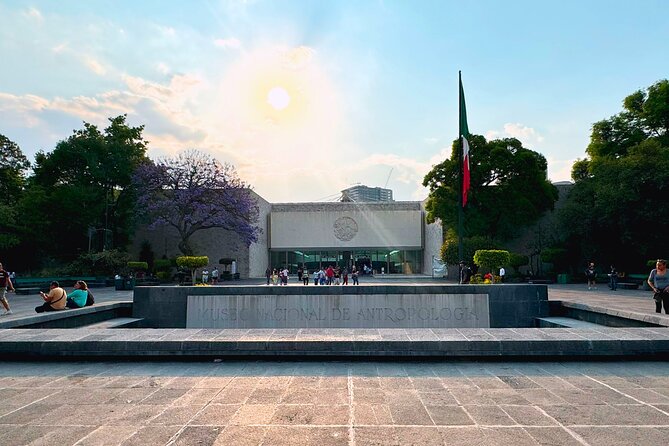
The meeting point is outside the museum at Avenida Paseo de la Reforma in the Chapultepec area. The location is near public transportation, which makes it practical for reaching the museum without arranging a private transfer.
The meeting area deserves some care. The museum lobby can be crowded, and it may not be obvious which person is your guide. One useful tip is to agree on exactly where to meet and look for the guide before the start time. The guide may not be holding a large sign, so do not assume the first tour group you see is yours.
You should also allow enough time to reach the entrance. This is a major museum, and a late arrival can be stressful when the group is already moving through security or toward the first gallery. Your confirmation is received when you book, and the experience is offered in English with a mobile ticket.
The tour lasts about three hours. That is a good length for a focused museum visit, but it is not enough to see every major section. Treat it as an introduction and a guided foundation, not a complete survey of the building.
The museum’s design becomes part of the tour
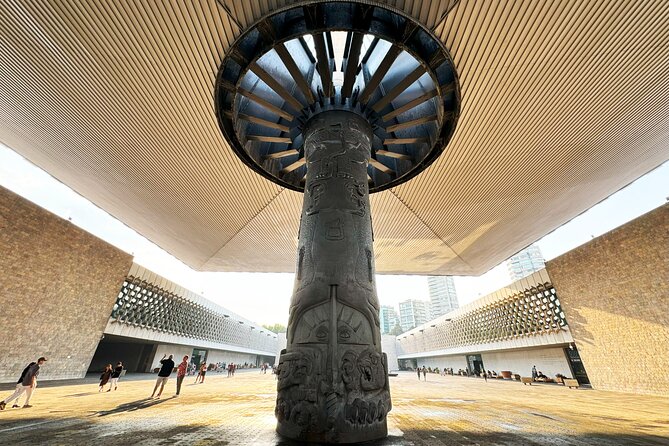
The experience begins with the project behind the museum’s design. That is a smart choice. Many museum tours rush straight to the objects, but the building itself shapes how you understand them.
Here, the guide uses the museum’s layout and purpose to set the scene. You learn how the building was conceived as a place to present Mexico’s Indigenous cultures and archaeological past. This gives the rooms a larger frame, helping you understand why certain objects are grouped together and how the museum tells its story.
I find this especially useful because museums are never neutral storage rooms. Their design, labels, lighting, order, and selection all guide your attention. An explanation of the building’s project helps you notice those choices.
The opening section also prepares you for the main theme: the many societies that occupied Mesoamerica before the fall of Mexico Tenochtitlan in August 1521. That date provides the tour’s endpoint, while the objects lead you backward through earlier periods and cultures.
Olmec objects and the first steps through time
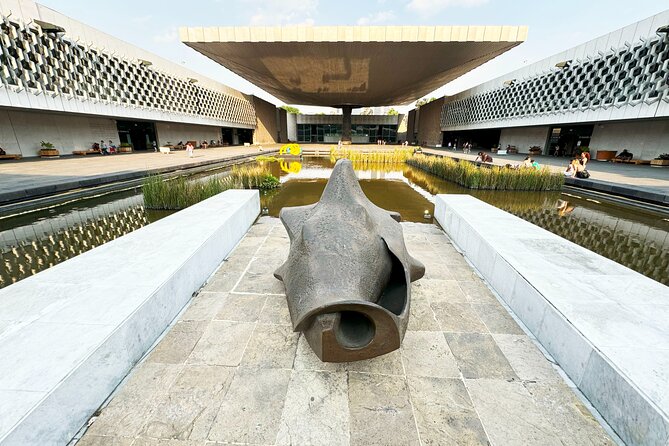
The Olmec material offers an early point of reference. The tour uses pieces from this culture to begin a broader discussion of how societies developed, organized themselves, and expressed ideas through art and ritual.
You should not expect a long academic lecture on every date and theory. The strength of the format is selection. The guide chooses objects that can carry a larger explanation, then uses them to connect one culture to the next.
That is helpful if you are new to Mesoamerican history. The cultures can blur together when you see them in one long museum visit. A guide keeps the sequence clear and explains why each group deserves its own place in the story.
The Olmec section also shows why looking at objects with context matters. Without guidance, you may admire scale, form, or craftsmanship and move on. With an explanation, you can start asking what the object tells you about authority, belief, labor, or contact between communities.
Same base, a different sort of day:
- Teotihuacan pyramids morning or afternoon without tourist traps
★ 5.0 · 6,186 reviews - Teotihuacan Early Access Guided Tour with optional Lunch
★ 4.5 · 6,138 reviews - Balloon flight + pick up in CDMX + Breakfast in Cave + Pyramids
★ 5.0 · 5,651 reviews - Balloon Flight + Cave Breakfast + Pick Up from CDMX or We Fly
★ 5.0 · 4,410 reviews
Zapotec and Teotihuacan rooms
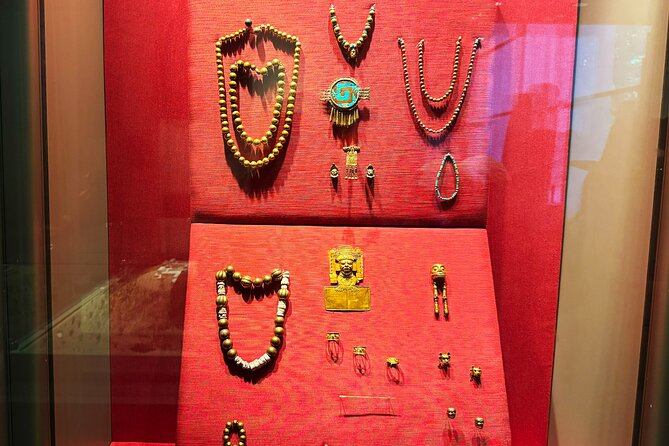
The Zapotec and Teotihuacan rooms add more layers to the museum’s story. The route does not treat Mesoamerica as one single culture. Instead, it points to different societies with their own systems, traditions, and achievements.
That distinction is one reason I would recommend this tour before visiting major archaeological sites. Several reviews describe the museum visit as useful preparation for places such as Teotihuacan and Monte Albán. I agree with the logic. Seeing objects first can give you a better framework for understanding ruins later, when you are standing among walls, platforms, and plazas without the same number of labels nearby.
Teotihuacan is particularly important in any first look at Mesoamerica, but the value here is not simply checking off a famous name. You are given an idea of how the culture fits into the wider regional story. The guide’s explanations help you understand that the museum is presenting a sequence of societies, not a collection of unrelated treasures.
The pace can vary. The advertised visit is about three hours, but one detailed account describes spending four hours and reaching only four rooms. That is a useful warning. If you ask many questions or pause often, the route may cover fewer rooms than planned. I would rather have four rooms explained well than eleven hurriedly crossed off, but you should set your expectations accordingly.
Mexica culture and the approach to 1521
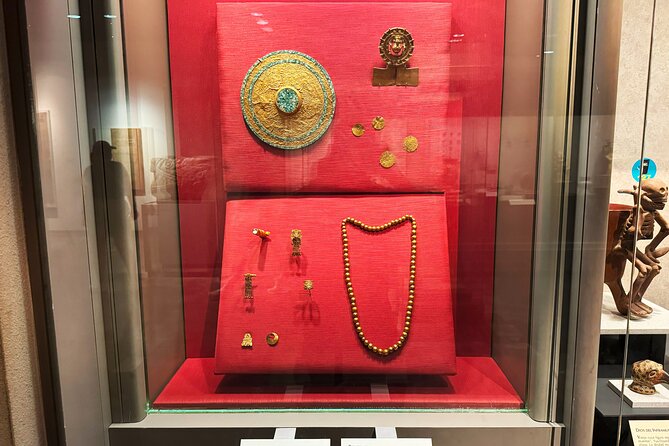
The Mexica rooms bring the tour closer to the fall of Mexico Tenochtitlan in 1521. This section gives the earlier cultures a point of comparison and helps you see how the story changes over time.
The guide uses objects as vehicles for moving through the past. That approach keeps the discussion grounded. You are not just hearing a list of rulers, dates, and place names. You are looking at material evidence and considering what it reveals about the people who made, used, valued, or controlled it.
The tour’s central promise is a clearer understanding of representative Mesoamerican cultures before the fall of Tenochtitlan. It does not claim to explain every Indigenous culture or every period in Mexican history. That limitation is important, and it is also what keeps the three-hour format manageable.
I would pay close attention to how the guide compares cultures without flattening their differences. A good explanation should help you see links across the region while keeping each society distinct. Raúl is praised for making the material easy to absorb, which is valuable when the subject includes unfamiliar terms and a large span of time.
Gold, jade, obsidian, and the 1985 theft
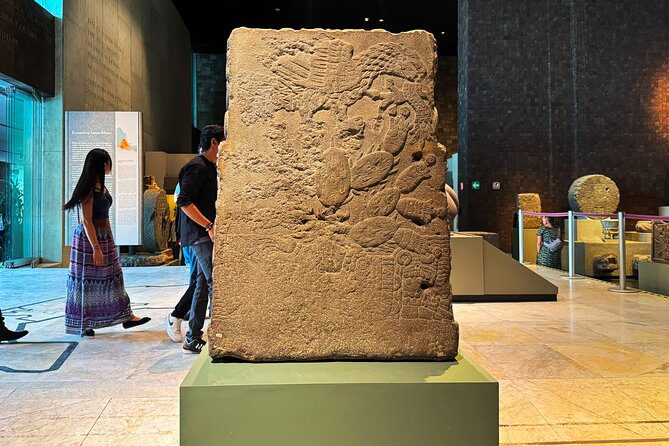
One of the more unusual stories concerns objects made from gold, jade, and obsidian. Some of these pieces were stolen on Christmas Day in 1985. This detail adds a modern chapter to a museum visit that otherwise focuses on the distant past.
It is a reminder that archaeological objects are not only historical evidence. They also have financial value, symbolic power, and a complicated modern life. A piece can move from an ancient workshop to a museum case, then become part of a crime story decades later.
This sort of detail is exactly what makes a guided visit worthwhile for me. You might read the object’s date and material on a label, but the theft gives the piece a second layer of meaning. It also shows that the museum’s story does not end when an artifact is placed behind glass.
The tour does not appear to focus only on sensational stories. The theft is one thread within a broader explanation of cultures and museum design. Still, it is the kind of memorable fact that may help you recall the objects later.
What a six-person group feels like
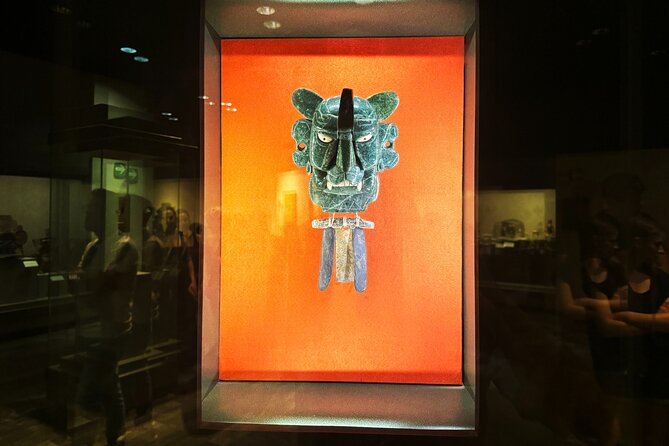
The group limit is six people. That is small enough to keep the tour personal without requiring the cost of a private guide.
A small group matters in a museum for practical reasons. You can stay close to the guide, hear the explanation more easily, and ask a question without interrupting a large crowd. The guide can also adjust the pace when the group needs a pause.
This flexibility was especially valuable for one visitor whose mother could not stand for long periods. Raúl provided seated breaks while continuing the explanation. That does not mean the tour is designed as a fully accessible program, and the information still recommends a moderate level of physical fitness. It does show the benefit of having a guide who can respond to individual needs.
You should expect walking and standing through a large museum. Wear sensible shoes and do not plan a demanding activity immediately afterward if you know museums tire you out. Three hours can pass quickly when the discussion is engaging, but it is still a substantial time on your feet.
Price, admission, and overall value
The tour costs $83.63 per person, with museum admission separate. The entry fee is listed as MX$210 per person, and you are told to buy tickets through the museum’s official website rather than another seller.
That makes this a fairly specialized purchase, not a basic museum ticket with a little commentary added. You are paying for a small English-language group, a planned route, and a guide who can shape the visit around the most important rooms.
The value is strongest if you want context and do not feel comfortable navigating a major museum alone. It is also useful if you have only a few hours in Mexico City or want a foundation before visiting Teotihuacan or Monte Albán.
The value is weaker if you enjoy moving at your own pace, reading every label, or spending a full day in one museum. You will see only part of the building, and the tour fee does not include admission. If you want a complete museum visit, you may need to return independently.
One practical advantage is that the small group avoids the impersonal feel of a large coach tour. That can make the price easier to justify, particularly when the guide answers questions and adapts the pace.
Who should book this experience?
I would recommend it to first-time visitors who want a strong introduction to Mesoamerican cultures without trying to master the whole museum alone. It suits anyone who prefers explanations in English, values a focused route, and wants a guide with a serious academic background.
It is also a good match for people planning a wider Mexico itinerary. The museum can give you useful context before you see pyramids and archaeological sites elsewhere. You will recognize cultural references and understand more of what you are looking at.
Families and mixed-age groups may benefit from the small size, especially if someone needs occasional seated breaks. Still, you should be ready for a moderate amount of walking and standing.
I would hesitate to recommend it to anyone who wants a leisurely, room-by-room museum day. The route is selective by design. You may leave with a better grasp of the main story, but also with several galleries still unseen.
Six practical tips for a better visit
- Buy the museum ticket separately: Use the museum’s official website and budget MX$210 per person in addition to the tour price.
- Arrive early at the meeting point: The lobby can be crowded, and a guide may be hard to identify.
- Keep the three-hour limit in mind: If you ask many questions, you may cover fewer than six rooms.
- Wear comfortable shoes: The tour involves a large museum and a moderate level of physical activity.
- Use the guide as a starting point: After the tour, you can return to rooms that deserve more time.
- Ask about the objects: The strongest explanations connect materials such as jade, gold, and obsidian to wider questions about society and power.
FAQ
How long does the Museo Nacional de Antropología tour last?
The experience lasts approximately three hours.
How many people can join the group?
The tour has a maximum of six travelers.
Is museum admission included in the tour price?
No. Admission is separate and listed as MX$210 per person. Tickets should be purchased through the museum’s official website.
Is the tour offered in English?
Yes. The tour is offered in English.
Where does the tour start and finish?
It starts at Museo Nacional de Antropología on Avenida Paseo de la Reforma in Mexico City. It ends back at the same meeting point.
Can I cancel for a full refund?
Yes, if you cancel at least 24 hours before the experience start time. Cancellations made less than 24 hours in advance are not refunded, and late changes are not accepted.
Should you book the small-group museum tour?
Book it if you want context, structure, and a personal guide. Raúl’s clear English, archaeology and history background, and willingness to adjust for seated breaks add real value. The route through the Olmec, Zapotec, Teotihuacan, and Mexica material gives you a useful framework for the museum and for later archaeological visits.
Skip it if you want to see every room, linger over each label, or keep the cost down by exploring alone. For most first-time visitors with only a few hours, though, the small group and focused route make this a sensible way to meet one of Mexico City’s most important museums.
Newly listed around Mexico City
- Xochimilco : Island of the dolls, tequila and mezcal CDMX★ 5.0 · 102 reviews
- Xochimilco: Sanctuary of the Axolotl★ 4.9 · 58 reviews
- Xochimilco: Market, Food and Nature ¡All included! Tour★ 4.9 · 107 reviews
- Xochimilco: amanecer en kayak Ciudad de México★ 5.0 · 35 reviews
- Xochimilco & Colonial Coyoacan Trip★ 4.0 · 312 reviews
- Bike Tour in Mexico City★ 5.0 · 45 reviews
- Small Groups: Xochimilco and Coyoacan★ 4.0 · 37 reviews
- Museum of Anthropology: a look at Mexico’s past★ 5.0 · 52 reviews
Mexico City Tours, compared.
Teotihuacan, Guadalupe Shrine & Tlatelolco Day Tour with Lunch
Read our review →
Xochimilco, Coyoacan and Frida Kahlo with Optional Lunch
Read our review →
Balloon flight + Breakfast in cave + Pyramids + Pick up CDMX.
Read our review →
Teotihuacan pyramids morning or afternoon without tourist traps
Read our review →
Teotihuacan Early Access Guided Tour with optional Lunch
Read our review →
Balloon flight + pick up in CDMX + Breakfast in Cave + Pyramids
Read our review →
Balloon Flight + Cave Breakfast + Pick Up from CDMX or We Fly
Read our review →