
Reviewed · WORKSHOPS
Oaxaca: Oaxacan Mole Workshop with a Traditional Cook
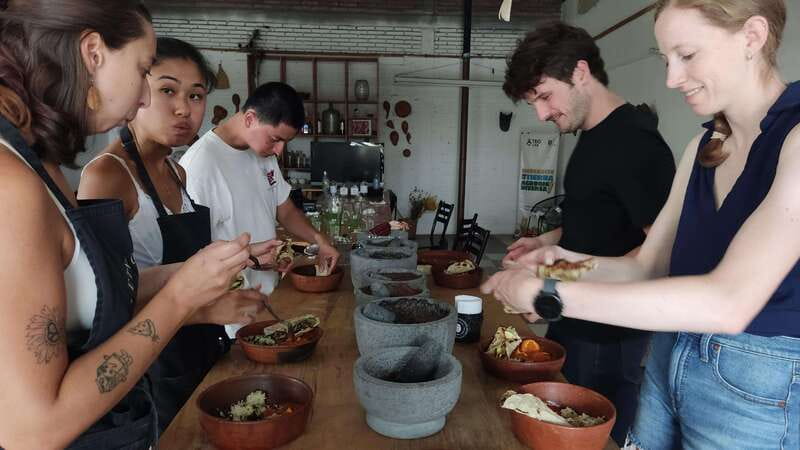
Mole is Oaxaca on a plate. This 3.5-hour class combines a walk through a local market with hands-on cooking, cultural stories, and a full meal in a downtown foodlab. I especially like the market visit, where you learn what makes local chiles, cacao, herbs, fruit, and quesillo special, and the small-group format, advertised for no more than four participants. The main point to consider is that the mole recipe can vary. Some sessions feature a more involved dark mole, while others use green mole and spend more time on tortillas, quesadillas, and sauces.
I also like that the class is taught in English or Spanish by local cooks such as Victor Ramirez, Quetzalli, Wendy, and Pablo, depending on the day. Their teaching style appears warm and practical, with plenty of chances to chop, blend, fry, press masa, and ask questions. The walk to the market and the length of the cooking session mean this is not a passive food tasting, and it may not suit anyone with back problems or low fitness.
In This Review
- Key things to know before booking
- Starting near the Zócalo on Xicotencatl Street
- The market walk: learning what belongs in the pot
- Back at the foodlab: a working kitchen, not a demonstration
- Making the mole: ask which style is planned
- Tortillas, quesadillas, and the pleasure of doing the simple parts
- Eating together with mezcal and seasonal fruit water
- The teachers make the difference
- Group size, timing, and the class pace
- Is $64 a fair price in Oaxaca?
- Who should book this Oaxaca cooking class?
- Should you book the mole workshop?
- FAQ
- Where does the cooking class meet?
- How long does the experience last?
- Is transportation included?
- Is the class available in English?
- How many people are in the group?
- What food will I prepare?
- Is mezcal included?
- Is water included?
- What should I bring?
- Is the activity suitable for children?
Key things to know before booking
- The market visit comes first: You walk from the meeting point to a small local market and help choose the ingredients used later in the kitchen.
- Mole is only part of the meal: You may also prepare tortillas, quesadillas, salsa, guacamole or guacachile, pico de gallo, vegetables, rice, and a traditional dessert.
- The class is genuinely hands-on: Expect chopping, cleaning, frying, mixing, blending, shaping tortillas, and cooking rather than simply watching a chef work.
- Local food culture is central: Guides connect ingredients with Zapotec traditions, family cooking, small producers, and the meaning of sharing food.
- The advertised group limit is four: Some past sessions have had larger groups, so confirm the expected size if personal attention matters to you.
- The price is $64 per person: With ingredients, instruction, mezcal for adults, fruit water, and a full meal included, the cost is fair for Oaxaca.
Starting near the Zócalo on Xicotencatl Street
The meeting point is at Xicotencatl Street 609 in the downtown district, about five blocks from Oaxaca City’s Zócalo. Look for the foodlab with the FILOTEO sign and a large dog on the facade. Transportation is not included, but the central location makes it practical to reach on foot if you are staying in the historic center.
I would allow extra time to find the entrance. The directions are specific, but a foodlab can be easier to recognize by its sign than by a large tour-company storefront. Comfortable shoes are important because the class includes a walk to the market and several hours of standing in the kitchen.
The experience is offered in English and Spanish. That makes it accessible to many international visitors, and you can still use the class to practise useful Spanish food words. One especially nice touch is the relaxed way some instructors encourage participants to ask questions and take part, even if they have little cooking experience.
A few more Oaxaca runs worth comparing
- Hierve el Agua, Tule Tree, Mitla and Mezcal Distillery Tour
★ 4.5 · 1,094 reviews - Explore Hierve el Agua, Mitla, Tule, Textile and Mezcal for a day
★ 5.0 · 1,043 reviews - Monte Alban Guided Half Day Tour
★ 5.0 · 880 reviews
The market walk: learning what belongs in the pot
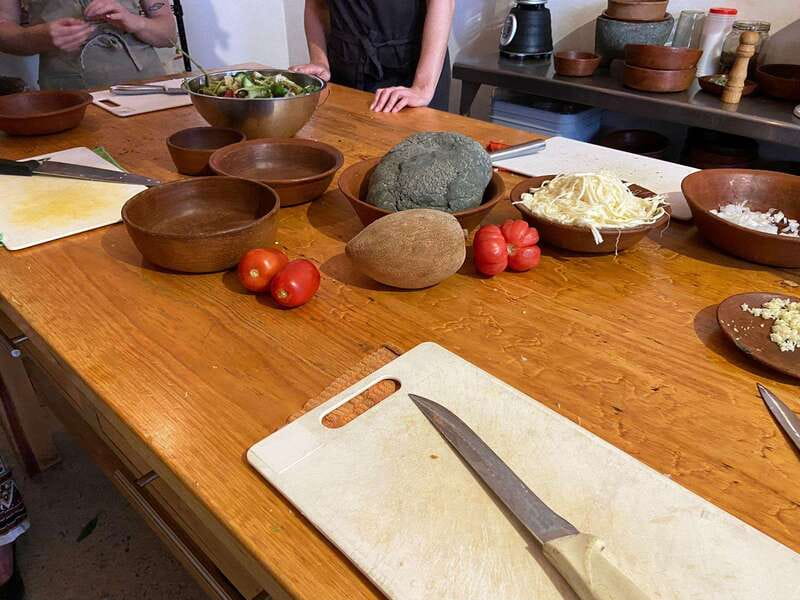
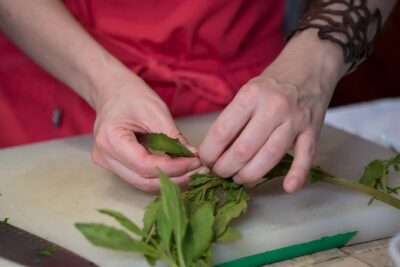
The market portion gives the class its local footing. Instead of beginning with bowls of premeasured ingredients, you walk out to select the produce and other items needed for the meal. This helps you understand that Oaxacan cooking starts with shopping, judging freshness, and knowing how an ingredient is used.
You might examine regional chiles, herbs, fruit, vegetables, cacao, chocolate, and quesillo. The exact selection depends on the season and the menu. The class also promises a special local ingredient, perhaps an herb or unusual fruit, so the meal can change with what is available.
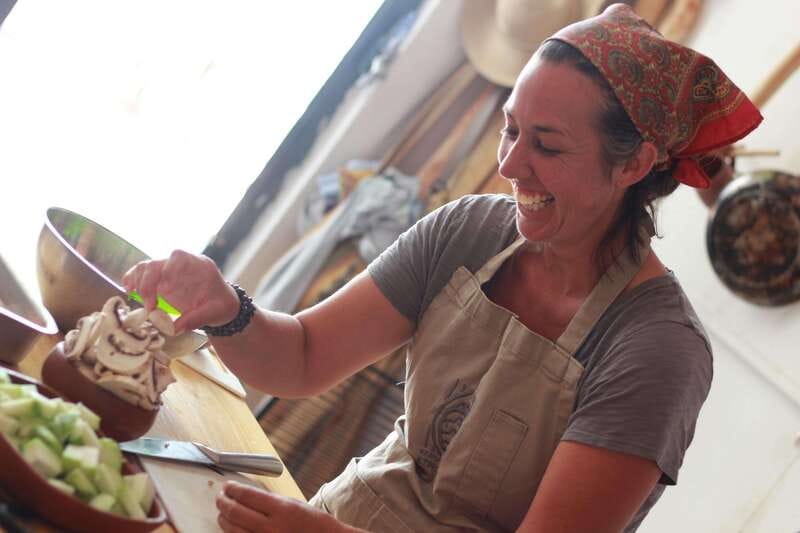
Victor Ramirez is praised for making this part lively and clear. He has shown participants handmade local specialties and explained how ingredients connect with Zapotec culture. Other instructors, including Quetzalli and Wendy, have also been described as attentive and good at assigning tasks so everyone stays involved.
This is not a grand market tour designed around famous sights. It takes you to a smaller local market away from the main tourist path. That can be a plus if you want a more everyday look at food shopping in Oaxaca, although the walk requires a moderate level of fitness.
The market can also include tastings. Quesillo, local fruit, and other products may appear along the way, giving you a better sense of texture and flavor before you begin cooking. I would ask questions here, not just in the kitchen. Knowing why a certain chile, herb, or piece of cacao is chosen makes the later preparation easier to understand.
Back at the foodlab: a working kitchen, not a demonstration
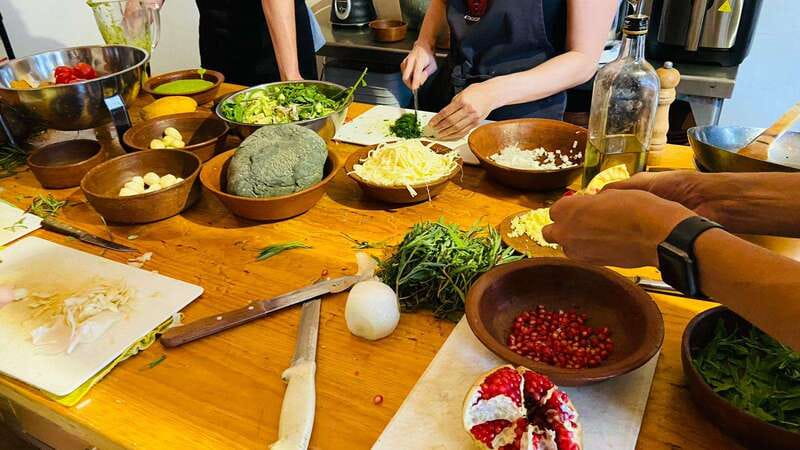
After shopping, you return to the foodlab and begin preparing lunch. The kitchen is described as clean, modern, and spacious enough for the class groups. You receive the necessary utensils and ingredients, and the instructor guides you through each stage.
The pace is active. You may clean produce, chop vegetables, toast or fry ingredients, mix sauces, blend ingredients, prepare masa, and organize several dishes at once. Guides keep an eye on timing and offer feedback as you work, which helps beginners avoid feeling lost.
I like this format because it explains the labor behind Oaxacan food. Mole is not simply a sauce poured from a jar. Even when modern equipment such as a blender is used, you can see how ingredients are selected, prepared, combined, and adjusted.
The class is not limited to mole. Many sessions include two or more salsas, guacamole or guacachile, pico de gallo, tortillas, quesadillas, and sometimes rice or vegetables. The description also includes a typical Oaxacan dessert, though the exact dessert is not specified and may change with the menu.
Making the mole: ask which style is planned
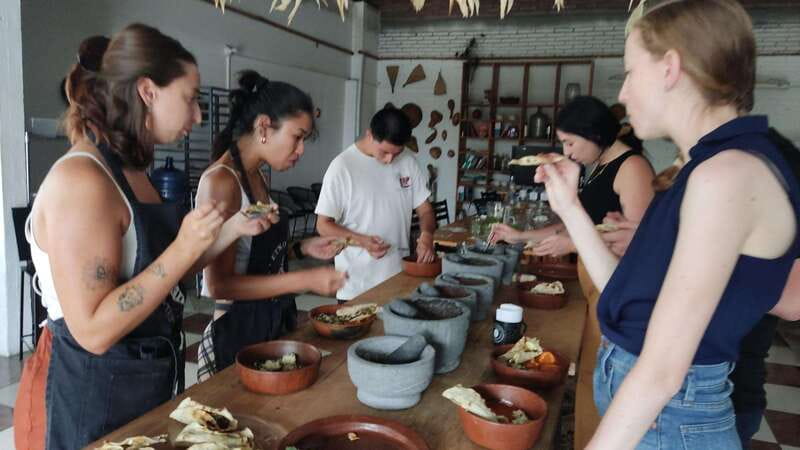
Mole is the star, but the precise style matters. Oaxacan mole can involve a long list of chiles, spices, nuts, seeds, fruit, cacao, and other ingredients. A darker mole generally offers a more involved process than a quick green mole made mainly from herbs and vegetables.
This distinction is important when you book. Some participants have prepared black mole from scratch and found the lesson memorable. Another session featured green mole, with more time spent making tortillas and quesadillas. Neither approach is wrong, but they offer different cooking lessons.
If you specifically want to study a complex dark mole, ask ahead which mole is scheduled for your date. The provided description promises traditional Oaxacan mole but does not guarantee black mole. That one question can prevent a mismatch between your expectations and the day’s menu.
The hands-on method still gives you useful skills. You see how the ingredients behave, learn how flavors are balanced, and taste the finished sauce with the group. The cook also shares practical tips that can help you adapt the recipes at home, even if some local ingredients are difficult to find outside Mexico.
Same base, a different sort of day:
- From Oaxaca de Juarez: Hierve el Agua and Mezcal Distillery
★ 4.9 · 615 reviews - Oaxaca de Juarez: Monte Alban Half-Day Tour
★ 4.7 · 492 reviews - AUTHENTIC OAXACA CULTURAL FOOD TOUR, eat like a local.
★ 5.0 · 462 reviews - Oaxaca: Tule, Mitla & Hierve el Agua, & Mezcal Tour
★ 4.7 · 456 reviews
Tortillas, quesadillas, and the pleasure of doing the simple parts
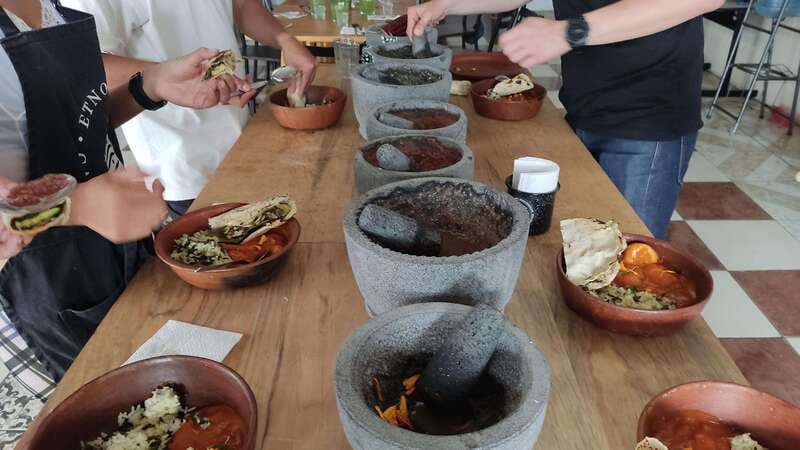
For many people, making tortillas becomes the most enjoyable part of the class. You work with prepared masa, shape the dough, and cook the tortillas yourself. Some sessions also include quesadillas, often with Oaxacan cheese.
This is a good reminder that a memorable meal does not depend only on the most complicated recipe. Pressing and cooking your own tortillas gives you a direct connection to the food on the table. It also keeps beginners busy while the mole or other dishes develop.
There is a practical limitation. The class uses modern tools, including a blender and stove, and the masa is prepared rather than ground from whole maize. If you want a full traditional maize-to-tortilla lesson, this is not that. If you want a manageable introduction with real participation, the approach makes sense.
The amount of food can also be generous. One small class produced enough for six to eight people, which may feel excessive if only a few participants attend. The upside is a plentiful shared meal. The downside is that preparation can take longer than expected.
Eating together with mezcal and seasonal fruit water
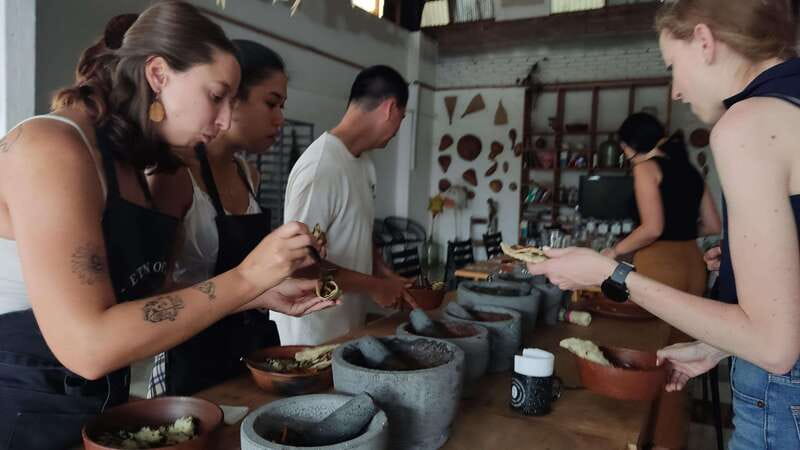
Once the cooking is finished, you sit down and eat what you made. The meal can include mole, tortillas, quesadillas, several sauces, vegetables, and other dishes prepared during the class. A seasonal fruit-flavored water is included, and adults aged 18 and over receive mezcal to accompany the mole.
This shared table is part of the experience, not just the reward at the end. People arrive as strangers and work through a series of small tasks together. By the time the food is served, the meal feels connected to the market visit and the work in the kitchen.
The mezcal is included only for adults, and alcohol or drugs are not allowed as general items at the activity. If you do not drink, the fruit water gives you another included option. Additional food or drinks beyond the stated menu are not covered.
Food restrictions deserve advance discussion. One session successfully accommodated dietary restrictions, but the supplied details do not promise that every request can be handled. Contact the provider before booking if you have an allergy or strict dietary need.
The teachers make the difference
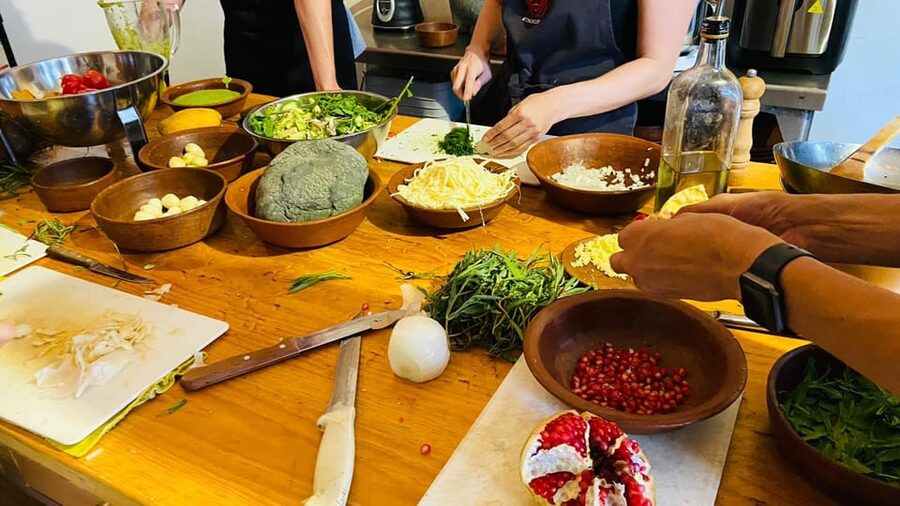
The strongest part of this class is the instruction. Victor Ramirez is repeatedly singled out for his humor, warmth, clear English, and pride in local food and Zapotec traditions. He has also been praised for welcoming beginners and answering questions without making the class feel formal.
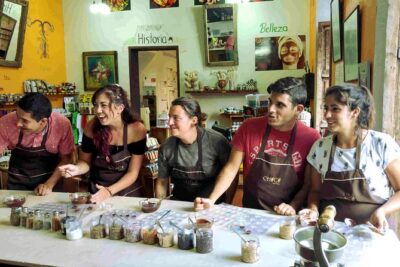
Quetzalli, Wendy, and Pablo have led other sessions. The teaching style can vary by instructor, but the common thread is personal attention, cultural explanation, and active participation. One instructor assigned tasks to everyone and paused to check for questions, a simple habit that matters in a shared kitchen.
You may hear family stories, learn about the names and uses of local foods, and discuss the value of supporting small local businesses. One guide connected the class with the Zapotec idea of sharing, which gives the final meal a wider meaning without turning the lesson into a lecture.
The experience can also work well for solo participants. During a low-season visit, one person had the market tour and cooking class conducted alone. That level of personal attention cannot be guaranteed, but the small-group design makes a quieter session possible.
Group size, timing, and the class pace
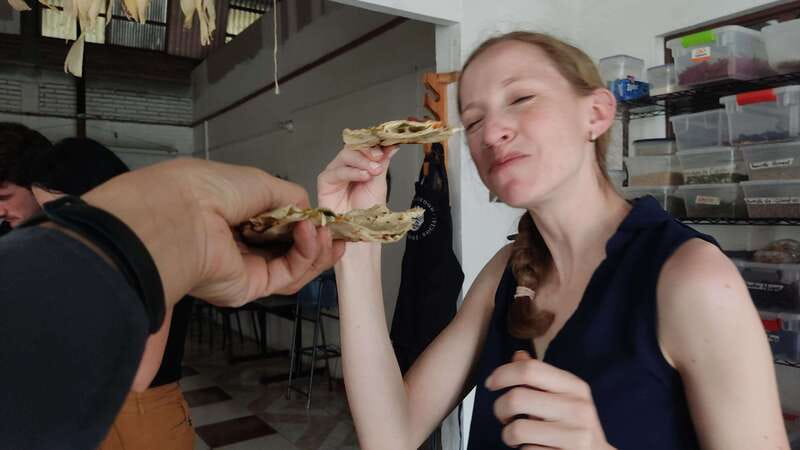
The advertised group is limited to four participants, which is excellent for a cooking lesson. With four people, the instructor can give each person a real task and still answer questions. A small group also makes the market visit easier.
Past sessions have sometimes included more people, including a group of nine. Larger groups can still work if the teaching team is organized, and one spacious kitchen handled a bigger class well. Still, the experience will feel less personal when several people share the same chopping boards, burners, or preparation jobs.
The total duration is 3.5 hours. That is enough time for the market walk, ingredient preparation, cooking, and the meal, but it also means you should not schedule another tight activity immediately afterward. Some participants have found the session a little long, especially when the menu includes a large amount of food.
The class is best treated as a half-day event rather than a quick lesson. Wear shoes you can comfortably stand and walk in, and come ready to take a task when it is offered. The work is not highly strenuous, but the organizers do not recommend it for children under 10, people with back problems, or people with a low fitness level.
Is $64 a fair price in Oaxaca?
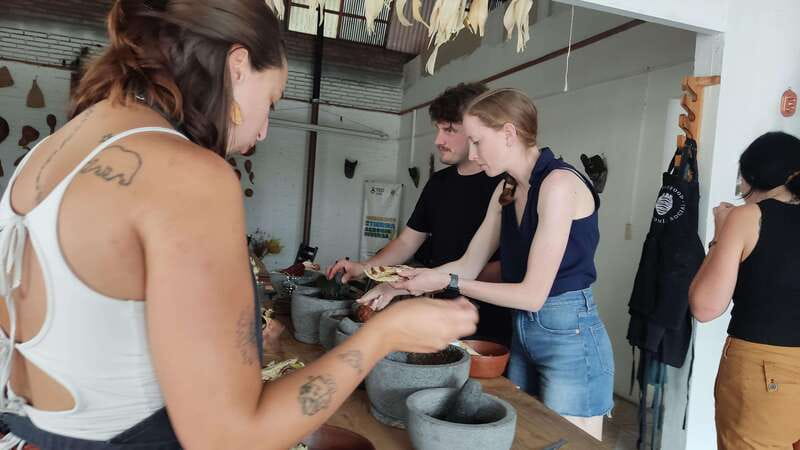
At $64 per person, I consider this a good value if you want both a cooking class and a meal. The price covers fresh ingredients, kitchen equipment, instruction, cultural background, the completed meal, mezcal for adults, and seasonal fruit water. You are also paying for a local market visit and several hours of guidance.
The value is strongest when the group is small and the class includes several dishes. You are not only learning one mole recipe. You may leave with a better feel for tortillas, salsas, quesadillas, local produce, and the way Oaxacan meals are built.
The value is weaker if you want a highly technical lesson focused only on dark mole. A session featuring green mole or a large amount of tortilla and quesadilla preparation may not meet that goal. Ask about the menu and expected group size before paying, especially if the mole style is the main reason you are booking.
Free cancellation up to 24 hours before the activity and a reserve-now, pay-later option make planning easier. Transportation, extra food or drinks, and staff tips are not included. A tip is optional, but you may wish to budget for one if the cook gives you a generous, personal lesson.
Who should book this Oaxaca cooking class?
I would choose this experience if you enjoy food, local markets, and learning by doing. It suits curious beginners as well as confident home cooks because the instructors explain the process and give real-time help.
It is also a good choice for solo visitors, couples, and small groups who want a social activity near the center of Oaxaca. You will meet people from different countries, share kitchen duties, and finish with a meal you helped prepare.
I would think twice if you dislike standing, walking, or group cooking. I would also look elsewhere if you want a strictly traditional process using a stone grinder, freshly ground maize, or only open-fire methods. The class uses modern kitchen equipment and focuses on an approachable version of Oaxacan cooking.
Should you book the mole workshop?
Yes, if your priority is a friendly, hands-on introduction to Oaxacan food rather than a narrow technical study of one mole style. The market visit, local ingredients, tortillas, sauces, cultural stories, and shared meal give you a fuller picture of the cuisine than a standard restaurant meal can provide.
Before booking, confirm three things: which mole will be prepared, how many people are expected, and whether the menu can meet your dietary needs. If the answer suits you, $64 is a sensible spend for a central Oaxaca experience that is both filling and genuinely instructive.
FAQ
Where does the cooking class meet?
It meets at Xicotencatl Street 609 in Oaxaca’s downtown district, about five blocks from the City Zócalo. Look for the foodlab with the FILOTEO sign and a large dog on the facade.
How long does the experience last?
The activity lasts 3.5 hours, including the market walk, cooking class, and shared meal.
Is transportation included?
No. Transportation to and from the class venue is not included.
Is the class available in English?
Yes. The live guide may teach in English or Spanish.
How many people are in the group?
The activity is advertised as a small group limited to four participants. Some past sessions have been larger, so confirm the expected group size if that matters to you.
What food will I prepare?
The menu centers on Oaxacan mole and may also include salsas, guacamole or guacachile, pico de gallo, tortillas, quesadillas, vegetables, rice, and a typical Oaxacan dessert. The exact dishes can vary.
Is mezcal included?
Yes. Mezcal is included for participants aged 18 and above.
Is water included?
Yes. Seasonal fruit-flavored water is included.
What should I bring?
Bring comfortable shoes because the experience includes a walk to the market and time standing during the cooking session.
Is the activity suitable for children?
The activity is not suitable for children under 10 years old. It is also not recommended for people with back problems or a low level of fitness.
Newly listed around Oaxaca
- The Mezcal Journey★ 4.9 · 78 reviews
- Street Art with an artist★ 4.9 · 32 reviews
- Sunset by Horse on the Beach★ 4.6 · 34 reviews
- Puerto Escondido: Bioluminescence Night Spectacle★ 3.9 · 45 reviews
- Oaxaca: Traditional Oaxacan Cooking Class with Market Visit★ 4.9 · 80 reviews
- Oaxaca: San Martín Tilcajete, Jalieza & Ocotlán Crafts Route★ 4.6 · 48 reviews
- Oaxaca: Mount Albán & Cuilapam de Guerrero Full-Day Tour★ 4.7 · 110 reviews
- Oaxaca: Monte Alban and the Art of Oaxaca★ 4.2 · 99 reviews
Workshops, compared.
Cabo San Lucas Mexican Cooking Class Experience and Local Markets
Read our review →
Puerto Vallarta Cooking Class Experience with Market Tour
Read our review →
La Paz World Class Snorkeling in Balandras Hidden Beaches
Read our review →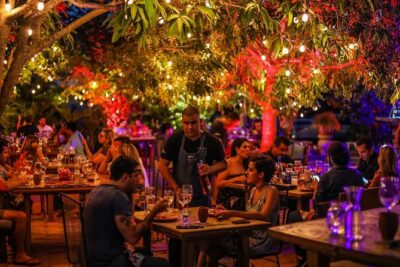
Mexican Cooking Class with Food Market Visit in Mexico City
Read our review →
Bean to Bar Chocolate Workshop in Puerto Vallarta
Read our review →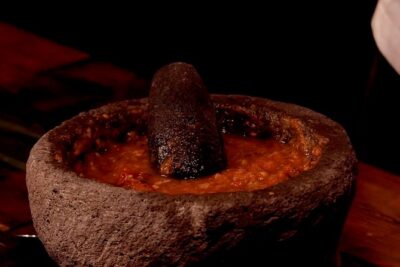
Browse the lists this tour appears in