
Reviewed · SCUBA DIVING
PADI Discover Scuba Diving
Take the plunge, without a full certification course. This Costa Maya experience gives you a sensible first taste of scuba, with classroom basics, shallow-water practice, and a guided reef excursion in one compact outing. I especially like the small-group attention and the calm, patient instruction praised by many participants. The main caution is the sea itself: rough conditions can make the boat ride and first descent difficult.
The underwater portion is the real reward. You travel about 10 minutes by boat to a coral garden, follow a mooring line down to a bottom beginning at roughly 25 feet, and may spend about 43 minutes among fish, rays, coral, lobsters, and moray eels. I also like that all scuba gear and bottled water are included, though the taxi cost is extra and should be settled before you leave the port.
In This Review
- Quick takeaways for your Costa Maya day
- What makes this Costa Maya scuba lesson worthwhile
- From theory to shallow-water practice
- The 10-minute boat trip to the coral garden
- What the reef visit feels like for a first-timer
- Safety, weather, and the limits of a beginner program
- Cost, taxis, and the cruise-port connection
- Equipment, photos, and small comforts
- Who should book this experience?
- Should you book the PADI Discover Scuba experience?
- FAQ
- How long does the PADI Discover Scuba experience last?
- How deep will I go?
- How long will I stay underwater?
- Is scuba equipment included?
- What is the minimum age?
- What happens if bad weather cancels the activity?
Quick takeaways for your Costa Maya day
- A real first scuba experience: You learn the basics, practice in shallow water, then continue to a reef site.
- Maximum depth of 40 feet: The limit follows beginner safety standards, with the descent guided along a mooring line.
- About 43 minutes underwater: Your exact time depends on how quickly you use your air.
- Small groups matter: The maximum is 16 people, though several outings had much smaller groups and two instructors for four participants.
- A short transfer from the cruise port: The meeting point is in Huachinango, with a taxi required and transportation not included.
- Weather can change the plan: Poor conditions may lead to a rescheduled outing or a full refund.
What makes this Costa Maya scuba lesson worthwhile
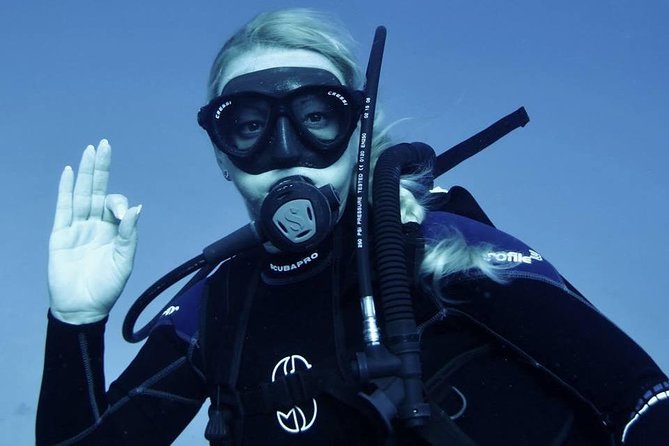
I see this as a useful middle ground between snorkeling and a full certification program. You get enough instruction to understand the equipment and basic safety, then you have the chance to experience breathing underwater at a genuine reef site.
That distinction matters. A quick resort pool demonstration can feel like a novelty. Here, the session includes theory, confined-water practice, and a boat trip to deeper water. You are not simply handed a mask and sent toward the fish.
The program is designed for beginners, but it can also help if you are certified and have not used your equipment in a while. One certified participant was allowed to join another group while a spouse completed the introductory lesson. That arrangement is not guaranteed, but it suggests the staff can sometimes work with mixed-experience families.
The strongest feature is the human side of the operation. Instructors named in the feedback include Sebastian, Brenda, Rodrigo, Jesse, David, Gala, Lucia, and others. Sebastian, often called Sea Bass, received repeated praise for explaining procedures clearly, staying close during the reef visit, and helping nervous participants solve problems with masks, weight belts, and ear pressure.
That patience is not a minor detail. Many first-time participants struggle with equalizing their ears or feel anxious when they first descend. The staff have repeatedly helped people pause, regain control, and try again. One participant needed several attempts before reaching the bottom, then enjoyed about 40 minutes underwater.
More Scuba Diving in Costa Maya:
- Two tanks local diving for certified divers, SCUBA gear included
★ 5.0 · 122 reviews - Discovery Scuba Dive.
★ 5.0 · 103 reviews - Discover Scuba Diving in Cozumel Paradise Reef
★ 5.0 · 686 reviews
From theory to shallow-water practice
The lesson begins on land with an explanation of diving physiology and an overview of the SCUBA unit. You learn how the equipment works and what your body needs to do in the water.
This part is not filler. For a beginner, the regulator, tank, buoyancy equipment, mask, fins, and weight system can feel like a lot of machinery. Understanding the purpose of each piece makes the later water work less intimidating.
Next comes basic skills practice in confined water. The water is shallow enough to stand in, and some descriptions place the practice in roughly waist-deep water. That gives you a place to test breathing, mask use, movement, and other basic procedures before heading away from shore.
I like this progression because you can identify problems early. A leaking mask, loose weight belt, or trouble with ear pressure is easier to address in shallow water than from a boat over the reef. The instructors also have room to demonstrate a skill again instead of rushing you along.
Still, you should not expect a private lesson automatically. The maximum group size is 16, and the quality of your experience will depend partly on the number of people booked that day. Several outings had only two to four participants and two staff members, which is excellent. If your group is larger, ask how many instructors will be in the water.
The 10-minute boat trip to the coral garden
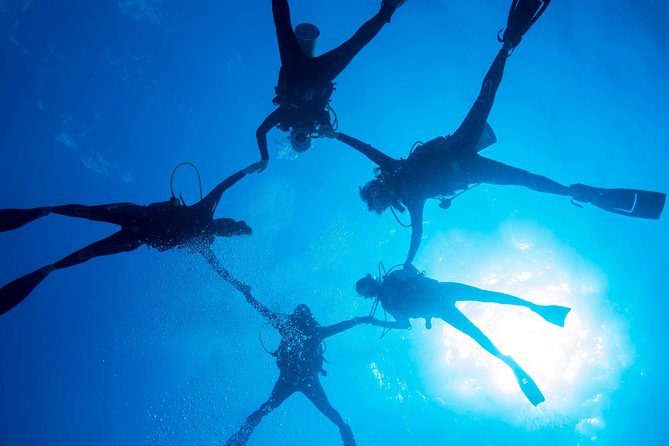
After the shallow-water work, you take a boat for about 10 minutes to a coral garden. The short ride keeps the outing efficient and leaves most of the 3 hours and 45 minutes for instruction, preparation, and time underwater.
The site is limited to a maximum depth of 40 feet. The bottom begins at about 25 feet, and the descent follows a mooring line. That line is especially helpful for a first underwater excursion because it gives you a clear reference point during the descent and ascent.
The advertised average underwater time is 43 minutes, but your air use determines the actual length. Nervous beginners often breathe faster, so do not treat 43 minutes as a promise. A shorter session is not a failure. Staying calm, breathing normally, and communicating with your instructor matter more than chasing a particular number.
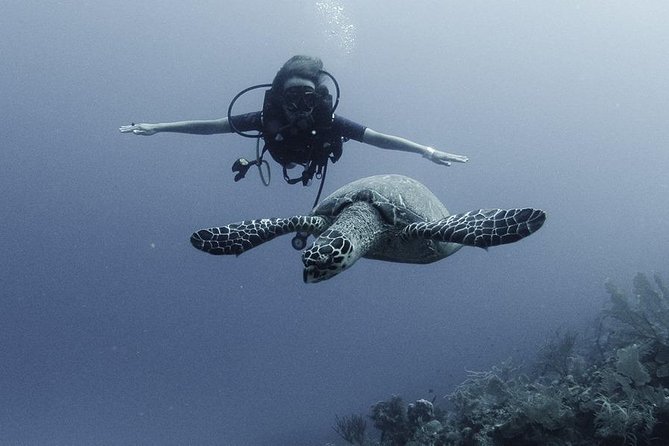
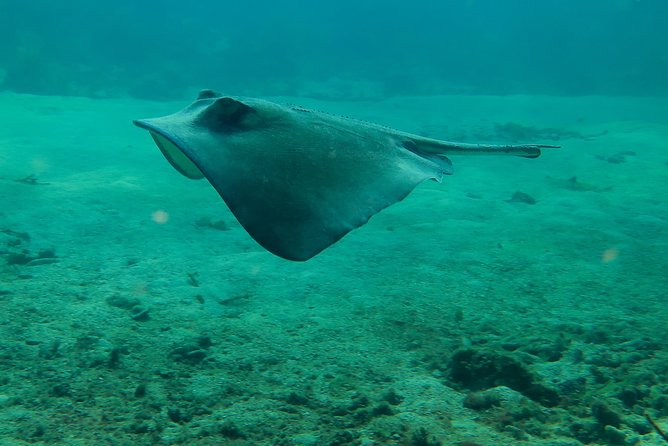
The marine life can be surprisingly varied for a beginner-level site. Participants have seen schooling fish, stingrays, turtles, lobsters, clownfish, moray eels, and large coral formations. A ray or turtle is never guaranteed, but the site appears to offer more than a bare patch of sand.
Several people also described clear water and attractive coral. One experienced participant called the coral some of the best they had encountered in several countries. Conditions can vary, though. Cloud, rain, and rough water may affect visibility and comfort even when the reef itself remains worthwhile.
What the reef visit feels like for a first-timer
The biggest emotional hurdle is usually the first few feet below the surface. You may feel strange breathing through a regulator, hear your own breathing, and wonder if your mask is seated correctly. That is normal, but it can be intense.
Your instructor stays with you during the reef portion. Staff members have been praised for remaining close, checking that participants were comfortable, and coaching people who hesitated at the descent line. If you cannot continue, you should signal early rather than force yourself downward.
This is also where the smaller groups make a practical difference. One participant became anxious and needed several attempts to descend. The instructor worked with that person while another staff member continued with the rest of the group. That kind of flexibility can turn a frightening start into a rewarding experience.
The reef visit is guided, not an independent exploration. Your instructor can point out marine life you might otherwise miss, including small fish tucked into coral or creatures inside a cave. You should expect supervision and instruction, not the freedom of a certified recreational scuba trip.
That distinction helps set the right expectation. This is a controlled introduction for people who are not certified. If you already hold advanced certification and want a challenging site, this outing will probably feel too limited. If you want to know how scuba feels before committing to a longer course, it fits well.
A few more Costa Maya runs worth comparing
- Chacchoben Mayan Ruins from Costa Maya
★ 4.5 · 1,352 reviews - Costa Maya Shore Excursion: Chacchoben Day Trip
★ 5.0 · 1,109 reviews - Bacalar – 7 Colors Lagoon Excursión Costa Maya
★ 5.0 · 408 reviews - Chacchoben Mayan Ruins from Costa Maya
★ 4.5 · 381 reviews
Safety, weather, and the limits of a beginner program
The 40-foot maximum depth is a sensible boundary for an introductory session. The mooring-line descent also gives the instructor and participant a shared route to follow.
The program depends on sea conditions. Rough water has caused discomfort for some participants, especially during the boat ride and initial descent. One person could not finish the underwater portion, while a daughter in the same group completed it and had a great time.
I would pay close attention to the forecast and keep your expectations flexible. The operator may cancel because of poor weather, offering another date or a full refund. The cancellation terms allow a full refund when you cancel at least 24 hours before the start time. Less than 24 hours means no refund, and changes are not accepted inside that window.
You also need to plan around altitude. Allow at least 12 hours between scuba activity and going above 300 meters, or 1,000 feet. This matters if your Costa Maya visit connects with a high-altitude flight or overland trip.
The medical guidance deserves serious attention. Check with your doctor if you have high blood pressure, angina, heart disease, or a history of heart or blood-vessel surgery. The same applies if you have had a collapsed lung, chest surgery, seizures, fainting, convulsions, or epilepsy, or if you take medication for these conditions.
The minimum age is 10. The information says most people can participate, but children and adults alike should be honest about comfort in open water. Being able to swim comfortably is not listed as a formal requirement in the supplied details, so ask the operator directly if you have concerns about your ability in the sea.
Cost, taxis, and the cruise-port connection
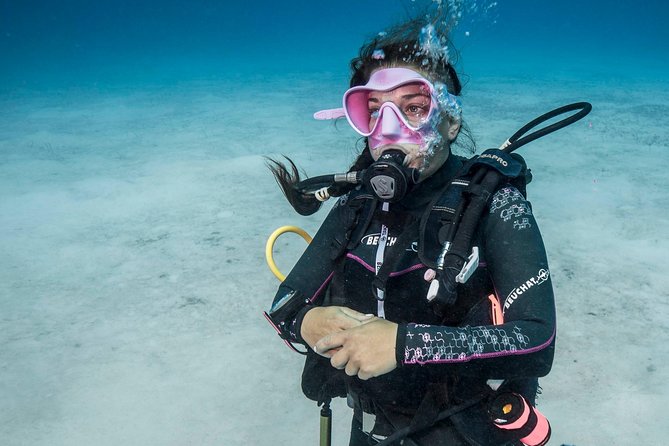
At $100 per person, the price is reasonable for a nearly four-hour beginner session that includes an instructor, scuba equipment, shallow-water training, a boat ride, the reef outing, and bottled water. A certification course costs far more in time and money, so this is a practical way to test your interest first.
The price does not include your taxi. The listed transportation cost is $4 per person per ride, or $8 for a solo passenger. Some recent instructions given to participants cited about $5 per person, so bring cash and confirm the current fare before setting off.
The meeting point is on Huachinango in the 77976 area of Quintana Roo. The activity returns to that same meeting point. It is near public transportation, but cruise passengers should build in enough time for the taxi, check-in, instruction, and return trip to the port.
The area has restaurants and vendors nearby, and some people enjoyed staying there before or after the water session. A beach bar may be part of the setting, but facility standards can be basic. One participant specifically found the toilet facilities less impressive than the underwater portion, so do not expect a polished resort environment.
If you are arriving from a cruise ship, pay attention to local time. The booking uses local time, and cruise-ship schedules can create confusion. One group also benefited from staff flexibility after arriving late because the ship docked behind schedule, but you should never rely on that courtesy when planning your return aboard.
Equipment, photos, and small comforts
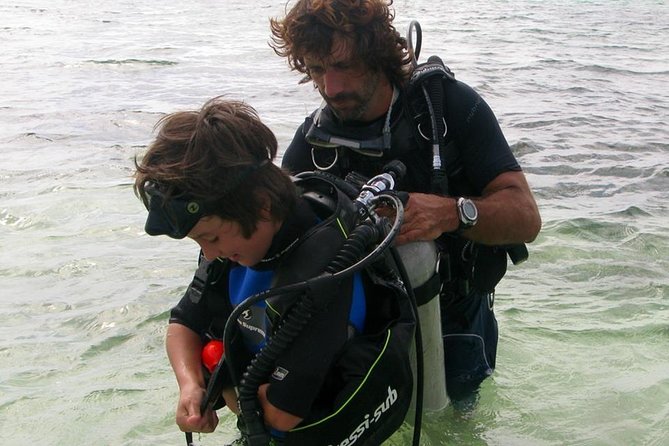
Scuba equipment is included, so you do not need to bring a personal tank, regulator, or buoyancy gear. Bottled water is also provided.
The staff handle much of the equipment preparation, which helps first-time participants focus on the lesson rather than sorting out a full gear setup. You should still check that your mask fits and tell the instructor immediately if something feels loose or uncomfortable.
Photography may be offered during the experience, according to feedback from participants, but it is not listed among the included features. Ask about the price and delivery before agreeing to photographs.
Some outings ended with fresh pineapple. That sounds like a pleasant local touch, but it is not part of the formal inclusions, so consider it a possible extra rather than something guaranteed.
Bring sun protection and bug spray. One participant specifically advised bug spray at the beach. The advice makes sense for a shore-based session, especially if you are waiting around before or after the boat trip.
Who should book this experience?
I would recommend it most strongly to:
- First-time scuba participants who want a guided introduction
- Families with children aged 10 or older
- Couples who want to try the activity together
- Cruise passengers with roughly half a day available
- Certified participants who want a gentle refresher
- Mixed groups where some people are certified and others are not
It is less suitable if you want a long, independent reef session or a demanding technical site. It may also be a poor choice if rough seas make you uneasy, if you have difficulty equalizing ear pressure, or if you need a highly polished beach facility.
The English-language offering is useful, but communication quality can vary by staff member. One family had difficulty understanding a dive master’s English, and only one of three young participants reached the bottom. If clear English instruction is essential for your group, contact Mar Adentro before booking and ask who will teach your session.
Should you book the PADI Discover Scuba experience?
For most beginners in Costa Maya, I think this is a strong buy. The price is fair, the reef is close, the depth is controlled, and the instructors have shown unusual patience with nervous participants. That combination is more important than fancy facilities when you are learning to breathe underwater.
Book it if you want a real introduction and are comfortable with some uncertainty from weather and sea conditions. Leave extra time around the cruise schedule, bring cash for the taxi, use insect repellent, and do not plan a high-altitude trip until at least 12 hours afterward.
If calm water and a private lesson are essential, ask about the group size and instructor assignment before paying. If you can accept a simple local setting and a little ocean unpredictability, this is a thoughtful way to see Costa Maya from below the surface.
FAQ
How long does the PADI Discover Scuba experience last?
The activity lasts approximately 3 hours and 45 minutes, including theory, confined-water skills, the boat trip, and the guided reef session.
How deep will I go?
The maximum depth is 40 feet. The bottom begins at about 25 feet, and the descent follows a mooring line.
How long will I stay underwater?
The average underwater time is about 43 minutes, but your air consumption determines the exact length.
Is scuba equipment included?
Yes. Scuba equipment and bottled water are included in the price.
What is the minimum age?
The minimum age is 10 years old.
What happens if bad weather cancels the activity?
If poor weather causes a cancellation, you will be offered another date or a full refund. If you cancel at least 24 hours before the start time, you can receive a full refund. Cancellations within 24 hours are not refunded.
Newly listed around Costa Maya
- Private sport fishing in costa maya, mahahual 4 hrs★ 5.0 · 38 reviews
- Two tanks local diving for certified divers, SCUBA gear included★ 5.0 · 122 reviews
- Costa Maya, snorkeling on the reef with fish, looking for turtles★ 4.5 · 181 reviews
- Lagoon of 7 colors from Costa Maya – Boat Tour and transportation★ 5.0 · 49 reviews
- All Inclusive VIP Beach Break Pass at Nacional Beach Club★ 4.5 · 92 reviews
- Costa Maya Snorkel Tour★ 4.5 · 53 reviews
- Mahahual Snorkeling Adventure: Turtle Encounter★ 4.5 · 213 reviews
- Beach Break Costa Maya with Lunch and Open Bar★ 4.0 · 50 reviews
Scuba Diving, compared.
Diving in the Mexican Caribbean for Beginners | 2 Tanks 2 Dives | All Inclusive
Read our review →
2-Tank Scuba Dive in Cabo San Lucas Reserve for Certified Divers
Read our review →
Discover Scuba Diving & Beach Club with Transportation In Riviera Maya
Read our review →
Two Tanks Scuba Diving for Beginners in Cancun
Read our review →Browse the lists this tour appears in