
Reviewed · HISTORICAL TOURS
Pedestrian Tour in San Luis Potosí Downtown Historic District
San Luis Potosí reveals itself on foot. This two-hour evening walk links courtyards, churches, plazas, and government buildings while explaining how colonial religion, mining wealth, and civic life shaped the city. I especially like the route’s strong sense of place and the chance to enter historic interiors instead of viewing every landmark from the pavement.
I also like the guide-led storytelling. Miguel is praised for his passion, humor, clear English, and willingness to answer questions, while Angela has also led the tour with an engaging style. The main consideration is simple: this is a walking tour, not a sightseeing ride, and some stops focus on exterior architecture or interpretation rather than long indoor visits.
In This Review
- Key points to know before you book
- Why this San Luis Potosí walking tour works well
- Starting at Plaza de los Fundadores
- Stop 1: the University courtyard and New Spain’s religious orders
- Stop 2: Antigua Caja Real and the money behind the city
- Stop 3: Plaza de Aranzazu and the Franciscan setting
- Stop 4: Plaza del Carmen and the Temple of San Elías
- Stop 5: Plaza de Armas and the city’s civic center
- The guide makes the largest difference
- Price, group size, and overall value
- Who should book this walk
- Practical details before you go
- Should you book the San Luis Potosí downtown walk?
- FAQ
- Where does the tour begin?
- What time does the tour start?
- How long does the tour last?
- Where does the tour end?
- Is the tour offered in English?
- Is transportation included?
- What is the maximum group size?
- Can I cancel for a full refund?
Key points to know before you book
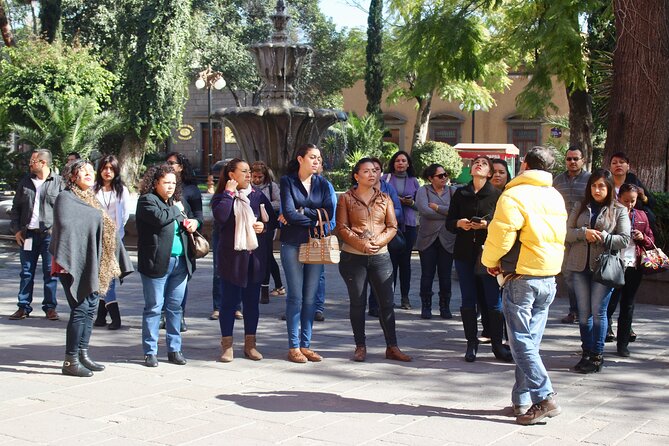
- A 5 p.m. start shows the centro at a pleasant transition point, with the route moving through historic plazas and religious buildings into the evening.
- The tour covers five major areas, including the University courtyard, Antigua Caja Real, Plaza de Aranzazu, Plaza del Carmen, and Plaza de Armas.
- Miguel receives especially strong praise for humor and historical storytelling, turning architectural details into understandable stories.
- The route includes church interiors, notably the Temple of San Elías, along with several exterior landmarks.
- The $23.06 price is fair for a small-group history walk, especially if you are new to San Luis Potosí and want context before exploring alone.
- The group can reach 25 people, though the experience may feel much more personal when attendance is low.
Why this San Luis Potosí walking tour works well
San Luis Potosí is easy to underestimate if you only see its main plaza and cathedral. The city center has layers: viceregal foundations, mining money, religious orders, civic power, education, and present-day public life. This tour gives you a framework for reading those layers.
I like that the route does not simply march from one postcard view to another. At the Central Building of the Autonomous University of San Luis Potosí, you learn how religious orders affected society in New Spain and how the building later took on an educational role. At Antigua Caja Real, the focus shifts to taxation and the silver economy. By the time you reach Plaza de Armas, the city’s churches and government buildings fit into a much larger story.
The tour is offered in English, and the guide’s approach appears conversational rather than stiff. Miguel is repeatedly praised for making history easy to follow, adding humor, and taking questions seriously. That matters in a city where a guide can either bring the stonework to life or bury you under dates and names.
The timing is useful, too. Starting at 5 p.m. gives you a structured introduction during the cooler part of the day. It also leaves you back at Plaza de los Fundadores after sunset or near it, depending on the pace and season. You can then continue exploring on your own, have dinner, or return to a place that caught your eye.
More History Tours in Mexico:
- Historic Downtown Walking Tour
★ 5.0 · 1,289 reviews - Historic Center Food Tour in Mexico City
★ 5.0 · 1,263 reviews - Mexico City: Historic Downtown Walking Tour
★ 4.8 · 1,039 reviews
Starting at Plaza de los Fundadores
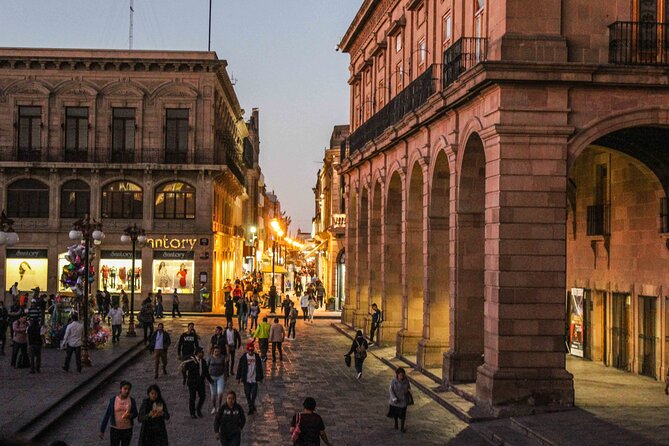
The tour begins at Plaza de los Fundadores in the Centro Histórico. This is a sensible meeting point because the walk quickly moves into the city’s older architectural core.
The opening section sets up the city’s viceregal origins. That context is important. San Luis Potosí was not built as a random collection of attractive churches and public buildings. Its growth was tied to colonial institutions, religious communities, mining activity, and government administration.
You should arrive ready to walk for the full two hours. The schedule gives about 25 minutes to each of the five main sections, but that does not mean every minute is spent inside a single building. The experience includes movement between sites, exterior interpretation, and stops for questions.
A phone ticket is provided, and all listed admission fees are included. There is no private transportation, but none is needed for this downtown route.
Stop 1: the University courtyard and New Spain’s religious orders
The first major stop takes you into the patio of the Central Building of the Autonomous University of San Luis Potosí. This is one of the more useful openings because it connects a present-day educational institution with the city’s colonial past.
The focus here is the role of religious orders in Potosí society during the years of New Spain. You will also hear how the venue changed over time while keeping an educational purpose. That shift from religious influence to university life gives you a clear example of how old buildings can continue serving the public in new ways.
I like this stop because it moves beyond surface architecture. You are not only looking at a courtyard. You are considering who used the space, what institutions shaped local life, and how the building’s purpose evolved.
The scheduled time is about 25 minutes, with no separate admission charge. If you enjoy architecture, colonial institutions, or the social side of Mexican history, this should be one of the most rewarding portions of the walk.
Stop 2: Antigua Caja Real and the money behind the city
The Antigua Caja Real offers a different angle. The building was used to collect the Quinto Real, the royal contribution taken from mining production. It also protected gold and silver produced by local miners.
This stop gives economic weight to the churches and grand public buildings you see later. Colonial cities did not gain their scale by accident. Mining wealth passed through official channels, and buildings such as the Caja Real helped control that wealth.
Today, the site functions as a cultural center administered by the Autonomous University of San Luis Potosí. That present use adds another layer to the visit. You can connect royal administration, mining, cultural activity, and university life within a single building.
The visit lasts about 20 minutes. It is shorter than the other main stops, so expect a focused explanation rather than a long museum visit. If you prefer stories about trade, taxes, institutions, and power, this section may be more appealing than a standard church tour.
Same base, a different sort of day:
- Chichen Itza, Cenote, and Valladolid Tour
★ 5.0 · 24,293 reviews - Chichen Itza, Cenote & Valladolid Tour with Tequila and Lunch
★ 4.5 · 15,789 reviews - Teotihuacan, Guadalupe Shrine & Tlatelolco Day Tour with Lunch
★ 5.0 · 11,603 reviews - Cabo Beach Camel Ride, Mexican Buffet and Tequila Tasting
★ 5.0 · 8,815 reviews
Stop 3: Plaza de Aranzazu and the Franciscan setting
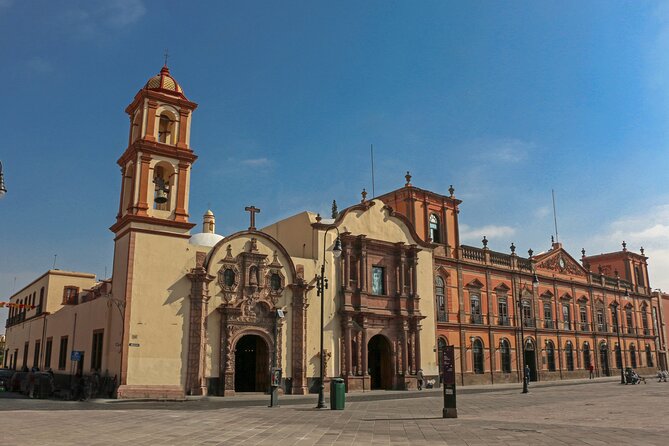
The route then reaches Plaza de Aranzazu and the area around the old Franciscan convent. This section includes Guerrero Garden, the Temple of San Francisco de Asís, Santo Entierro alley, and Plaza de Aranzazu itself.
Here, the guide interprets the most notable religious imagery and explains how residents use these spaces today. That combination is valuable. You are not looking at historic buildings as frozen museum pieces. You are also seeing public places that remain part of the city’s daily life.
The old convent setting gives the stop a strong architectural and religious focus, while the gardens and alley provide a sense of how the historic center connects in practice. The route is compact, but the subject matter is broad enough to include iconography, urban use, and local identity.
You have about 25 minutes here. The pace should suit you if you like stopping for details without spending an entire afternoon inside one monument. If you want a lengthy examination of every sculpture and façade, the time may feel limited. For a first orientation, it is a sensible balance.
Stop 4: Plaza del Carmen and the Temple of San Elías
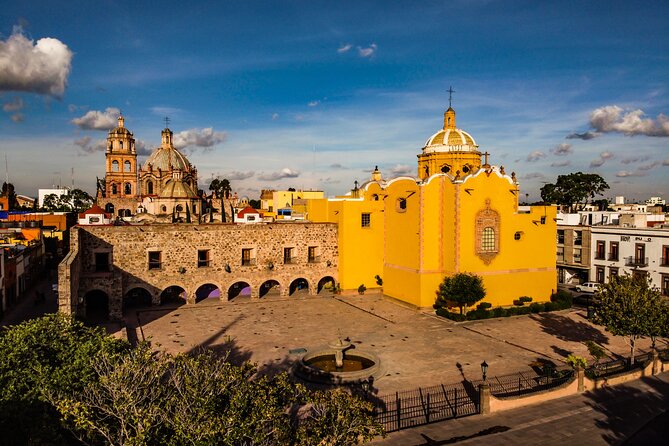
From Guerrero Garden, the walk passes the former Augustinian convent and continues to Plaza del Carmen. You see the exterior of the National Mask Museum and the Peace Theater, two landmarks that add cultural and civic variety to the route.
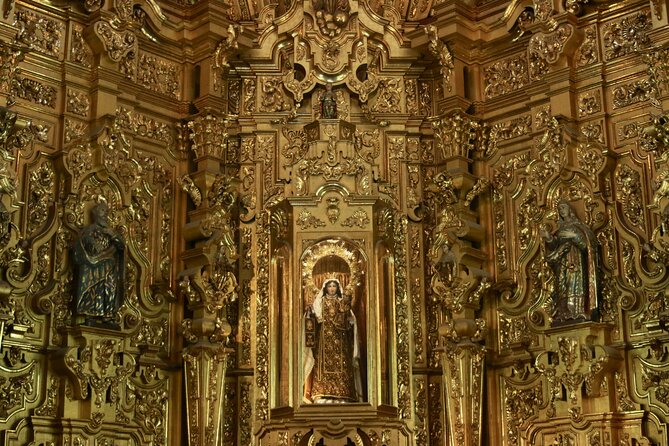
The main interior visit in this section is the Temple of San Elías. The guide interprets the façade, altarpiece, the altar of the seven princes, and the dressing room of the Virgin of Carmen. These details make this more than a quick church peek.
I particularly like the range of subjects packed into this stop. You move from a former convent to a museum, a theater, and a church, all within one urban sequence. The result is a useful lesson in how San Luis Potosí’s historic center brings religious, artistic, and public life close together.
The visit lasts about 25 minutes. Church access can sometimes depend on local conditions, so you should think of the indoor portion as an important feature rather than a reason to book if you require a guaranteed long interior visit. The tour information confirms a visit to the temple, but the route is still a guided walk, not a formal museum program.
Stop 5: Plaza de Armas and the city’s civic center
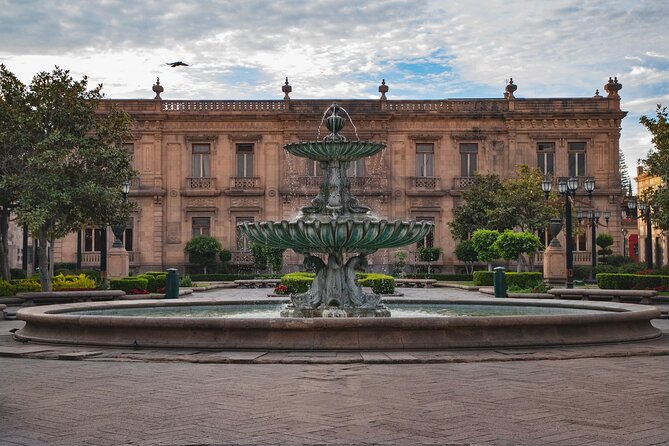
The final section takes you from Plaza del Carmen to Jardín Hidalgo, also called Plaza de Armas. This is where the religious and economic stories meet the city’s civic power.
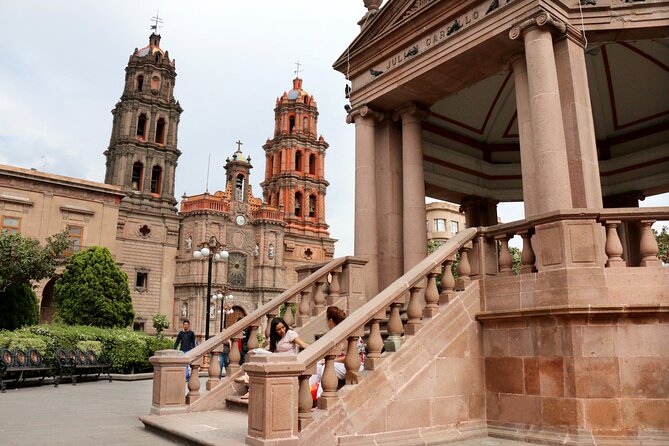
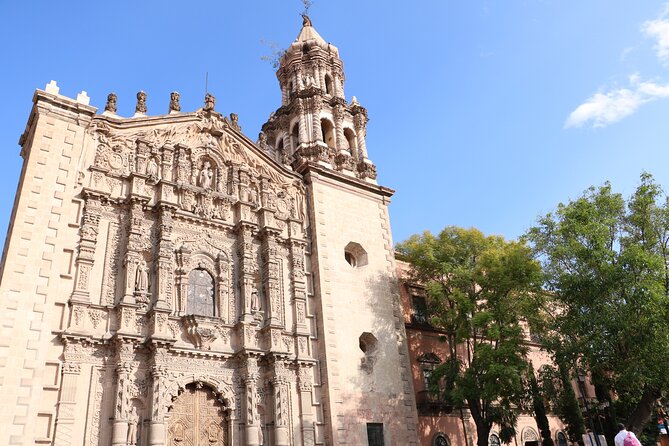
You see the exterior of the Government Palace, the old City Hall, and the State Congress. The guide also interprets the façade of the Metropolitan Cathedral of San Luis Potosí and shares key facts about its history. The route ends near the garden kiosk before returning to Plaza de los Fundadores.
This is a strong closing point because you can now read the center as a connected system. Churches represent religious institutions and devotion. The Caja Real points to mining and royal control. Government buildings show civic authority. The plazas tie those forces together in public space.
The last section also gives you practical bearings. After returning to the starting point, you will have a clearer idea of where the main historic areas sit in relation to one another. That is useful if you plan to continue walking independently.
The guide makes the largest difference
The guide is the heart of this experience. Miguel is praised for his passion for San Luis Potosí, his humor, and his ability to explain both city history and wider Mexican context. Several accounts describe him as friendly and easygoing, with a style that encourages questions rather than shutting them down.
That is especially helpful on a two-hour route. A guide who simply recites facts can make five stops feel long. Miguel’s reported approach is more personal and interactive. He has also handled very small groups, including occasions when a scheduled group became a one-person walk. In that situation, the experience can feel almost like a private introduction to the city.
Angela has also led the walk and is described as funny, engaging, and clear. Since the guide may vary, you should expect the general route and themes to remain consistent while the tone and emphasis may differ.
The most praised quality is not merely factual command. It is the way the guide makes the city feel understandable. You get architectural explanation, historical context, cultural meaning, and practical suggestions for other places to see.
Price, group size, and overall value
At $23.06 per person, this is a reasonable price for a two-hour English-language walking tour with no extra admission fees. The value is strongest if you are new to San Luis Potosí or have limited time. A good guide can help you notice buildings you would otherwise pass without understanding.
The group limit is 25 people. That is not a tiny group, and the experience could feel less personal at full capacity. Still, the route is designed around public streets, plazas, and courtyards, so it should remain workable. Smaller attendance can make it easier to ask questions and hear the guide clearly.
I would not choose this tour solely to gain entry to every major landmark. Several buildings are viewed from outside, and the route does not promise extensive museum time. I would choose it for interpretation, orientation, and access to selected interiors.
The tour is also a good value for solo visitors. Several solo guests have found the format comfortable, and the guide’s open manner helps keep the experience social without making it feel forced.
Who should book this walk
I would recommend it most strongly for:
- First-time visitors to San Luis Potosí
- Solo visitors who want a structured introduction
- Couples interested in architecture and colonial history
- Families with older children who can manage two hours of walking
- Business visitors with only a free afternoon or evening
- Anyone who prefers an English-speaking guide
It is less suitable if you want private transportation, a long museum visit, or a tour focused mainly on food and nightlife. It is also not the best choice if walking through the historic center is difficult for you, since transportation is not included and the entire experience takes place on foot.
You can use the tour early in your stay to get ideas for later exploration. One useful suggestion repeated by past participants is to take it during your first or second day, when the guide’s local advice can help shape the rest of your visit. The same provider also offers a Mezcal and Pulque tour, which may suit you if you want to add a food and drink experience later.
Practical details before you go
The tour starts at 5 p.m. from Plaza de los Fundadores and ends at the same meeting point. Plan for about two hours, though questions and walking pace can affect the exact finish.
Confirmation arrives when you book. Service animals are allowed, and the meeting point is near public transportation. The activity states that most people can participate, but you should still be prepared for continuous walking through the downtown area.
Free cancellation is available up to 24 hours before the start time for a full refund. Cancellations or changes made within 24 hours are not refunded or accepted. The activity also requires a minimum number of participants, so if that minimum is not met, you will be offered another date or experience, or a full refund.
Should you book the San Luis Potosí downtown walk?
Yes, if you want a smart first look at the city rather than a quick checklist of landmarks. The route covers the main historic center, but its real value comes from the connections between religious orders, mining taxes, civic buildings, university life, and modern public use.
I would book it early in my stay, especially if I had never visited San Luis Potosí. Miguel’s warm, humorous style is the strongest reason to choose it, though Angela has also led the walk successfully. Just keep your expectations clear: this is a compact walking tour with selected interior visits, not a private architectural inspection or a transportation-based city tour.
At $23.06, it offers a practical way to get your bearings and understand what you are seeing. If you enjoy history told through real streets, working plazas, and old buildings with new purposes, this is a worthwhile introduction.
FAQ
Where does the tour begin?
The tour begins at Plaza de los Fundadores in the Centro Histórico of San Luis Potosí, at 78000 San Luis Potosí, S.L.P., Mexico.
What time does the tour start?
The start time is 5 p.m.
How long does the tour last?
The tour lasts approximately two hours.
Where does the tour end?
The activity ends back at Plaza de los Fundadores, the meeting point.
Is the tour offered in English?
Yes. The tour is offered in English.
Is transportation included?
No. Private transportation is not included. The experience is a pedestrian tour through the downtown historic district.
What is the maximum group size?
The maximum group size is 25 participants.
Can I cancel for a full refund?
Yes. You can cancel at least 24 hours before the local start time for a full refund. Cancellations or changes made less than 24 hours before the start time are not refunded or accepted.
Newly listed around Mexico
- Xochimilco : Island of the dolls, tequila and mezcal CDMX★ 5.0 · 102 reviews
- Xochimilco: Sanctuary of the Axolotl★ 4.9 · 58 reviews
- Xochimilco: Market, Food and Nature ¡All included! Tour★ 4.9 · 107 reviews
- Xochimilco: amanecer en kayak Ciudad de México★ 5.0 · 35 reviews
- Xochimilco & Colonial Coyoacan Trip★ 4.0 · 312 reviews
- From Cancún: Half-Day Snorkeling with Whale Sharks★ 4.5 · 50 reviews
- From Playa del Carmen: Whale Shark Tour★ 4.3 · 52 reviews
- Cozumel: West Coast E-Bike and Snorkeling Tour★ 4.7 · 38 reviews
Historical Tours, compared.


Mexico City Historical Centre Food Tour with 7 Authentic Tastings
Read our review →
Historical and Cultural Walking Tour of San Miguel de Allende
Read our review →
Historical and Cultural Walking Tour of San José del Cabo
Read our review →
Walking Tour in Mexico City for Exploring their Cultural Heritage
Read our review →Browse the lists this tour appears in