
Reviewed · HISTORICAL TOURS
Walking Tour of the Historic Center of Mexico City
Mexico City’s center is history underfoot. This small-group walk connects Aztec remains, Spanish colonial power, revolutionary murals, and grand public buildings in one lively route. I like the small maximum of 10 people, which makes it easier to hear the guide and ask questions, and I like the mix of famous sights with less obvious places such as the archaeological window beside Templo Mayor. The main drawback is simple: three hours on uneven streets can be tiring, especially at Mexico City’s altitude, and a slower group may not reach every planned stop.
The English-speaking guides are the heart of the experience. Fernanda, Alexia, Luis, Nat, Benjamin, Sarah, Gabby, and others have been praised for clear explanations, humor, patience, and a strong affection for the city. You should expect a broad introduction rather than long interior visits. It is a useful first walk, but you may want to return later to explore the cathedral, Templo Mayor, and the Palace of Fine Arts at greater length.
In This Review
- Key points to know before you book
- Starting in the Zócalo with Mexico City at full scale
- The Metropolitan Cathedral and the weight of centuries
- Templo Mayor and the city beneath the city
- Diego Rivera’s murals inside the Ministry of Education
- Plaza de Santo Domingo and the complicated colonial center
- Plaza Tolsá, shade, and a wider view of Mexico
- The archaeological window beneath an ordinary street
- Bellas Artes, Palacio Postal, and the city’s grand public face
- The House of Tiles and a practical finish
- What the guides do best
- Walking conditions, timing, and what to bring
- Is the tour good value?
- Who should book this Mexico City walk?
- Should you book it?
- FAQ
- How long is the walking tour?
- Where does the tour begin?
- Where does the tour end?
- Is the tour offered in English?
- How large is the group?
- Is admission to the Museo Vivo del Muralismo included?
- Are cathedral admission and Palacio Postal admission included?
- Is transportation to the meeting point included?
- Can I cancel for a full refund?
Key points to know before you book
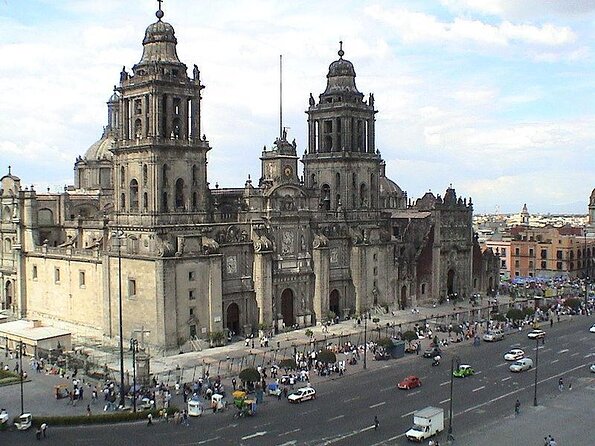
- A compact route through nine major sights links the Zócalo, Templo Mayor, Diego Rivera murals, Bellas Artes, Palacio Postal, and the House of Tiles.
- The group is capped at 10 people, a real advantage on crowded streets and during explanations.
- The Museo Vivo del Muralismo is the main interior visit, with admission included for the Ministry of Education murals.
- The tour covers both pre-Hispanic and colonial Mexico, then carries the story into politics, art, language, food, and modern city life.
- The walk ends near Bellas Artes and the House of Tiles, placing you close to several places worth revisiting.
- Good walking shoes, water, sun protection, and patience matter, since cobblestones, heat, and altitude can affect the pace.
Starting in the Zócalo with Mexico City at full scale
The tour begins at Plaza de la Constitución, usually called the Zócalo. This enormous square gives you the right opening image of Mexico City: a public space shaped by Mexica power, Spanish rule, national government, religion, commerce, and modern civic life.
From here, your guide points out the National Palace, the Supreme Court of Justice, and the silversmith shops around the square. The setting can feel grand and a little confusing at first, so this is a good place to hear the basic story of how the pre-Hispanic city and the colonial city were built over one another.
The scheduled stop is about 15 minutes. That is enough for an orientation and a few strong details, but not enough for an inside visit to the National Palace or the Supreme Court. Think of the Zócalo as the map for the rest of the walk.
More History Tours in Mexico City
- Historic Downtown Walking Tour
★ 5.0 · 1,289 reviews - Historic Center Food Tour in Mexico City
★ 5.0 · 1,263 reviews - Mexico City: Historic Downtown Walking Tour
★ 4.8 · 1,039 reviews
The Metropolitan Cathedral and the weight of centuries
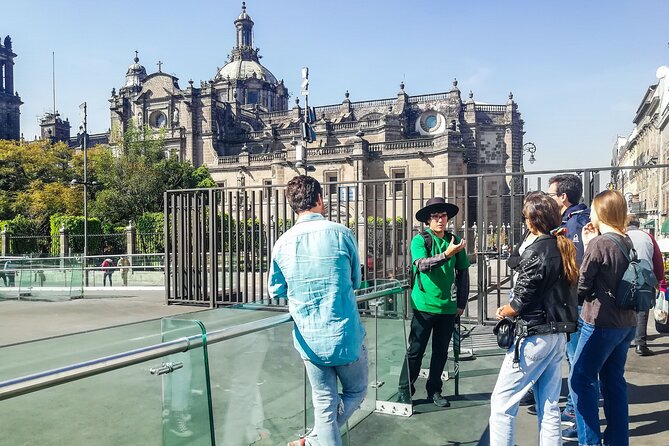
The Metropolitan Cathedral is explained from the outside for about 10 minutes. Your guide covers its origins, long construction, and Baroque and neoclassical features. The building is useful for showing how Mexico City’s religious and political power took physical form after the Spanish conquest.
The cathedral is one of those places where the exterior alone tells a complicated story. You will see different architectural ideas layered into one enormous structure, and the guide helps you notice why it does not look like a single, tidy design.
Admission is not included, and the scheduled visit is an exterior explanation rather than a full interior tour. If the cathedral interests you, mark it for a return visit when you can look around without the rest of the group waiting.
Templo Mayor and the city beneath the city
Near the cathedral, the walk turns toward the ruins of Templo Mayor. The tour views the archaeological remains from outside and explains their importance to the Mexica, including the connection to the gods of rain and the sun and the way the sacred center shaped the city’s geography.
This is one of the most important stops because it makes Mexico City’s layered past visible. Colonial buildings are not simply next to ancient ruins by accident. Much of the modern center grew around, over, and through the earlier Mexica capital.
The guide’s role here is to give you a framework. You are not getting a full archaeological museum visit or an extended site inspection, but you will understand why Templo Mayor matters and how it fits into the surrounding streets. If you want a closer look, plan separate time for the archaeological zone.
Diego Rivera’s murals inside the Ministry of Education
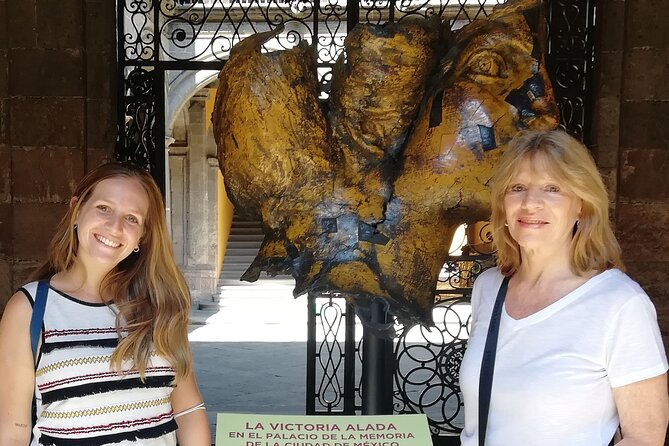
The Museo Vivo del Muralismo is the walk’s major interior stop, with about 25 minutes inside the Ministry of Education. Admission is included, and you see a substantial group of Diego Rivera murals, described as roughly a third of the murals he made during his career.
This stop adds color and human detail to the earlier political history. The murals touch on festivals, traditions, work, social struggle, trade, and politics in early 20th-century Mexico. Instead of treating Rivera as only a famous painter, the guide places his work in the life of the country.
The visit can be especially rewarding if you enjoy art but do not want a formal museum lecture. Guides such as Fernanda have been praised for making the setting approachable, while one group appreciated her flexibility when it wanted a few extra minutes in the courtyard with the murals.
Still, 25 minutes is brief. You will see a selection and receive context, not a full study of every panel. If Rivera is a main reason for booking, return on your own for more time.
More Walking Tours in Mexico City
- Frida Kahlo VIP [Museum Tickets Included] Walk, Markets & Churros
★ 5.0 · 982 reviews - Anthropology Museum Private Experience Walking Tour
★ 5.0 · 355 reviews - Mexico City: Guided walking tour through the most historic parts of the city.
★ 4.5 · 172 reviews - Mexico City: Lucha Libre Show, Walking Tour & Tequila
★ 4.6 · 156 reviews
Plaza de Santo Domingo and the complicated colonial center
The 15-minute stop at Plaza de Santo Domingo shifts the focus to the viceroyalty of New Spain. The square is tied to major colonial events, the movement of spices and goods with Asia, the Spanish Inquisition, and French attempts to conquer Mexico.
That range is typical of this walk. The guide does not isolate one building from the rest of the city. Instead, the stops show how religion, trade, empire, and foreign pressure affected everyday life and public spaces.
This is also a good place to listen for the difference between a polished monument and a difficult past. The walk presents colonial Mexico as a period of power and trade, but also of control and conflict. The short stop gives you the outline, then the route keeps moving.
Plaza Tolsá, shade, and a wider view of Mexico
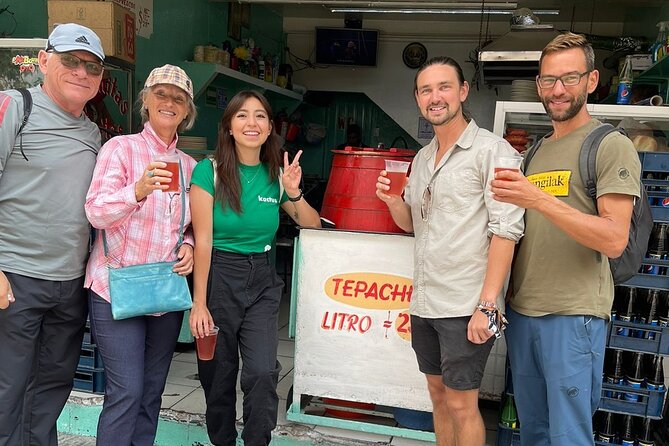
Plaza Tolsá offers a planned 20-minute pause in the shade. That break matters. The route is not just a string of explanations delivered while everyone hurries from one building to the next.
Here, the guide may discuss indigenous languages, Día de Muertos, music, politics, and food. The exact conversation can vary by guide, which is part of the appeal of a small-group walk. Guides bring their own examples and answer questions about present-day Mexico as well as the past.
You also see the equestrian statue of Charles IV, widely known as El Caballito, or the little horse. The exterior of the National Museum of Art and the Mining Palace add two more grand architectural faces to the route.
This stop is a reminder that the historic center is not only an archaeological or colonial zone. It is also a place where art, civic life, language, food, and national identity continue to be discussed.
The archaeological window beneath an ordinary street
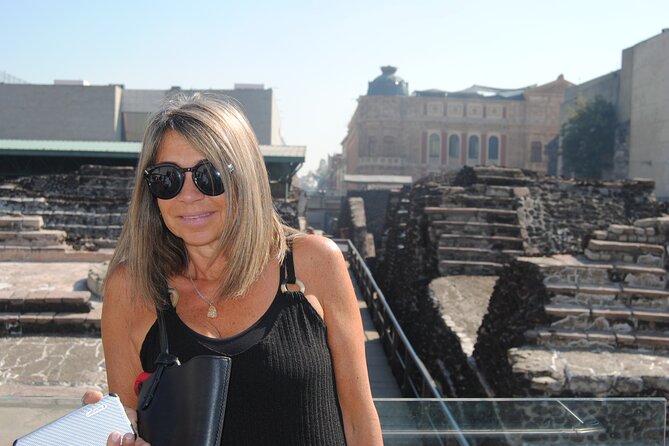
The five-minute Ventana Arqueológica stop is short but memorable. Beside the main temple, you look through an archaeological window to see remains below street level and learn how they were found.
The point is not scale. It is the surprise of seeing the past under a normal city street. Mexico City often hides earlier layers beneath modern construction, and this small display makes that fact easy to understand.
Because the stop lasts only a few minutes, it works best as a quick visual clue rather than a major attraction. Listen closely, since the explanation may be over before you have had much time to examine the site.
Bellas Artes, Palacio Postal, and the city’s grand public face
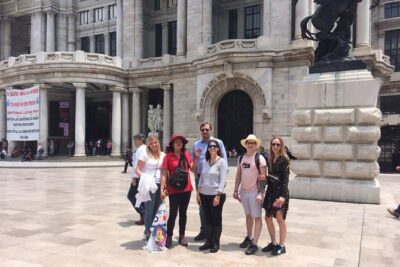
The Palace of Fine Arts is a must-see landmark on the route. The tour spends about 15 minutes taking in its exterior and discussing the artistic character of the building. The itinerary describes both the inside and outside as striking, but the tour information does not include an interior admission, so you should not expect a full museum visit during the walk.
This is a classic photo stop, yet it earns its place because it helps explain Mexico City’s love of grand civic architecture. Your guide can point out details that are easy to miss when you are simply taking a picture.
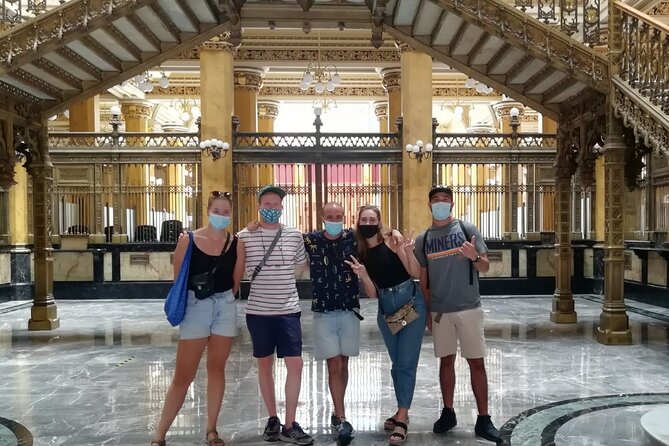
The route then reaches Palacio Postal for about 10 minutes. This elegant palace still operates as a working building, and the guide connects its design to the economic and political ambitions behind it. Admission is not included, so treat this as an exterior visit unless the guide confirms otherwise.
These two buildings work well together. Bellas Artes shows the city’s artistic ambition, while Palacio Postal shows how commerce and government once expressed confidence through architecture.
The House of Tiles and a practical finish
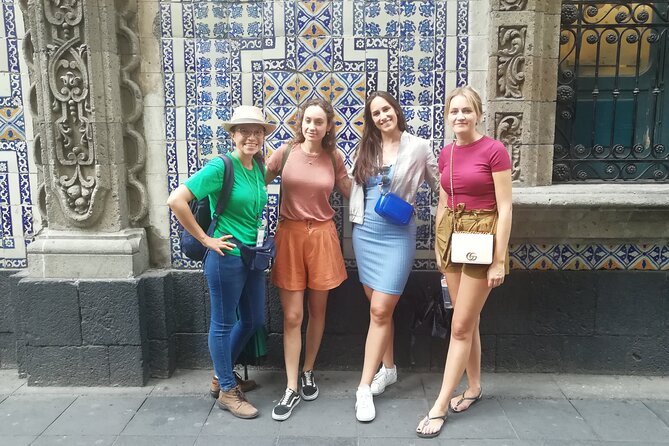
The House of Tiles, or Casa de los Azulejos, is one of the most photographed buildings in the center. Its tiled facade gives the walk a strong visual ending, especially after so much discussion of history and politics.
The tour ends at Edificio Guardiola on Avenida 5 de Mayo, beside the Palace of Fine Arts and the House of Tiles. This is convenient because you are already near several places you may want to revisit, photograph, or enter after the group separates.
The scheduled route includes about nine named sights, though the listed stop times add up to less than three hours. The remaining time is used for walking, street crossings, questions, and transitions. That also explains why a slow group may not see everything. One group found that mobility problems and cobblestone streets reduced the number of stops they reached.
What the guides do best
The strongest part of this experience is the guiding. The best guides make a large amount of history feel manageable without turning the walk into a lecture.
Fernanda has been praised for being punctual, warm, funny, flexible, and attentive to practical needs such as shade and bathroom breaks. Alexia is noted for adding thoughtful comments about both historic sites and current life. Luis has received high marks for clear English, a comfortable pace, helpful street-crossing care, and useful recommendations for the rest of a Mexico City stay.
Other guides, including Nat, Benjamin, Gabby, Sarah, Thomas, Oscar, Eduardo, and Fer, have also been singled out for friendly presentation, good answers, humor, and patience. Since the exact guide is not guaranteed, the experience can vary in tone. The consistent theme is an approachable guide who enjoys explaining the city.
A small group helps here. With no more than 10 people, you are less likely to lose the guide in the Zócalo crowd, and questions are easier to handle. Several groups also found the pace comfortable for mixed ages, though comfort depends on the walking ability of everyone in your group.
Walking conditions, timing, and what to bring
This is a genuine walking tour, not a sightseeing ride with short pavement breaks. You will cross uneven streets and cobblestones, spend time in the sun, and walk at Mexico City’s high altitude.
Wear shoes with good grip. Bring water, sunscreen, and a hat or umbrella. The guides are known to help with shade and street crossings, but you should still plan for weather and distance.
Most people can participate, and service animals are allowed. The tour is near public transportation, but transportation to the meeting point is not included. You need to reach Plaza de la Constitución on your own.
The tour is offered in English and lasts about three hours. It requires good weather and a minimum number of participants. If poor weather or low enrollment cancels the experience, you are offered another date or a full refund.
Is the tour good value?
No price is provided here, so the best way to judge value is by what you receive. You are paying for an English-speaking guide, a planned route, a small group, and included access to the Museo Vivo del Muralismo. You are not paying for transportation, cathedral admission, Palacio Postal admission, food, or tips.
The value is strongest if this is your first time in Mexico City and you want the historic center to make sense quickly. A good guide can save you hours of trying to connect the Zócalo, Templo Mayor, colonial plazas, Rivera’s murals, and later civic buildings on your own.
The value is weaker if you want long interior visits or a specialist art and archaeology tour. The route gives you an overview and points you toward places worth exploring later. One person felt it resembled a free walking tour and would rather give money directly to a student guide, so compare the price with the kind of independent walk available in the city.
Tips are not included. Given the guide’s role and the personal attention possible in a group of 10 or fewer, budget a tip if the experience meets your expectations.
Who should book this Mexico City walk?
I would recommend it to first-time visitors who want to get their bearings fast in the historic center. It suits solo visitors, couples, friends, and families who enjoy history, architecture, art, and local context more than shopping or food stops.
It also works well early in a Mexico City visit. The ending near Bellas Artes and the House of Tiles makes it easy to continue exploring, and several guides provide recommendations for later sightseeing.
I would be more cautious if you have difficulty walking on cobblestones or managing altitude and heat. You can ask for shade or a pause, but the route still covers a lot of ground. Visitors who want to study Templo Mayor, the cathedral, or Rivera’s murals in detail should use this walk as an introduction, then return independently.
Should you book it?
Book this tour if you want a clear, lively introduction to central Mexico City and value a small group with an English-speaking guide. The combination of Aztec remains, colonial plazas, Rivera murals, and grand public buildings gives you a useful way to understand how the city’s past and present overlap.
Skip it if you prefer to move slowly, spend long periods inside museums, or avoid uneven streets. For most first visits, though, the route is well chosen, the guides add real value, and the finish near Bellas Artes leaves you in an excellent place to continue on your own.
FAQ
How long is the walking tour?
The tour lasts approximately three hours.
Where does the tour begin?
It begins at Plaza de la Constitución in Mexico City’s Centro Histórico.
Where does the tour end?
It ends at Edificio Guardiola on Avenida 5 de Mayo, near the Palace of Fine Arts and the House of Tiles.
Is the tour offered in English?
Yes, the experience is offered in English.
How large is the group?
The tour has a maximum of 10 participants.
Is admission to the Museo Vivo del Muralismo included?
Yes, admission to the Museo Vivo del Muralismo is included.
Are cathedral admission and Palacio Postal admission included?
No. Admission to the Metropolitan Cathedral and Palacio Postal is not included.
Is transportation to the meeting point included?
No. You are responsible for transportation to Plaza de la Constitución.
Can I cancel for a full refund?
Yes. You can cancel at least 24 hours before the local start time for a full refund. Cancellations or changes made within 24 hours are not refunded or accepted.
Newly listed around Mexico City
- Ticket to Frida Kahlo Museum on CDMX★ 4.5 · 44 reviews
- Epic Centro Histórico Walking Tour★ 5.0 · 77 reviews
- Eat Like A Local By The Taco Mensch★ 5.0 · 55 reviews
- Eat and Explore Local Markets in Mexico City★ 5.0 · 83 reviews
- Express Tour to Teotihuacan Pyramids. Be the first to arrive!★ 4.5 · 62 reviews
- Ticket for the Frida Kahlo Museum★ 3.5 · 67 reviews
- Authentic Lucha Libre Tour : Wrestling School, Tacos & Mezcal★ 5.0 · 162 reviews
- Small Group: The Magical Colonial Towns of Taxco and Cuernavaca★ 4.5 · 46 reviews
Historical Tours, compared.


Mexico City Historical Centre Food Tour with 7 Authentic Tastings
Read our review →
Historical and Cultural Walking Tour of San Miguel de Allende
Read our review →
Historical and Cultural Walking Tour of San José del Cabo
Read our review →
Historical & Cultural Walking Tour of San Miguel de Allende
Read our review →Browse the lists this tour appears in