
Reviewed · HISTORICAL TOURS
History and Murals: Walking Tour Guadalajara
Guadalajara tells its story in stone. This three to four hour walk links the city’s grand squares, churches, political buildings, José Clemente Orozco’s powerful murals, and the lively Mercado Libertad. I especially like that Cabañas Museum admission is included and that guide Fernando brings history, politics, art, and food together instead of treating the city center as a parade of pretty façades. The main drawback is simple: you will spend much of the tour standing, and access to some government buildings depends on local authorities.
The $53.05 price feels fair if you want a strong introduction to Guadalajara in one morning. Fernando’s clear English and personal knowledge are the biggest part of the value, particularly at the Cabañas murals. Just wear comfortable shoes, bring water, and understand that this is a live walking tour with no headsets or microphones.
In This Review
- Five things that make this Guadalajara walk worthwhile
- Starting at Plaza de Armas at 10 a.m.
- Three early landmarks: El Sagrario, the cathedral, and the Rotonda
- Civic power at the Municipal Palace and Government Palace
- Independence and theater at two central plazas
- Plaza Fundadores and Plaza Tapatía
- The main event at Cabañas Museum
- Food and shopping at Mercado Libertad
- How much value do you get for $53.05?
- Who should book this walking tour?
- Final verdict: book it for context and Orozco
- FAQ
- How long does the Guadalajara history and murals tour last?
- Where does the tour begin?
- Where does the tour end?
- Is Cabañas Museum admission included?
- Is entry to the Government Palace guaranteed?
- Is the tour offered in English?
- How many people can join the tour?
Five things that make this Guadalajara walk worthwhile
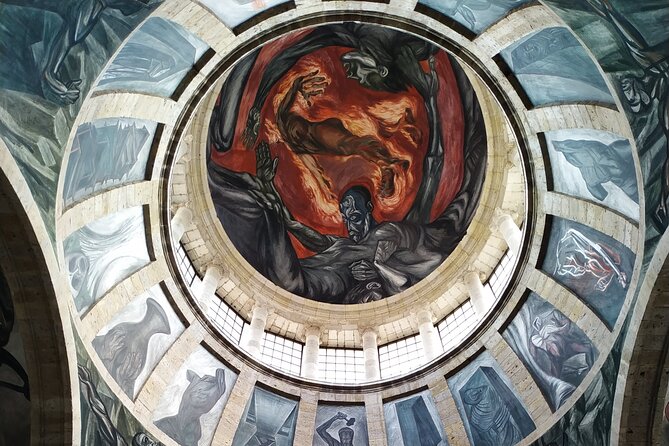
- Orozco’s 57 frescoes at Cabañas Museum are the artistic center of the tour, with time to view them before Fernando explains their meaning.
- Fernando gives context, not just dates, connecting Guadalajara’s buildings to Mexican politics, religion, conquest, social movements, and local life.
- Mercado Libertad finishes the route, giving you a chance to try local food and shop for crafts and souvenirs.
- The compact route covers major sights on foot, from Plaza de Armas to the cathedral, theater, plazas, museum, and market.
- The small group limit of 15 people allows for questions and conversation without the feel of a large bus excursion.
- Government building access is not guaranteed, so the experience can change slightly depending on local closures and official restrictions.
Starting at Plaza de Armas at 10 a.m.
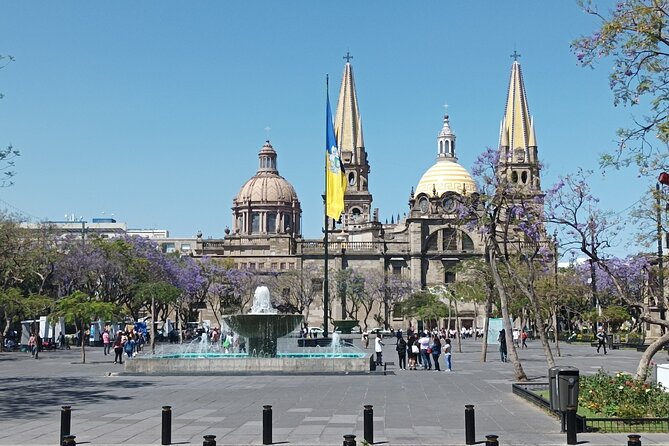
Meet Fernando at the kiosk in Plaza de Armas at 10 a.m. This is a useful starting point because the square sits at the center of Guadalajara’s historic district, surrounded by several of the city’s most important buildings.
The plaza dates to the city’s founding in the 16th century and gives you an immediate sense of how Guadalajara was organized around religious and civic power. You will spend about 20 minutes here, enough time to get your bearings and understand how the cathedral, government buildings, and nearby streets fit together.
Fernando has been praised for starting on time and keeping in touch before the meeting. One practical concern is identification at the kiosk. It may help to confirm exactly what he will be wearing or carrying, since a distinctive logo or shirt would make the meeting point easier to spot.
More Walking Tours in Guadalajara:
- Walk Guadalajara!
★ 5.0 · 474 reviews - Guadalajara City Center Walking Tour
★ 5.0 · 225 reviews - Guadalajara Private Walking Tour
★ 5.0 · 167 reviews
Three early landmarks: El Sagrario, the cathedral, and the Rotonda
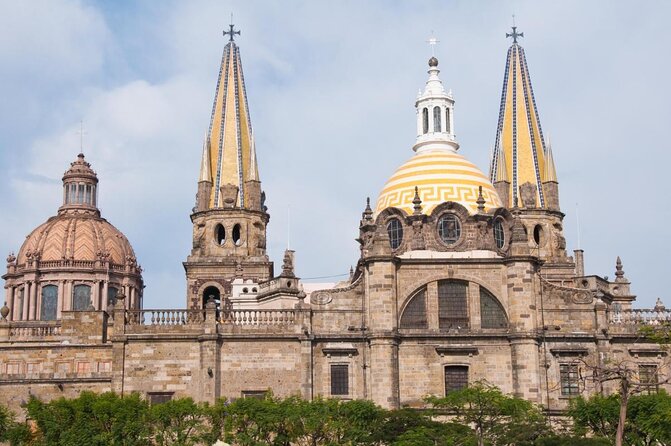
The first church stop is Parroquia El Sagrario Metropolitano, inaugurated in 1839. Its golden quarry stone and neoclassical design give it a different feel from the nearby cathedral, and the short 10-minute visit works well as an architectural introduction.
Next comes Guadalajara Cathedral, whose construction began in the 16th century. You see both the exterior and interior of the main church of Jalisco, an important distinction because the cathedral is not simply a photo stop. Fernando explains its place in the state’s religious and civic life while pointing out details that are easy to miss if you visit alone.
Allow about 20 minutes here. The pace is not rushed, but this is still a city walk, not an extended church study. If you want quiet time for private prayer or detailed photography, you may need to return on your own.
At the Rotonda de los Jaliscienses Ilustres, the focus shifts from church figures to the men and women honored for shaping Jalisco. The neoclassical monument provides a useful way to discuss local identity and the people the state chooses to remember.
This part of the walk is especially good for first-time visitors. You see Guadalajara’s major symbols early, but Fernando also explains what they mean instead of handing you a list of construction dates.
Civic power at the Municipal Palace and Government Palace
The Guadalajara Municipal Palace is a neocolonial building constructed from 1949 to 1952. It houses the city’s municipal council, and its placement near the central plazas shows how closely civic government and public space are tied together here.
The Palacio de Gobierno del Estado de Jalisco has a longer political story. Opened in 1790, it served as the Guadalajara Court during the viceregal period, later became a military barracks, and then housed the Jalisco congress. Its main staircase contains one of José Clemente Orozco’s murals.
That mural is a major reason to hope the building is open, but access is not promised. State government rules control entry, and closures have continued during preparations connected with the 2026 FIFA World Cup. If you cannot enter, the guide can still explain the building from outside, but this is one point where the exact experience may differ from your expectations.
The tour’s handling of current events is another strength. Fernando has explained protests and public markings around government buildings without reducing them to a simple political message. That kind of context helps you see Guadalajara as a working city, not a preserved museum set.
Independence and theater at two central plazas
Plaza de la Liberación was built in the 1950s and dedicated to Mexican independence. It is a broad civic space, and the stop gives Fernando room to explain how national history is presented in Guadalajara’s public places.
The nearby Teatro Degollado opened in 1866 during the War of Reform. Its architecture and acoustics make it one of the city’s most important theaters, and the exterior alone is worth a careful look.
Interior access depends on local availability, just as it does at the Government Palace. The planned stop is about 10 minutes, followed by a useful break of roughly 15 to 20 minutes at Café Degollado. You can use the restroom, drink water, and give your feet a rest.
That pause matters. The route is described as an easy short walk, but the experience includes plenty of standing. There are no audio devices, so you listen directly to Fernando. This creates a more personal exchange, though people with hearing difficulties may want to stand close to the guide and confirm details before booking.
More History Tours in Guadalajara:
- Charreria heritage tour be a charro for a day
★ 5.0 · 188 reviews - Tequila/Guachimontones Tour-cultural heritage route
★ 5.0 · 136 reviews - Guadalajara: Mexican Charro and Charreada Cultural Tour
★ 4.8 · 83 reviews - From Guadalajara to Chapala Lake: Funny and cultural tour
★ 4.2 · 38 reviews
Plaza Fundadores and Plaza Tapatía
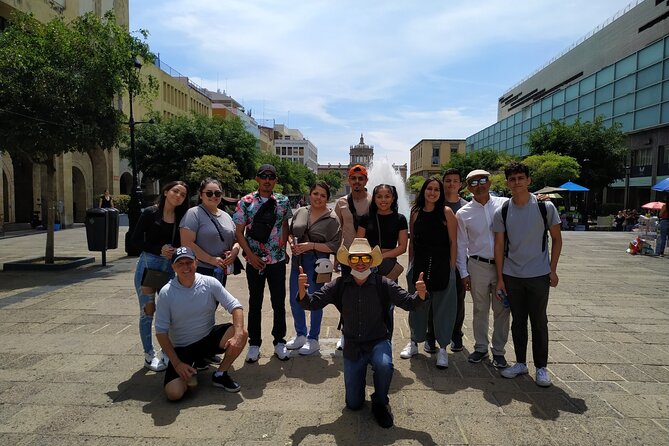
Plaza Fundadores commemorates the founding of Guadalajara in 1542. A bronze sculpture by local artisan Rafael Zamarripa honors the founders, giving the square a clear connection to the city’s origin story.
The next stop, Plaza Tapatía, was built in the 1970s. It is the largest and newest square in the historic center, designed around commerce and handicrafts. Here the tour begins to shift from official history toward everyday shopping and local culture.
This change of mood is one of the walk’s best features. You move from cathedrals and government rooms to spaces where people shop, eat, meet, and pass through the center. The contrast makes the earlier discussion of Guadalajara’s institutions feel more grounded.
The route can feel full for one morning, but the stops are short and grouped close together. You are not constantly climbing into vehicles or waiting for transportation. Most people can participate, though the amount of standing remains the main physical consideration.
The main event at Cabañas Museum
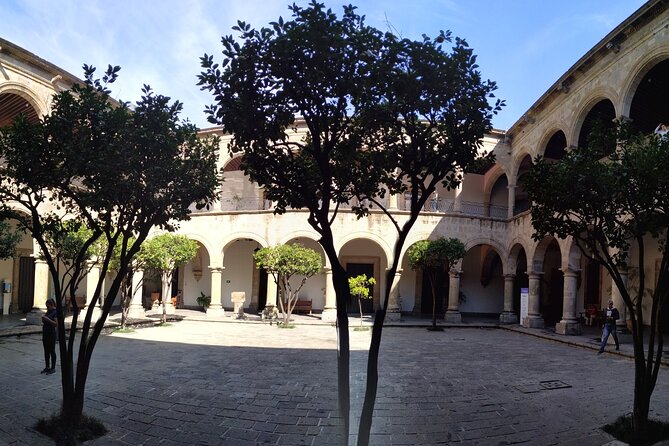
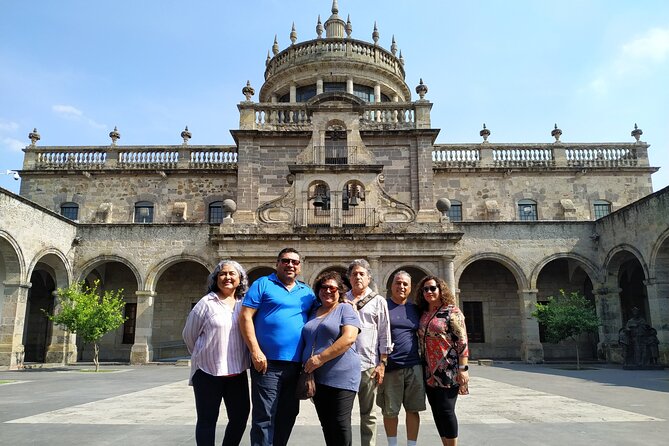
The Cabañas Museum receives about an hour, and this is where the tour earns much of its price. Your entrance is included, so you do not have to manage a separate museum ticket or wait in the regular admission line.
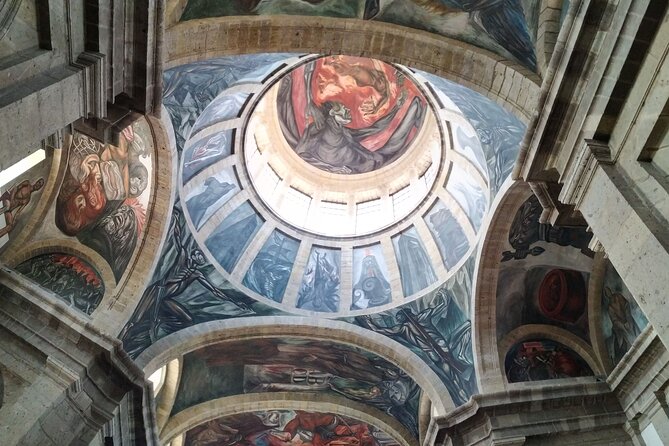
Inside, you see 57 fresco murals by José Clemente Orozco, painted across the walls and domes of the main chapel. Orozco is one of Mexico’s three most important muralists, and the museum’s mural cycle is recognized as a UNESCO World Heritage Site.
Fernando’s approach here is particularly effective. You first have time to look at the murals and form your own response. Then he explains the imagery, historical setting, and ideas behind the work. That order matters because you are not simply told what to think before seeing the art.
The murals can be overwhelming at first. Their scale, movement, and serious subjects demand time, and a guide who can explain them in plain English is useful. Fernando has been praised for making the art understandable without burying people in academic detail.
If the Government Palace is closed, Cabañas becomes even more important. It provides the tour’s guaranteed major interior experience and gives you a meaningful encounter with Mexican art rather than only exterior sightseeing.
Food and shopping at Mercado Libertad
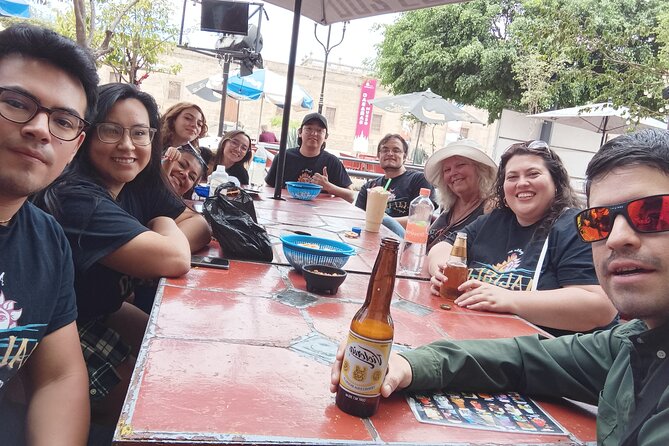
The walk ends at Mercado Libertad, also called San Juan de Dios, on Calle Dionisio Rodríguez. It is described as the largest traditional market in Guadalajara and the largest of its type in Latin America.
This is a good finish because the market gives you choices. You can look for regional crafts, souvenirs, and typical foods, or simply continue exploring after the guide says goodbye. Bargain shopping is part of the appeal, but prices and quality vary, so compare items before buying.
Food is not a minor add-on here. The experience includes a chance to taste traditional Mexican cuisine, and Fernando has guided people toward local specialties such as birria and tortas ahogadas. He has also introduced visitors to tejuino, a traditional drink made from fermented corn. These food suggestions add something you would not get from a strictly architectural walk.
The formal tour time at the market is about 15 minutes, so do not expect an extended food crawl. If you want lunch, shopping, or more time to browse, plan to stay after the official ending. Since the route finishes here rather than returning to Plaza de Armas, you can continue your afternoon from the market.
How much value do you get for $53.05?
At $53.05 per person, this is not the cheapest way to see Guadalajara’s center. You can walk past many of these buildings for free. The price makes more sense when you count the included Cabañas Museum admission, the small group cap, the English guiding, and the time saved researching the city’s complicated past.
The best value comes from interpretation. A solo visit to the cathedral or Cabañas Museum lets you see the sights, but Fernando adds connections among colonial government, church authority, Mexican independence, modern civic life, and Orozco’s political art.
The tour is also useful if you have only a short stay. In one morning, you cover the central landmarks and finish at a market where you can eat and shop. It serves as a practical orientation before exploring Guadalajara on your own.
It is less suitable if you want a slow photographic walk, a private experience, or long interior visits at every stop. The group may include up to 15 people, and some planned entries can close without notice.
Who should book this walking tour?
I would choose this tour if you are visiting Guadalajara for the first time and want the city’s major sights explained in English. It suits people who enjoy architecture, Mexican history, political context, and art, especially those curious about Orozco.
It also works well for solo visitors. Fernando’s patient style leaves room for questions and conversation, and the small group structure can feel more personal than a large public tour.
Families and couples should find the route manageable if everyone is comfortable walking and standing for several hours. A short break is built in, and Fernando has made an effort to use shade and rest opportunities when possible.
You may want a different experience if your priority is nightlife, shopping alone, or a food-focused tour. Mercado Libertad is part of the finish, but the heart of the morning is history, architecture, and murals.
The experience is offered in English and is near public transportation. Confirmation arrives at booking. Free cancellation is available up to 24 hours before the start time, while poor weather or failure to meet the minimum group size can lead to a different date or a full refund.
Final verdict: book it for context and Orozco
You should book History and Murals: Walking Tour Guadalajara if you want more than a checklist of landmarks. The strongest reasons are Fernando’s engaging explanations, the included Cabañas entry, and the chance to connect major buildings with the forces that shaped Jalisco.
Before booking, accept three conditions: you will stand often, there are no headsets, and the Government Palace and Teatro Degollado may be closed. If those limits are acceptable, this is a focused and worthwhile way to understand Guadalajara’s center, taste a little local food, and finish among the city’s everyday commerce.
FAQ
How long does the Guadalajara history and murals tour last?
The tour lasts approximately three to four hours, beginning at 10 a.m. and ending at Mercado Libertad.
Where does the tour begin?
The meeting point is Plaza de Armas in Guadalajara’s historic center, at the kiosk near the cathedral and government buildings.
Where does the tour end?
The tour ends at Mercado Libertad, also known as San Juan de Dios, at Calle Dionisio Rodríguez 52.
Is Cabañas Museum admission included?
Yes. Entrance to Cabañas Museum is included, with about one hour devoted to José Clemente Orozco’s fresco murals.
Is entry to the Government Palace guaranteed?
No. Access depends on availability and instructions from the Jalisco state government.
Is the tour offered in English?
Yes. The tour is offered in English.
How many people can join the tour?
The activity has a maximum group size of 15 people.
Newly listed around Guadalajara
- Tlaquepaque and Tonala Private Full-Day Tour★ 5.0 · 31 reviews
- Transfer by car to or from Guadalajara Airport★ 4.5 · 49 reviews
- Guachimontones Archaeological Tour★ 5.0 · 60 reviews
- Tequila distillery experience, Jose Cuervo & Tequila Magic Town★ 4.5 · 61 reviews
- Full-Day Tequila Tour from Guadalajara★ 4.5 · 272 reviews
- Tequila Route Experience from Guadalajara★ 5.0 · 102 reviews
- Charreria heritage tour be a charro for a day★ 5.0 · 188 reviews
- Tequila Express★ 4.5 · 110 reviews
Historical Tours, compared.


Mexico City Historical Centre Food Tour with 7 Authentic Tastings
Read our review →
Historical and Cultural Walking Tour of San Miguel de Allende
Read our review →
Historical and Cultural Walking Tour of San José del Cabo
Read our review →
Historical & Cultural Walking Tour of San Miguel de Allende
Read our review →Browse the lists this tour appears in