
Reviewed · HISTORICAL TOURS
Queretaro: colonial architecture and history
History comes alive on foot. This Querétaro tour links colonial churches, convents, and plazas with the larger story of Mexico, from Spanish settlement and silver to independence and the French intervention. I especially like the small maximum of six people and the guide, Armando Magaña, whose clear English, strong storytelling, and broad grasp of Mexican history have earned repeated praise.
I also like the route’s ending at the City Museum, right in the old town, where you can continue exploring or stop for a meal. The main caution is its focus: you will see architecture, but the talk leans more toward religious and political history than detailed architectural analysis. The walk lasts three to four hours, and it may run longer.
- A small group of six or fewer makes it easier to ask questions and follow the guide through the old city.
- Armando Magaña connects local events to world history, including silver mining, Spanish expansion, independence, and the 1860s struggle against French rule.
- Seven historic stops cover the aqueduct, cemeteries, churches, convents, grand homes, and Querétaro’s central square.
- The route begins at the Mirador de los Arcos and ends at the City Museum, creating a useful downhill-to-downtown introduction to the historic center.
- The tour is offered in English and suits people who want context before exploring Querétaro on their own.
- Expect a serious history lesson as well as a city walk, with moderate walking and several hours of listening.
In This Review
- Why Querétaro Makes a Good History Walk
- Starting Beneath the Aqueduct at 9:00 a.m.
- Panteón de los Queretanos Ilustres and the People Behind the City
- Santa Cruz and the Hill Where Querétaro Was Founded Again
- Plaza de Armas and the Colonial Center
- The Guadalupe Sanctuary and Mexico’s Religious Story
- San Francisco and the Old Inland Road
- Santa Clara, One Corner With Several Layers
- What Armando Magaña Adds to the Experience
- Timing, Walking, and Group Size
- The $50 Price and Where the Value Lies
- Ending at the City Museum in the Old Town
- Who Should Book This Querétaro Walk
- Should You Book It?
- FAQ
- Where does the tour begin?
- Where does the tour end?
- How long does the tour last?
- How much does the tour cost?
- Is the tour offered in English?
- How many people can join the tour?
- Are admission tickets included?
- How physically demanding is the experience?
- Can I cancel for a full refund?
Why Querétaro Makes a Good History Walk
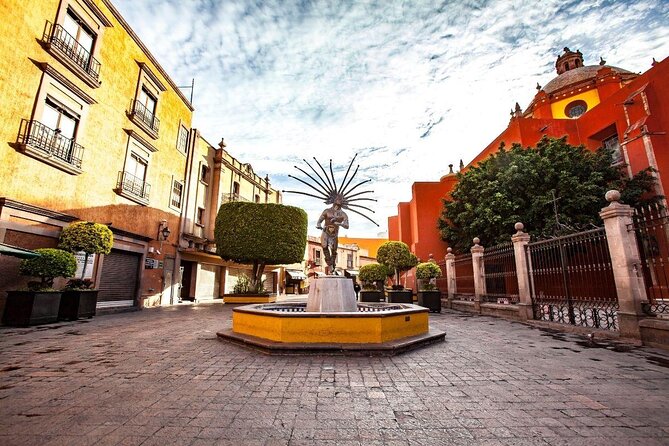
Querétaro can look easy to understand at first. You see a handsome plaza, a church facade, a long aqueduct, and a few grand colonial buildings. Then the dates begin to pile up. Indigenous settlement, Spanish expansion, silver routes, religious orders, independence, civil conflict, and the French occupation all meet in this city.
That is the main value of this experience. It does not treat each monument as an isolated photo stop. Instead, the route uses the buildings to explain how Querétaro grew and why it mattered to Mexico.
I would choose this walk early in your stay. One person who took it on a final day wished it had come first, and that advice makes sense. The tour gives you a working map of the old town and explains what you are seeing before you wander off on your own.
The tone is historical rather than theatrical. Armando Magaña has been praised for telling stories with context, connecting local events to Mexican and world history, and answering questions without rushing. That approach is useful in Querétaro, where a simple church visit can lead into a much larger story.
Starting Beneath the Aqueduct at 9:00 a.m.
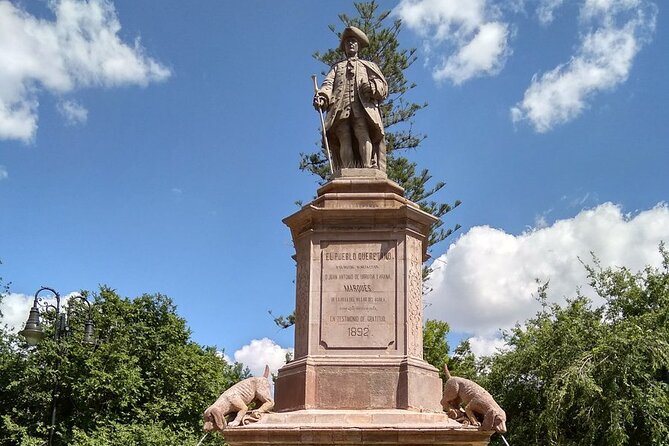
The meeting point is the Mirador de los Arcos, at Ejército Republicano 47 in the La Santa Cruz and La Pastora area. The tour begins at 9:00 a.m. beside one of Querétaro’s most recognizable sights, the aqueduct.
You spend about 15 minutes here. Admission is free, and the stop is less about inspecting every stone than learning how the city was founded and why the aqueduct was built. Armando also tells the love story tied to its construction, adding a human touch to what could otherwise be a standard engineering explanation.
This is a smart opening. The aqueduct gives you an immediate sense of Querétaro’s scale and civic ambition, while the founding story sets up the broader themes of the morning: water, settlement, religion, money, and power.
Do not expect a long technical lecture about arches or hydraulic design. If architecture is your main interest, ask direct questions here. The guide has covered architecture during the tour, but the strongest emphasis is on the historical events connected to each site.
More History Tours in San Miguel de Allende:
- Historical and Cultural Walking Tour of San Miguel de Allende
★ 5.0 · 641 reviews - Historical & Cultural Walking Tour of San Miguel de Allende
★ 4.8 · 225 reviews - Historic Downtown Walking Tour
★ 5.0 · 1,289 reviews
Panteón de los Queretanos Ilustres and the People Behind the City
The next stop is the Panteón de los Queretanos Ilustres, a 15-minute visit with no admission charge. Here the focus turns from buildings to people.
You hear about important figures buried at the site and the actions that shaped Querétaro and Mexico. This stop helps put names and decisions behind the grand phrases often used in Mexican history. Instead of hearing only about independence or national change in the abstract, you begin to see how individual lives affected the city.
The short visit also keeps the walk moving. It is not designed as a long cemetery study, but as a compact introduction to people whose choices influenced the country. If you enjoy political history, this is likely to be one of the more useful early stops.
Santa Cruz and the Hill Where Querétaro Was Founded Again
The Templo y ex-convento de la Santa Cruz de los Milagros receives about 40 minutes, making it one of the tour’s major stops. It sits at the top of the hill where Querétaro was founded for a second time.
This setting matters. You are not simply entering another attractive religious building. The hill carries the story of the city’s changing identity, and the Franciscan convent became involved in several important chapters of national history.
Armando brings in the legends connected with Santa Cruz and explains the role of the Franciscan order. He also uses the building to discuss how religious institutions shaped settlement and public life. Several parts of the morning involve churches and convents, but they are not interchangeable. Each one opens a different door into the past.
Allow yourself to listen closely here. The material can stretch across religion, conquest, local tradition, and national events. Families with children should consider the age and attention span of their group. A three to four hour history walk is not a great match for young children who are unused to extended walking and listening.
Plaza de Armas and the Colonial Center
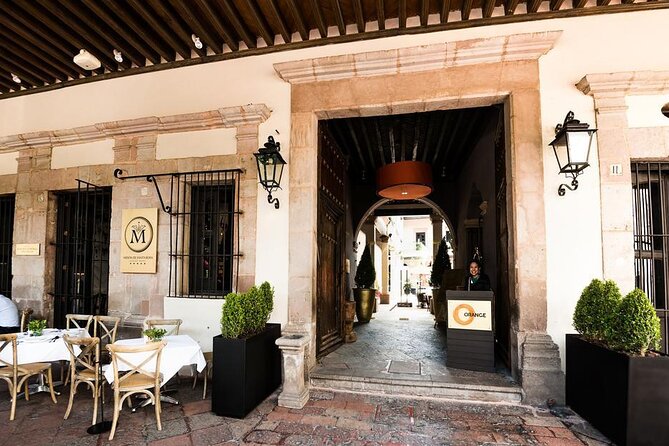
The route continues to Plaza de Armas for about 35 minutes. Along the way, you see examples of Neoclassical architecture before reaching the city’s picturesque main square.
This is the point where the walk begins to feel like a classic old-town introduction. The plaza gives you a central reference point, and the surrounding architecture provides a setting for more historical stories. Armando uses the square to explain events that affected Querétaro and Mexico, rather than offering only a list of dates and facades.
I like this part because it combines orientation with interpretation. You can see how the city center works as a civic and social space while learning why Querétaro became important during the country’s political upheavals.
The architecture discussion is present, but it is not the star of the tour. One honest criticism from a participant was that the experience was not detailed enough for someone mainly seeking an architecture tour. That is worth taking seriously. You will see fine colonial and Neoclassical examples, but the guide’s greatest strength is explaining what happened here and why it mattered.
A few more San Miguel de Allende runs worth comparing
- Immersive Cañada de La Virgen Pyramid Tour
★ 5.0 · 789 reviews - Original Downtown Food Tour with Taste of San Miguel
★ 5.0 · 598 reviews - Tacos and Tequila Walking Tour with Taste of Miguel
★ 5.0 · 583 reviews - Half-Day Horseback Riding Adventure
★ 5.0 · 417 reviews
The Guadalupe Sanctuary and Mexico’s Religious Story
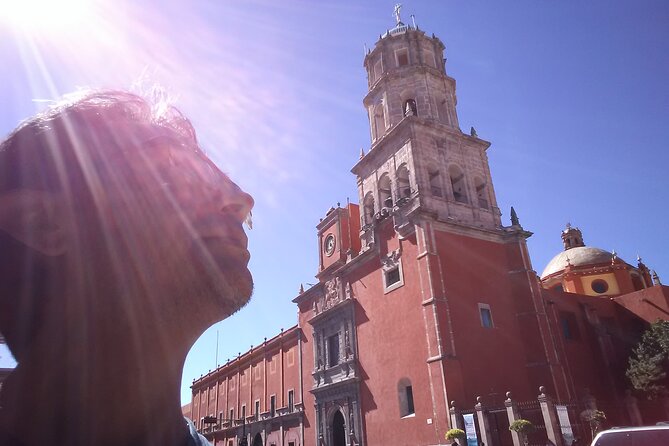
At the Santuario de la Congregación de Nuestra Señora de Guadalupe, the tour pauses for about 15 minutes. You appreciate the temple while hearing about the historical importance of the Virgin of Guadalupe in Mexico.
The guide also discusses the temple’s builder. That detail keeps the stop grounded in the building itself, while the wider explanation places the sanctuary within Mexico’s religious and cultural life.
This is a good example of the tour’s method. You receive some architecture, some biography, and a larger explanation of national identity. If you already know the basic story of Guadalupe, you can use the time to ask about the building or its place in Querétaro’s development.
San Francisco and the Old Inland Road
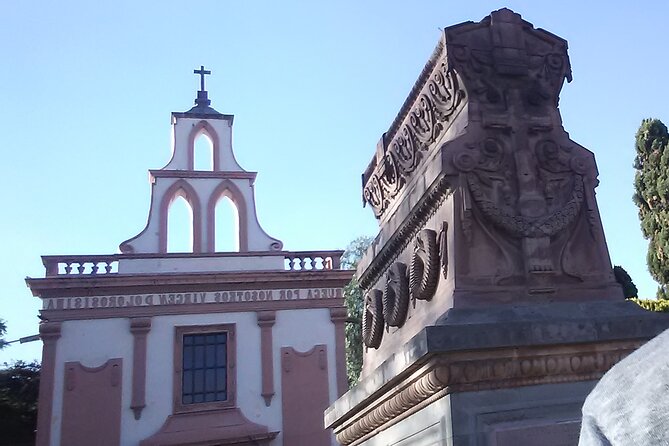
The Templo y Exconvento de San Francisco de Asís de Querétaro takes about 15 minutes. From within the old convent premises, you learn how the building changed as the country passed through different historical periods.
That idea of transformation is important. Historic buildings are not frozen in the moment when they were first built. Their uses, appearance, and meaning change as political and social conditions shift. This stop lets you see that process in a compact form.
You also visit the place where the ancient inner-land road began. That detail widens the story beyond the church itself. Routes are part of history too. Roads carry people, goods, religious ideas, silver, armies, and news, helping explain why Querétaro developed into an important inland city.
This is another stop where a question can improve the experience. Ask Armando to point out the building changes he is describing, especially if you want a stronger architectural reading.
Santa Clara, One Corner With Several Layers
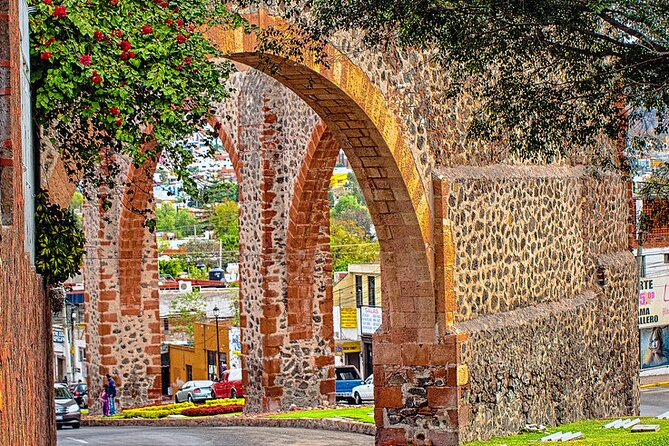
The Convento de Santa Clara takes about 20 minutes and gathers several kinds of history in one place. It was the city’s first and largest female convent, and the area also includes the old city hospital, a notable Neoclassical fountain, and what is described as the finest example of Baroque private-house architecture.
That concentration makes this one of the most visually rewarding parts of the route. In a single corner, you can compare religious architecture, public care, domestic design, and later Neoclassical taste.
The stop also adds balance to a route that could otherwise feel dominated by male religious and political figures. A female convent was not simply a quiet retreat. It was part of the city’s institutions and social structure, and its scale tells you something about the importance of religious life in colonial Querétaro.
You should expect a steady stream of explanation here rather than a long period for independent browsing. The guide is building a connected story, and the value comes from seeing how the buildings relate to one another.
What Armando Magaña Adds to the Experience
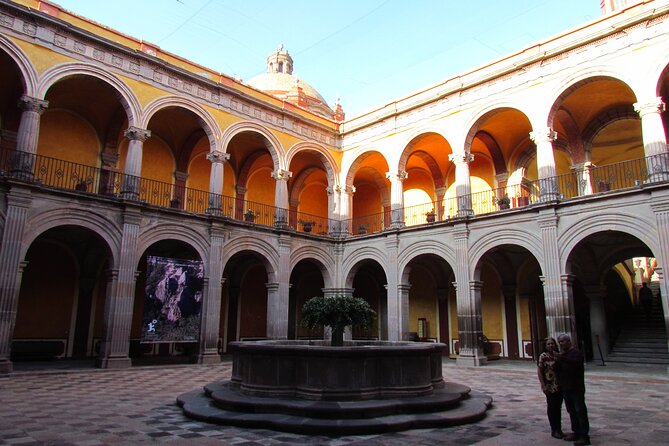
The guide is the central reason this tour receives such strong marks. Armando Magaña is repeatedly praised for his passion, clear English, patience, and ability to place Querétaro within Mexican and world history.
His approach appears especially useful for visitors who know the names of major events but not how they connect. The story may begin with an aqueduct and lead into Spanish interest in silver, then move toward the independence movement, the role of Querétaro in the 1810 revolution, and the expulsion of French forces in the 1860s.
That breadth can make the experience feel like more than a sightseeing circuit. You are learning how local events were shaped by forces beyond the city. Several people also appreciated Armando’s humor and the small hints he gives about what is coming next, which helps maintain interest during a long morning.
The tradeoff is that this is a guide-led history experience, not a silent stroll with occasional facts. If you want to photograph every facade at your own pace, you may feel the schedule is structured. If you want the city to make sense, that structure is a benefit.
Timing, Walking, and Group Size
The advertised duration is three to four hours, though the walk can last longer when questions are plentiful. One outing extended beyond four hours, and another reached five hours. Plan your morning with flexibility rather than booking a tight lunch or transport connection immediately afterward.
You need a moderate level of physical fitness. The route includes several hours of walking and listening, and Santa Cruz is at the top of a hill. Comfortable shoes and water are sensible choices, even though the tour information does not specify a particular dress code or equipment.
The group has a maximum of six people. That is a major advantage for a history-heavy walk. You can ask about a date, building, or confusing political turn without trying to catch the guide’s attention in a crowd.
The tour is offered in English and includes mobile ticketing. Service animals are allowed. Confirmation arrives when you book, and free cancellation is available if you cancel at least 24 hours before the local start time.
The $50 Price and Where the Value Lies
At $50 per person, this is not the cheapest way to walk around Querétaro, especially since admission is free at every listed stop. You are paying for the guide’s time, preparation, English presentation, and the small group rather than for entry tickets.
I think the price is fair if you care about history and want the city explained in context. Without a guide, you can see the aqueduct, churches, convents, and plaza, but you may miss the connections between them. The experience is most valuable if you would otherwise spend hours reading signs or trying to assemble the story yourself.
The value drops if your priority is only architectural photography or a quick orientation. In that case, the religious focus and long historical commentary may feel like more than you need.
Ending at the City Museum in the Old Town
The tour ends at the Museo de la Ciudad on Calle Vicente Guerrero Norte, in the former Capuchin convent. This is a practical finish because you remain in the historic center rather than being taken back to the starting point.
From there, you can continue on foot, take a taxi to your hotel, or find somewhere to rest and have dinner. The ending also makes the tour easy to combine with an afternoon of independent exploration.
Because the route begins at the Mirador de los Arcos and ends downtown, you should think of it as a one-way introduction rather than a loop. Arrange your morning around the starting point, and leave the afternoon open near the museum.
Who Should Book This Querétaro Walk
I would recommend it most strongly to:
- First-time visitors who want the old town to make sense quickly
- People interested in Mexican independence, religion, colonial society, and national politics
- English-speaking visitors who want a serious local guide
- Couples and solo visitors who enjoy asking questions
- Anyone who prefers a small group to a large scheduled tour
- History lovers who do not mind spending half a day on foot
I would be more cautious if you are traveling with small children who cannot listen for several hours, have limited walking ability, or want a tour focused mainly on design details. The experience includes architecture, but history drives the morning.
Should You Book It?
Book this tour if you want Querétaro explained rather than merely displayed. Armando Magaña’s strength is connecting the aqueduct, convents, churches, cemetery, and plazas to the forces that shaped Mexico. Start with it early in your visit, keep the rest of the morning flexible, and bring questions.
Skip it if you want a short photo walk or a specialist architecture lecture. For everyone else, the small group, English delivery, thoughtful route, and strong historical storytelling make $50 a sensible investment in understanding the city.
FAQ
Where does the tour begin?
It begins at 9:00 a.m. at the Mirador de los Arcos, Ejército Republicano 47, La Santa Cruz, La Pastora, 76025 Santiago de Querétaro, Qro., Mexico.
Where does the tour end?
It ends at the Museo de la Ciudad, Calle Vicente Guerrero Norte 27, Centro, 76000 Santiago de Querétaro, Mexico.
How long does the tour last?
The stated duration is approximately three to four hours. It can run longer when the guide spends extra time answering questions or discussing the sites.
How much does the tour cost?
The price is $50 per person.
Is the tour offered in English?
Yes. The experience is offered in English.
How many people can join the tour?
The maximum group size is six people.
Are admission tickets included?
All seven listed stops show free admission, so there are no stated entry fees for the itinerary.
How physically demanding is the experience?
A moderate level of physical fitness is recommended. You should be ready for several hours of walking and listening, including a visit to the hilltop Santa Cruz complex.
Can I cancel for a full refund?
Yes, if you cancel at least 24 hours before the experience start time. Cancellations or changes made less than 24 hours before the local start time are not refunded or accepted.
Newly listed around San Miguel de Allende
- Sierra Gorda Tour in 1 day with starting from Querétaro★ 5.0 · 33 reviews
- Recorrido Histórico a Pie: Descubre y Explora San Miguel (ES/EN)★ 4.5 · 86 reviews
- Hot Air Balloon Flight in San Miguel de Allende from Mon-Thurs★ 5.0 · 93 reviews
- Sunset Horseback Riding Tour Through San Miguel de Allende★ 5.0 · 45 reviews
- State-of-the-art Mexican cooking classes★ 5.0 · 52 reviews
- Tour to the Tolantongo Caves, starting from Querétaro★ 5.0 · 34 reviews
- Half Day Trail Riding in San Miguel de Allende★ 5.0 · 156 reviews
- One Painting in One Day, Doors of San Miguel★ 5.0 · 37 reviews
Historical Tours, compared.


Mexico City Historical Centre Food Tour with 7 Authentic Tastings
Read our review →
Historical and Cultural Walking Tour of San Miguel de Allende
Read our review →
Historical and Cultural Walking Tour of San José del Cabo
Read our review →
Walking Tour in Mexico City for Exploring their Cultural Heritage
Read our review →Browse the lists this tour appears in