
Reviewed · FOOD & DRINK
Valladolid Mayan Bees Tour with Lunch or breakfast and Honey Tasting
Bees without stings change the tour. At Xkopek Parque Apícola in Valladolid, you walk through a dry cenote and jungle path to learn how Mayan communities care for native melipona bees. I like the close look at wild bee nests and the thoughtful link between bees, plants, food, and Mayan culture. The included honey tasting makes the lesson tasty rather than merely academic.
I also like the easy start at Xkopek, the small group limit of 10, and the choice of a traditional breakfast or lunch. The main drawback is the setting: stairs, uneven paths, jungle vegetation, and mosquitoes call for closed walking shoes and decent mobility.
This is a short, useful stop for anyone who wants more from Valladolid than ruins and swimming holes. The tour lasts about 90 minutes, though some visits have run closer to an hour before the included meal.
In This Review
- Key points about the Xkopek Mayan Bees Tour
- Why Mayan bees matter in Valladolid
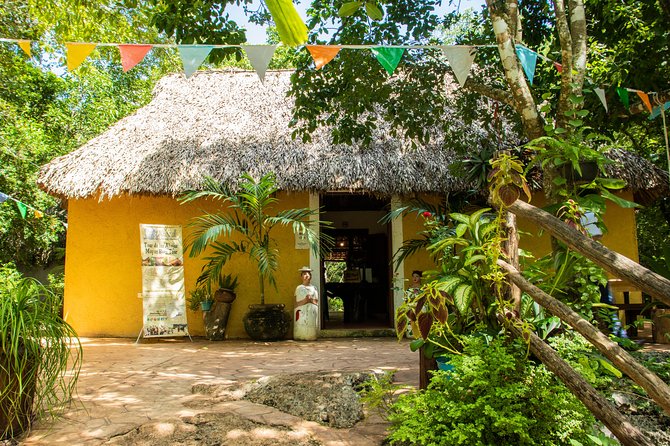
- Starting at Xkopek Parque Apícola
- Walking down to the dry cenote
- A jungle path lined with useful plants
- Opening a hive at the meliponario
- Honey, pollen, and propolis tasting
- Choosing breakfast or lunch
- Timing, comfort, and practical planning
- Is the tour worth the price?
- Who should book the Mayan Bees Tour?
- Should you book it?
- FAQ
- Where does the Mayan Bees Tour begin?
- Where does the tour end?
- How long does the experience last?
- Is the tour offered in English?
- Are the Mayan bees dangerous?
- What food is included?
- What should I wear?
- Can I cancel the booking?
Key points about the Xkopek Mayan Bees Tour
- Wild bees in a dry cenote: See native stingless bees living in their natural surroundings below ground.
- Mayan beekeeping in practice: Learn how melipona bees are raised, protected, and connected to local plants and culture.
- Honey tasting with several products: Sample honey, pollen, propolis, and other hive products, with some visits offering as many as nine samples.
- Breakfast or lunch included: Choose breakfast items such as quesadillas or eggs, or lunch featuring poc chuc or empanadas.
- Small, personal group size: The experience accepts a maximum of 10 people, with guides including Jorge, Dianela, Gerardo, and Julia.
- A simple Valladolid meeting point: Start and finish at Xkopek, only a short drive from central Valladolid, with free parking and nearby public transportation.
Why Mayan bees matter in Valladolid
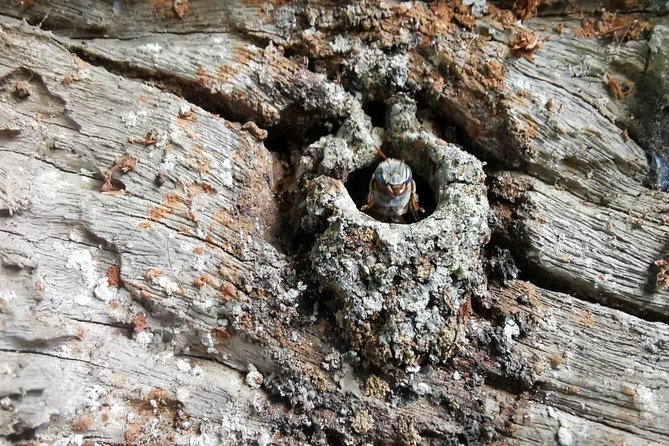
The star of this experience is the melipona bee, a small native bee without a functional stinger. These bees have long been important in Mayan culture, both for honey and for their place in the natural world.
That cultural connection gives the tour more weight than a basic farm visit. You are not simply looking at insects in boxes. You are learning how local people understand the relationship between bees, flowering plants, food, health, and the wider ecosystem.
I especially like that the visit takes place in a working beekeeping park rather than a staged indoor display. Xkopek combines a natural area, a dry cenote, a meliponario, a restaurant, and a small shop. The result feels practical and grounded. You see the habitat first, then the managed hives, then the products.
The park has earned a 4.9 rating from 193 reviews, with 98 percent of visitors recommending it. Those numbers fit the experience described here: the strongest points are the guides, the clear explanations, the tasting, and the meal.
More Food Tours in Merida
- Merida Walking Food Tour. Authentic & Local Cuisine
★ 5.0 · 451 reviews - Merida Street Food Walking Tour
★ 5.0 · 417 reviews - Chichen Itza, Private Cenote/Food Experience & the magic Izamal
★ 5.0 · 385 reviews
Starting at Xkopek Parque Apícola
The meeting point is Xkopek Parque Apícola at Calle 57, between Calles 36 and 38, in the San Juan area of Valladolid. The tour returns to this same location, so you do not need to arrange a second pickup point at the end.
That simple setup matters in Valladolid. You can arrive by local transport, and free parking is available on-site. If you are using this as a stop while moving between Valladolid, Chichén Itzá, and Tulum, the fixed meeting point keeps the day easy to organize.
The group limit is 10 people. That is a useful size for a nature-focused activity because the guide can show hive details without trying to manage a large crowd. The guide team includes Jorge, Dianela, Gerardo, and Julia. Other guides named in visit accounts include Eduardo, Joel, and Mario, so your exact guide may vary.
English is offered. One practical point deserves attention: if the guide is leading a bilingual group, make sure information is shared evenly between languages. One family found that long stretches in Spanish left English-only members waiting around. This is not a reason to reject the tour, but it is fair to ask the guide to alternate more often if needed.
Walking down to the dry cenote
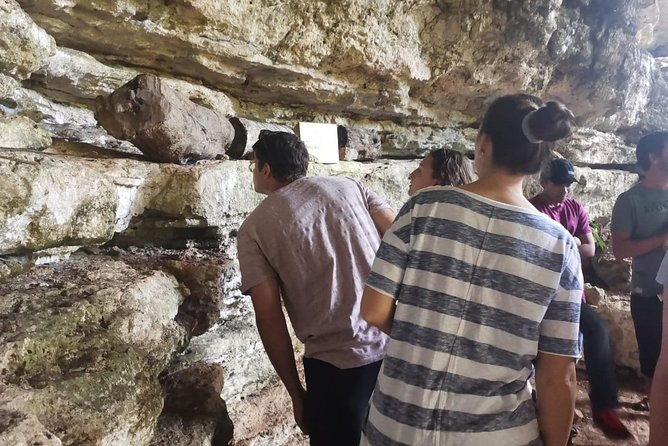
The visit begins on foot. You follow the guide toward a stairway and descend into a dry cenote, where the air, plants, and rock create a different setting from the open park above.
This is not a swimming stop. The cenote is dry, and the value comes from seeing local plants and wild bee colonies in the place where they naturally live. The guide explains the uses and importance of the plants found along the way, then points out native bees living in the cenote vault.
For me, this is the most unusual part of the experience. Many Yucatán excursions focus on swimming in a cenote or looking at ancient stonework. Here, the cenote becomes a living classroom. The bee habitat is part of the story, not just a backdrop for photographs.
The native bees are small and do not sting, which makes close observation less intimidating. Still, do not treat the area as completely insect-free. European honeybees, which are not native to the region, also occur in the Yucatán and can sting. The requirement that you not be allergic to bees should be taken seriously.
The stairway and natural paths require moderate physical fitness. You do not need to be an athlete, but this is not a fully level, step-free activity. Wear shoes with a firm sole and closed toes. Sandals are a poor choice here.
A jungle path lined with useful plants
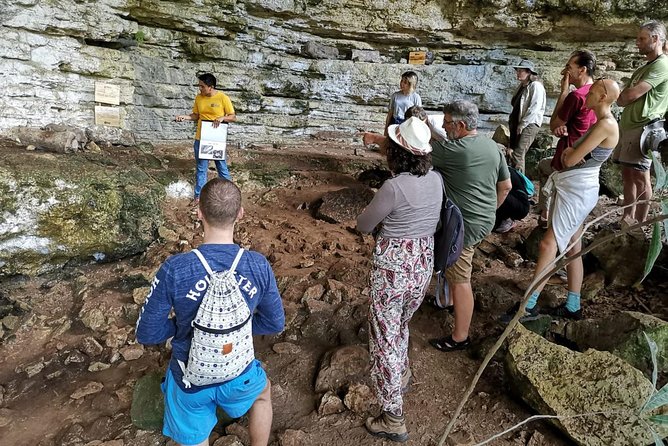
After the cenote, you walk along a jungle path toward the meliponario, the area where the stingless bees are kept. The walk adds context because the guide identifies plants used in honey production.
This section helps explain an important point: honey does not begin with a jar or a hive. It begins with flowering plants, seasonal cycles, and healthy habitat. The park protects space where bees can feed and pollinate, and the guide connects those plants to local beekeeping.
The setting is green and natural, but it also brings mosquitoes. I would use organic mosquito repellent before you arrive and wear long trousers and sleeves if you are comfortable in them. A visit that lasts only 90 minutes can feel much less pleasant if you spend it swatting insects.
The first tour of the morning can be a smart choice. One visit began at 8:30 a.m., when the temperature was still comfortable. Early timing also gives you breakfast afterward. If you prefer lunch, choose a later departure, but confirm the meal arrangement at booking because the package options differ.
A few more Merida runs worth comparing
- From Cancún: Rio Lagartos & Las Coloradas Day Trip & Lunch
★ 4.6 · 451 reviews - Chichen Itza, Cenote Swim & Izamal Magic Town with Buffet Lunch
★ 4.5 · 317 reviews - Taste of the Yucatan: Merida Cooking Class and Market Visit
★ 5.0 · 291 reviews - Mérida: 3-Hour Walking Food Tour
★ 4.9 · 287 reviews
Opening a hive at the meliponario
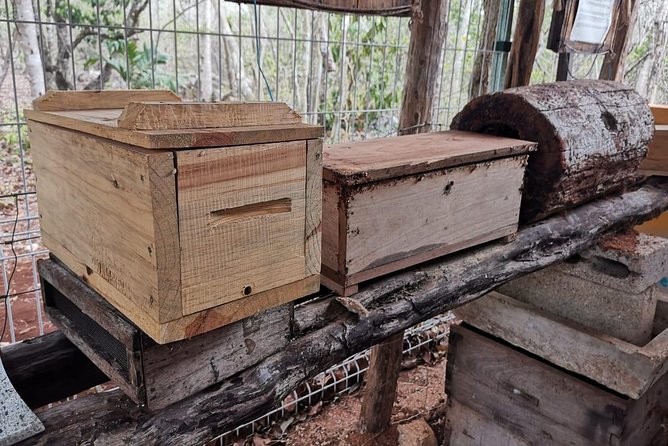
At the meliponario, the guide explains how honey is produced and describes other products from the hive. You may also see a hive opened so you can examine the internal structure.
This is a strong part of the tour for anyone interested in insects, ecology, or traditional food production. You get to see the architecture of the colony instead of hearing only a general explanation. The hive becomes a working example of organization, care, and adaptation.
The guides are often praised for clear English and an engaging manner. Some use a tablet with images and instructional material, which helps when the bees, nests, or underground habitat are difficult to see clearly.
The experience also works well for families. A six-year-old enjoyed it enough to keep talking about bees for the rest of the trip. Children who like animals will have plenty to watch, but parents should still prepare them for stairs, rough paths, and a short period outdoors in humid conditions.
Beekeepers and biology-minded visitors may find the most detail here. One California beekeeper found the visit especially satisfying because it offered a close look at local bee species and nest structures rather than a generic honey farm presentation.
Honey, pollen, and propolis tasting
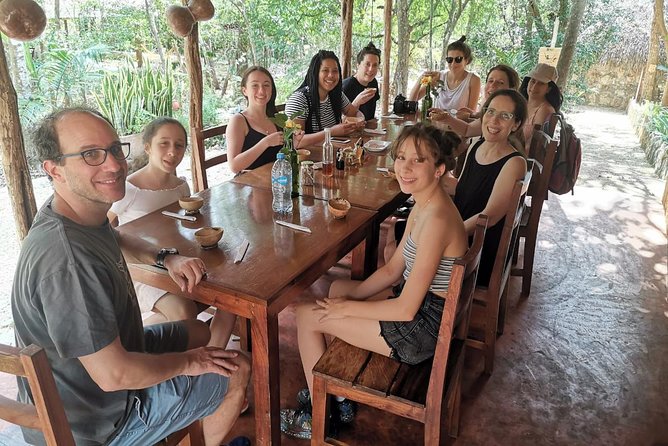
The tasting follows the explanations, and it gives you a chance to compare several products from the hive. Depending on the presentation, you may sample different honeys along with pollen, propolis, and other preparations.
This is more useful than simply tasting one sweet spoonful. You can notice differences between products and learn how the park connects them to health and traditional use. The exact number of samples can vary, but one visit included nine bee products.
The tasting is also a good bridge between Mayan tradition and modern conservation. The bees are not presented only as producers of something to sell. Their role in pollination and the local ecosystem remains part of the discussion.
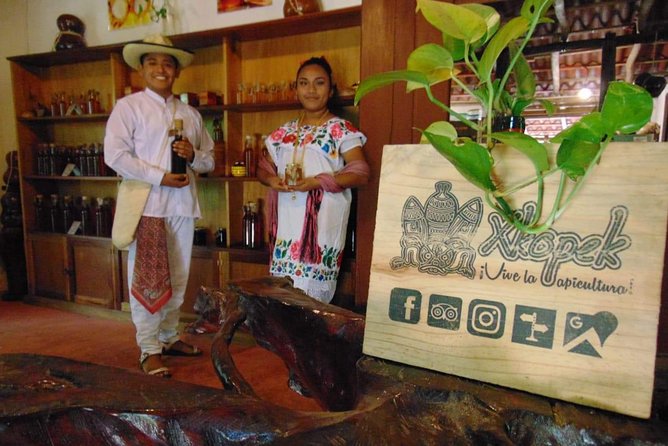
You can purchase products at the small on-site shop. Items mentioned by visitors include honey and moisturizing cream. The shop also sells souvenirs, and the experience ends with a souvenir photograph. I would view the shop as optional rather than an obligation. The educational visit works perfectly well without buying anything, but purchases do support the local operation.
Choosing breakfast or lunch
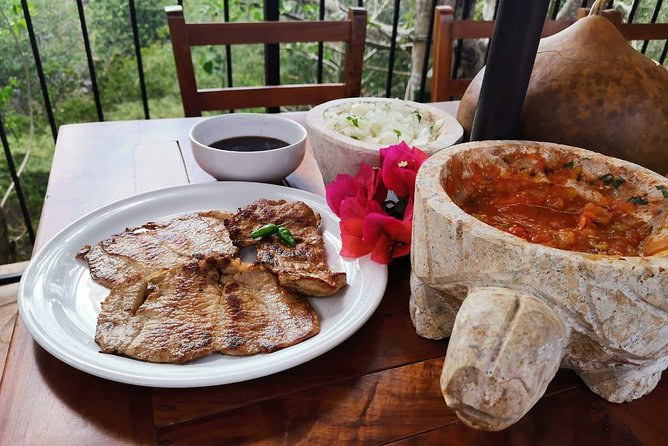
Food is included, which strengthens the value of the experience. Breakfast options include quesadillas, scrambled eggs, or an omelet with up to two ingredients. Lunch choices include traditional poc chuc with pork or chicken, or empanadas. A fruit water of the day is included as well.
The meal is served at the restaurant on the same property. Several visits describe the food as delicious, with particular praise for the poc chuc, fresh tortillas, salsa, and breakfast. One account found the food quality good for the price, though not exceptional. That is a fair way to approach it: this is a useful, satisfying meal attached to the tour, not a destination restaurant.
The restaurant and washrooms have been described as clean, which helps if you are traveling with children or using Xkopek as a midday stop. If your schedule is tight, allow enough time to eat. One person did not have time to use the included lunch, so the meal has value only if you can fit it into your day.
There has also been some confusion about meal inclusion in an individual booking. Because the experience specifically offers breakfast or lunch packages, check that your selected option includes the meal you want. Do not assume that every departure includes the same food service.
Timing, comfort, and practical planning
The listed duration is about one hour and 30 minutes. In practice, the walking, explanations, cenote visit, hive presentation, tasting, and meal can vary in length. Some visits finished the tour portion in about an hour, followed by breakfast. Plan around two hours if you want to eat without rushing.
The activity is offered in English and uses a mobile ticket. Confirmation is received at booking. It requires good weather, and if poor weather forces cancellation, you can choose another date or receive a full refund.
For a comfortable visit, bring or wear:
- Closed, comfortable walking shoes
- Organic mosquito repellent
- Long trousers or sleeves if mosquitoes bother you
- A little extra time for the meal and shop
The park is near public transportation, and the tour begins and ends at the same address. That makes it practical for independent visitors staying in Valladolid. You do not need a full-day excursion to fit it into your plans.
Cancellation is free up to 24 hours before the start time. Cancellations or changes made within 24 hours are not refunded or accepted. The local time in Valladolid controls the cutoff.
Is the tour worth the price?
No price is provided here, so I cannot judge the exact cost against competing activities. I can judge the package itself. You receive a guided natural and cultural visit, access to the cenote and beekeeping area, a honey tasting, and a breakfast or lunch.
That combination gives the experience good value, especially if you were already planning to pay for a meal. The group size of 10 or fewer adds value too, since the guide has a better chance of answering questions and showing the hive to everyone.
The meal is not the reason to book on its own. It is a pleasant extra that makes the visit easier to fit into a morning or afternoon. The real value is the access to the dry cenote, the native bees, and the explanation of Mayan beekeeping.
I would compare it with a standard cenote outing this way: you will not swim, and you will not spend hours in the water. Instead, you get a focused lesson about local ecology and culture, with food included. For many people, that makes it a better choice for a spare morning in Valladolid.
Who should book the Mayan Bees Tour?
I would recommend it to families, solo visitors, couples, nature lovers, beekeepers, and anyone looking for a short activity away from the usual archaeological stops.
It is especially good for you if:
- You want to understand Mayan culture through a living tradition
- You enjoy animals and plants more than staged entertainment
- You like tasting local foods and natural products
- You have about 90 minutes to two hours
- You can manage stairs and uneven outdoor paths
- You want an activity near Valladolid with food included
I would think twice if you have a serious bee allergy, dislike mosquitoes, or need a fully accessible route. The park setting is natural, not polished into a flat indoor attraction.
The tour also suits a travel day. You can visit before heading toward Chichén Itzá or Tulum, provided the timing works with your transport. It is close enough to Valladolid to avoid turning a short activity into a complicated excursion.
Should you book it?
Yes, if you want a small, personal, and unusual Valladolid experience. The dry cenote, stingless Mayan bees, hive opening, tasting, and traditional meal give you several worthwhile elements in a compact visit.
Book it with realistic expectations. This is not a luxury food tour or a long wildlife expedition. It is a modest, educational park visit with natural paths, mosquitoes, and a meal that is good rather than grand.
I would choose an early departure for cooler conditions and breakfast, or a later one if poc chuc and lunch suit your schedule. Wear proper shoes, use repellent, and confirm your meal option. If those basics work for you, Xkopek offers one of the most distinctive ways to spend a couple of hours in Valladolid.
FAQ
Where does the Mayan Bees Tour begin?
The tour begins at Xkopek Parque Apícola, located at Calle 57 x 36 y 38, Supermanzana Tablaje Catastral 2581, San Juan, Valladolid, Yucatán 97780, Mexico.
Where does the tour end?
The activity ends back at the Xkopek Parque Apícola meeting point.
How long does the experience last?
The listed duration is approximately one hour and 30 minutes. The tour portion may sometimes take about an hour, with additional time needed for the included breakfast or lunch.
Is the tour offered in English?
Yes. The experience is offered in English. Guides may also lead bilingual groups, so you can ask for information to be shared evenly between languages.
Are the Mayan bees dangerous?
The native melipona bees seen during the experience do not have stingers. However, European honeybees also occur in the Yucatán and can sting, so you should not book if you are allergic to bees.
What food is included?
Breakfast options include quesadillas, scrambled eggs, or an omelet with up to two ingredients. Lunch options include traditional poc chuc with pork or chicken, or empanadas. Fruit water of the day is included.
What should I wear?
Wear comfortable closed shoes suitable for stairs and walking on natural paths. Organic mosquito repellent is recommended, and long trousers or sleeves may also help with mosquitoes.
Can I cancel the booking?
You can cancel at least 24 hours before the start time for a full refund. Cancellations or changes made less than 24 hours before the experience are not refunded or accepted. Poor weather may result in a different date or a full refund.
Newly listed around Merida
- From Mérida: Ria Celestun Biosphere Reserve Tour★ 4.3 · 56 reviews
- Mérida: Uxmal, Cenote and Chocolate Museum Choco-Story★ 4.8 · 57 reviews
- All-inclusive Cenotes tour★ 5.0 · 93 reviews
- Chichen Itza skip the line – Cenote – Izamal from Valladolid★ 5.0 · 97 reviews
- Full Day Tour Chichen Itza plus Cenotes From Valladolid★ 4.0 · 107 reviews
- Shared Mezcal Tasting Experience in Valladolid Mexico★ 5.0 · 97 reviews
- Valladolid Tourist Shared Transport to Chichen Itza & Two Cenotes★ 5.0 · 42 reviews
- Cenote Maya Native Park Admission Ticket★ 4.5 · 33 reviews
Food & Drink, compared.

Cabo Beach Camel Ride, Mexican Buffet and Tequila Tasting
Read our review →
Early morning Chichen Itza Tour: Cenote and Tequila Tasting
Read our review →
4×4 ATV Adventure with Tequila Tasting and Mexican Buffet Lunch
Read our review →
Cancun ATV Jungle Adventure, Ziplines, Cenote and Tequila Tasting
Read our review →
Winner 2025 Downtown Vallarta Food Tour with Vallarta Food Tours
Read our review →
ATV Tour, Camel Ride, Tequila Tasting and Mexican Buffet Lunch
Read our review →
Cabo Migrino Beach and Desert ATV Tour plus Tequila Tasting
Read our review →
Food & Mixology Tour:Tequila,Tacos, Mezcal and Agave Cocktails
Read our review →Browse the lists this tour appears in