
Reviewed · WALKING TOURS
Epic Condesa and Roma Norte Walking Tour
Two neighborhoods, one long, rewarding walk. This 4.5-hour English tour links Condesa and Roma Norte through parks, mansions, churches, galleries, and side streets that are easy to miss on your own. I like the small maximum of 12 people, and I especially like that guide Ricardo adds local food tips, personal stories, and occasional flexibility when the group wants to pause or make a short detour.
The main catch is simple: this is a serious walk. You cover a lot of ground, and several people found it closer to five hours once breaks and extra stops were included. At $59 per person, the value is strongest if you want context, orientation, and company rather than a quick photo walk.
In This Review
- What makes this Mexico City walk worth your time
- Starting at Churrería El Moro in Condesa
- Parque México and the oval streets of Condesa
- Condesa’s hotels, fountains, and art collections
- Roma Norte’s church, plazas, and famous buildings
- La Romita and the quieter side of Roma
- Mansions, plazas, and Roma’s cultural core
- Ending at Huerto Roma Verde
- How much walking should you expect?
- What $59 buys you
- Food advice and local conversation
- Who should book this walk?
- Should you book the Condesa and Roma Norte walk?
- FAQ
- How long does the Condesa and Roma Norte walking tour last?
- What time and where does the tour start?
- Where does the tour finish?
- Is the tour offered in English?
- How large is the group?
- How physically demanding is the tour?
- Can I cancel for a full refund?
What makes this Mexico City walk worth your time
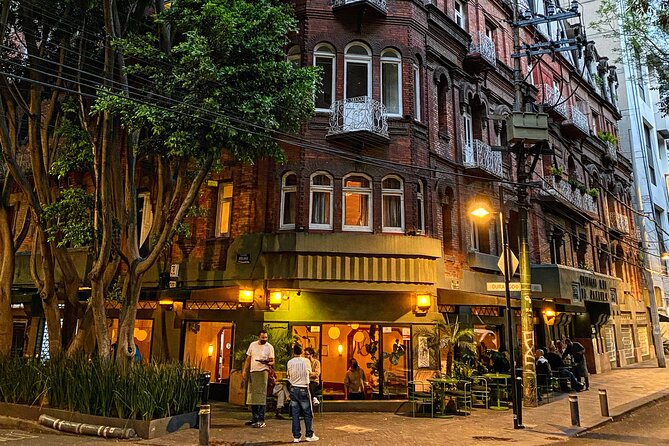
- Parque México and Ámsterdam reveal Condesa’s design story, from Art Deco details to the oval street that follows an old horse-racing track.
- Roma Norte brings a different mood, with churches, plazas, galleries, early 20th-century buildings, and the old village quarter of La Romita.
- Ricardo is frequently praised for his English and local insight, especially his explanations of architecture, politics, art, and daily life.
- Food advice is part of the experience, with a bakery stop and possible recommendations for street tacos and dinner.
- The route ends at Huerto Roma Verde, an urban garden and community space rather than a major monument.
- The long route suits fit walkers, but it may feel tiring if you prefer short sightseeing bursts or need frequent seated breaks.
Starting at Churrería El Moro in Condesa
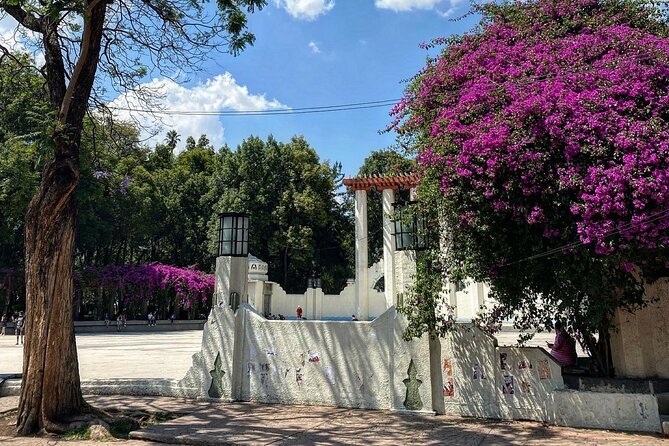
The meeting point is Churrería El Moro on Avenida Michoacán, with a noon start. That is a useful location for beginning in Condesa, one of Mexico City’s easiest areas to explore on foot, and the tour gets moving quickly rather than spending its first half on transport.
The guide leads, which matters here. Condesa and Roma are pleasant neighborhoods, but their streets, parks, galleries, hotels, and restored houses can blur together if you are simply wandering without a plan. A local guide gives the buildings a reason to matter.
Ricardo is the guide named most often in the feedback, and his strengths are clear. He explains architecture without turning the afternoon into a lecture, connects older events with present-day Mexico City, and speaks excellent English. He has also been praised for being friendly and flexible, especially when a private or very small group wants to add a gallery, food stop, or nearby point of interest.
The scheduled group limit is 12 people. That is small enough for questions and conversation, though the actual group may be much smaller. On some departures, the experience has been a private-feeling walk with only one or two participants. You should not count on having a private tour, but the small cap gives the guide room to pay attention.
More Walking Tours in Mexico City
- Historic Downtown Walking Tour
★ 5.0 · 1,289 reviews - Mexico City: Historic Downtown Walking Tour
★ 4.8 · 1,039 reviews - Frida Kahlo VIP [Museum Tickets Included] Walk, Markets & Churros
★ 5.0 · 982 reviews
Parque México and the oval streets of Condesa
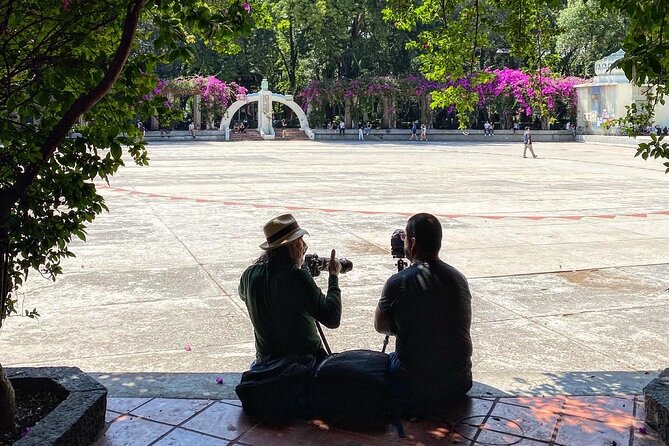
The opening section focuses on the heart of Condesa. Parque México offers leafy paths, open space, Art Deco touches, sculptures, and the neighborhood’s social feel. The planned visit is 15 minutes, enough for an introduction and a look around, though not enough for a full park stroll.
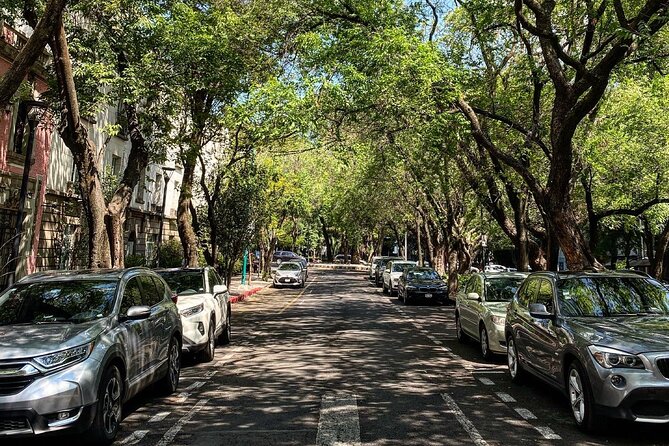
From there, you walk along Ámsterdam, the elliptical street that follows the shape of a former horse-racing track. This is one of the best places to understand why Condesa feels so different from many other parts of Mexico City. The road curves instead of running in a strict grid, and trees, green strips, and early 20th-century buildings soften the route.
I like this early pairing because it gives you a visual key for the rest of the afternoon. You are not just seeing pretty streets. You are learning how planning, architecture, and public space shaped the neighborhood.
Parque España follows, with only about five minutes scheduled. It is a short pause among trees, paths, sculptures, and monuments. The brief timing suggests that the guide uses it as a connecting point rather than a major stop.
Condesa’s hotels, fountains, and art collections
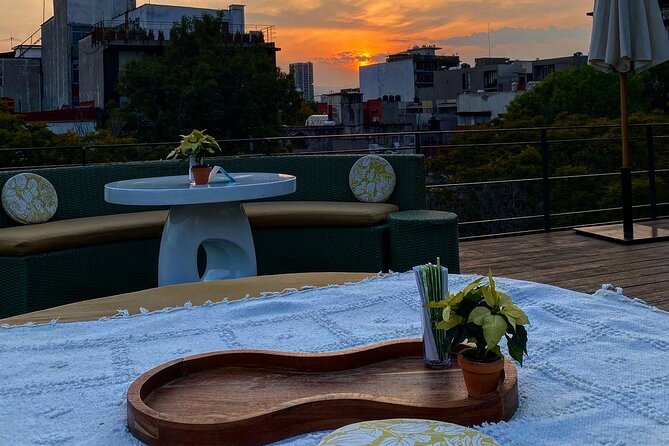
The walk continues to Condesa DF, a boutique hotel known for its mix of modern and colonial design. The planned stop lasts about 10 minutes and includes a look at the interior design and rooftop views over Condesa.
Access and time at a hotel can naturally depend on the day, so think of this as an architectural stop, not a guaranteed rooftop visit of the sort that would require a separate booking. Still, it adds a useful contrast to the older mansions and public parks.
At the Fuente de Cibeles, Ricardo explains the Mexico-Spain connection represented by the fountain. This is a five-minute stop, but it gives the route a broader cultural frame. Condesa is not only about cafés and attractive buildings. Its public spaces also reflect Mexico City’s links with Europe and its own changing identity.
Casa Museo Guillermo Tovar de Teresa is one of the more distinctive stops. The house preserves art, antiques, and the personal world of Guillermo Tovar de Teresa, a prominent Mexican art historian. The scheduled 15 minutes gives you time to appreciate the setting and hear why the collection matters.
Casa Universitaria del Libro, operated by UNAM, adds another cultural layer. The building is a historic mansion, and temporary exhibitions are held inside. Five minutes is short, so you should expect an introduction and a look at the architecture or current display rather than a long gallery visit.
These stops are valuable because they break up the usual Mexico City formula of major museums and famous ruins. You are seeing how culture appears in houses, former residences, university spaces, and neighborhood buildings.
Roma Norte’s church, plazas, and famous buildings
The route then crosses toward Roma Norte and the Parroquia de la Sagrada Familia. The church is noted for its Neo-Gothic design and its place among Roma Norte’s older religious buildings. The stop lasts about five minutes, so listen closely if architectural details interest you.
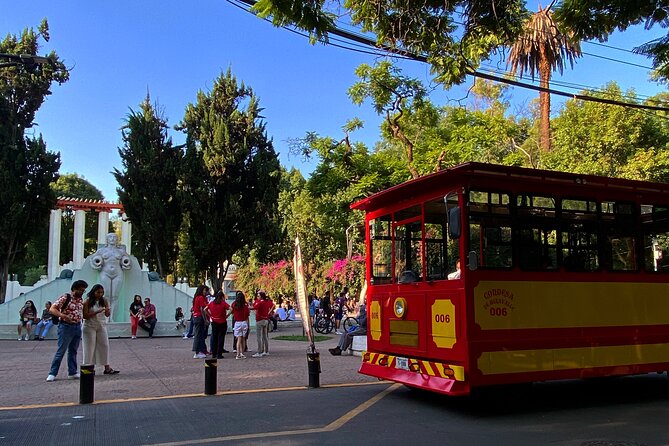
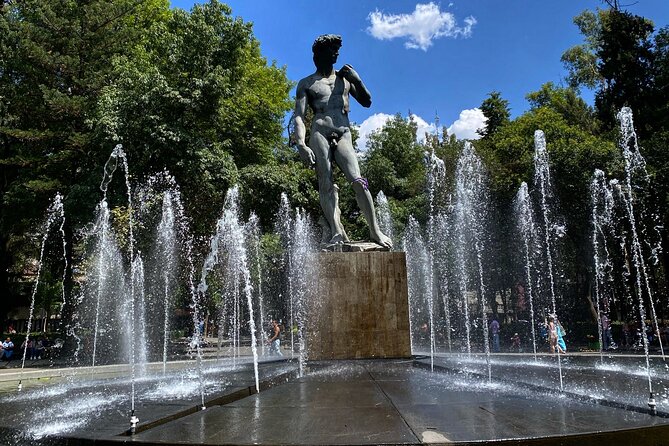
Plaza Río de Janeiro provides a more relaxed public square. You can see the well-known replica of Michelangelo’s David and look at the buildings around the plaza. The nearby Edificio Río de Janeiro receives its own short stop for its eclectic design and local importance.
Together, these two stops show how Roma Norte’s appeal comes from the relationship between open space and buildings. A plaza is not just an empty patch of grass. Its surrounding façades, statues, cafés, and street corners create the scene.
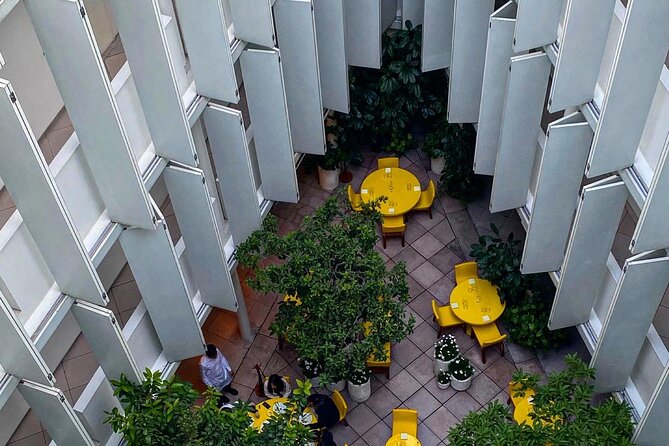
Casa Basalta offers a different kind of cultural stop. This early 20th-century mansion now combines the MAIA Contemporary art gallery, a meditation center, and restaurants. The planned 10 minutes gives you a taste of the place rather than a complete visit to each part.
That mix is typical of the route. You move from formal architecture to active cultural spaces, then back outdoors. If you prefer a tour built around major interior attractions, you may find some stops too brief. If you enjoy seeing how old buildings are being used now, the variety is a real strength.
Same base, a different sort of day:
- Teotihuacan, Guadalupe Shrine & Tlatelolco Day Tour with Lunch
★ 5.0 · 11,603 reviews - Xochimilco, Coyoacan and Frida Kahlo with Optional Lunch
★ 4.5 · 7,320 reviews - Balloon flight + Breakfast in cave + Pyramids + Pick up CDMX.
★ 5.0 · 6,335 reviews - Teotihuacan pyramids morning or afternoon without tourist traps
★ 5.0 · 6,186 reviews
La Romita and the quieter side of Roma
La Romita is one of the route’s most appealing changes of pace. The guide takes you through narrow streets and Plaza de la Romita, explaining how the area began as the pre-Hispanic village of Aztacalco before becoming part of the modern city.
This section matters because Roma Norte is often presented only through restaurants, bars, and polished architecture. La Romita gives you a sense of an older settlement pattern and a more intimate neighborhood scale. The 10-minute stop will not cover every part of its story, but it makes the area easier to read when you return alone.
Pushkin Garden follows with another brief park visit. The five-minute pause offers a little breathing room and a link to the Russian poet Alexander Pushkin, whose name the garden carries.
Then comes Avenida Álvaro Obregón, one of Roma’s best-known streets. The walk takes in Art Deco buildings, shops, and nightlife addresses. The 10-minute stop helps place the neighborhood’s social life in context, but the guide’s commentary is likely more important than any single building here.
This is also where you may appreciate the walking format most. Cars can take you from one major avenue to another, but they cannot give you the same view of storefronts, entrances, façades, small squares, and side streets along the way.
Mansions, plazas, and Roma’s cultural core
Casa Prunes is an Art Nouveau mansion that now contains a restaurant and less obvious corners worth pointing out. The planned eight minutes is enough to admire the exterior and hear how the building has been reused.
Plaza Luis Cabrera follows. Its fountain and green areas make it a good place for a short pause, especially on a long afternoon. The scheduled five minutes will not turn this into a long rest, but the route includes several such intervals.
El Parián dates to 1926 and now contains shops and restaurants. It is a short stop, yet it gives you a chance to see how an older passage continues to serve everyday commercial life.
Casa Lamm Centro de Cultura is another key cultural address. The early 20th-century building now functions as a cultural center, making it a useful example of Roma’s old houses finding new purposes.
Calle Orizaba receives a longer 15-minute look. Its early 20th-century architecture and active street life make it one of the better stretches for simply walking and observing. You will likely get more from this part if you slow down for details: entrances, balconies, tilework, curves in the street, and the way old façades sit beside newer businesses.
The route is strongest when Ricardo connects these places. His explanations cover art, history, architecture, Mexican culture, and current politics, so you are not left with a string of disconnected addresses.
Ending at Huerto Roma Verde

The tour finishes at Huerto Roma Verde on Jalapa Street in Roma Sur. This urban garden and community space focuses on sustainable practices and local activity.
It is a fitting end. After several hours of looking at restored mansions, churches, hotels, parks, and galleries, you finish with a working community space. The contrast shows that Roma is not only an architectural district. It is also a place where residents are creating new uses for urban land.
The listed stop takes about eight minutes. There is no promise of a meal or a formal final activity, so plan to arrange your next stop after the tour. The end point is near public transportation, which makes it practical for continuing to dinner or returning to your accommodation.
How much walking should you expect?
The scheduled stops add up to far less than the full 4.5-hour duration. The rest is walking between them, listening to explanations, taking short breaks, and possibly making a small detour.
That distinction matters. This is not 20 separate attractions with long visits inside each one. It is a connected neighborhood walk, with many short stops that help you understand the streets as a whole.
Several people described the experience as lasting about five hours once breaks and additions were included. I would reserve most of your afternoon and wear comfortable shoes. A moderate level of physical fitness is requested, and that is fair guidance.
The route includes parks and pauses, but do not book it if you want a low-effort outing. You should be comfortable walking for hours, standing during explanations, and keeping up with a group.
What $59 buys you
At $59 per person, the tour is not the cheapest way to see Condesa and Roma Norte. The parks and streets are free, and you can visit many of them without a guide.
The value comes from the structure and interpretation. You get a planned route through 20 stops, an English-speaking guide, a group capped at 12, and help noticing buildings and cultural spaces you might pass without understanding. Ricardo’s food recommendations also add practical value, especially if you are new to Mexico City and want suggestions beyond the most obvious addresses.
A private-feeling experience is possible if your departure has only one or two people, but it is not guaranteed. If you are traveling alone, the small-group format can make the afternoon more social without the scale of a large bus tour.
The tour is also useful early in a Mexico City visit. By the end, you will have a clearer sense of where Condesa and Roma Norte fit together and where you may want to return for food, galleries, parks, or evening walks.
Food advice and local conversation
Food is not presented as the main product, but it appears to be an important part of the experience. There is a bakery stop mentioned in the feedback, and some departures included a detour for street tacos when the group wanted it.
Ricardo also offers dinner suggestions, and those recommendations were used successfully by people on the tour. That does not mean a meal is included, so you should budget separately for snacks and food.
The broader appeal is conversation. Ricardo has been praised for discussing Mexican history, art, architecture, culture, and contemporary politics in an approachable way. If you want a guide who only recites dates, this may feel conversational rather than formal. If you want a local point of view, that is a plus.
Who should book this walk?
I would choose this tour if you want to understand two of Mexico City’s most attractive central neighborhoods rather than simply photograph them. It suits solo visitors, couples, and friends who enjoy architecture, public spaces, art, and food suggestions.
It is especially useful for first-time visitors who want help getting their bearings. The route gives you plenty of ideas for the rest of your stay, and the English presentation removes the worry of missing important explanations.
I would be more cautious if you have limited stamina, dislike long walking tours, or prefer spending 30 to 60 minutes inside each museum or historic building. The short stop lengths mean you see many places, but you do not fully explore every one.
Booking at least a few weeks ahead is sensible. This experience is often reserved about 26 days in advance, and its small capacity can limit last-minute availability. Confirmation arrives when you book, and free cancellation is available until 24 hours before the start time. Changes or cancellations inside that window are not accepted for a refund.
Should you book the Condesa and Roma Norte walk?
Book it if you want a well-paced introduction to local streets, architecture, culture, and food with a guide who can add personal context. Ricardo’s English, warmth, and ability to adjust a small group are the strongest reasons to choose it.
Skip it if you want a short outing or a museum-heavy schedule. For fit walkers who can spare nearly half a day, the $59 fee is reasonable because you are buying orientation and interpretation, not admission tickets. You leave at Huerto Roma Verde with a better map in your head and a useful list of places to revisit on your own.
FAQ
How long does the Condesa and Roma Norte walking tour last?
The tour lasts approximately 4 hours and 30 minutes. Some departures may run closer to five hours when breaks or additional stops are included.
What time and where does the tour start?
It starts at 12:00 pm at Churrería El Moro, Avenida Michoacán 27, Hipódromo, Cuauhtémoc, Mexico City.
Where does the tour finish?
The tour ends at Huerto Roma Verde, Jalapa 234, Centro Urbano Presidente Juárez, Roma Sur, Cuauhtémoc, Mexico City.
Is the tour offered in English?
Yes. The experience is offered in English.
How large is the group?
The maximum group size is 12 people.
How physically demanding is the tour?
You should have a moderate level of physical fitness. The route involves several hours of walking, with breaks included.
Can I cancel for a full refund?
Yes. You can cancel at least 24 hours before the start time for a full refund. Cancellations or changes made less than 24 hours before the experience are not accepted for a refund.
Newly listed around Mexico City
- Xochimilco : Island of the dolls, tequila and mezcal CDMX★ 5.0 · 102 reviews
- Xochimilco: Sanctuary of the Axolotl★ 4.9 · 58 reviews
- Xochimilco: Market, Food and Nature ¡All included! Tour★ 4.9 · 107 reviews
- Xochimilco & Colonial Coyoacan Trip★ 4.0 · 312 reviews
- Xochimilco: amanecer en kayak Ciudad de México★ 5.0 · 35 reviews
- Bike Tour in Mexico City★ 5.0 · 45 reviews
- Small Groups: Xochimilco and Coyoacan★ 4.0 · 37 reviews
- Museum of Anthropology: a look at Mexico’s past★ 5.0 · 52 reviews
Walking Tours, compared.

Frida Kahlo VIP [Museum Tickets Included] Walk, Markets & Churros
Read our review →

Puerto Vallarta’s Best Canopy Zipline + Jorullo Bridge walk!
Read our review →
Historical and Cultural Walking Tour of San Miguel de Allende
Read our review →
Tacos and Tequila Walking Tour with Taste of Miguel
Read our review →Browse the lists this tour appears in