
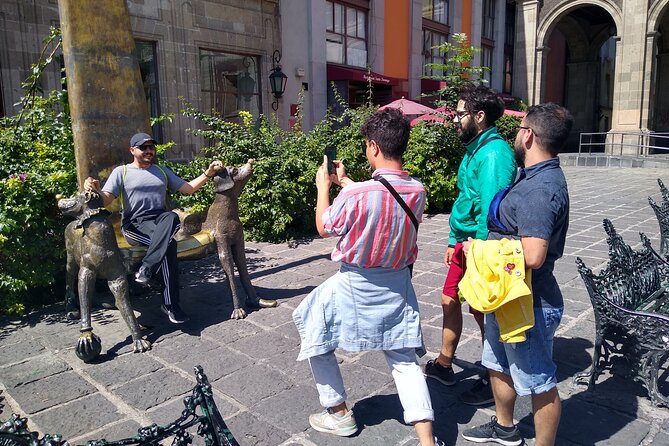
Reviewed · HISTORICAL TOURS
Gay Side of History through Plazas & Temples
History looks different from the edges.
This 3.5-hour walking tour connects Mexico City’s major historic sights with stories of LGBTQ+ life, power, faith, and persecution. I like the small maximum of 10 people, which gives the guide room to adjust the conversation and answer real questions. I also like that the experience goes beyond a standard point-and-photo walk, using the Templo Mayor, cathedral, National Palace, and old Inquisition buildings to explain Mexico from a gay perspective.
The main drawback is the operator record: one cancellation was reported just an hour before departure, with no explanation or reply to messages. That appears to be an exception rather than the usual experience, but it is worth keeping in mind when planning a tightly scheduled day.
In This Review
- Key things to know before booking
- Why this walk gives Mexico City a different angle
- Starting above the ruins at Librería Porrúa
- Templo Mayor and the cathedral: two worlds side by side
- The Zócalo and the center of national power
- Centro Cultural de España and the colonial city behind the cathedral
- Santo Domingo Plaza and the old Inquisition
- What the guide adds to the experience
- Is $99 a fair price?
- Practical details for a smooth morning
- Who should book this Mexico City walk?
- FAQ
- How long is the tour?
- Where does the tour begin and end?
- What time does the tour start?
- Is admission included?
- What is included in the price?
- Is the tour suitable for all ages?
Key things to know before booking
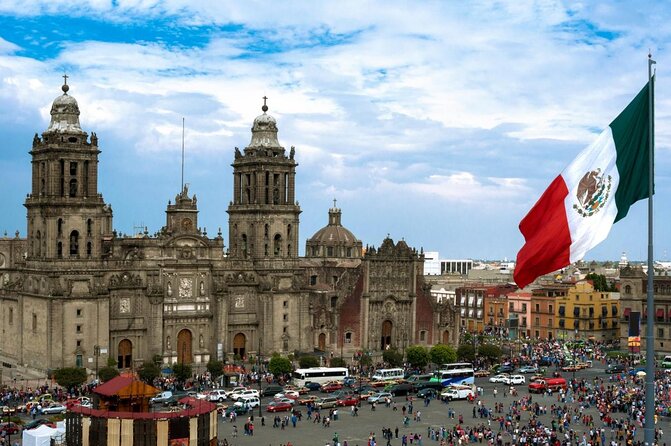
- Begin with coffee above the Templo Mayor: The tour starts at Librería Porrúa, where a rooftop balcony gives you a useful view over the Aztec ruins and nearby historic buildings.
- Carlos is the guide to request: His storytelling, broad command of Mexican history, and willingness to follow personal interests receive the strongest praise.
- The route covers about one mile: It is not a strenuous hike, but you remain on your feet for roughly three hours.
- LGBTQ+ history is the focus, not a side note: The route uses familiar monuments to discuss same-sex relationships, colonial control, religion, politics, and changing social attitudes.
- Useful material comes home with you: You receive a digital LGBTQ+ map of the Historic Center, extra resources, and a PDF of RAINBOW MEXICO: Bridging Forgotten Pasts and Vibrant Futures.
- The $99 price buys context and access: You are paying for a private-feeling small group, a local guide, drinks, digital materials, and a focused interpretation of places you could otherwise see without understanding their less visible stories.
Why this walk gives Mexico City a different angle
Mexico City’s Historic Center already offers an overload of grand buildings, ancient ruins, churches, and government offices. The challenge is making sense of them. A conventional city walk may tell you when a building was built, who used it, and where to take a photograph. This experience asks a sharper question: who had power here, who was punished, who found protection, and whose stories were left out?
That approach gives familiar sights a second layer. You still learn about the Mexica capital, Spanish conquest, the colonial church, Mexican independence, the Inquisition, Benito Juárez, Porfirio Díaz, and the Revolution. But you also examine how sexuality and gender fit into those periods.
I especially like the way the route begins with a broad historical frame. One particularly praised version of the experience spent time discussing the settlement of the Americas before moving through the Mexica world and Spanish conquest. That may sound like a lot for a morning, but it helps prevent LGBTQ+ history from being treated as a detached modern topic.
The experience is designed for adults, with a minimum age of 18. It suits you best if you want history explained in conversation, rather than delivered as a string of dates. It also works well for allies and for anyone who wants a more personal introduction to Mexico City’s past.
More History Tours in Mexico City
- Historic Downtown Walking Tour
★ 5.0 · 1,289 reviews - Historic Center Food Tour in Mexico City
★ 5.0 · 1,263 reviews - Mexico City: Historic Downtown Walking Tour
★ 4.8 · 1,039 reviews
Starting above the ruins at Librería Porrúa
Your 10:00 a.m. meeting point is República de Argentina 15 in the Historic Center. The opening stop is Librería Porrúa, a bookshop with a rooftop balcony overlooking several major sites.
This is a smart place to begin. From above, you can look toward the ruins of the Templo Mayor, the Metropolitan Cathedral, and the building identified in the tour description as the Palace of the Royal Duty. You also get views connected with Frida Kahlo’s hideaway rooms. The exact value of the stop is not simply the view. It gives the guide a visual board on which to place the story of the city.
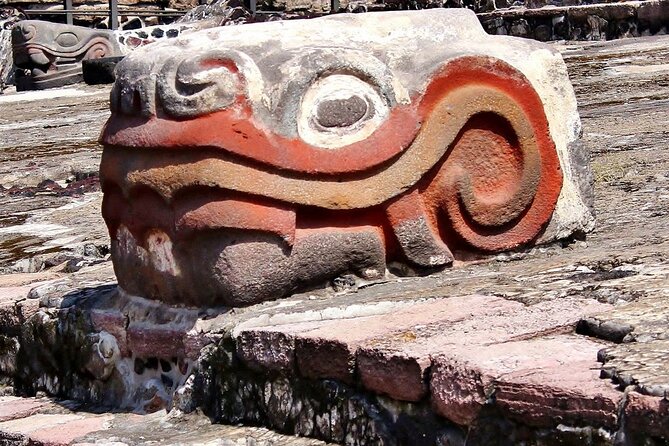
The Templo Mayor was the main temple of the Mexica capital, usually called the Aztec capital in English. Its remains sit beside the later Spanish cathedral and colonial buildings, making the layers of conquest unusually clear. You can see, in one sweep, the old Indigenous center and the institutions that replaced or covered parts of it.
Coffee, tea, and bottled water are included. That small touch matters at the beginning of a long walking discussion, especially because the tour starts with historical background before moving through the streets. The opening conversation can also run longer when the group asks good questions. One couple described spending four hours with Carlos because the discussion kept developing.
The rooftop is a highlight, but you should not confuse this with a full museum visit to the Templo Mayor. The route uses the site for context and interpretation. If you want an extensive archaeological visit, you may need separate time for that.
Templo Mayor and the cathedral: two worlds side by side
The Templo Mayor section anchors the tour in the Mexica past. The central question is how a place of Indigenous power became part of a colonial capital. That shift is essential to understanding later laws, religious authority, and social control.
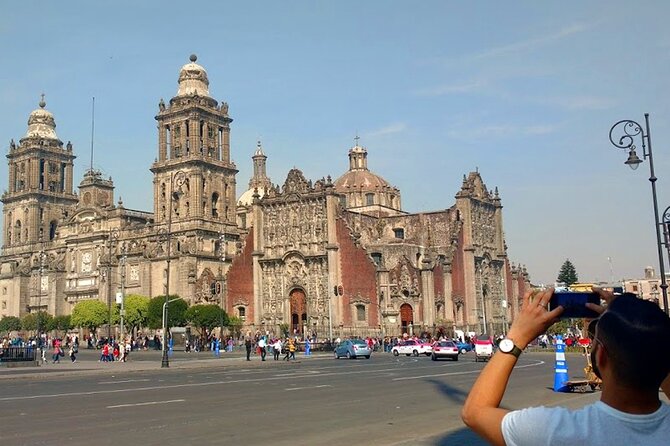
Next comes the Metropolitan Cathedral of the Assumption of the Most Blessed Virgin Mary into Heaven. The cathedral is the Catholic center of Mexico City and one of the defining buildings of the Zócalo. Here, the focus turns toward the colonial order and the role of the church in shaping public and private life.
This is where the tour’s subject can become serious. The history of same-sex relationships in Mexico is not presented as a simple march toward freedom. Colonial institutions brought religious judgments and legal punishments that affected people accused of homosexuality. The discussion includes the Spanish Inquisition and its role as a civilian institution executing convicted homosexuals between 1521 and 1821.
That subject deserves a guide who can handle difficult material without turning it into spectacle. Carlos receives repeated praise for being serious without becoming dry, and for adding humor without making light of the topic. That balance is one of the reasons the tour appeals beyond LGBTQ+ visitors.
The Zócalo and the center of national power
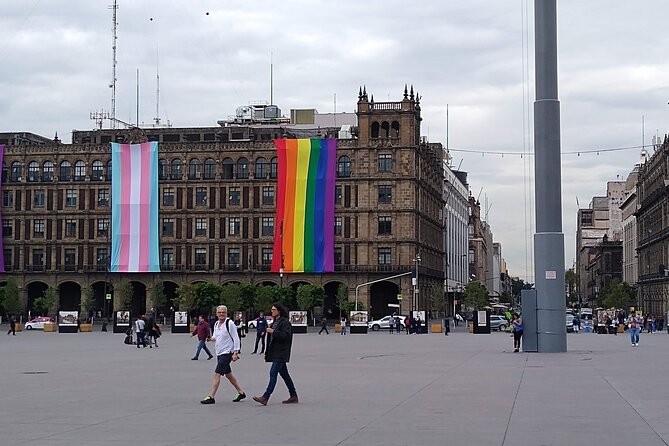
The Zócalo is the heart of Mexico City and one of the most important public squares in the country. You spend about 30 minutes here, with no separate admission charge.
The plaza has served as a meeting place since the 16th century. It is also the best location for connecting private lives to public power. Around it are the National Palace, the cathedral, and the broad ceremonial spaces where political and religious authority have been displayed.
The National Palace is the seat of Mexico’s federal executive and, since 2018, has also served as the official residence of the president. The building gives the guide a way to connect colonial government with modern national politics. The conversation can move from the Spanish period to the 19th century, the Reform era, Porfirio Díaz, and the 1910 Revolution.
The tour does not promise an interior visit to every major building. Much of the experience takes place outdoors, with the guide using the architecture around you as evidence. That is an advantage if you prefer a moving conversation, but a limitation if you want long indoor sightseeing stops.
You should also expect the Zócalo to be an active public space. The tour description does not guarantee quiet conditions or unobstructed views. Wear shoes suitable for city pavement, and keep your attention on the guide while crossing between sites.
Same base, a different sort of day:
- Teotihuacan, Guadalupe Shrine & Tlatelolco Day Tour with Lunch
★ 5.0 · 11,603 reviews - Xochimilco, Coyoacan and Frida Kahlo with Optional Lunch
★ 4.5 · 7,320 reviews - Balloon flight + Breakfast in cave + Pyramids + Pick up CDMX.
★ 5.0 · 6,335 reviews - Teotihuacan pyramids morning or afternoon without tourist traps
★ 5.0 · 6,186 reviews
Centro Cultural de España and the colonial city behind the cathedral
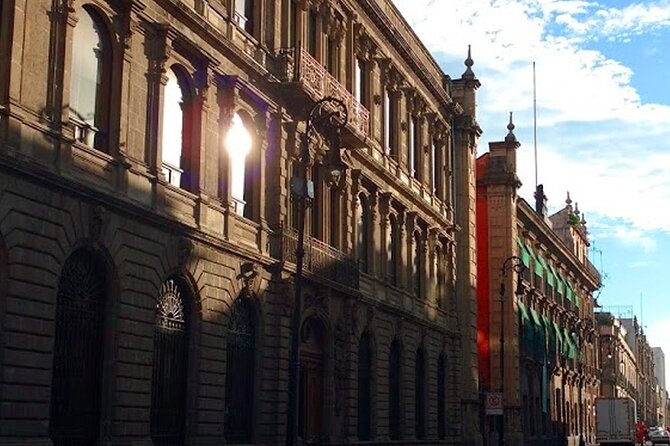
From the Zócalo, the route continues to the Centro Cultural de España at 18 Guatemala Street. This cultural center occupies a restored mansion just behind the cathedral.
The building had fallen into ruins in the late 1990s. Mexico City transferred it to the Spanish government, restoration followed, and the center opened in 2002 with the King of Spain and Mexico’s president present. Its story offers a useful lesson in how the Historic Center keeps being reused. Old colonial structures are not frozen in time. They are repaired, repurposed, and given new public meaning.
The stop lasts about 30 minutes and admission is free. The value here is less about checking off another monument and more about seeing how the city’s Spanish colonial layer remains part of present-day cultural life.
The route also brings in the Old Customs Building, located on the east side of Santo Domingo Plaza. Customs offices tell you something about the city as a center of trade and administration. They also help connect the grand public institutions to the everyday movement of goods, people, documents, and money.
That broader setting matters. LGBTQ+ history does not happen only in bars or designated community spaces. It is tied to courts, churches, government offices, markets, roads, and the rules that govern public life.
Santo Domingo Plaza and the old Inquisition
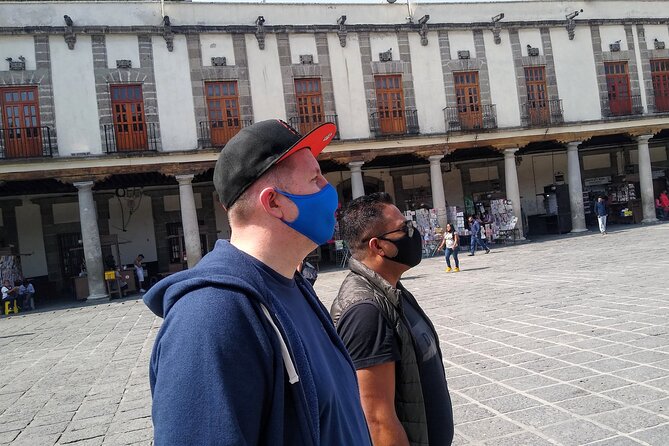
The final major stop is Plaza de Santo Domingo, the Historic Center’s second-largest plaza. You finish at the corner of República de Venezuela and República de Brasil, beside the former Palace of the Holy Inquisition.
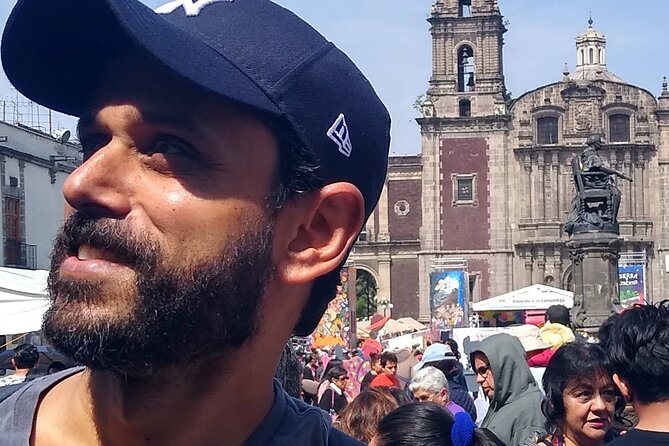
The plaza is known for the Portal de Evangelistas, a Tuscan colonnade with round arches. Scribes once worked here with typewriters and antique printing presses. This detail adds texture to the place: Santo Domingo was not only a stage for official power, but also a working public square where people prepared documents and exchanged information.
On the north side is the Church of Santo Domingo. The church faces the plaza and is associated with El Camino Real, the trading route that ran from Old Mexico toward New Mexico. The tour presents this route as a safe haven for gay male couples. That is an unusual detail, and it gives the final section a different tone from the discussion of punishment under the Inquisition.
The ending is deliberately close to the former Inquisition building. You are left with the tension between repression and refuge, between official rules and the ways people found room to live around them. It is a strong place to end a tour focused on forgotten stories.
The finish is not back at the starting point. You should plan onward transportation from Santo Domingo Plaza rather than assuming a return walk to Librería Porrúa.
What the guide adds to the experience
The guide can make or break a history walk, and Carlos is the clear strength here. He is described as personable, entertaining, serious about the subject, and happy to tailor the discussion to your interests.
That flexibility matters because the route covers a great deal. If you already know Mexican history, Carlos can add an LGBTQ+ reading to familiar events. If you are new to Mexico City, he can supply the basic timeline while explaining why the major buildings matter.
Several especially useful qualities come through:
- He gives context before asking you to look at a site.
- He answers questions rather than rushing to the next stop.
- He connects Mexico City to wider world events.
- He can make a serious history lesson engaging and occasionally funny.
- He treats the tour as a conversation, not just a memorized script.
One person who had studied Mexican history and visited Mexico City many times still found unfamiliar places and new interpretations. That is a good sign if you have already seen the cathedral or Zócalo on an earlier visit.
You should know that the quality of the experience may depend heavily on the guide assigned and on the group’s questions. The strongest praise is specifically tied to Carlos. If booking allows you to identify the guide, that is a useful point to check.
Is $99 a fair price?
At $99 per person, this is not the cheapest way to walk through the Historic Center. Much of the route takes place in public spaces with free admission, and you cover only about one mile.
The price makes more sense when you count what you are buying: three and a half hours with a specialist guide, a small group capped at 10 people, coffee or tea, bottled water, a digital LGBTQ+ map, additional resources, and a downloadable PDF of RAINBOW MEXICO: Bridging Forgotten Pasts and Vibrant Futures.
You are also paying for interpretation that is difficult to find in a standard city tour. The point is not merely to reach the sights. It is to connect them through a focused subject and to give you material you can read after the walk.
I would call it good value if you care about LGBTQ+ history, Mexican history, or thoughtful cultural context. It is less suitable if you want a fast highlights tour, extensive interior access, or a low-cost orientation walk.
Practical details for a smooth morning
The tour runs in all weather, so dress for the conditions. Comfortable walking shoes are important, even though the distance is modest. You walk about one mile over three hours, with plenty of time spent standing and listening, so moderate physical fitness is recommended.
The start time is 10:00 a.m. at República de Argentina 15. The end is at the former Palace of the Holy Inquisition, República de Brasil 33, at Plaza de Santo Domingo. The area is near public transportation.
Service animals are allowed. The tour is offered in English and uses mobile tickets. Confirmation is provided at booking.
Free cancellation is available up to 24 hours before the start time. Cancellations or changes made less than 24 hours before departure are not accepted for a refund. Because one reported cancellation occurred close to the start time, I would avoid scheduling an important timed attraction immediately afterward.
Who should book this Mexico City walk?
I would choose this experience if you want to see the Historic Center through a clear LGBTQ+ lens without giving up the wider story of Mexico City. It is especially well suited to couples, solo visitors, friends, LGBTQ+ travelers, allies, and history lovers who prefer discussion over a checklist.
You do not need to identify as LGBTQ+ to find value in it. The route covers the city’s political, religious, Indigenous, and colonial past, while showing how sexuality fits into those stories.
I would skip it if you dislike long outdoor explanations, need a wheelchair-accessible itinerary that has not been specifically confirmed, or want a tour focused mainly on entering museums and monuments. The route is thoughtful and substantial, but it asks you to listen, think, and walk at a relaxed pace.
If you book, leave room for the conversation to run long. Carlos’s answers and your questions may be the best part of the morning.
FAQ
How long is the tour?
The experience lasts approximately 3 hours and 30 minutes. The route covers about one mile during that time.
Where does the tour begin and end?
It begins at Librería Porrúa, República de Argentina 15, in Mexico City’s Historic Center. It ends at the former Palace of the Holy Inquisition, República de Brasil 33, beside Plaza de Santo Domingo.
What time does the tour start?
The scheduled start time is 10:00 a.m.
Is admission included?
Admission is included for the Librería Porrúa stop. The Zócalo, Centro Cultural de España, and Plaza de Santo Domingo are listed with free admission.
What is included in the price?
The price includes a local guide, coffee or tea, bottled water, a digital LGBTQ+ map of the Historic Center, extra resources, and a downloadable PDF copy of RAINBOW MEXICO: Bridging Forgotten Pasts and Vibrant Futures.
Is the tour suitable for all ages?
The minimum age is 18. The tour operates in all weather, allows service animals, and recommends a moderate level of physical fitness.
Newly listed around Mexico City
- Xochimilco: Sanctuary of the Axolotl★ 4.9 · 58 reviews
- Xochimilco: Market, Food and Nature ¡All included! Tour★ 4.9 · 107 reviews
- Xochimilco : Island of the dolls, tequila and mezcal CDMX★ 5.0 · 102 reviews
- Xochimilco: amanecer en kayak Ciudad de México★ 5.0 · 35 reviews
- Xochimilco & Colonial Coyoacan Trip★ 4.0 · 312 reviews
- Bike Tour in Mexico City★ 5.0 · 45 reviews
- Small Groups: Xochimilco and Coyoacan★ 4.0 · 37 reviews
- Museum of Anthropology: a look at Mexico’s past★ 5.0 · 52 reviews
Historical Tours, compared.


Mexico City Historical Centre Food Tour with 7 Authentic Tastings
Read our review →
Historical and Cultural Walking Tour of San Miguel de Allende
Read our review →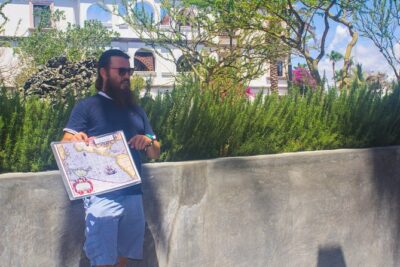
Historical and Cultural Walking Tour of San José del Cabo
Read our review →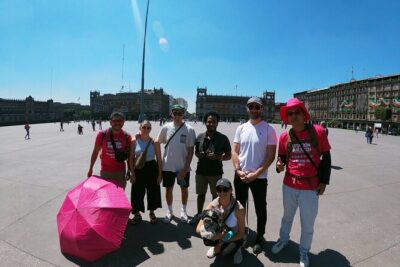
Walking Tour in Mexico City for Exploring their Cultural Heritage
Read our review →Browse the lists this tour appears in