
Reviewed · CITY TOURS
Hop-on Hop-off or Night Tour Tourist Bus in Mexico City
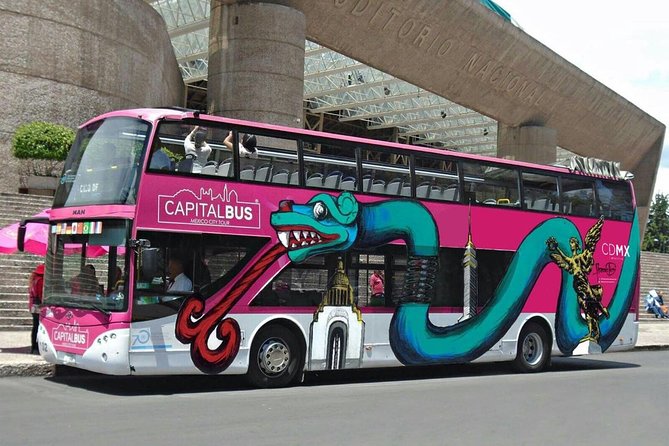
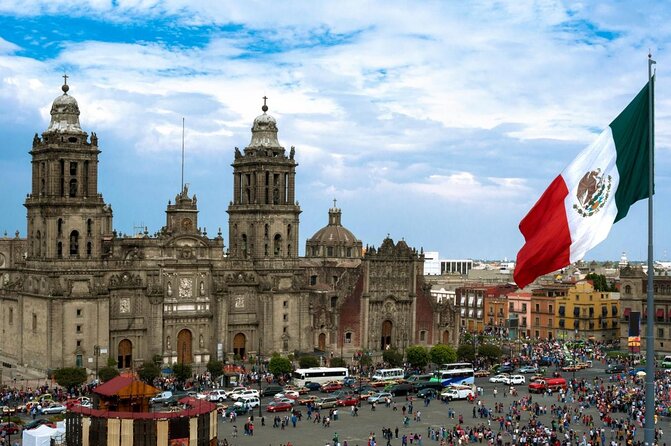
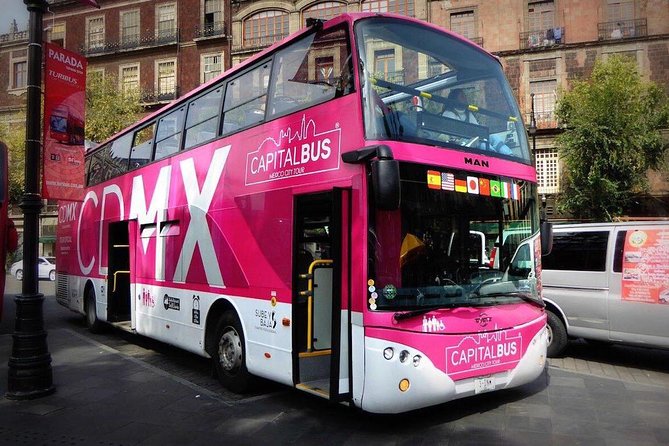
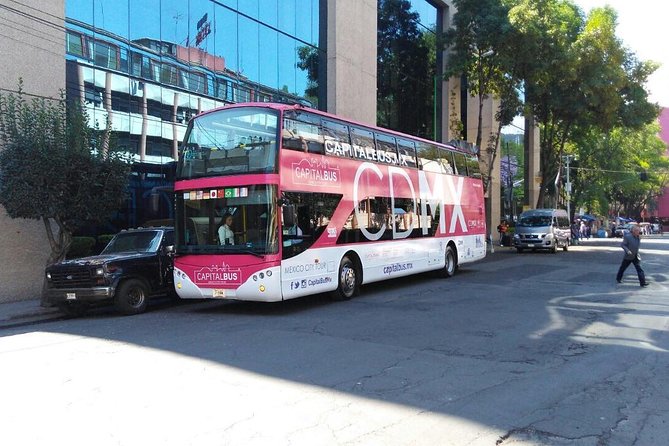
Mexico City rewards a good first look. This open-top, double-decker bus gives you broad city views while linking major sights across the capital, from the Zócalo and Reforma to Chapultepec and Polanco. I like the 24-hour ticket, which lets you ride for orientation, then return later to places worth a proper visit.
I also like the English audio commentary and the freedom to get off as often as you wish. The main catch is that this is transport with sightseeing attached, not a guided walking tour. Traffic can stretch the ride, and the overall rating of 3 out of 5 from 127 ratings suggests you should keep expectations practical.
In This Review
- Key points to know before you board
- Why a bus helps in a city this large
- Starting at the Zócalo and finding your bearings
- Reforma monuments: El Ángel, Diana, and Cibeles
- Chapultepec: the strongest stop for museum time
- Plaza Carso and the modern Polanco side
- Auditorio Nacional and the city’s cultural scale
- Food, shopping, and useful breaks
- What the 24-hour ticket is really worth
- English commentary and the limits of audio touring
- Timing, weather, and practical planning
- Who should book this Mexico City bus tour?
- FAQ
- Where does the Mexico City bus tour start?
- Where does the tour end?
- How long does the experience last?
- What are the operating hours?
- Is the tour offered in English?
- Can I get off the bus during the tour?
- What are some of the main stops?
- How far in advance can I cancel for a full refund?
Key points to know before you board
- The ticket lasts 24 hours, so you can split the ride across a full day instead of rushing from stop to stop.
- The open upper deck gives you clear views of monuments, avenues, parks, and modern districts.
- Chapultepec is the key stop if you want museums, gardens, and several of Mexico City’s major sights in one area.
- Plaza Carso connects you with Museo Soumaya and Museo Jumex, making it useful for an art-focused afternoon.
- The route mixes historic and modern Mexico City, from the National Palace and Zócalo to Santa Fe shopping and Polanco.
- The bus starts and finishes at the Zócalo meeting point, with service listed from 9:15 a.m. to 8 p.m.
Why a bus helps in a city this large
Mexico City is not a compact sightseeing town. Its best-known sights spread across the Centro Histórico, Paseo de la Reforma, Chapultepec, Polanco, and newer districts farther west. A bus tour helps you understand that shape before you spend time and energy crossing it on your own.
I would use the first ride as a moving map. Sit upstairs if the weather is agreeable, listen to the English commentary, and watch how the city changes from grand government buildings to tree-filled parkland, expensive Polanco, and large commercial developments. That basic orientation can save you from treating every attraction as if it were next door.
The open top is the real advantage over an ordinary city bus. You can see monuments above traffic, read street signs, and watch the architecture pass without fighting tinted windows. It also gives you a better sense of Paseo de la Reforma, one of the city’s most important avenues.
The tradeoff is exposure to sun, rain, and traffic fumes. The bus may be comfortable for sightseeing, but it cannot control Mexico City’s road conditions. If you have only one free hour, you might spend much of it sitting in traffic. The 24-hour validity matters because it gives you room to be flexible.
A few more Mexico City runs worth comparing
- Teotihuacan, Guadalupe Shrine & Tlatelolco Day Tour with Lunch
★ 5.0 · 11,603 reviews - Xochimilco, Coyoacan and Frida Kahlo with Optional Lunch
★ 4.5 · 7,320 reviews - Balloon flight + Breakfast in cave + Pyramids + Pick up CDMX.
★ 5.0 · 6,335 reviews
Starting at the Zócalo and finding your bearings
The listed starting point is the Capital Bus Zócalo stop on Calle de Monte de Piedad in the Centro Histórico. This is a sensible place to begin because the Zócalo puts you near some of the capital’s most important civic and historic buildings.
The square’s giant Mexican flag is hard to miss. The National Palace forms one of its defining edges, and the area gives you an immediate introduction to the scale and formality of central Mexico City. Even if you do not get off for a long visit, the opening section helps place the rest of the route in context.
I would not treat the Zócalo stop as a quick photo opportunity only. If you have time before boarding or after returning, this is one of the better points on the route for independent sightseeing. The bus ends back at the meeting point, which makes the stop useful at both ends of your day.
The exact ride duration depends on how often you get off. The experience is described as lasting from about one to eleven hours, while the ticket remains valid for 24 hours. That means the shorter figure refers to time spent using the tour, not a limit that forces you to complete everything in one sitting.
Reforma monuments: El Ángel, Diana, and Cibeles
The route gives you repeated chances to see the monuments along Paseo de la Reforma. This broad avenue is one of the best places in the city to appreciate Mexico City’s mix of national memory, public art, and busy urban movement.
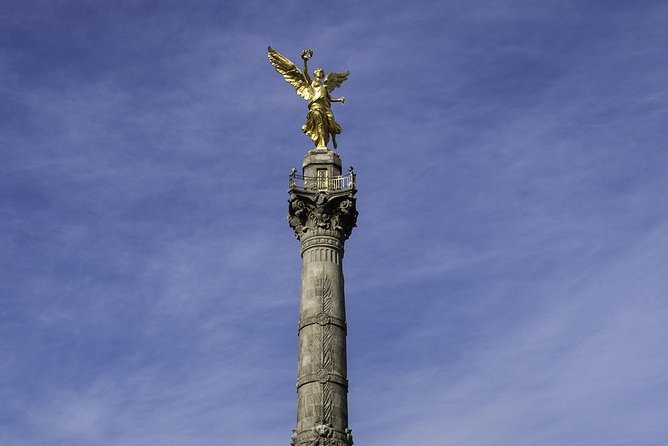
The Monumento a la Independencia is better known as El Ángel. It is an honorary column at the meeting point of Paseo de la Reforma, Río Tíber, and Florencia streets. The monument was inaugurated in 1910 to mark the centennial of the beginning of the Mexican War of Independence.
From the upper deck, you can see the column in its traffic circle setting without needing to cross a major road. That is useful here. Reforma is not the sort of avenue where you should casually wander into traffic for a closer photograph.
The Fountain of Diana the Huntress gives the route another recognizable landmark. Its sculpture represents Artemis, the Greek goddess, or Diana in Roman tradition. The original name, The Arrow of the North Stars, hints at the figure’s pose and purpose.
The Cibeles Fountain offers a different kind of city connection. It is a replica of Madrid’s Plaza de Cibeles fountain, installed in Mexico City in 1980 as a symbol of friendship between Spanish and Mexican communities. It was remodeled in 2011 and sits at the meeting point of Oaxaca, Durango, Medellín, and El Oro streets.
These are good examples of why the bus works well as an introduction. You can take in several landmarks quickly, then decide which area deserves more of your own time. The limitation is that seeing a monument from the bus is not the same as visiting it on foot. The commentary and views provide context, but you will need to hop off for closer inspection.
Chapultepec: the strongest stop for museum time
Chapultepec Forest is likely the most useful stop for a full day of sightseeing. It is described as the largest urban park in the Western Hemisphere and contains several of Mexico City’s major attractions, including the National Museum of Anthropology.
The area is more than a green break from city streets. It has archaeological importance, with historical remains and nearly 4,000 archaeological objects found within the forest. That makes Chapultepec a place where nature, public space, and Mexico’s past meet in one stop.
The National Museum of Anthropology is the obvious anchor for many visitors. The Tamayo Museum and Museum of Modern Art also appear among the major museum choices in this part of the route. If you want to visit even one of them properly, plan to spend much longer than the brief suggested stop of 15 minutes.
That 15-minute figure is best understood as a short orientation pause, not enough museum time. You can get off, locate the attraction, and continue later, but you should not expect to see a major museum in a quarter hour.
I would use the 24-hour ticket strategically here. Ride the full route first, then return to Chapultepec when you are ready for a slower visit. The bus is especially useful if your group has different interests. One person can spend time at a museum while another uses the route for a wider look at the city.
Same base, a different sort of day:
- Teotihuacan pyramids morning or afternoon without tourist traps
★ 5.0 · 6,186 reviews - Teotihuacan Early Access Guided Tour with optional Lunch
★ 4.5 · 6,138 reviews - Balloon flight + pick up in CDMX + Breakfast in Cave + Pyramids
★ 5.0 · 5,651 reviews - Balloon Flight + Cave Breakfast + Pick Up from CDMX or We Fly
★ 5.0 · 4,410 reviews
Plaza Carso and the modern Polanco side
Plaza Carso shifts the mood from historic center and public monuments to modern Nuevo Polanco. The mixed-use complex includes Museo Soumaya, Museo Jumex, and Teatro Telcel, among other sites.
This stop works well for an art-centered plan. Museo Soumaya and Museo Jumex offer two clear reasons to get off, while the surrounding development gives you a look at a newer, commercial side of Mexico City. The listed stop time is 15 minutes, so again, treat it as a chance to orient yourself rather than a complete visit.
The route also passes Avenida Moliere, another important part of the Polanco area. Lincoln Park is in southern Polanco, surrounded by early mansions, apartments, offices, and newer residential buildings. The park was the first designed for the colony, with a second park located on Horacio Avenue in front of the San Agustín Parish.
This section is useful if you want to compare neighborhoods. The Zócalo shows the historic core. Chapultepec adds museums and open space. Polanco brings upscale streets, public parks, major cultural buildings, and modern development. The bus lets you make that comparison without arranging separate transport for every district.
Still, I would keep your expectations measured. A bus passing through Polanco gives you an overview, not a detailed neighborhood walk. If Lincoln Park or Avenida Moliere interests you, get off and explore independently rather than trying to absorb everything through the audio track.
Auditorio Nacional and the city’s cultural scale
Auditorio Nacional is another useful stop, especially if you care about music, theater, or large performance venues. It is described as Mexico’s main presentation venue and one of the most important in the world, based on its artistic program, audience numbers, performances, ticket sales, and audiovisual facilities.
Even without attending an event, the building helps show the scale of Mexico City’s cultural life. The stop is also a convenient marker near Chapultepec and Polanco, so it can help you organize your day geographically.
The suggested 15-minute stop is enough for a quick look, but not for a performance. No event admission is included in the tour information, so do not treat the bus ticket as access to the auditorium. You are paying for transport and sightseeing commentary, not a show.
Food, shopping, and useful breaks

The route includes practical places to pause, including Santa Fe shopping mall and Paseo de la Reforma. These stops matter because a long bus day needs breaks. You can use them for food, shopping, or a change of pace after several cultural sights.
Santa Fe is particularly useful if you want a large shopping center rather than a museum or monument. Reforma offers a wider range of places to eat and shop along one of the city’s main avenues. The tour does not include meals, so you should plan to buy food independently.
I like this flexibility. A fixed sightseeing schedule can turn lunch into a nuisance, while hop-on service lets you stop when you need to. The weakness is that the route cannot guarantee how long your break will feel if traffic or bus spacing changes. Keep your plan loose instead of booking a tight sequence of timed activities.
What the 24-hour ticket is really worth
No tour price is provided here, so I cannot give you a fair peso-for-peso verdict. The value depends on how much of the route you use and how many times you get off.
The ticket makes the most sense if you plan to:
- Ride a broad section of the city for orientation.
- Visit at least one museum or major district.
- Use the bus again later in the 24-hour period.
- Prefer a simple route over arranging several separate rides.
- Want English commentary while you look around.
It is weaker value if you only want a quick ride past monuments. In that case, a short independent trip may cost less, depending on your transport choices. The bus earns its keep through repeated use and saved planning, not through a single brief circuit.
The maximum group size is 45 people. That is large enough to feel like shared city transport rather than a personal tour, but small enough to keep the operation manageable. You should not expect a guide to tailor the day around your interests.
English commentary and the limits of audio touring
The onboard audio commentary is helpful for first-time orientation. It gives names and context while you are moving, which is especially useful for monuments such as El Ángel, Diana the Huntress, and the Cibeles Fountain.
Audio commentary also lets you look outward instead of keeping your eyes on a guide. That suits the upper deck, where the main pleasure is watching the city pass. You can listen while deciding where to get off next.
The limit is depth. An audio track cannot answer a personal question, adjust its explanation to your interests, or replace time inside the National Museum of Anthropology. I would use it as a starting point, then explore the stops on your own.
Timing, weather, and practical planning
Service is listed Monday through Sunday from 9:15 a.m. to 8 p.m. The experience is offered in English, and confirmation is provided at booking. It begins and ends at the Zócalo meeting point.
The tour is near public transportation, and most people can participate. The information does not specify a separate accessibility arrangement, so anyone with particular mobility needs should confirm details before booking rather than assume the bus setup will fit.
Free cancellation is available if you cancel at least 24 hours before the experience start time. Cancellations within 24 hours are not refunded, and changes during that period are not accepted. The cut-off uses local Mexico City time.
For the best experience, I would allow more time than the minimum one-hour use. Start with a full circuit or a long section, note the stops that interest you, then spend the rest of the ticket period at Chapultepec, Polanco, the Zócalo, or Reforma. The bus is most useful when you treat it as a flexible framework rather than a race.
Who should book this Mexico City bus tour?
I would recommend it to a first-time visitor who wants a quick grasp of Mexico City’s size and major districts. It also suits families, mixed-interest groups, and anyone who prefers sitting above traffic while choosing stops independently.
It is a good fit if you want English information, open-air views, and simple connections between central sights, museums, Polanco, and Reforma. The 24-hour ticket is the main reason to choose it over a short sightseeing ride.
I would hesitate if you want a detailed, personal history lesson or a tightly managed small-group tour. The 3 out of 5 rating from 127 ratings also tells you to approach it as useful city transport with commentary, not a flawless premium excursion. Book it if you value orientation and flexibility. Skip it if your schedule is too short for repeated use or if you prefer exploring each neighborhood slowly on foot.
FAQ
Where does the Mexico City bus tour start?
It starts at the Capital Bus Zócalo stop on Calle de Monte de Piedad in Centro Histórico.
Where does the tour end?
The activity ends back at the same meeting point in the Zócalo area.
How long does the experience last?
Use of the experience is listed at approximately 1 to 11 hours, depending on how you ride and how often you get off. The ticket itself is valid for 24 hours.
What are the operating hours?
Service is listed Monday through Sunday from 9:15 a.m. to 8 p.m.
Is the tour offered in English?
Yes. English onboard audio commentary is included.
Can I get off the bus during the tour?
Yes. You can hop off as many times as you like during the 24-hour ticket period.
What are some of the main stops?
Stops and sights include the Zócalo, El Ángel, Chapultepec Forest, Plaza Carso, Lincoln Park, Auditorio Nacional, the Diana the Huntress Fountain, and the Cibeles Fountain.
How far in advance can I cancel for a full refund?
You must cancel at least 24 hours before the experience start time for a full refund. Cancellations or changes made within 24 hours are not accepted for a refund.
Newly listed around Mexico City
- Xochimilco: Sanctuary of the Axolotl★ 4.9 · 58 reviews
- Xochimilco: Market, Food and Nature ¡All included! Tour★ 4.9 · 107 reviews
- Xochimilco : Island of the dolls, tequila and mezcal CDMX★ 5.0 · 102 reviews
- Xochimilco: amanecer en kayak Ciudad de México★ 5.0 · 35 reviews
- Xochimilco & Colonial Coyoacan Trip★ 4.0 · 312 reviews
- Bike Tour in Mexico City★ 5.0 · 45 reviews
- Small Groups: Xochimilco and Coyoacan★ 4.0 · 37 reviews
- Museum of Anthropology: a look at Mexico’s past★ 5.0 · 52 reviews
City Tours, compared.
Teotihuacan, Tlatelolco & Guadalupe Shrine Tour
Read our review →
Teotihuacan Hot Air Balloon Flight from Mexico City / Volare
Read our review →

The best tour to Teotihuacán from Mexico City
Read our review →
Browse the lists this tour appears in