
Reviewed · CITY TOURS
Puebla and Cholula Day Trip from Mexico City
Mexico’s past comes in layers. This full-day trip links Cholula’s enormous pre-Hispanic pyramid with Puebla’s Spanish colonial churches, making it a useful way to see two important places beyond Mexico City. I especially like the chance to compare an ancient ceremonial center with Puebla’s ornate Baroque interiors, and the air-conditioned transport is welcome on a day that can last 10 to 12 hours.
The $54 starting price is appealing for hotel transport, a bilingual guide, and a full day outside the capital. The main caution is time: traffic, group transfers, language switching, and restaurant delays can turn this into a 13-hour outing, with less time walking around than you may expect.
In This Review
- Key Details Before You Book
- Why Puebla and Cholula Make a Good Pair
- Cholula’s Great Pyramid and the Church Above It
- Puebla’s Santo Domingo and the Chapel of the Rosary
- Walking Through Puebla’s Historic Center
- Lunch: Convenient, Optional, and Not the Main Reason to Go
- Talavera Ceramics and Onyx: Useful Stop or Shopping Detour?
- Bilingual Guiding and the English Question
- Pickup Details and the Risk of Confusion
- The Real Time Commitment
- Is $54 a Good Value?
- Who Should Choose This Day Trip?
- Should You Book It?
- FAQ
- How long does the Puebla and Cholula day trip take?
- What time does the tour start?
- Where can I be picked up?
- Can I be picked up at an Airbnb or private residence?
- Is the tour offered in English?
- Is lunch included?
- Is the archaeological entrance fee included?
- How many people can join the tour?
- Can I cancel for a refund?
Key Details Before You Book
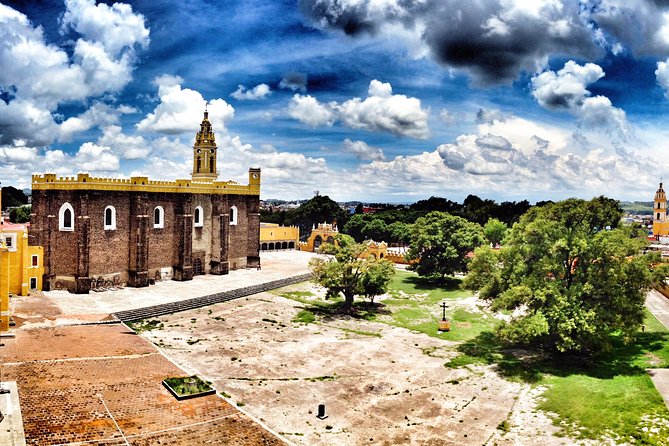
- The Great Pyramid of Cholula is the star attraction: Its square base measures about 1,300 feet on each side, and the Church of Our Lady of the Remedies sits on top.
- Puebla’s Chapel of the Rosary is an interior masterpiece: A plain exterior gives way to gilded Mexican Baroque decoration.
- The tour is bilingual, not English-only: Your guide speaks English and Spanish, but the balance depends on the makeup of the group.
- The drive can take more than two hours each way: Highway traffic, roadworks, holidays, and late departures have caused major delays.
- Lunch is optional: You can choose the tour with a buffet meal, but drinks cost extra and the food experience can be uneven.
- On Tuesdays, Cholula may be a panoramic stop: The archaeological site visit is not the standard full visit that day.
Why Puebla and Cholula Make a Good Pair
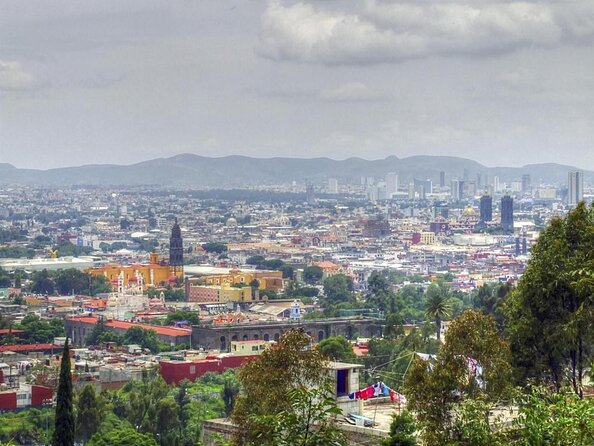
Cholula and Puebla sit southeast of Mexico City, but they offer very different experiences. Cholula is built around one of the great ceremonial structures of ancient Mesoamerica. Puebla is a colonial city of churches, tiled facades, carved stone, and traditional crafts.
That contrast gives the day a clear purpose. You are not simply ticking off two towns. You are seeing how older Indigenous foundations and later Spanish religious architecture occupy the same part of central Mexico.
The drawback is distance. The road trip is part of the experience, but it also consumes much of the day. Past trips have included rest stops roughly 80 to 90 minutes into the journey, which helps, especially for older passengers. Still, you should expect substantial time in a car, van, or bus.
The group can reach as many as 50 people, and the vehicle size depends on attendance. Some departures use a car or van, while larger groups may travel by bus. That makes the experience less personal than a private tour, but the price is far lower than a custom excursion.
A few more Mexico City runs worth comparing
- Teotihuacan, Guadalupe Shrine & Tlatelolco Day Tour with Lunch
★ 5.0 · 11,603 reviews - Xochimilco, Coyoacan and Frida Kahlo with Optional Lunch
★ 4.5 · 7,320 reviews - Balloon flight + Breakfast in cave + Pyramids + Pick up CDMX.
★ 5.0 · 6,335 reviews
Cholula’s Great Pyramid and the Church Above It
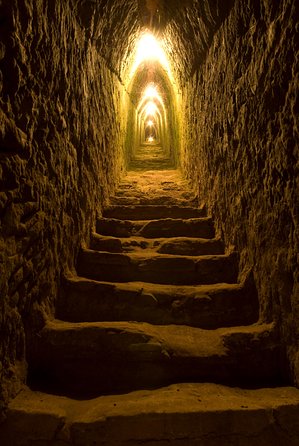
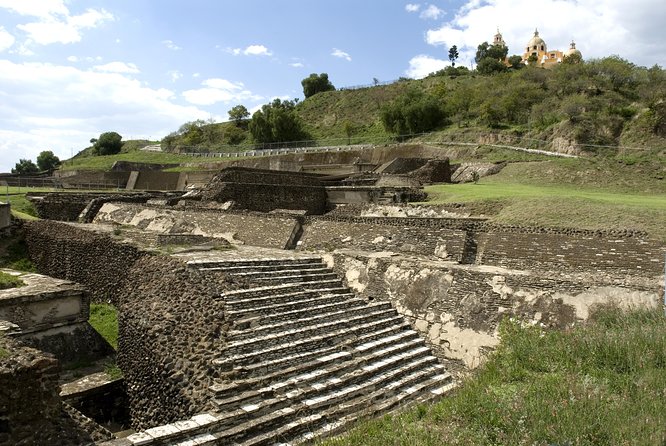
The first major stop is the Great Pyramid of Cholula, also called Tlachihualtepetl. It rises about 180 feet, or 55 meters, but its huge square base is more striking than its height. By volume, it is described as the largest pyramid in the world.
Much of the structure is covered by earth and vegetation, so do not expect the sharply exposed stone terraces you see at Teotihuacan. Cholula’s pyramid feels more like a broad hill with an ancient core. Its scale becomes easier to understand when you look across the wide base and imagine the construction effort required over many generations.
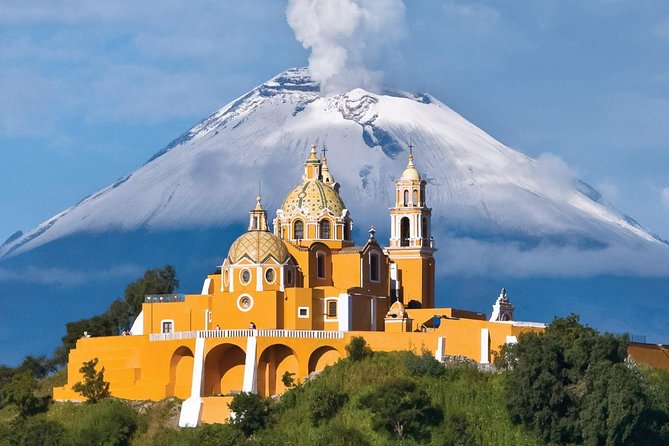
At the summit is the Church of Our Lady of the Remedies. The pairing is visually powerful: a Spanish church perched on an Indigenous sacred site. The tour explains the tradition that Hernan Cortes ordered 365 churches to be built here, one for every day of the year.
You need to pay attention to the exact access included on your departure. The formal visit to the archaeological zone is listed separately from the tour price, and Tuesday departures may only see the site from the outside. Some past departures also allowed very little time to walk toward the church or climb for the view.
That is an important distinction. If your main goal is to see the church on the pyramid, ask before booking what access is planned for your date. If you want extensive archaeological exploration, a dedicated Cholula visit will give you more breathing room than this combined day trip.
The archaeological stop is scheduled for about one hour. That sounds reasonable on paper, but group movement, ticket lines, heat, and meeting arrangements can reduce your actual time among the ruins. Stay close to your guide and confirm the departure time clearly before walking away to take photographs.
Puebla’s Santo Domingo and the Chapel of the Rosary
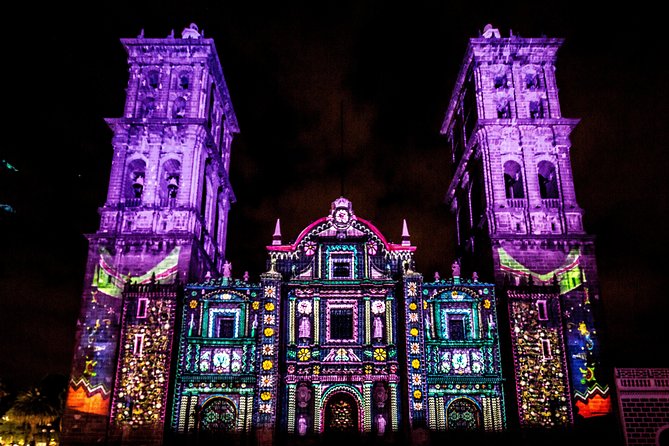
Puebla is the cultural center of the day. Its historic district is known for freestone buildings and painted ceramic tiles, and the central area contains around 70 churches. You will not see all of them, of course, but even a short walk reveals why Puebla is famous for its religious architecture.
The Church of Santo Domingo is a useful introduction. Its gray and pink exterior is restrained, almost severe. Inside, the mood changes completely.
The Chapel of the Rosary is attached to Santo Domingo and is the real visual payoff. Gilded stucco covers the interior, creating a dense display of Mexican Baroque ornament. The chapel was once called the eighth wonder of the art world, a grand claim, but the decoration does make a strong impression.
Give your eyes time to adjust. The details are crowded together, with gold surfaces, carved forms, and religious symbols competing for attention. A good guide can explain what you are seeing instead of leaving you to stare at a wall of ornament without context.
The stop is commonly divided into time at Santo Domingo and time in the Rosary Chapel, about 30 minutes for each. In practice, the pace depends on church access, the group’s punctuality, and the overall schedule.
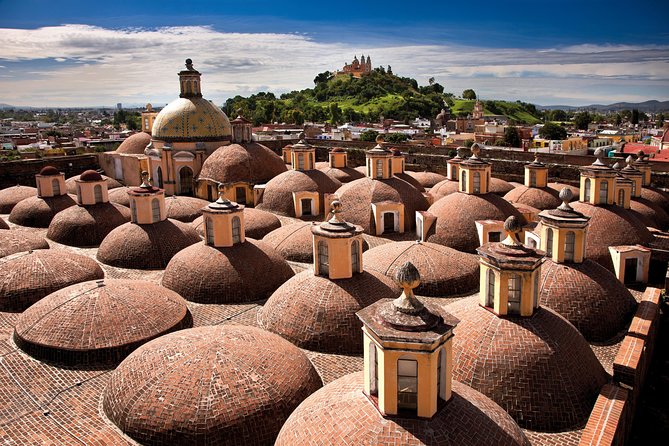
The Convent of Santa Monica, now the Museum of Religious Art, is another planned point of interest. Its serene blue exterior adds a cooler, quieter note after the heavy gold of the Rosary Chapel. The exact amount of time devoted to each Puebla sight can vary, so you should not expect a slow museum visit.
Walking Through Puebla’s Historic Center
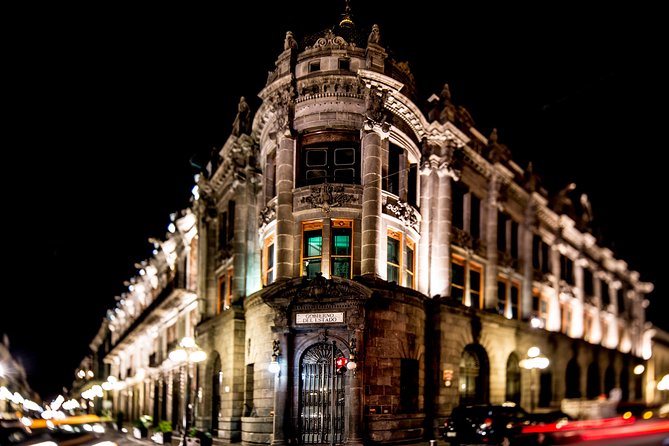
A walking segment through Puebla helps connect the separate church visits. This is where you get a better feel for the city’s tiled facades, plazas, church towers, and colonial street plan.
Several past departures have included more walking than expected, with one estimate putting the day’s total at more than three miles. Wear shoes that can handle cobbled or uneven streets, and bring water. The tour is not a strenuous hike, but it is not a bus-only sightseeing loop either.
The schedule can become tight. When traffic delays the morning, the lunch runs late, or the group waits for a vehicle, Puebla’s walking portion may shrink to a quick orientation. That is frustrating because Puebla is often the part of the day people most want to explore independently.
You may also have little or no free time to wander. Some guides set firm meeting rules and move the group together from one site to the next. That keeps the bus from waiting for stragglers, but it limits spontaneous browsing, photography, and café stops.
If independent exploration matters more to you than convenience, consider visiting Puebla on your own or booking a private tour. If you mainly want an organized introduction and do not mind following a schedule, the walking tour still gives you a useful first look.
Same base, a different sort of day:
- Teotihuacan pyramids morning or afternoon without tourist traps
★ 5.0 · 6,186 reviews - Teotihuacan Early Access Guided Tour with optional Lunch
★ 4.5 · 6,138 reviews - Balloon flight + pick up in CDMX + Breakfast in Cave + Pyramids
★ 5.0 · 5,651 reviews - Balloon Flight + Cave Breakfast + Pick Up from CDMX or We Fly
★ 5.0 · 4,410 reviews
Lunch: Convenient, Optional, and Not the Main Reason to Go
You can book the trip with or without a five-course buffet lunch. The meal option is described as including salad, soup, pasta or rice, four or five stews, and dessert. Drinks are not included.
The buffet format is practical for a large group because it gets people fed without requiring every dish to be ordered separately. Some meals have included well-liked mole poblano, while other departures have found the food ordinary, the service slow, or particular dishes disappointing.
That makes the lunch a convenience rather than a reason to select the tour. If you are curious about Puebla food and want a more focused meal, you may prefer to skip the package and choose your own restaurant, if the schedule allows. If you want to avoid making another decision during a tightly managed day, the included buffet can be worthwhile.
A guitarist and singer have performed during lunch on some departures. That sort of live music can add local character, though it also means the restaurant stop may feel designed for a group excursion rather than a quiet meal.
Watch the clock. Lunch has sometimes taken so long that the Puebla visit was pushed toward evening. A late meal is also possible when traffic delays the arrival.
Talavera Ceramics and Onyx: Useful Stop or Shopping Detour?
The route includes visits connected with onyx and Talavera ceramics. You learn how these local crafts are made and have a chance to buy something to take home.
Talavera is closely tied to Puebla’s visual identity. The painted tiles on city buildings and the ceramics sold in workshops are part of the same artistic tradition, so the stop can add context to what you have already seen in the streets.
The practical question is time. The workshop portion may be brief, with around 15 minutes suggested for shopping. Some people appreciate the chance to see the craft process and buy a solid souvenir. Others feel the stop takes time away from Puebla’s churches and plazas.
You should also confirm what is actually included on your departure. The advertised route refers to both onyx and Talavera, but the time and exact presentation can vary. If you are not interested in shopping, treat this as a short cultural stop and do not expect a long factory tour.
Bilingual Guiding and the English Question
The guide is bilingual in English and Spanish. That is useful for mixed groups, but it does not mean you will receive an English-only tour.
If most of the group speaks Spanish, explanations may take longer in Spanish and shorter in English. Some English-speaking passengers have found it hard to hear the translation, especially with a faulty or quiet microphone and a noisy bus. A shared bilingual format can work well with an organized guide, but it can also make an already full schedule feel even tighter.
Guides named Gabriela, Jaime, Javier, Francisco, and Erik have been praised for being friendly, safe, helpful, and well informed. Gabriela in particular has received strong praise for her care and personal attention. Of course, the guide assigned to your departure is not guaranteed.
At the start, ask how information will be presented in both languages. Sit where you can hear the microphone, and tell the guide immediately if the sound system is poor. This is not a small detail: missing explanations can turn the day into a long ride followed by a series of photo stops.
Pickup Details and the Risk of Confusion
Pickup is offered from selected hotels, with listed collection points at 8:15 a.m. from the InterContinental Presidente, Royal Reforma Hotel, and Zocalo Central Hotel. Another meeting point is at 8:45 a.m. at Avenida de la República 154 in Tabacalera, near the Monumento a la Revolución and behind the Barceló Reforma Hotel.
The activity itself is scheduled to start at 9:00 a.m., but pickup can begin 15 to 60 minutes earlier depending on your location. You must call to confirm the exact time.
This is the most important booking detail. Apartments and private residences are not eligible for pickup. If you are staying in an Airbnb or outside the pickup zone, go directly to Avenida de la República 154.
Do not rely only on the broad start time shown during booking. Confirm the pickup point and time by phone, then check your messages again the evening before. Several bad experiences have involved people waiting at the wrong location or missing a bus after a pickup change.
The first pickup may also transfer you to a central departure point, where you join the full group. That extra movement is normal for this shared service, but it adds time to the morning.
The Real Time Commitment
The advertised duration is 10 to 12 hours, but you should plan for a longer day. Several departures have returned after 8 p.m., 10 p.m., or later when traffic, road repairs, holiday crowds, or missing passengers caused delays.
Mexico City traffic can be severe, and the highway toward Puebla has also been affected by repairs. The operator cannot control every delay, but the organization of the group matters. Waiting for late passengers or changing vehicles can turn an already long road trip into an exhausting one.
Do not schedule a flight on the same day. The operator specifically warns against it, and that advice is sound. You should also think twice if you have an evening appointment or a low tolerance for sitting on a bus.
Bathroom breaks have been appreciated, especially on the long drive. Still, delays at the meeting point or archaeological entrance can leave you standing in the sun, so carry water, sun protection, and a light snack.
Is $54 a Good Value?
At $54 per person, this is an inexpensive way to reach two destinations that are awkward to combine by public transport in a single day. The price includes selected hotel pickup and drop-off, air-conditioned transport, and a bilingual guide. The lunch supplement gives you another choice instead of forcing a meal on everyone.
The value is strongest if you want transport and a broad introduction. You are paying for access to Puebla and Cholula without arranging buses, directions, tickets, or a return journey yourself.
The value weakens if you want long visits at each sight, strong English interpretation, or independent time in Puebla. A day with repeated vehicle waits and a shortened city visit can feel expensive even at a low price.
Group discounts may be available, and the maximum group size can reach 50. Ask about the expected vehicle size if that matters to you. A smaller departure is likely to feel more manageable, while a full bus makes timing and sound quality more important.
Who Should Choose This Day Trip?
I would suggest it to someone spending several days in Mexico City who wants one broad outing beyond the capital. It suits you if you enjoy churches, architecture, archaeology, local crafts, and scenic highway views, and if you can accept a long day.
It is also a reasonable choice for solo visitors who prefer organized transport and want a guide nearby. Several guides have been praised for helping people feel safe and offering practical suggestions along the way.
I would not choose it for a relaxed family day with young children prone to carsickness. I would also hesitate if you need a dependable return time, want an English-only experience, or hope to explore Cholula and Puebla at your own pace.
For the best chance of a smooth day, confirm pickup by phone, arrive early, stay close to the group, ask about Tuesday access at Cholula, and treat the lunch and craft workshop as flexible parts of the schedule rather than guaranteed highlights.
Should You Book It?
Book this trip if your priority is seeing the Great Pyramid of Cholula and Puebla in one affordable, organized outing. The churches, especially the Chapel of the Rosary, can make the effort worthwhile, and a strong guide such as Gabriela or Jaime can transform a crowded day into a memorable one.
Skip it if you dislike long bus rides or need generous free time. The main attractions are excellent, but the route is vulnerable to traffic, mixed-language guiding, vehicle changes, and group delays.
The sensible choice is to book only when your schedule has room for a very late return. Cancellation is free up to 24 hours before departure, but changes or cancellations inside that window are not refunded.
FAQ
How long does the Puebla and Cholula day trip take?
The planned duration is approximately 10 to 12 hours. Traffic, roadworks, holiday crowds, late departures, and group delays can make the day longer.
What time does the tour start?
The activity start time is 9:00 a.m. Pickup begins earlier, usually 15 to 60 minutes before the activity depending on the meeting point.
Where can I be picked up?
Pickup is available from selected hotels, including the InterContinental Presidente Mexico City, Royal Reforma Hotel, and Zocalo Central Hotel. Another meeting point is Avenida de la República 154 in Tabacalera.
Can I be picked up at an Airbnb or private residence?
No. Private residences and apartment buildings are not eligible for pickup. If you are staying in an Airbnb, you should go to Avenida de la República 154.
Is the tour offered in English?
The guide speaks English and Spanish. It is a shared bilingual tour, not an English-only service. The amount of English instruction depends on the number of participants speaking each language.
Is lunch included?
Lunch is optional. The meal option includes a buffet with salad, soup, pasta or rice, four or five stews, and dessert. Beverages are not included.
Is the archaeological entrance fee included?
The Great Pyramid of Cholula stop lists admission as not included. On Tuesdays, the archaeological site visit is described as panoramic.
How many people can join the tour?
The activity can have a maximum of 50 participants. Transportation may be by car, van, or bus depending on the group size.
Can I cancel for a refund?
You can cancel at least 24 hours before the local start time for a full refund. Cancellations or changes made less than 24 hours before departure are not accepted for a refund.
Newly listed around Mexico City
- Xochimilco : Island of the dolls, tequila and mezcal CDMX★ 5.0 · 102 reviews
- Xochimilco: Sanctuary of the Axolotl★ 4.9 · 58 reviews
- Xochimilco: Market, Food and Nature ¡All included! Tour★ 4.9 · 107 reviews
- Xochimilco: amanecer en kayak Ciudad de México★ 5.0 · 35 reviews
- Xochimilco & Colonial Coyoacan Trip★ 4.0 · 312 reviews
- Bike Tour in Mexico City★ 5.0 · 45 reviews
- Small Groups: Xochimilco and Coyoacan★ 4.0 · 37 reviews
- Museum of Anthropology: a look at Mexico’s past★ 5.0 · 52 reviews
City Tours, compared.
Teotihuacan, Tlatelolco & Guadalupe Shrine Tour
Read our review →
Teotihuacan Hot Air Balloon Flight from Mexico City / Volare
Read our review →

The best tour to Teotihuacán from Mexico City
Read our review →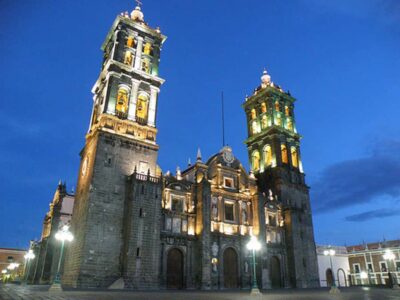
Browse the lists this tour appears in