
Reviewed · CITY TOURS
THE REAL CDMX: Under the skin of the city
Start hungry, leave oriented. The Real CDMX offers a useful first look at Mexico City through neighborhood food, public transport, local customs, and major sights. Rather than spending the whole morning among the city’s best-known monuments, you begin in working-class Guerrero, visit a local market, ride the Metro, and finish near the Zócalo.
I especially like the mix of freshly prepared food and city history, and I like that the tour uses the Metro instead of keeping you inside a sightseeing bubble. Guides such as Olin, Fernando, Alex, and Oliverdo have been praised for their warmth, humor, and helpful recommendations. The main drawback is the amount of walking and the loose timing. Although advertised at about four hours, the tour has sometimes lasted five hours or more.
In This Review
- Key details that shape the experience
- Why this is a smart first morning in Mexico City
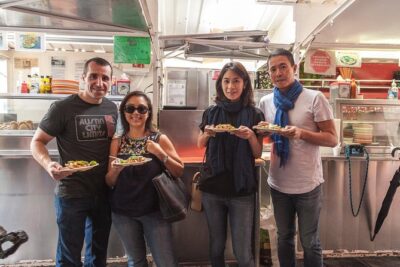
- Guerrero begins the day with tamales and atole
- The local market adds the city’s everyday flavor
- Monumento a la Revolución brings history into the walk
- The Metro ride makes CDMX feel real
- Pulque and fried quesadillas keep the food trail moving
- Bellas Artes and Torre Latinoamericana frame the city center
- Tacos and a terrace finish near the Zócalo
- What the $47.79 price really buys
- Who should book this CDMX food walk
- Should you book The Real CDMX?
- FAQ
- How long does The Real CDMX tour last?
- Where does the tour begin?
- Where does the tour end?
- What food is included?
- Are vegetarian options available?
- Are drinks included?
- Does the tour use public transportation?
- How large is the group?
- Is the tour offered in English?
- Can I cancel for a full refund?
Key details that shape the experience
- Breakfast begins with Oaxaca-style tamales and chocolate, so arrive hungry and skip your usual morning meal.
- Guerrero and its local market come first, giving you a look at daily CDMX life before the historic center.
- Four food stops and three drinks create a filling introduction to Mexican flavors.
- A Metro ride connects the neighborhoods, adding a practical local touch to the sightseeing.
- The group is limited to 10 people, which should make questions and conversation easier.
- The tour ends on a terrace by the Zócalo, a fine place to continue exploring on your own.
Why this is a smart first morning in Mexico City
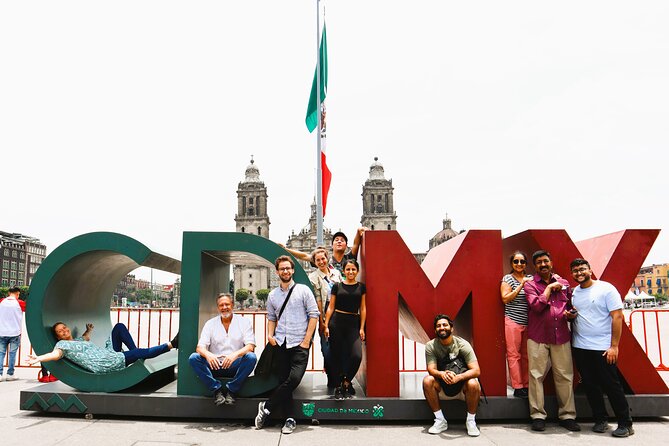
Mexico City can feel enormous at first. The historic center, sprawling neighborhoods, markets, museums, taquerias, and public transport system all compete for your attention. This experience helps you get your bearings while giving you several meals along the way.
The route moves from Guerrero toward the center, so you see a change in the city rather than one concentrated sightseeing zone. You get local food early, then architecture and history, then more food and a rooftop finish. That broad sweep is useful if you have only a few days in CDMX.
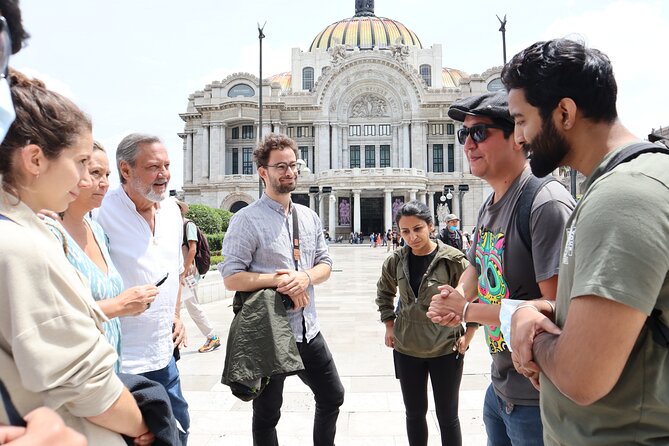
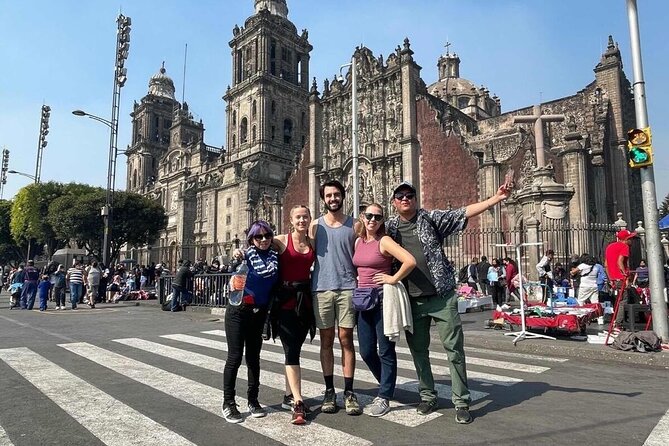
I would schedule it near the start of your visit. You will pass Palacio de Bellas Artes, Torre Latinoamericana, Monumento a la Revolución, and the Zócalo, but you will not spend long inside each landmark. That makes the tour a good introduction, not a replacement for later museum visits or a detailed architectural walk.
The guide’s role matters here. Olin is frequently praised for explaining what you are eating, asking questions rather than delivering a long lecture, and offering practical suggestions for the rest of your stay. Fernando and Alex have also led the experience. Since several guides are named in the available material, the exact personality and storytelling style may vary by date.
A few more Mexico City runs worth comparing
- Teotihuacan, Guadalupe Shrine & Tlatelolco Day Tour with Lunch
★ 5.0 · 11,603 reviews - Xochimilco, Coyoacan and Frida Kahlo with Optional Lunch
★ 4.5 · 7,320 reviews - Balloon flight + Breakfast in cave + Pyramids + Pick up CDMX.
★ 5.0 · 6,335 reviews
Guerrero begins the day with tamales and atole
The meeting point is at Lerdo 196 in Guerrero, with a 9:00 am start. This is not the polished postcard version of Mexico City, and that is the point. The first stop is a small, family-run eatery where you try tamales prepared by a family from Oaxaca.
The sample menu lists tamales with chocolate. One account also describes atole, a warm traditional drink, at the opening meal. The portions are part of a full food day, so the advice to skip breakfast is practical, not promotional fluff. If you eat a normal breakfast before meeting the guide, you may have trouble enjoying the later stops.
This opening meal also sets the tone. You are not simply handed a dish and told its name. The guide explains the food and the setting, helping you understand how an ordinary morning meal fits into local life. That is more useful than a quick tasting at a restaurant designed around foreign visitors.
The tradeoff is that adventurous eating is built into the plan. One family member described in the supplied material was a very selective eater and would have benefited from carrying a snack. Vegetarian choices are available, but anyone with strong dislikes should tell the operator ahead of time and remain ready for substitutions or simpler options.
The local market adds the city’s everyday flavor
From Guerrero, the route reaches a local market. Here you encounter ingredients and food traditions that are harder to understand from a restaurant menu alone. The experience includes conversation about chiles and mole, along with a freshly made green juice.
This is one of the most useful parts for anyone who wants to eat well in Mexico City afterward. You see the kinds of ingredients that shape Mexican cooking and gain context for dishes you may encounter at markets and neighborhood restaurants. The market stop also breaks up the walking with food, which helps on a morning that covers a fair amount of ground.
The market is not presented as a staged cultural display. You are there to see a working place and sample food where local residents shop and eat. That can feel less tidy than a formal food hall, but it gives you a better sense of the city’s daily rhythm.
There is also a small shopping element, with a stop described as the only place to buy something during the tour. The market is the natural spot for that, particularly if you want to browse mole, chiles, or other local products. Keep purchases modest unless you already know how you will carry them for the rest of the walk.
Monumento a la Revolución brings history into the walk
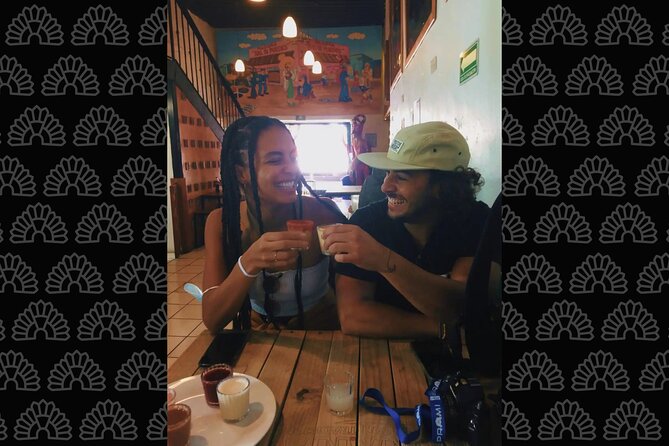
The route then connects food with Mexico City’s past at Monumento a la Revolución. The guide shares stories about the city and Mexico that go beyond a list of dates and names. The strongest feedback about this experience centers on the balance: enough history to make the places meaningful, but not so much that the food and walking become a classroom exercise.
Olin is praised for using questions and conversation to keep the group involved. That style suits a small group, especially when people want to ask about Mexican culture, architecture, language, and daily life. The stories can also be humorous, including personal anecdotes and the guide’s comic tales about failed romances.
You should not expect a full tour of the monument or a long interior visit based on the details provided. The value here is orientation and storytelling. You see a major site, understand more about its place in the city, and continue on foot toward the historic center.
Same base, a different sort of day:
- Teotihuacan pyramids morning or afternoon without tourist traps
★ 5.0 · 6,186 reviews - Teotihuacan Early Access Guided Tour with optional Lunch
★ 4.5 · 6,138 reviews - Balloon flight + pick up in CDMX + Breakfast in Cave + Pyramids
★ 5.0 · 5,651 reviews - Balloon Flight + Cave Breakfast + Pick Up from CDMX or We Fly
★ 5.0 · 4,410 reviews
The Metro ride makes CDMX feel real
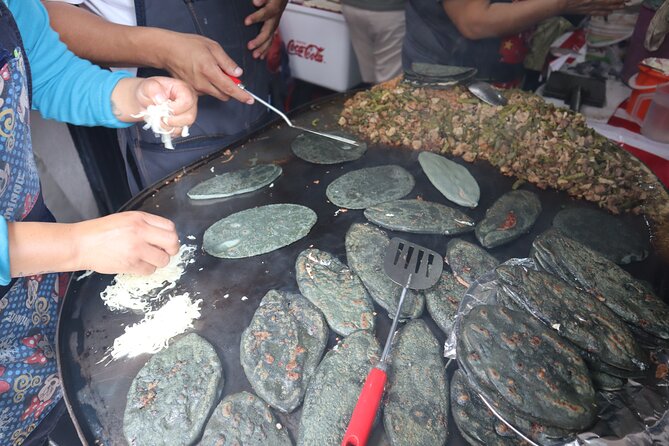
One of the tour’s most distinctive features is the Metro ride. Many sightseeing tours keep visitors in private vehicles or on a fixed walking route. Here, public transport becomes part of the experience.
The ride shows you how residents move around a city that is too large to cover comfortably on foot. It also helps you understand the relationship between neighborhoods. For a first visit, that practical knowledge can save time later, especially when you start planning your own museum and market days.
The Metro is also a change of pace. You have been eating and walking, then suddenly you are using the same system that carries millions of people across the city. The guide helps make the ride approachable for visitors who do not speak much Spanish.
The tour description calls this traveling like a true chilango, a local term for a Mexico City resident. That phrase captures the spirit of the experience, though you should still treat the ride as a normal public-transport segment rather than a special attraction. It is valuable because it is ordinary.
Pulque and fried quesadillas keep the food trail moving
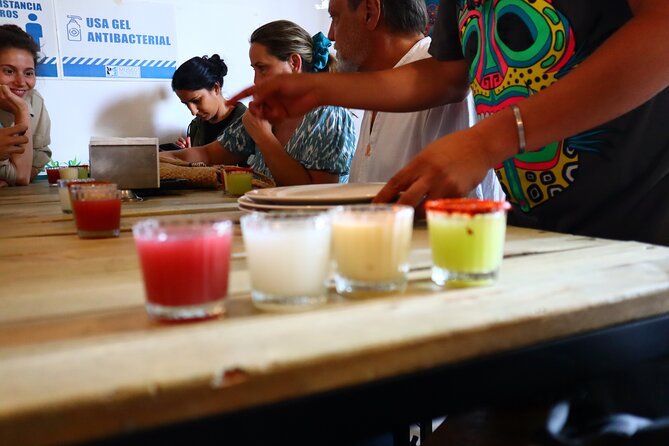
The food stops continue with pulque, an ancient fermented drink associated with central Mexico. The tasting gives you a chance to try something less familiar than the usual beer or margarita. For many visitors, this is a highlight because it connects a drink with older Mexican traditions.
You also get deep-fried quesadillas from a small street stand. The menu describes a corn dough quesadilla, while the overall experience includes four dishes and three drinks. A blue-corn tlacoyo filled with beans and cactus is another listed sample, adding a different texture and a useful vegetarian option.
The food is not all tacos, which is important. You sample tamales, cecina, quesadilla, and tlacoyo, with drinks that may include chocolate, atole, green juice, pulque, or beer depending on how the stops are arranged. This gives you a wider introduction to Mexican cooking than a single taqueria visit.
If you are vegetarian, the experience specifically offers plenty of options. Still, the menu includes meat, and the exact substitutions are not detailed. Tell the guide about dietary needs before the tour begins so the food stops can be handled smoothly.
Bellas Artes and Torre Latinoamericana frame the city center
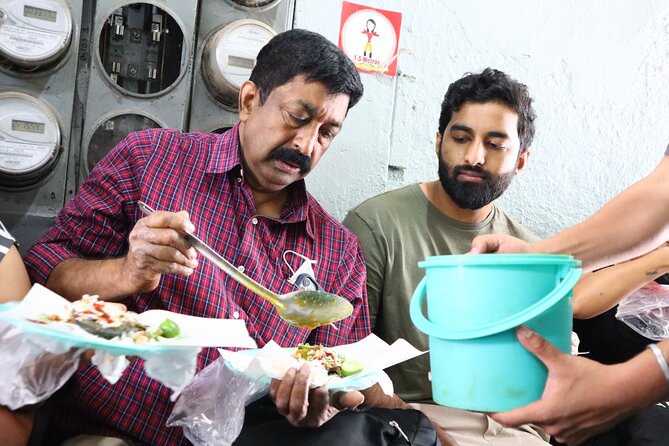
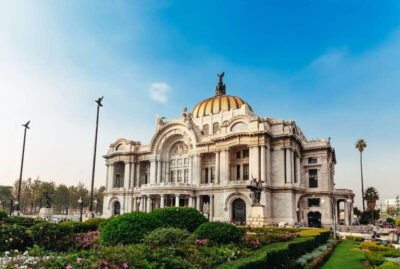
As the group heads into central CDMX, you pass Palacio de Bellas Artes and Torre Latinoamericana. These are some of the city’s most recognizable buildings, but the experience treats them as part of a larger route rather than isolated photo stops.
Bellas Artes gives you a strong architectural landmark and a reminder of Mexico’s artistic traditions. Torre Latinoamericana helps you read the central skyline and understand the scale of the city around you. The guide’s explanations add context, while the walk lets you see how major sights sit beside ordinary streets, food stalls, and shops.
This combination is one of the tour’s strengths. You get the famous center, but you reach it after seeing neighborhoods that many first-time visitors skip. The contrast makes the well-known sights more meaningful.
The route can also be busy and tiring. There are plenty of steps, and one account specifically advises comfortable shoes and water. The official duration is about four hours, but several accounts describe a longer outing, including one that ran beyond five hours. Do not schedule a tight afternoon flight or an important appointment immediately afterward.
Tacos and a terrace finish near the Zócalo
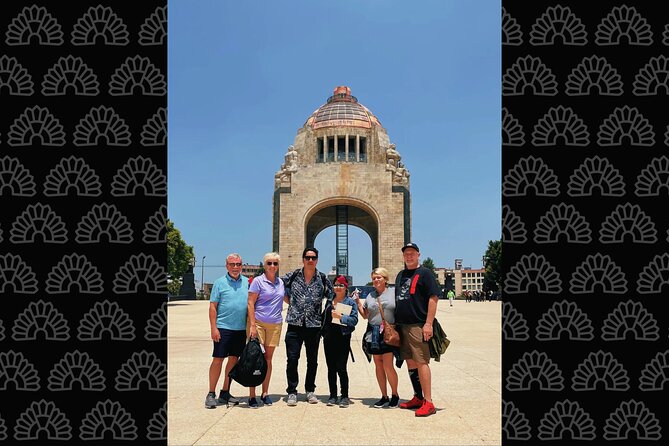
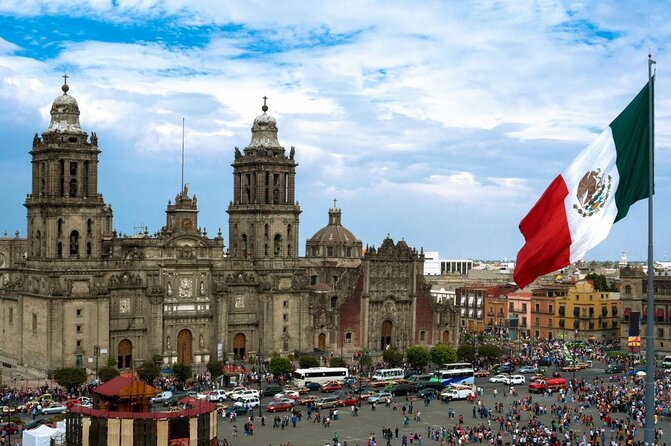
The final food focus is tacos, including a taco de cecina at the oldest taqueria in the local market according to the supplied menu. The route then ends at a terrace near the Zócalo, Mexico City’s main square, at P.za de la Constitución 58.
That ending is well chosen. You finish with a broad view and an easy location for continuing your own day. From there, you can explore the center at your own pace, return to a museum, or simply sit down after the walking and eating.
The rooftop stop includes drinks and views. It is not only a final snack stop, but also a chance to review what you have seen. By this point, you will have crossed several neighborhoods, used public transport, sampled traditional dishes, and heard stories about the city’s past and present.
The tour does not claim to cover every major attraction in the historic center. That is fine. Its purpose is to give you a working map and a taste of how the center connects to less-touristed areas.
What the $47.79 price really buys
At $47.79 per person, the value depends on how much of the food and drink is included on your date, but the package is strong for a four-hour small-group experience. You are paying for a guide, four dishes, three drinks, local transport as part of the route, and access to food spots you might not confidently find alone.
The group limit of 10 is another plus. A small group makes it easier to hear explanations in the street, ask questions, and keep the food stops moving. It also suits solo visitors who want company without joining a large bus tour.
You should not judge the price only by the number of landmarks. This is not a monument-entry tour. Its value comes from the route, food, orientation, and local perspective. If your main goal is to enter museums or climb monuments, spend the money elsewhere. If you want an energetic introduction to how CDMX works, the price is fair.
The experience is also booked an average of 27 days ahead, so popular dates may fill early. Free cancellation is available up to 24 hours before the 9:00 am start. Same-day booking requires care: one serious complaint came from a booking made at 5:45 am for that same day, when the operator did not expect a reservation. That situation was acknowledged as an operator mistake, but it is still a reason to book ahead and confirm close to the date.
Who should book this CDMX food walk
I would choose this tour for first-time visitors who want orientation before exploring alone. It also suits solo visitors, couples, families with older children, and people who want a social morning in a small group.
It is a good match if you like:
- Street food and traditional dishes
- Informal history told through stories
- Public transport and local neighborhoods
- Walking with frequent food breaks
- Guides who offer restaurant and sightseeing suggestions
- A mix of famous places and less familiar streets
I would think twice if you dislike eating unfamiliar food, need a tightly timed schedule, or want a slow architectural tour. The food is central, the route can run long, and the guide’s style appears lively and conversational rather than formal.
Families can enjoy it, but the pace may be demanding for very young children. One group that included a teenager and adults in their seventies had a good time, while another account stressed the need for proper shoes and water. Most people can participate, but plan for sustained walking.
Should you book The Real CDMX?
Book it if you want to understand the city before tackling it on your own. The combination of Guerrero, market food, pulque, Metro travel, historic-center sights, tacos, and a Zócalo terrace gives you a broad first taste without the feel of a standard sightseeing circuit.
Go hungry, wear comfortable shoes, bring water, and leave your afternoon open. Tell the guide about dietary needs, and book at least a day ahead rather than relying on a last-minute reservation.
If you want polished restaurants or a short list of famous monuments, choose another activity. If you want food, stories, local transport, and a practical sense of CDMX, this is a strong-value introduction.
FAQ
How long does The Real CDMX tour last?
It is advertised at approximately four hours, beginning at 9:00 am. The experience has sometimes lasted longer, with some outings reaching five hours or more.
Where does the tour begin?
The meeting point is Lerdo 196, Guerrero, Cuauhtémoc, Mexico City.
Where does the tour end?
It ends at P.za de la Constitución 58 in Centro Histórico, beside the Zócalo. The final stop is a terrace with city views and drinks.
What food is included?
The listed sample menu includes tamales with chocolate, a cecina taco, a deep-fried quesadilla, and a blue-corn tlacoyo filled with beans and cactus.
Are vegetarian options available?
Yes. The experience states that plenty of vegetarian options are available.
Are drinks included?
Yes. The tour includes three drinks. The food stops can include chocolate, green juice, pulque, beer, or other traditional beverages described in the experience details.
Does the tour use public transportation?
Yes. A Metro ride is part of the route.
How large is the group?
The maximum group size is 10 people.
Is the tour offered in English?
Yes. It is offered in English and uses a mobile ticket.
Can I cancel for a full refund?
You can cancel at least 24 hours before the start time for a full refund. Cancellations or changes made within 24 hours are not refunded or accepted. If poor weather or an insufficient number of bookings causes cancellation, you are offered another date or a full refund.
Newly listed around Mexico City
- Xochimilco : Island of the dolls, tequila and mezcal CDMX★ 5.0 · 102 reviews
- Xochimilco: Sanctuary of the Axolotl★ 4.9 · 58 reviews
- Xochimilco: Market, Food and Nature ¡All included! Tour★ 4.9 · 107 reviews
- Xochimilco: amanecer en kayak Ciudad de México★ 5.0 · 35 reviews
- Xochimilco & Colonial Coyoacan Trip★ 4.0 · 312 reviews
- Bike Tour in Mexico City★ 5.0 · 45 reviews
- Small Groups: Xochimilco and Coyoacan★ 4.0 · 37 reviews
- Museum of Anthropology: a look at Mexico’s past★ 5.0 · 52 reviews
City Tours, compared.
Teotihuacan, Tlatelolco & Guadalupe Shrine Tour
Read our review →
Teotihuacan Hot Air Balloon Flight from Mexico City / Volare
Read our review →
The best tour to Teotihuacán from Mexico City
Read our review →
Browse the lists this tour appears in