
Reviewed · HISTORICAL TOURS
Walking Tour in Historic Center CDMX
Mexico City’s story unfolds block by block. This walking tour links Diego Rivera’s political mural, grand Porfirian buildings, theater history, and the Aztec capital of Tenochtitlan in one thoughtful route through Centro Histórico. I like the clear progression from modern Mexican history back to the Aztec world, and I like the chance to see several major sights without having to plan the route myself.
The guides receive strong praise for their English and personal attention. Delta is described as warm and well organized, while Diego, Jorge, and Jaime have all been praised for answering questions and adapting the pace. My main caution is simple: this is a survey, not a series of full museum visits. You see many places in roughly three hours, but several stops are brief and some are explained from the outside.
In This Review
- Key Points to Know Before You Book
- What This Walking Tour Does Well
- Diego Rivera’s Mural Sets the Historical Frame
- Alameda Central Shows Everyday Mexico City
- Palacio de Bellas Artes Explains the City’s Great Showcase
- Palacio Postal and Palacio de Minería Reveal Porfirian Ambition
- Museo Nacional de Arte Adds Sculpture and Architecture
- Teatro de la Ciudad Brings Theater and Tragedy
- Centro Cultural España Connects Colonial Schooling to Aztec Nobility
- Templo Mayor Finishes With Tenochtitlan
- The Guides Are a Major Part of the Value
- Timing, Group Size, and What to Bring
- Who Will Get the Most From This Tour?
- Should You Book the CDMX Historic Center Walk?
- FAQ
- Where does the walking tour begin?
- Where does the tour end?
- How long does the tour last?
- What language is offered?
- What is included in the price?
- How many people can join the tour?
- Can I cancel for a full refund?
Key Points to Know Before You Book
- Nine historic stops in about three hours: The route connects the Diego Rivera Mural Museum, Alameda Central, major palaces, theaters, colonial sites, and Templo Mayor.
- A useful reverse history lesson: You begin with Mexico’s more recent political and cultural story, then work back to the Aztec capital and Spanish conquest.
- Strong English-language guiding: Past guides including Delta, Diego, Jorge, and Jaime have been praised for clear explanations, patience, and flexibility.
- The route ends at Templo Mayor: The final portion explains Tenochtitlan and the main temple with models, but the central ruins are explained from outside.
- Best for first-time visitors: You get a broad orientation to the historic center, with enough context to choose which museums deserve a longer return visit.
- Book earlier in the day if possible: One useful tip is to start early, before the central streets and plazas become harder to navigate.
What This Walking Tour Does Well
At $83.64 per person, this is not the cheapest way to stroll through the center. You are paying mainly for a certified English-speaking guide who connects the pieces, keeps the group moving, and helps you understand why the buildings and artworks matter.
That value depends on your style. If you want to spend an hour studying every painting, this tour will feel rushed. If you want a strong first look at central Mexico City, with political history, architecture, art, and archaeology tied together, the price makes more sense.
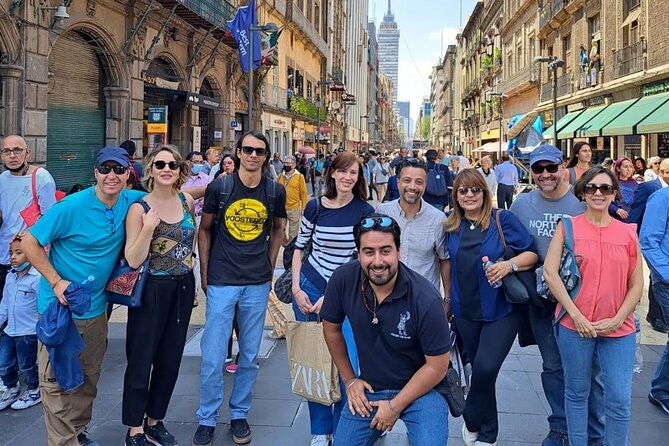
The group can include up to 25 people, though the available feedback also includes small private-feeling experiences, such as Diego adapting the pace for one solo visitor and another guide adjusting the route for four older American visitors. You should not assume every departure will be that intimate, but the guides appear used to handling different ages and interests.
The tour takes about two hours and 30 minutes to three hours and 10 minutes. That is enough time for an overview, not enough for full admission visits at every site. Wear comfortable shoes and expect a steady walk between stops. The route begins at the Diego Rivera Mural Museum on Calle Colón Balderas and finishes near Templo Mayor Museum on Seminario Street.
More History Tours in Mexico City
- Historic Downtown Walking Tour
★ 5.0 · 1,289 reviews - Historic Center Food Tour in Mexico City
★ 5.0 · 1,263 reviews - Mexico City: Historic Downtown Walking Tour
★ 4.8 · 1,039 reviews
Diego Rivera’s Mural Sets the Historical Frame
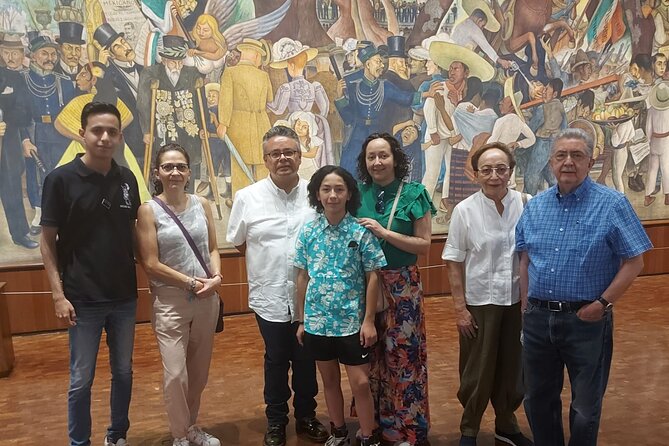
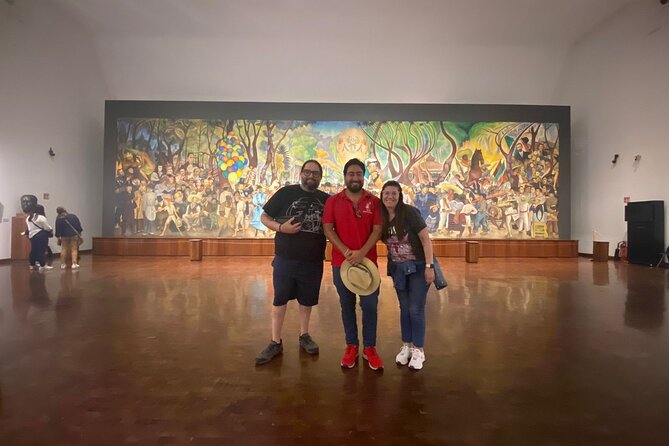
The opening stop is the Museo Mural Diego Rivera, where you spend about 25 minutes with Rivera’s famous mural Dream of a Sunday Afternoon in Alameda Central. The guide focuses on the many figures in the mural and the political, cultural, and ideological forces they represent.
One striking detail is the work’s censorship. Rivera included the phrase God does not exist, which led to a dispute and the mural being covered for a period. That episode gives you an immediate sense of how art, religion, politics, and public opinion collided in Mexico.
This is a smart place to begin. Instead of starting with dates and rulers, the guide uses a single artwork to introduce several centuries of change. You get a visual cast of characters and a way to understand why Mexican history often feels like a conversation, or argument, between Indigenous traditions, Spanish colonial power, the Catholic Church, reformers, revolutionaries, and modern political figures.
The stop is included in the route, but 25 minutes passes quickly. You will hear the guide’s interpretation and see the main work, but you will not have time to examine every figure in detail. If Rivera matters greatly to you, plan to return on your own.
Alameda Central Shows Everyday Mexico City
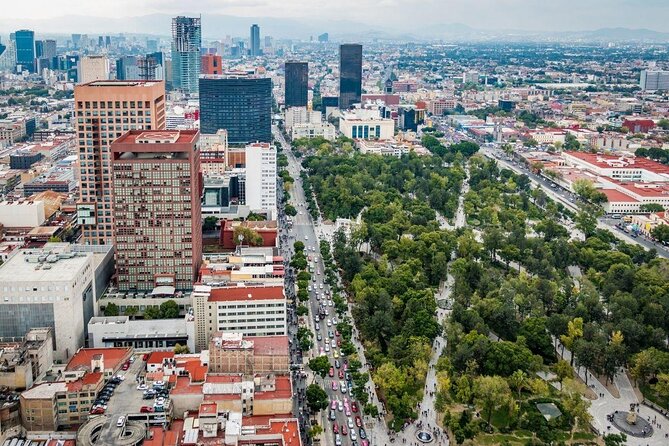
From the mural museum, the tour moves to Alameda Central for about 10 minutes. The park is presented as the first public park in the Americas, with attention to its classical sculptures and the way city residents use the space.
This short pause helps shift the focus from famous figures to ordinary urban life. A historic center is not only palaces and museums. It is also a place where people walk, rest, meet, cross the city, and make use of public space.
Ten minutes is enough to understand the park’s place in the city, but not enough for a slow stroll through it. Think of Alameda Central as a visual and social stop rather than a formal guided visit. The short timing also makes an early start useful, since crowded walkways can make it harder to stay close to the group.
Palacio de Bellas Artes Explains the City’s Great Showcase
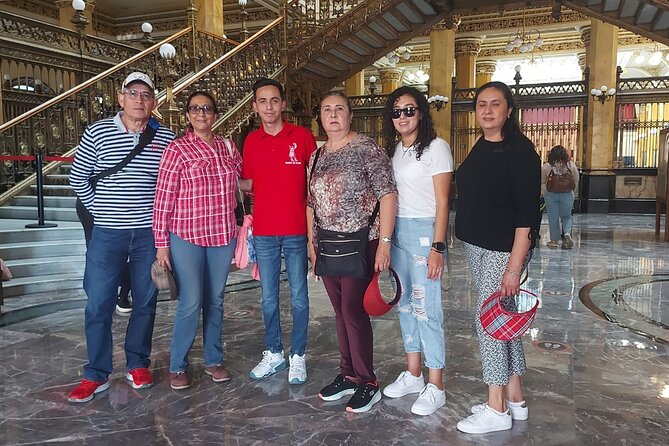
The Palacio de Bellas Artes gets about 20 minutes, and this is one of the route’s main highlights. The guide covers its history and explains why it is considered Mexico City’s most emblematic building.
The palace is especially useful for understanding the city’s changing ambitions. Its presence reflects a period when leaders wanted to modernize and beautify Mexico City, while its artistic role connects architecture, performance, and national identity.
The tour description promises detail here, but you should still keep your expectations realistic. Twenty minutes is an introduction. You will learn why the building matters and see its most important features, yet you are unlikely to have time for a full examination of the interior, murals, or exhibitions.
I like this stop because it adds a grand public building to the earlier political mural and public park. You are not simply collecting photo stops. You are watching the city express different ideas about power, culture, and modern life.
More Walking Tours in Mexico City
- Frida Kahlo VIP [Museum Tickets Included] Walk, Markets & Churros
★ 5.0 · 982 reviews - Walking Tour of the Historic Center of Mexico City
★ 5.0 · 870 reviews - Anthropology Museum Private Experience Walking Tour
★ 5.0 · 355 reviews - Walking Tour in Mexico City for Exploring their Cultural Heritage
★ 5.0 · 245 reviews
Palacio Postal and Palacio de Minería Reveal Porfirian Ambition
The Palacio Postal receives about 15 minutes. It forms part of Porfirio Díaz’s project to make Mexico City more modern and attractive, and the guide uses the building to explain that larger program.
The stop works best when you pay attention to the contrast between beauty and politics. Fine construction and civic improvement can tell one story, while the social tensions of the period tell another. The tour’s theme of contrasts appears clearly here: a polished public building can reflect both progress and inequality.
You then spend about 10 minutes at Palacio de Minería. The guide connects it to Mexico’s continuing importance as a silver-exporting country. This is a compact stop, but it gives the route an economic angle. Behind the facades are mining wealth, technical education, trade, and the money that helped shape the capital.
Because both stops are brief, you will want to listen closely. The guide’s explanation is more important than the amount of time spent inside or outside each building.
Museo Nacional de Arte Adds Sculpture and Architecture
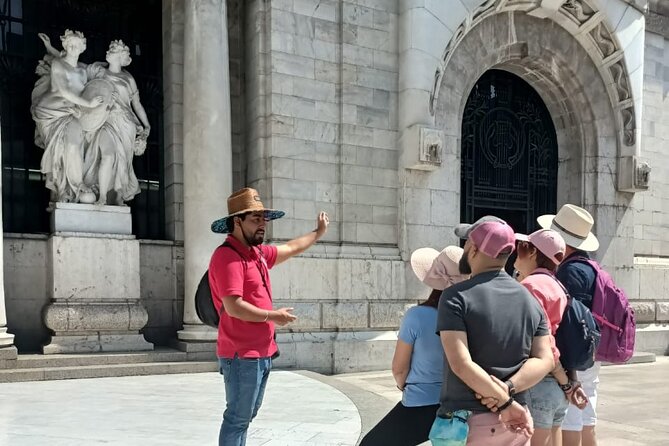
At the Museo Nacional de Arte, you spend around 10 minutes examining a sculpture made by an artist with one hand, along with details of the building’s architecture.
That unusual sculpture story gives the stop a human focus. It is the sort of detail you might miss if you simply walked past the museum’s grand exterior. The architecture also keeps the tour’s attention on how Mexico City’s institutions presented culture and national purpose.
Again, this is a sample rather than a full museum visit. The route gives you a reason to return, especially if art or architecture is high on your list. You should not expect time to explore the museum’s wider collection.
Teatro de la Ciudad Brings Theater and Tragedy
The Teatro de la Ciudad stop lasts about 15 minutes. The guide explains the history of theater in Mexico and tells the tragic story of Esperanza Iris, a major figure associated with the theater.
Across from the theater, you also hear about a former 18th-century asylum for women described at the time as insane. This is one of the tour’s darker turns. The route does not present the city as a collection of pretty buildings only. It also points to confinement, social attitudes, and difficult chapters in urban life.
That balance is valuable. Mexico City’s center can look ceremonial and elegant, but its buildings have served many purposes, including ones that are uncomfortable to consider today. The guide’s storytelling helps you read the streets as places shaped by real lives, not just architectural decoration.
The theater portion is free according to the tour details, but the stop remains short. You are there for context and storytelling rather than an extended performance or museum experience.
Centro Cultural España Connects Colonial Schooling to Aztec Nobility
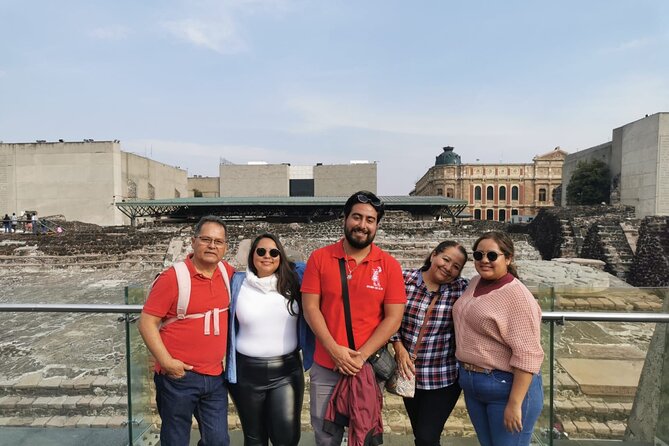
At Centro Cultural España en México, the group goes below street level to see remains associated with the school for the sons of Aztec nobles. About 20 minutes are set aside for this stop, which is free.
This is an important transition in the route. You have moved through colonial and modern Mexico City, and now the ground itself begins to reveal the earlier city beneath it. The remains help explain how Spanish institutions were built over, beside, and in response to the Aztec capital.
The stop also gives you a useful reminder that the modern center is layered. Streets and buildings do not erase the earlier city completely. Fragments remain below and around them, and a guide can point out the connection more clearly than a quick independent walk.
The lower-level setting may not suit everyone, and the time is limited. Still, this is one of the stops that gives the tour its particular character. You are not only looking at monumental facades. You are seeing evidence of an older world under the present one.
Templo Mayor Finishes With Tenochtitlan
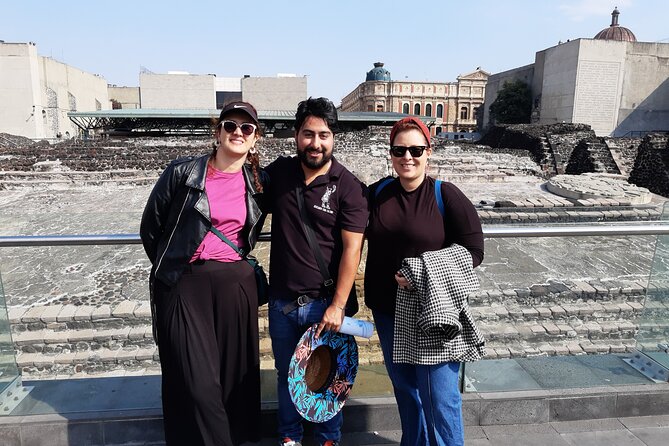
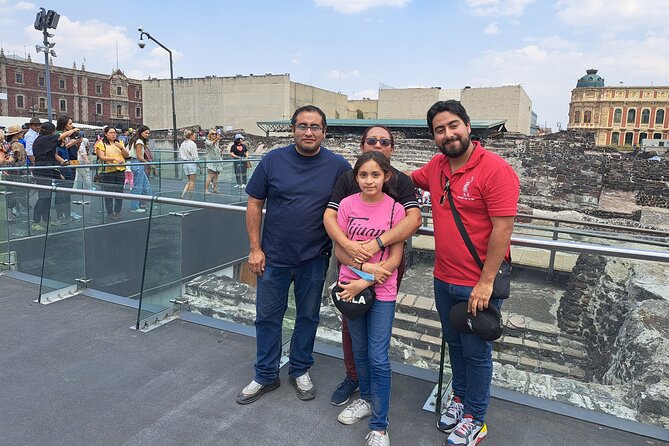
The final stop is Templo Mayor Museum, with about 25 minutes devoted to the Aztec capital, its worldview, sacrifices, and the Spanish conquest.
The guide uses models to explain how the Mexica built Tenochtitlan. This is a strong ending because it brings the whole route into focus. The modern center sits where a major Indigenous city once operated, and the surrounding streets make more sense once you understand that earlier urban plan.
One point needs careful attention: the experience ends by explaining the main temple from outside. The tour includes models and an explanation of how Tenochtitlan was built, but it is not a full museum visit. If you want the archaeological collection and excavation area in detail, reserve separate time for the Templo Mayor Museum.
The final explanation covers sacrifices and the conquest, subjects that require careful context. A good guide can show how religion, politics, urban planning, and military power fit together without reducing the Aztec world to a few dramatic facts. This is where the quality of your guide matters most.
The Guides Are a Major Part of the Value
The strongest praise goes to the people leading the walks. Delta is described as personable, pleasant, organized, and good at keeping the group on schedule. Diego has been praised for clear English, broad knowledge, and willingness to answer unusual questions. Jorge receives similar praise for patience and command of the subject, while Jaime is noted for kindness and efforts to accommodate individual needs.
Names may vary by departure, so you should not book expecting one particular guide unless the provider confirms it. Still, the pattern is encouraging. The experience depends heavily on explanation, and the available feedback points to guides who do more than recite dates.
One guide also offered lunch suggestions and advice on where to catch an Uber back toward Roma. That kind of practical help can add real value at the end of a long morning, especially if you are still learning your way around the center.
English is the offered language. Confirmation arrives at booking, and service animals are allowed. The tour is near public transportation, and most people can participate, but the route remains a walking experience with several stops close together.
Timing, Group Size, and What to Bring
I would choose an earlier departure. One useful piece of advice is to book early in the day to avoid heavier crowds. Morning timing should also make it easier to stay with the group near the central plazas and major buildings.
A group of up to 25 is large enough that you need to remain alert when crossing streets or moving between buildings. Ask questions when the guide pauses, rather than waiting until the last stop. The short schedule means the guide may need to keep moving.
Bring comfortable walking shoes, water, and a little patience for the quick transitions. Food and drinks are not included, and neither are tips. The route ends near Templo Mayor, where you can continue exploring or find lunch in the historic center.
The free-cancellation rule is straightforward: cancel at least 24 hours before the local start time for a full refund. Cancellations or changes within 24 hours are not refunded or accepted.
Who Will Get the Most From This Tour?
I would recommend it to a first-time visitor who wants a strong introduction to Centro Histórico without spending hours researching each building. It also suits families and solo visitors who value a guide’s ability to answer questions and adjust the pace.
It is a good match for anyone interested in the connection between art, politics, architecture, and archaeology. The route gives you a useful mental map, then lets you decide which places deserve a longer return visit.
I would be more cautious if you have limited mobility, dislike steady walking, or want long indoor visits. The tour covers nine stops in roughly three hours, so the pace can feel brisk. Art specialists and museum lovers may also find the visits too short.
Should You Book the CDMX Historic Center Walk?
Book this tour if you want breadth, context, and a capable English-speaking guide more than extended time inside each museum. The route is unusually well planned, moving from Rivera and modern Mexico through Porfirian architecture, theater, colonial remains, and the Aztec capital.
At $83.64, the cost is reasonable only if you use the guide’s interpretation. You are not paying for a full admission experience at every stop. You are paying to make sense of a complicated center in one compact walk.
My practical choice would be an early start, comfortable shoes, and a plan to return later to Bellas Artes, the Diego Rivera museum, or Templo Mayor if one catches your interest. For a first orientation, I would book it. For a slow, detailed museum day, I would choose individual visits instead.
FAQ
Where does the walking tour begin?
It begins at the Museo Mural Diego Rivera, at Calle Colón Balderas s/n, Colonia Centro, Cuauhtémoc, Mexico City.
Where does the tour end?
It ends at or near the Templo Mayor Museum, at Seminario 8 in Centro Histórico. The final explanation of the main temple is given from outside.
How long does the tour last?
The expected duration is approximately two hours and 30 minutes to three hours and 10 minutes.
What language is offered?
The tour is offered in English.
What is included in the price?
A certified guide is included. Tips, lunch, food, and drinks are not included.
How many people can join the tour?
The maximum group size is 25 people.
Can I cancel for a full refund?
Yes. You must cancel at least 24 hours before the experience start time for a full refund. Cancellations or changes made within 24 hours are not refunded or accepted.
Newly listed around Mexico City
- Xochimilco : Island of the dolls, tequila and mezcal CDMX★ 5.0 · 102 reviews
- Xochimilco: Sanctuary of the Axolotl★ 4.9 · 58 reviews
- Xochimilco: Market, Food and Nature ¡All included! Tour★ 4.9 · 107 reviews
- Xochimilco: amanecer en kayak Ciudad de México★ 5.0 · 35 reviews
- Xochimilco & Colonial Coyoacan Trip★ 4.0 · 312 reviews
- Bike Tour in Mexico City★ 5.0 · 45 reviews
- Small Groups: Xochimilco and Coyoacan★ 4.0 · 37 reviews
- Museum of Anthropology: a look at Mexico’s past★ 5.0 · 52 reviews
Historical Tours, compared.


Mexico City Historical Centre Food Tour with 7 Authentic Tastings
Read our review →
Historical and Cultural Walking Tour of San Miguel de Allende
Read our review →
Historical and Cultural Walking Tour of San José del Cabo
Read our review →
Walking Tour in Mexico City for Exploring their Cultural Heritage
Read our review →Browse the lists this tour appears in