
Reviewed · HISTORICAL TOURS
Mexico City: Historical walking tour of Tenochtitlan
History comes alive on foot. This three-hour walk links Tenochtitlan, Spanish rule, and modern Mexico through ruins, churches, palaces, murals, and city streets. I like the route’s clear sweep across roughly 700 years, and I especially like having Professor Cristina Ríos explain how each site fits into the larger story. The main drawback is that several places are viewed from the outside, so you will need extra time and separate tickets to explore the museums and major interiors.
The small groups, limited to 10 people, make it easier to ask questions and keep up with the guide. Cristina’s strong background in Mexican history, art, and architecture is the tour’s biggest asset. This is not a quick photo walk. It suits adults who enjoy detailed explanations, and it may feel too fact-heavy for young children or anyone wanting a casual stroll.
In This Review
- Key points to know before booking
- Why this Mexico City history walk works
- Templo Mayor and the buried city of Tenochtitlan
- Behind the cathedral: layers of faith and power
- Cortés, Moctezuma, and the old palace site
- Iturbide Palace and Mexico City’s changing architecture
- San Francisco and the city built over itself
- Casa de los Azulejos and one memorable mural
- Palacio de Bellas Artes closes the route
- Professor Cristina Ríos makes the difference
- Price, pace, and what you receive for $43
- Who should book this walking tour?
- Should you book it?
- FAQ
- How long does the Mexico City Tenochtitlan walking tour last?
- Where does the tour meet?
- Where does the tour finish?
- Does the tour enter the Templo Mayor Museum?
- Is Professor Cristina Ríos the guide?
- Are tickets, food, and drinks included?
- Is the tour suitable for children?
- What should I bring?
- How large is the group?
Key points to know before booking
- 700 years in three hours: Follow the story from Mexica Tenochtitlan through Spanish colonization, independence, and modern Mexico City.
- Professor Cristina Ríos leads the tour: Her explanations cover history, architecture, art, customs, and lesser-known places.
- Templo Mayor is viewed from outside: You see models and the archaeological zone, but the museum entrance is not included.
- A compact downtown route: Walk from the Centro Cultural España to Palacio de Bellas Artes, with stops at major landmarks along the way.
- Small groups matter: With three to 10 people, the pace can be adjusted and questions are easier to handle.
- Bring sun protection: Comfortable shoes, a hat or sunglasses, and sunscreen will make the morning much easier.
Why this Mexico City history walk works
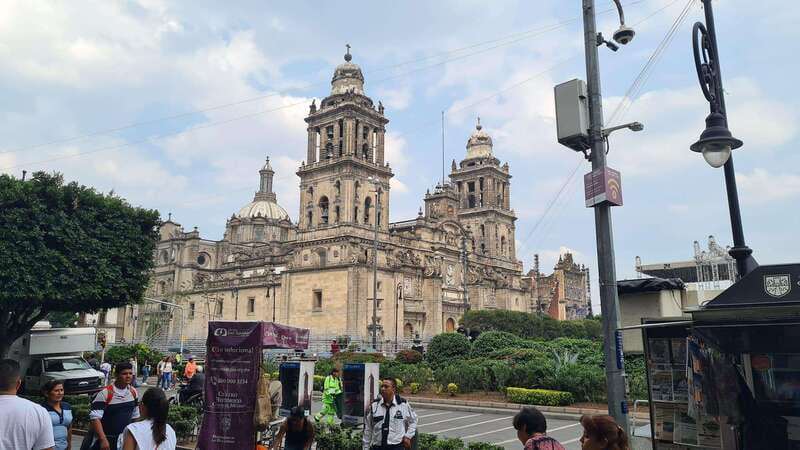
Mexico City can be hard to read at street level. A cathedral may sit beside an Aztec excavation, while a grand colonial building hides a story about a former palace. Without context, you see impressive stone and colorful facades. With the right guide, you begin to understand how one city was built on top of another.
That is the strength of this tour. It does not treat Tenochtitlan as an isolated chapter that ended with the Spanish conquest. Instead, the route connects the Mexica capital with colonial power, Mexican independence, 19th-century architecture, and the artistic identity of the modern city.
I would choose this walk early in a Mexico City visit. It gives you a useful map of Centro Histórico, explains why the main buildings matter, and can help you decide which places deserve a longer visit later. Several people who took the tour also received suggestions for museums, restaurants, books, and additional places to see, making the experience useful beyond its three-hour length.
The route begins at the entrance of the Centro Cultural España at Guatemala 18, near the Templo Mayor area. Confirm the exact meeting instructions when booking, since the tour description also refers to the Templo Mayor Museum entrance. You will begin with models and an exterior view of the archaeological zone rather than entering the museum.
More History Tours in Mexico City
- Historic Downtown Walking Tour
★ 5.0 · 1,289 reviews - Historic Center Food Tour in Mexico City
★ 5.0 · 1,263 reviews - Mexico City: Historic Downtown Walking Tour
★ 4.8 · 1,039 reviews
Templo Mayor and the buried city of Tenochtitlan
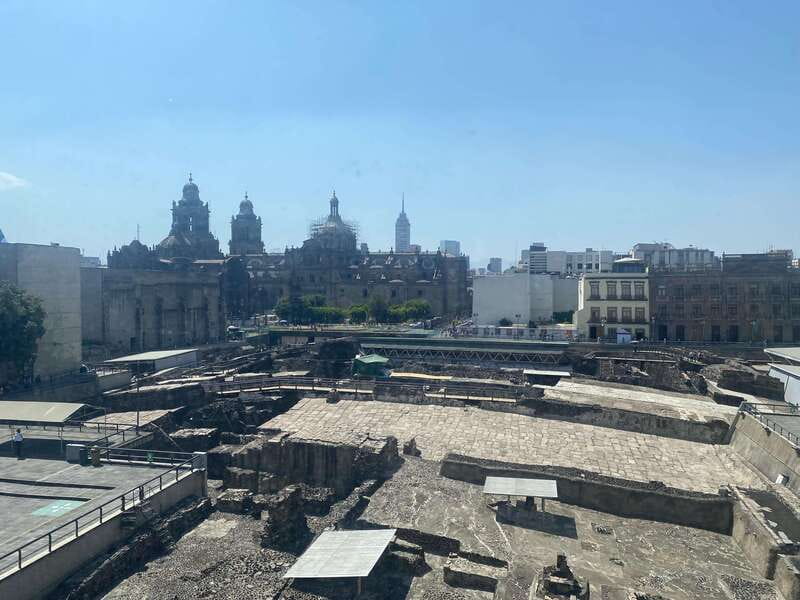
The first major stop is Templo Mayor, where the scale of the ancient Mexica capital starts to make sense. The tour spends about 40 minutes here, using models and the view of the excavation to explain the founding and growth of Tenochtitlan.
This is valuable because the archaeological remains can look fragmented. Professor Ríos helps connect what you see on the ground with the larger ceremonial center that once occupied this area. You also begin to understand the physical relationship between the old Mexica city and the later colonial center.
The tour does not include entry to the Templo Mayor Museum or the archaeological zone. That is an important limitation. If you want to see the artifacts and excavated structures at close range, plan a separate visit, perhaps later the same day or on another morning.
Still, the exterior introduction has a practical advantage. You get the historical framework first, then you can explore the museum independently with a better sense of what you are looking at. I would budget extra time if Templo Mayor is one of your main interests.
Behind the cathedral: layers of faith and power
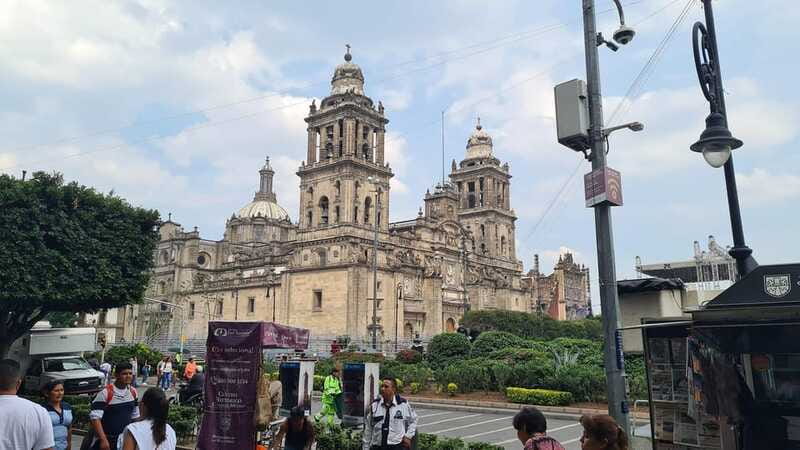
From Templo Mayor, the route moves behind the Metropolitan Cathedral. This section lasts about 20 minutes and includes the site connected with the Ánimas del Purgatorio, as well as the Calmecac Site Museum at the Centro Cultural España.
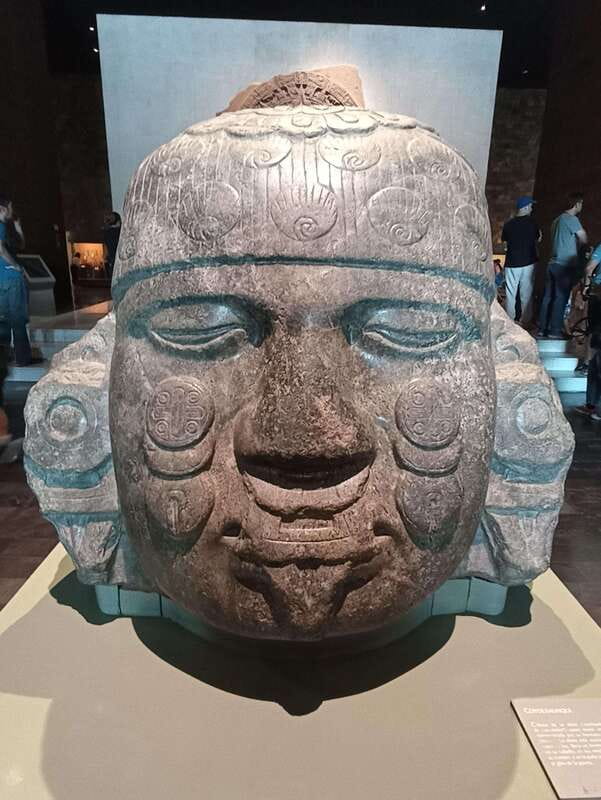
The Calmecac site is especially useful for understanding how pre-Hispanic remains appear within the modern city. The name refers to an important educational institution in Mexica society, and the location gives the tour another chance to show that ancient Mexico was not simply erased. Its remains survive beneath and beside later buildings.
The cathedral area also helps explain the change in religious and political power after the Spanish conquest. I like this part of the route because it keeps the story grounded in actual spaces rather than turning the tour into a list of dates.
The stop is short, so you should not expect a full cathedral interior visit. The focus is on explanation and surrounding sites. If you want time inside the cathedral, save that for after the tour or return when you are not watching the clock.
Cortés, Moctezuma, and the old palace site
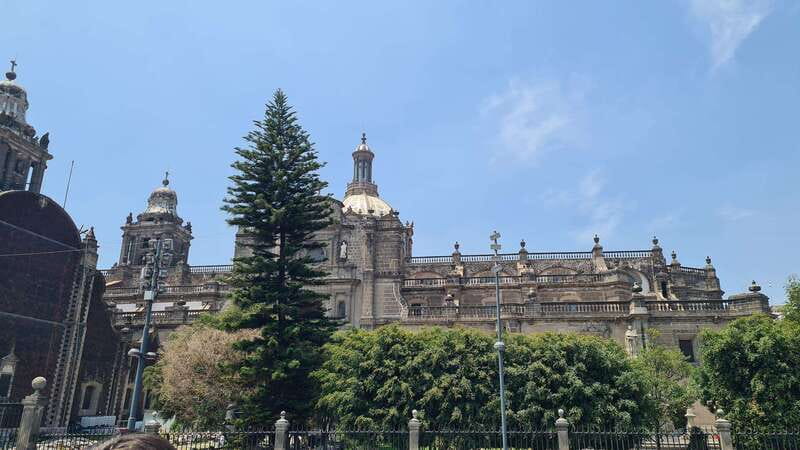
The walk continues to the former Axayacatl Palace, associated with the old houses of Moctezuma and the lodgings of Hernán Cortés. This is one of the most important stops for understanding the power shift that shaped the city.
The site brings two figures into the same physical story: Moctezuma, ruler of the Mexica Empire, and Cortés, the Spanish military leader whose arrival changed the course of Mexico. Professor Ríos explains the location in relation to the earlier palace and the colonial occupation that followed.
This kind of place is easy to miss if you walk downtown alone. There may be no single dramatic ruin announcing its importance. The value comes from knowing what happened there and why the building matters.
One especially useful detail from the tour experience is that Cristina has sometimes taken the group slightly off the planned route to see Cortés’s tomb. That sort of adjustment depends on the day and the group, so you should not treat it as a guaranteed stop. It does show the benefit of a small group and a guide who can respond to questions and interests.
More Walking Tours in Mexico City
- Frida Kahlo VIP [Museum Tickets Included] Walk, Markets & Churros
★ 5.0 · 982 reviews - Walking Tour of the Historic Center of Mexico City
★ 5.0 · 870 reviews - Anthropology Museum Private Experience Walking Tour
★ 5.0 · 355 reviews - Mexico City: Guided walking tour through the most historic parts of the city.
★ 4.5 · 172 reviews
Iturbide Palace and Mexico City’s changing architecture
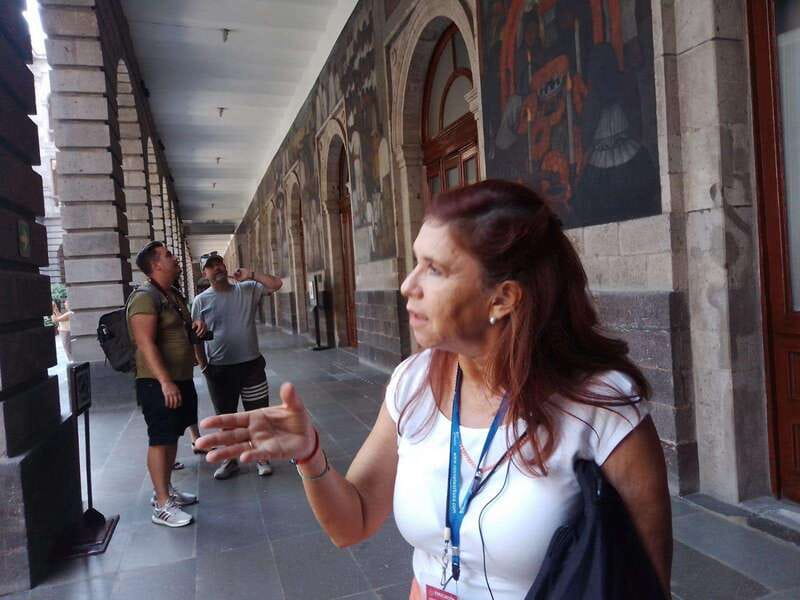
Next comes the Iturbide Palace, now the Banamex Cultural Center. The tour spends about 20 minutes here, using the building to discuss architecture and Mexico’s changing political and economic life.
This is a good pause in the route because the story moves beyond conquest and early colonial rule. The palace reflects the wealth and ambitions of later colonial society, while its present cultural role shows how historic buildings continue to function in the city.
The tour’s emphasis on architecture is one of its strongest features. Cristina does not only identify a style or a date. She explains how buildings reflect the people who commissioned them, the period in which they were built, and the way Mexico City developed.
The stop is primarily an exterior explanation, so check current access arrangements if you want to visit the cultural center inside. The walking tour gives you the background, but it does not replace a full museum visit.
San Francisco and the city built over itself
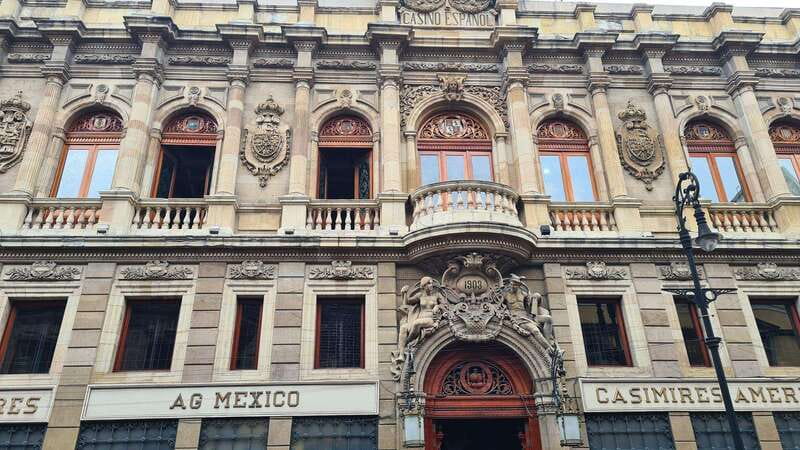
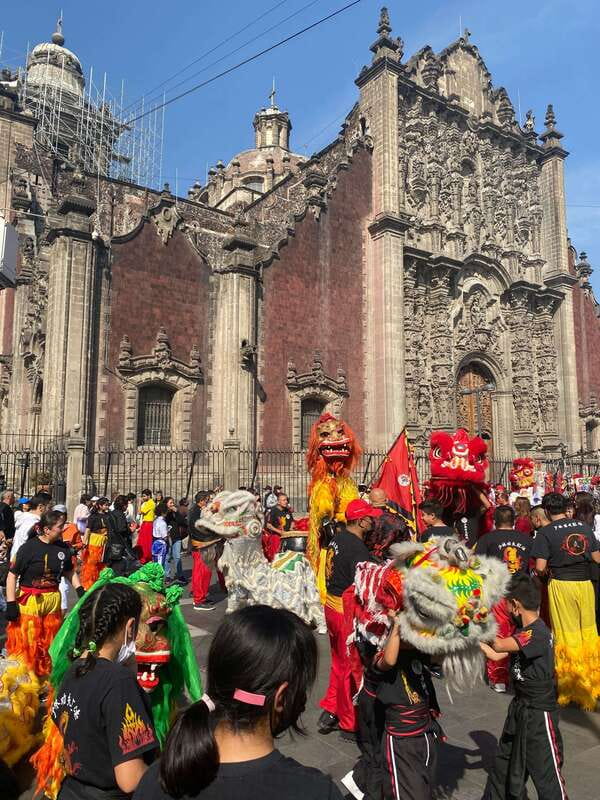
The facade of the Church of San Francisco is the next major stop. The group spends about 20 minutes here, looking at the exterior and discussing its place in the colonial center.
This is another example of why a guide helps. A church facade can seem like one more handsome historic wall after you have seen several palaces and religious buildings. Cristina’s focus on architectural details and historical connections gives the stop more purpose.
The church also adds to the tour’s central theme: Mexico City contains several eras in one compact area. The ancient Mexica capital, Spanish religious institutions, colonial residences, and later civic buildings are all close together. You walk only a short distance, but the time span is enormous.
Since the facade is the listed focus, do not assume you will receive a full interior tour. This is a pattern throughout the experience: the guide provides interpretation at important sites, while you handle longer museum and church visits separately.
Casa de los Azulejos and one memorable mural
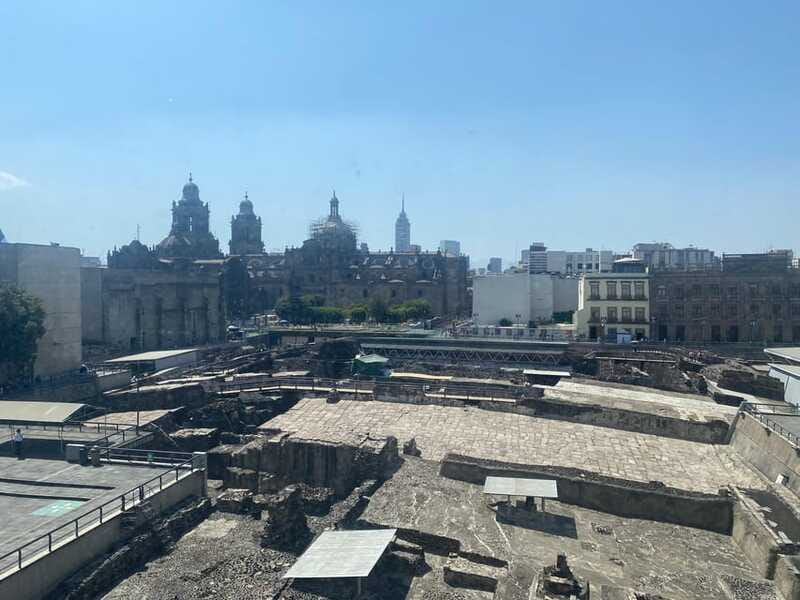
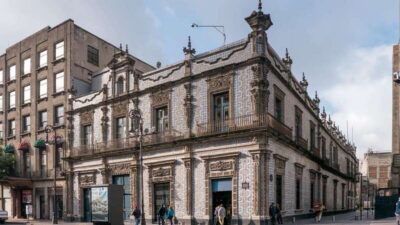
The Casa de los Azulejos, or House of Tiles, receives about 30 minutes. You view the famous blue-and-white tile facade from outside, then go inside to see José Clemente Orozco’s mural, with Cristina explaining its meaning and setting.
This is one of the route’s best combinations of architecture and art. The exterior is instantly recognizable, but the mural gives you a reason to look beyond the building’s pretty surface. Orozco’s work adds a modern Mexican artistic voice to a route that began with pre-Hispanic remains.
I would pay close attention here. The tour is not simply stopping for a photograph. The detailed explanation helps you see how architecture, mural painting, and national identity fit together.
The stop also provides a welcome change of texture. After ruins, churches, and colonial facades, you get a bright decorative building and a major work of Mexican art. It is a strong reminder that Mexico City’s story does not end with the colonial period.
Palacio de Bellas Artes closes the route
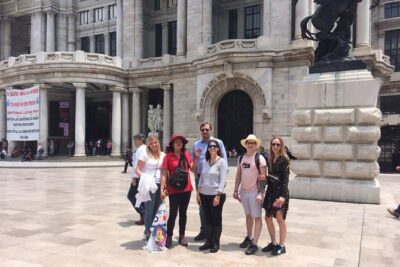
The final section passes by the Palace of Fine Arts and ends at Palacio de Bellas Artes. The planned time is about 30 minutes, though the building is described as a pass-by stop rather than a full interior visit.
That distinction matters. Bellas Artes is one of Mexico City’s essential cultural buildings, but this tour gives you an introduction, not a complete museum experience. Cristina can explain its architecture and place in the city, while you can return later for the murals, galleries, and interior details if they interest you.
Ending here works well geographically. You finish near one of the city’s major cultural institutions, with easy options for continuing your day. You might visit Bellas Artes on your own, explore nearby streets, or follow the guide’s suggestions for food and additional sights.
The tour’s endpoint also makes it easy to separate guided learning from independent exploration. You get the structure first, then choose where to spend more time.
Professor Cristina Ríos makes the difference
The clearest pattern in the feedback is the praise for Cristina Ríos. She is described as passionate, patient, and highly informed about Mexican history, art, architecture, and customs. Her English is considered easy to understand, and the tour is available in English or Spanish.
That matters on a history walk. The subject covers complicated names, dates, political changes, and architectural terms. A guide who can answer questions clearly keeps the material from becoming a blur.
Cristina also seems comfortable adapting the experience. One couple had a private version because they were the only people booked, and the route was adjusted to suit their interests. Other comments describe extra stops, recommendations for places to eat, and suggestions for further reading.
The tour can use earphones and audio equipment, with headsets supplied when the group is larger than seven people. That is useful in noisy downtown areas. If your group is smaller, ask how the guide will handle sound on the day.
The only less glowing note is that this is a traditional, fact-focused tour. One participant found it best suited to adults with some interest in architectural styles. I agree with that warning. Cristina’s strength is depth, not theatrical storytelling or constant entertainment.
Price, pace, and what you receive for $43
At $43 per person, this is not the cheapest way to walk through Centro Histórico. You are paying for a specialized guide and three hours of interpretation rather than admission to several attractions.
I consider the price reasonable if you want a serious introduction to Mexico City’s past. The route covers many major sites, the group is capped at 10, and the guide’s subject knowledge is the main product. You are also getting a framework that can make later museum visits more rewarding.
The value is weaker if you already know the city well or mainly want entrance access. Tickets, food, and drinks are not included. You will need to pay separately for museums and decide how much extra time to spend at Templo Mayor and Bellas Artes.
The pace is generally manageable, with walking between stops and time for questions. Comfortable shoes are essential. A hat, sunglasses, and sunscreen are recommended for the morning, since some parts of the route are outdoors.
The optional stop at Dulcería Celaya adds a small taste of traditional Mexican sweets. It is not included in the price, so bring money if you would like to try something there. This is a nice touch for people who enjoy food history, but it is not a full food tour.
The activity is wheelchair accessible, though the route includes historic streets and exterior sites. If you have specific mobility needs, confirm the current route details before booking.
Who should book this walking tour?
I would choose this experience if you:
- Want a clear introduction to Tenochtitlan and Mexico City
- Enjoy history, art, architecture, and political stories
- Prefer a small group over a large sightseeing crowd
- Want to ask detailed questions
- Are visiting Centro Histórico for the first time
- Can manage three hours of walking in the sun
- Prefer a serious guide to a light entertainment-style tour
I would think twice if you are traveling with children under 10, since the tour is not designed for them. It may also be a poor match if you want to enter every landmark during the walk or prefer short explanations and lots of free time.
Plan your day carefully. Since the tour ends at Palacio de Bellas Artes, you can continue there afterward, but you should reserve extra time if you want to see the interior. The same applies to Templo Mayor. The tour gives you context at both ends of the route, but it does not include museum admission.
Should you book it?
Book this tour if you want Mexico City to make sense, not just look impressive. Professor Cristina Ríos is the reason to choose it: her background, enthusiasm, clear English, and willingness to answer questions turn a downtown walk into a connected story.
The best plan is to take it near the beginning of your stay, then return to Templo Mayor, Bellas Artes, or another museum with the background fresh in your mind. At $43, it offers good value for a small group and a specialist guide, though you should budget separately for tickets and food.
Skip it if you want a relaxed photo stroll or a tour built mainly around interiors. For history-minded adults who want to understand how Tenochtitlan became Mexico City, this is a strong choice.
FAQ
How long does the Mexico City Tenochtitlan walking tour last?
The tour lasts three hours.
Where does the tour meet?
The meeting point is the entrance of the Centro Cultural España at Guatemala 18, near the Templo Mayor area. The meeting information also refers to the Templo Mayor Museum entrance, so confirm the exact point when booking.
Where does the tour finish?
The walk finishes at Palacio de Bellas Artes, also called the Palace of Fine Arts.
Does the tour enter the Templo Mayor Museum?
No. The tour views models and the archaeological zone from outside. Museum and archaeological-site tickets are not included.
Is Professor Cristina Ríos the guide?
The listed guide is Professor Cristina Ríos, who leads tours in English and Spanish.
Are tickets, food, and drinks included?
No. Tickets, food, and drinks are not included in the $43 price.
Is the tour suitable for children?
The activity is not suitable for children under 10.
What should I bring?
Bring comfortable shoes, a sun hat, sunglasses, and sunscreen. The tour involves walking through downtown Mexico City and includes outdoor stops.
How large is the group?
The group is limited to between three and 10 participants. Headsets are provided when the group has more than seven people.
Newly listed around Mexico City
- Ticket to Frida Kahlo Museum on CDMX★ 4.5 · 44 reviews
- Epic Centro Histórico Walking Tour★ 5.0 · 77 reviews
- Eat Like A Local By The Taco Mensch★ 5.0 · 55 reviews
- Eat and Explore Local Markets in Mexico City★ 5.0 · 83 reviews
- Ticket for the Frida Kahlo Museum★ 3.5 · 67 reviews
- Authentic Lucha Libre Tour : Wrestling School, Tacos & Mezcal★ 5.0 · 162 reviews
- Express Tour to Teotihuacan Pyramids. Be the first to arrive!★ 4.5 · 62 reviews
- Small Group: The Magical Colonial Towns of Taxco and Cuernavaca★ 4.5 · 46 reviews
Historical Tours, compared.


Mexico City Historical Centre Food Tour with 7 Authentic Tastings
Read our review →
Historical and Cultural Walking Tour of San Miguel de Allende
Read our review →
Historical and Cultural Walking Tour of San José del Cabo
Read our review →
Browse the lists this tour appears in