
Reviewed · MUSEUMS
Tour Museum of Anthropology a trip to the past-Small groups
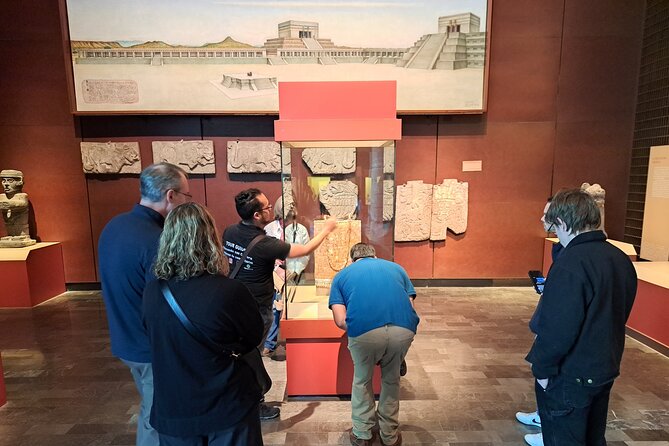
A great museum can be too much. Mexico City’s National Museum of Anthropology is vast, packed with major artifacts, and often labeled mainly in Spanish, so this three-hour small-group tour gives you a clear route through the essentials. I especially like the way guides Jorge and Delta turn objects into stories, and the group limit of 15 keeps the experience personal. The trade-off is simple: three hours covers highlights, not the whole museum.
I also like that admission and guiding are included for $98.57 per person. You get help reading symbols, placing cultures on a timeline, and understanding why famous pieces matter instead of merely walking past them. One practical warning: a single bad experience involved tickets that could not be downloaded and no guide appearing, so keep your confirmation handy and contact the operator promptly if anything looks wrong before arrival.
The tour begins and ends at the museum in Chapultepec, making it easy to fit into a day in Mexico City. It is offered in English, allows service animals, is near public transportation, and usually suits most participants. Free cancellation is available up to 24 hours before the start time.
In This Review
- Key points at a glance
- Why this museum needs a plan
- Meeting the guide at Chapultepec
- The opening lesson: how to read the museum
- Famous objects with useful context
- How Jorge and Delta shape the experience
- What three hours can and cannot do
- Is $98.57 per person fair?
- Who should book this visit?
- Practical advice before you go
- Should you book the Museum of Anthropology tour?
- FAQ
- Where does the tour begin?
- Where does the tour end?
- How long does the tour last?
- What is included in the price?
- Is lunch included?
- Are tips included?
- Is the tour offered in English?
- How large can the group be?
- Is public transportation available near the meeting point?
- Can I cancel for a full refund?
Key points at a glance
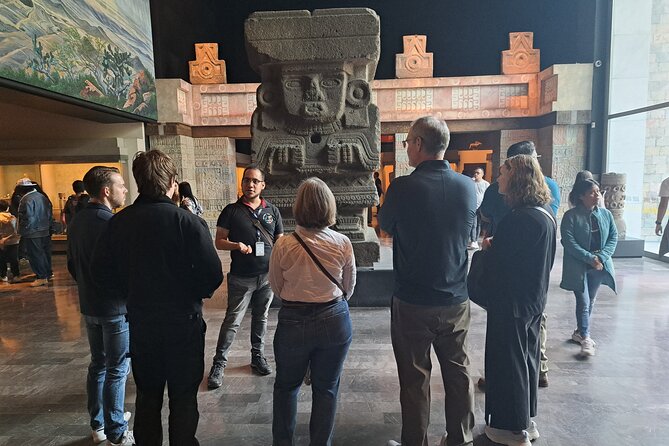
- Jorge and Delta are the main draw: Both guides receive repeated praise for clear English, strong storytelling, and a lively way of explaining difficult subjects.
- The Sun Stone is only the beginning: The route places famous objects such as the Sun Stone and Pakal Sarcophagus within larger stories about Mesoamerican cultures.
- Small groups change the museum visit: With a maximum of 15 people, the guide can ask questions, point out small details, and keep the pace human.
- English help matters here: Many room labels are in Spanish, with only limited English information, making a guide especially useful for English speakers.
- Three hours means selected highlights: You will understand much more, but you will not see every gallery or object in this enormous museum.
- The meeting point is straightforward: Start at the Museo Nacional de Antropología on Paseo de la Reforma, then return to the same spot.
Why this museum needs a plan
The National Museum of Anthropology is not a quick stop where you can stroll in, glance at a few famous pieces, and feel you have seen it. Its collections cover thousands of years and many peoples, regions, beliefs, and artistic traditions. Without a plan, it is easy to spend too long in one room and then rush through the next several.
That is where this tour earns its keep. The guide selects important objects and builds a usable timeline around them. You are not left trying to connect a carved figure in one gallery with a map or ceremonial object several rooms later. Instead, the tour shows how the pieces relate to one another.
I find this especially helpful if you are new to Mexico’s pre-Hispanic cultures. Terms, names, and dates can blur together quickly. A good guide gives you a few sturdy reference points, then adds detail without turning the visit into a classroom lecture.
The museum’s own displays are not equally accessible to English speakers. Several people who took the tour pointed out that many signs are in Spanish, with only a small amount of English translation. You can still admire the objects alone, but you may miss the meaning behind their posture, clothing, symbols, or placement.
More museum visits in Mexico City:
- CDMX: Xochimilco, Coyoacan, Frida Kahlo Museum & Murals Tour
★ 4.4 · 3,025 reviews - Chapultepec Castle & Anthropology Museum Tour
★ 4.5 · 1,348 reviews - Frida Kahlo VIP [Museum Tickets Included] Bike, Markets & Churros
★ 5.0 · 1,072 reviews
Meeting the guide at Chapultepec
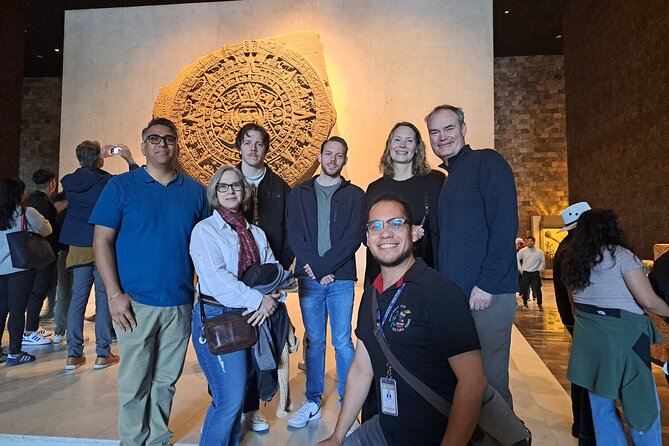
The meeting point is the Museo Nacional de Antropología, at Av. Paseo de la Reforma s/n in Bosque de Chapultepec I Sección, Miguel Hidalgo. The museum is near public transportation, and the activity ends back at that same meeting point.
That simple arrangement is useful. You do not need to coordinate a second pickup across the city, and you can plan lunch or another Chapultepec stop afterward. The tour does not include lunch, so bring your own plan for food before or after the visit.
The experience is offered in English. For many English-speaking visitors, that is more important here than it might be at a smaller museum. The guides do more than translate labels. They explain ideas, compare cultures, and show how archaeologists work from incomplete evidence.
The group can include up to 15 people. That is small enough to feel more manageable than a large bus-style group, though it is not a private tour. The strongest praise goes to guides Jorge and Delta, so your exact experience may depend on who leads your session. Both are described as warm, animated, and deeply familiar with the subject.
You may receive an earpiece so you can hear the guide clearly. That is a small but useful feature in a large museum, especially when other groups are nearby.
The opening lesson: how to read the museum
Jorge has a particularly effective way of beginning. He reportedly starts at a large pillar and asks the group to name what they see. At first, the symbols and figures may seem confusing. Later, near the end of the tour, he returns to the same pillar and asks you to look again.
By then, the forms have a place in your mind. You can recognize more of the imagery and understand how the earlier discussion prepared you for it. This kind of return gives the tour a satisfying shape, instead of making it feel like a string of unrelated stops.
Delta’s approach is also praised for connecting different peoples and periods. She is described as tracing links among Teotihuacan, Maya, and Aztec worlds while separating archaeological evidence from later legends. That distinction matters. Ancient cultures are often reduced to colorful myths, but the museum’s objects can support a more careful account.
I like this teaching method because it lets you look closely without needing to memorize every date. You begin to ask better questions: What was this object used for? Who made it? What can the evidence prove? What remains uncertain?
The guides also use larger maps and charts in the museum to connect regions and time periods. This is valuable because Mesoamerica was not one single culture moving through one simple sequence. The maps help you see distance and contact, while the timeline prevents every civilization from collapsing into one vague ancient past.
Famous objects with useful context
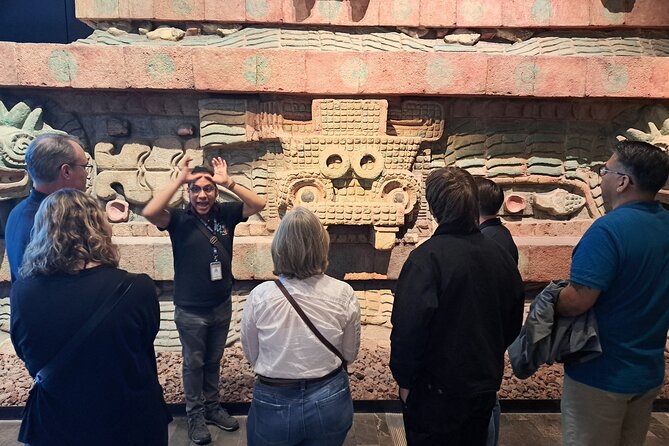
The tour highlights major pieces, including the Sun Stone and Pakal Sarcophagus. These are the objects many people already expect to see, but their fame can work against them. A crowd gathers, cameras come out, and the piece becomes a checklist item.
A guide gives you a reason to pause. You can learn how to read the symbols, understand the object’s place within its culture, and connect it to other works nearby. The point is not simply to identify the Sun Stone. It is to see why its design mattered and how the museum uses it to help explain Mexica thought.
The Pakal Sarcophagus offers another route into the past. The tour can help you consider the person, the imagery, and the archaeological setting rather than treating the sarcophagus as an isolated masterpiece. The supplied information also promises access to some objects that are not regularly displayed, though the exact items may vary.
There are multimedia resources that recreate ancient rituals, along with an explanation of restoration work. These features add a human side to the museum. You see not only what survived, but also how modern specialists preserve, study, and interpret it.
That can be one of the best parts for a curious visitor. Archaeology is not magic, and museum displays do not emerge fully formed. Objects need conservation, interpretation, and sometimes cautious revision when new evidence appears.
A few more Mexico City runs worth comparing
- Teotihuacan, Guadalupe Shrine & Tlatelolco Day Tour with Lunch
★ 5.0 · 11,603 reviews - Xochimilco, Coyoacan and Frida Kahlo with Optional Lunch
★ 4.5 · 7,320 reviews - Balloon flight + Breakfast in cave + Pyramids + Pick up CDMX.
★ 5.0 · 6,335 reviews - Teotihuacan pyramids morning or afternoon without tourist traps
★ 5.0 · 6,186 reviews
How Jorge and Delta shape the experience
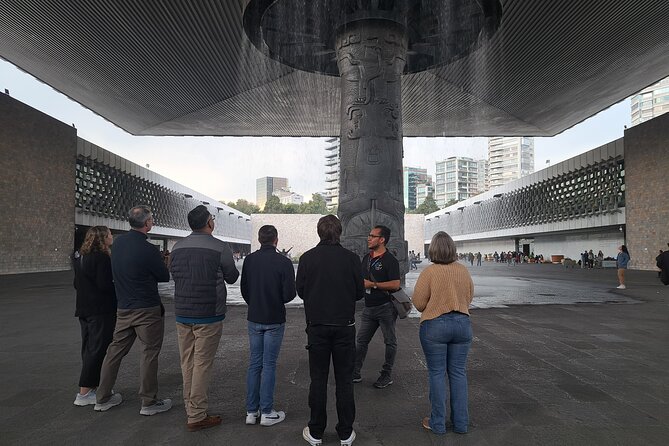
Jorge receives the most repeated praise for his storytelling. His strength is not just recall of facts. He links one artifact to the next, asks questions, uses maps, and keeps the group involved. One family even found that he held the attention of two teenagers for the full three hours, which is a useful test for any museum guide.
His English is described as excellent, and his style is energetic without losing the thread of the history. He also raises thoughtful questions about how history is recorded and whose version becomes the accepted one. That gives the tour a modern edge without turning it into a political speech.
Delta is praised for her warmth, clarity, and enthusiasm for Indigenous cultures and Mexican heritage. Her explanations help visitors understand the major cultural developments represented in the museum. A Mexican visitor found the tour especially useful for making personal cultural connections, showing that this is not only an introduction for first-time visitors from abroad.
Both guides appear to make the material personal and approachable. You are not expected to arrive with a background in anthropology. You need curiosity and the willingness to pay attention.
Still, guide quality can never be separated completely from the individual leading your group. The experience descriptions specifically praise Jorge and Delta, but the guide assigned to your date may differ. If a named guide is important to you, ask the operator before booking rather than assuming.
What three hours can and cannot do
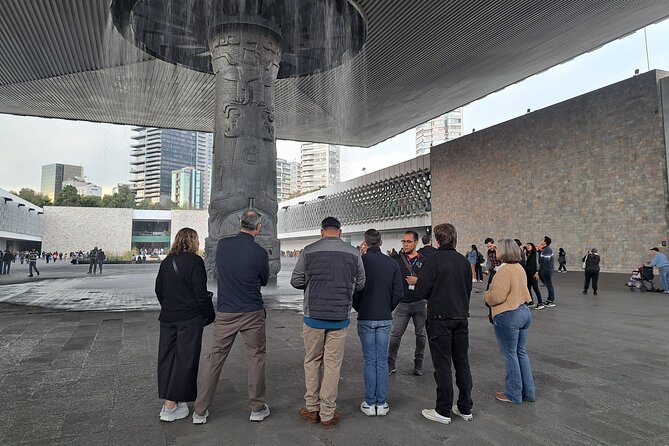
Three hours is a useful length for a first visit. It gives the guide enough time to establish a timeline, explain key cultures, and stop at major works without making the tour feel endless. The pace is described as well balanced, with a break included during at least one reported visit.
You should not expect to see the entire museum. One direct assessment estimates that roughly three quarters of the collection may remain unseen after the guided visit. That is not a flaw in the tour so much as a fact about the building’s size.
If you want a complete museum study, plan extra time afterward or return on another day. The problem is that the museum may close at 5 p.m., so a later start can leave little or no time for independent browsing. A reported 2 p.m. start had the advantage of fewer crowds but no spare time after the three-hour tour.
This creates a real timing choice. A morning session may give you more flexibility after the tour, while a later session may feel calmer. The exact schedule is not provided here, so check the available start time before you commit to a second museum visit that same day.
The best approach is to treat this as an orientation plus a focused visit. Let the guide show you the framework. Then, if time permits, revisit the rooms or objects that caught your attention.
Is $98.57 per person fair?
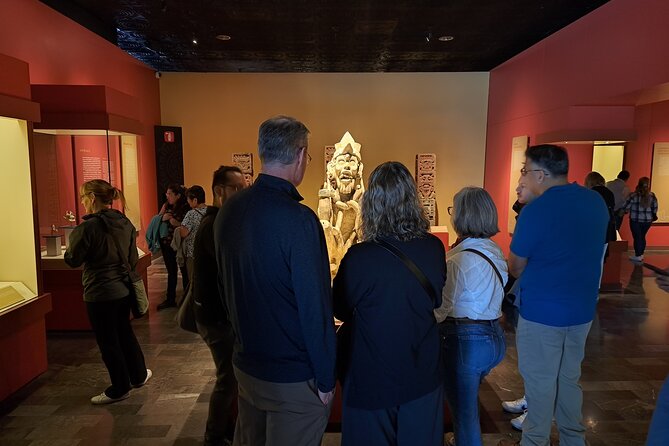
At $98.57 per person, this is not a cheap museum entry. You are paying for more than the ticket, though. Admission and a three-hour English-language guide are included, and the small group can make a major difference in a museum this large.
The price makes the most sense for you if you would otherwise spend hours reading limited Spanish labels, miss the links between galleries, or leave without understanding what you saw. It is also a sensible choice for a short Mexico City visit when your museum time is limited.
The value is weaker if you speak Spanish well, already have strong background knowledge, or prefer to move slowly through every room alone. You will still pay for a guided route that focuses on selected highlights.
The promotional description mentions special access times away from crowds and objects not regularly displayed. Treat those as possible benefits rather than guaranteed features for every departure. The clearest, most consistent value is the guide’s explanation and the included museum admission.
Tips are not included. Lunch is not included either, so budget for those separately. The free cancellation policy helps reduce the risk: cancel at least 24 hours before the local start time for a full refund. Late cancellations and changes are not refunded or accepted, and the operator may offer another date or a full refund if the minimum group size is not met.
Who should book this visit?
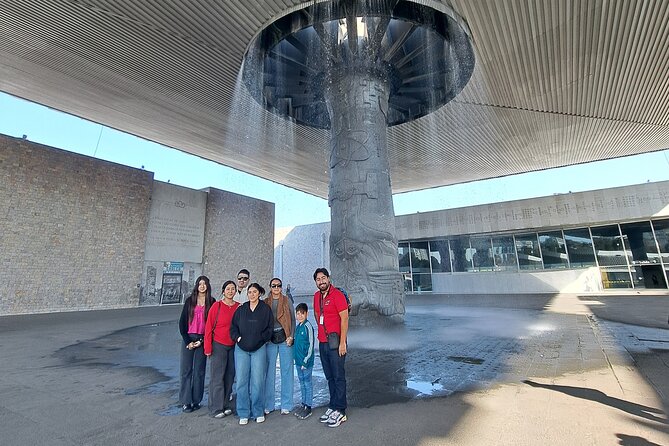
I would choose this tour if you want history explained in plain English, prefer a planned route, or have only one realistic chance to visit the museum. It suits solo visitors, couples, and families, with direct praise for its ability to keep teenagers involved.
It is also a strong match for anyone interested in symbolism, archaeology, restoration, and the relationship among different Mesoamerican cultures. You do not need specialist training. In fact, the tour is most useful when you are starting with little context.
You might skip it if you want to photograph every room at your own pace, dislike group schedules, or plan to spend the whole day reading individual labels. The three-hour format necessarily favors the main story over total coverage.
The museum is described as LGBTQ friendly, and service animals are allowed. Most people can participate, according to the available information, though no detailed mobility notes are provided. If you have specific access needs, confirm them before booking.
Practical advice before you go
Arrive prepared to listen. This is a fast overview of a very large subject, and the guide will cover a lot in three hours. A little advance reading may help, but it is not required.
Keep your booking confirmation available. One reported problem involved undownloadable tickets and the need to purchase replacement admission, followed by no guide appearing. That experience appears inconsistent with the many positive accounts, but it is enough reason to check your ticket details before you leave for the museum and contact Educando con Cultura if anything is unclear.
Plan your day around the start time rather than assuming you can explore afterward. If the tour begins at 2 p.m. and the museum closes at 5 p.m., the guided visit may use your full museum window.
Finally, leave room in your schedule for a quiet second look at one or two objects. The guide will give you the framework. Your own unhurried glance afterward, if time allows, can help the details settle.
Should you book the Museum of Anthropology tour?
For most English-speaking visitors, yes. The National Museum of Anthropology is too large and too important to approach casually if you have only a few hours. Jorge and Delta are praised for making the material clear, engaging, and connected, while the small group keeps the visit from feeling like a lecture delivered to a crowd.
Book it if you want to understand the objects rather than simply see them. Skip it if independent wandering is your main goal or if $98.57 feels too high for a highlights tour. Either way, do not underestimate the museum itself. A guide will not show you everything, but a good one can help you leave knowing what you actually saw.
FAQ
Where does the tour begin?
It begins at the Museo Nacional de Antropología, Av. Paseo de la Reforma s/n, Polanco, Bosque de Chapultepec I Sección, Miguel Hidalgo, 11560 Ciudad de México, CDMX, Mexico.
Where does the tour end?
The activity ends back at the meeting point, at the National Museum of Anthropology.
How long does the tour last?
The tour lasts approximately three hours.
What is included in the price?
Museum admission and a guide are included.
Is lunch included?
No. Lunch is not included.
Are tips included?
No. Tips are not included.
Is the tour offered in English?
Yes. The experience is offered in English.
How large can the group be?
The tour has a maximum of 15 participants.
Is public transportation available near the meeting point?
Yes. The museum is near public transportation.
Can I cancel for a full refund?
Yes, if you cancel at least 24 hours before the experience start time. Cancellations made less than 24 hours before the start time are not refunded.
Newly listed around Mexico City
- Xochimilco : Island of the dolls, tequila and mezcal CDMX★ 5.0 · 102 reviews
- Xochimilco: Sanctuary of the Axolotl★ 4.9 · 58 reviews
- Xochimilco: Market, Food and Nature ¡All included! Tour★ 4.9 · 107 reviews
- Xochimilco: amanecer en kayak Ciudad de México★ 5.0 · 35 reviews
- Xochimilco & Colonial Coyoacan Trip★ 4.0 · 312 reviews
- Bike Tour in Mexico City★ 5.0 · 45 reviews
- Small Groups: Xochimilco and Coyoacan★ 4.0 · 37 reviews
- Museum of Anthropology: a look at Mexico’s past★ 5.0 · 52 reviews
Museums, compared.
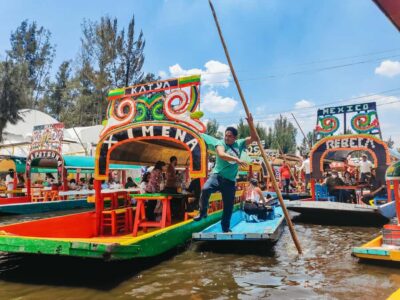
Xochimilco, Coyoacan, Frida Kahlo Museum & Murals Tour
Read our review →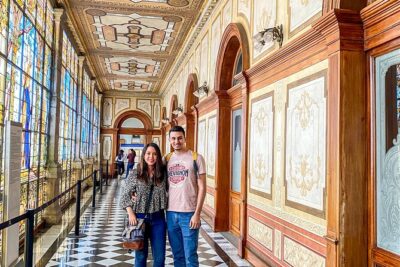
Chapultepec Castle & Anthropology Museum Tour
Read our review →
Frida Kahlo VIP [Museum Tickets Included] Bike, Markets & Churros
Read our review →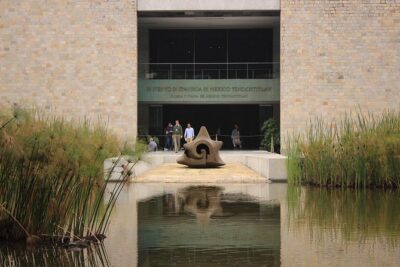

Frida Kahlo VIP [Museum Tickets Included] Walk, Markets & Churros
Read our review →
EXCLUSIVE TOUR Frida Kahlo Museum – SMALL GROUPS
Read our review →
Coba Multun-Ha Cenote Tulum and Mayan Museum Small Group
Read our review →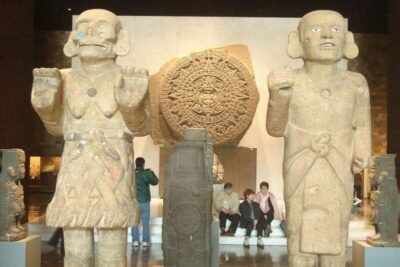
Browse the lists this tour appears in